

Key takeaways
- Compare the best landscape edging in steel, aluminum, plastic, rubber and faux stone, with sizing, install and durability notes for tidy beds and lawns.
A bed without a defined edge slowly loses its shape. Mulch migrates into the lawn after every heavy rain, grass runners creep into the soil, and the crisp line you cut in spring turns fuzzy by midsummer. Landscape edging solves that problem with a physical barrier: a strip of steel, aluminum, plastic, rubber, or molded stone-look material that sits between bed and lawn, holds loose material in place, and gives mower wheels and trimmer line a clear boundary to work against.
The right pick depends on how permanent you want the border, how your beds curve, and how much digging you are willing to do. Metal is the long-term option, thin plastic kits trade durability for a fast no-dig install, rubber suits lawns you mow right up to the bed, and faux stone blocks deliver a masonry look without mortar.
As an Amazon Associate, we earn from qualifying purchases.
Quick answer
For a permanent, crisp line, choose metal: Edge Right COR-Ten steel for hammer-in strength, or the EasyFlex Aluminum kit for rust-free runs. For a fast weekend install, the EasyFlex No-Dig plastic kit wins. EcoBorder rubber suits mow-over lawn edges, and Beuta faux stone blocks give a stacked-stone look without masonry work or mortar.
Edge Right Hammer-In Landscape Edging, COR-Ten Steel, 6-Inch, 5-Pack

Edge Right is the heavy-duty steel option: five 48-inch strips of 16-gauge COR-Ten A606 Type-4 weathering steel that hammer directly into the ground, giving 20 feet of edging per pack. Each strip is 6 inches deep with a 1/4-inch rounded top, and the bottom edge carries serrated teeth that bite into soil as you drive the strip down with a mallet and a wood block. Connector clips join the strips end to end, so a finished run reads as one continuous line rather than separate panels.
COR-Ten is the draw here. Instead of a paint or powder coat that eventually chips, the steel forms a stable rust-colored patina that protects the metal beneath it, and the maker rates the material for decades of service. The 6-inch depth, deeper than most residential edging, resists frost movement and blocks grass runners that travel below shallow barriers. It bends for gentle curves and suits formal beds and modern yards where a thin, dark line looks better than a chunky border.
The honest limits: that patina is real rust on the surface, and runoff from new strips can stain light concrete or pavers while the finish settles, so keep it away from pale hardscape or seal the steel first. The strips are stiff, and tight S-curves are hard work. Cutting a strip calls for a grinder or reciprocating saw, and gloves are essential because sheared edges are sharp.
EasyFlex Aluminum Landscape Edging Project Kit, Black

Dimex’s EasyFlex aluminum kit is the pick for gardeners who like the permanence of metal but not the rust. The box holds four 6-foot aluminum sections, 24 feet in total, plus 12 round metal anchoring spikes. The sections slide and lock together, sit in a shallow trench, and are pinned with the spikes, producing a low, clean line in a black finish that will not rust, rot, or turn brittle in cold weather.
Aluminum’s advantage over steel is weight and workability. The sections are light enough to carry under one arm, they cut with a hacksaw, and the metal flexes into smooth, flowing curves that hold their shape once staked. Because it never corrodes, aluminum is a sensible choice near salt air, in persistently wet soil, and around drip irrigation lines where steel would live a harder life. It suits curved perennial beds, tree rings, and borders where you want the edging to disappear and let the planting carry the look.
Expect to dig, though: this is a trench-and-stake install, not a surface kit, and a long border takes real time to lay out level. The thin profile that makes it elegant also makes it vulnerable to a mower deck or wheelbarrow tire hit, which can crease it. The black finish shows scratches as bright metal lines, and per foot this kit runs well above plastic coil edging, so measure carefully before ordering multiples.
EasyFlex No-Dig Landscape Edging Kit, 40-Foot, Black

The EasyFlex No-Dig kit is the fastest way to a defined bed. It is a 40-foot coil of recycled plastic edging, 1.5 inches tall with a straight top, that unrolls along the edge of a bed and anchors with the included plastic spikes and connectors. There is no trench to dig: you clear loose debris, lay the coil along the soil line, and drive spikes through the tabs at intervals to pin it down.
That simplicity suits renters, new gardeners, and anyone reshaping beds seasonally. The coil flexes around corners and tree rings without cutting, leftover length trims with heavy scissors or a utility knife, and a single person can edge a front yard in an afternoon. It works well as a tidy visual divider between mulch and turf, around play areas, and along paths where the border is mostly decorative and the mulch layer is thin.
Keep expectations in line with the 1.5-inch height. It will not hold back deep mulch on a slope, and it does little against aggressive grass runners that grow under or over a shallow lip. Plastic is the material most prone to frost heave: freeze and thaw cycles can push sections up over winter, and a glancing mower strike can pop a spike loose, so plan on a quick reset pass each spring. In loose, sandy soil the spikes grip poorly and pull out under tension on curves.
EcoBorder Recycled Rubber Lawn Edging, Black, 6-Piece Box
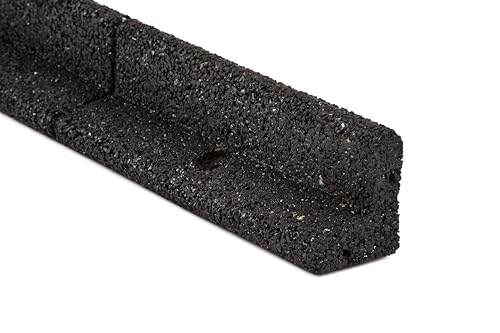
EcoBorder takes a different approach: short, heavy sections molded from recycled tire rubber. A box holds six 4-foot pieces, 24 feet in total, standing about 3.1 inches tall in an L-shaped profile. The vertical face holds mulch while the flat flange on the lawn side supports a mower wheel, so you can mow right over the edge and skip the follow-up trimmer pass. Connector rods join the pieces, and long stakes driven through pre-molded holes pin everything down.
Rubber brings a few genuine advantages. It does not rot, crack in a freeze, or corrode, and a string trimmer bouncing off it makes a dull thud rather than chewing a notch. Each piece has real heft, which helps it stay put, and the sections flex enough to follow gentle curves, up to about 70 degrees across a piece according to the maker. It suits high-traffic lawn edges, borders along driveways and play areas, and households that prefer recycled material.
The trade-offs are looks and height. The profile is chunky and utilitarian, closer to a curb than a crisp line, and at roughly 3 inches tall it retains modest mulch depths only. Rubber expands and contracts with heat, so leave a small gap at the joints on a hot install day or the run can buckle slightly. The pieces are heavy to haul around a big yard, and dark colors absorb heat in full sun.
Beuta Faux Stone Landscape Edging Blocks, Greystone, 4-Pack

Beuta’s system delivers the stacked-stone look without stone. Each of the four sections is a 48-inch strip molded to look like six blocks, measuring 6.5 inches tall and 4 inches wide, and the box covers 16 feet with eight anchoring spikes included. The molded plastic sections come in a Greystone finish, are light enough to position with one hand, and connect end to end, angling at the joints for corners and curves.
At 6.5 inches, this is the tallest edging in this roundup, which makes it the strongest visual border and the best of the five at holding back a deep mulch layer or a bed that sits above lawn level. It installs like a no-dig kit: set the sections on a level line, connect them, and drive the spikes. It suits front-of-house foundation beds, mailbox plantings, and tree rings where the border is meant to be seen, and it gives a finished look the day it goes in.
Be honest with yourself about the material, though. It is molded plastic, not concrete: up close, the repeating block pattern and uniform color give it away, and because each section is light, a bumped section can shift if the spikes are in soft soil. Sixteen feet per box is not much coverage, so a long frontage needs several boxes, and the tall face can rock on uneven ground unless you level the line first with a spade.
How to choose
Match the material to the job first. Steel and aluminum are permanent installs measured in decades; plastic coils are seasonal and decorative; rubber is a working lawn edge; faux stone is about appearance and height.
Height against soil and mulch depth is the most common mistake. Edging only contains what sits below its top edge, so add up your finished soil level plus mulch depth and choose a profile that stands at least an inch above that line. A 1.5-inch plastic lip under 3 inches of mulch will spill over within weeks, while a 6-inch steel strip set too high looks like a fin. Set metal and block edging so roughly half to two-thirds of its height is buried: buried depth is what resists heaving and leaning.
Know what each install really involves. Metal edging needs a shallow trench and gloves, because cut ends and sheared edges are genuinely sharp, and aluminum sections must be leveled as you go or the line waves. No-dig plastic skips the trench but pays for it later: frost heave works the spikes upward through freeze and thaw cycles, and a mower wheel catching the lip can pop a section free, so expect seasonal reseating. Rubber sections need a level, compacted line or their weight makes low spots obvious.
Finally, be clear about what edging does not do. It contains mulch, holds a soil line, and defines a mowing edge, and that is all. It does not stop weeds: weed seeds land on top of mulch from the air, and runners travel under shallow barriers. Pair edging with proper mulch depth and routine hand weeding, and treat any product that promises a weed-free bed as marketing.
Who should skip
Skip these kits if your bed needs real retaining strength, such as holding back a sloped bank or a raised bed more than a few inches above the lawn; that job calls for block, timber, or a poured edge. Skip metal edging if you cannot dig at all, whether because of a rental agreement, buried utilities you have not had marked, or rock-hard soil that will not take a trench or a spike. If you want an invisible border, a simple spade-cut trench edge maintained a few times a year beats any product here. And if your main problem is weeds rather than a fuzzy bed line, edging alone will not fix it.
Frequently Asked Questions
How much of the edging should be buried?
As a rule, bury half to two-thirds of the profile. A 6-inch steel strip typically sits with about 2 inches showing above the soil, which leaves enough buried depth to resist frost movement and leaning while still standing proud of a normal mulch layer.
Can landscape edging follow curves?
Yes, with the right material. Plastic coils and rubber sections flex the most, aluminum bends into smooth, wide arcs, and steel strips handle gentle curves but resist tight ones. Block-style sections angle at the joints, which makes faceted curves and square corners easier than smooth sweeps.
Does landscape edging stop grass and weeds?
Only partly. A deep, well-seated edge blocks many grass runners, but shallow no-dig kits stop few, and no edging prevents weed seeds from landing in the mulch from above. Edging is a containment and definition tool; weed control still comes from mulch depth and regular maintenance.
How do I work out how much edging to buy?
Measure the full run with a hose or string laid along the bed line, then add a small allowance for cuts, corners, and mistakes. Compare that figure with the true coverage per box, which ranges from 16 feet for the Beuta blocks to 40 feet for the EasyFlex No-Dig coil.
Final verdict
For most yards, the decision comes down to permanence versus effort. Edge Right’s COR-Ten steel is the buy-once choice for straight, formal borders, and the EasyFlex Aluminum kit matches that longevity with easier curves and no rust. The EasyFlex No-Dig coil is the sensible pick for renters and quick makeovers, EcoBorder earns its place wherever mowing speed matters, and Beuta’s blocks deliver height and a stone look that no strip edging can match. Measure your run, check your mulch depth against the profile height, and any of the five will hold a clean line.
Product and ASIN Reference
| Product | ASIN |
|---|---|
| Edge Right Hammer-In Landscape Edging, COR-Ten Steel, 6-Inch, 5-Pack | B07LB5X64K |
| EasyFlex Aluminum Landscape Edging Project Kit, Black (1806BK-24C) | B00BQC1FUK |
| EasyFlex No-Dig Landscape Edging Kit, 40-Foot, Black | B00HF4VLWK |
| EcoBorder Recycled Rubber Lawn Edging, Black, 6-Piece Box | B09Z7SL3F2 |
| Beuta Faux Stone Landscape Edging Blocks, Greystone, 4-Pack | B0B94X6HBV |
More from Amazon
Programs that pair well with the guide above. Offers and eligibility are set by Amazon and may change.
Collect the home and kitchen items you want in one registry that guests can shop from.
Create a wedding registrySet up recurring deliveries of everyday items on eligible products. Terms and savings are set by Amazon.
Explore Subscribe & SaveFree shipping on eligible items, Prime Video and more. Eligible new members can start with a free trial.
Start a Prime free trialAudiobooks and podcasts to listen to on the go. Eligible new members can start with a free trial.
Try Audible freeAs an Amazon Associate we earn from qualifying purchases.

Write Your Review
No reviews yet. Be the first to share your experience!