

Key takeaways
- The best planter boxes for porches, rails, and window sills compared: a cedar raised bed, self-watering resin, a window box, and a metal trough.
A good planter box turns a bare porch rail, a sunny sill, or a blank stretch of deck into growing space, but the boxes on offer differ more than their photos suggest. Some are furniture-grade wood beds on legs, some are resin troughs that help water the plants for you, and some are little more than a metal shell that needs a drill before it can hold soil safely. Picking the right one comes down to where it will sit, how often you can water, and how much soil your plants actually need.
This guide compares five planter boxes, one in each of the main styles people buy for porches, rails, and sills: a cedar box on legs, a self-watering resin trough, a traditional window box, an adjustable railing planter, and a galvanized metal trough. Each entry lists the materials, dimensions, and drainage setup from the maker, plus the limits that matter once the box is full of wet soil and growing plants.
As an Amazon Associate, we earn from qualifying purchases.
Quick answer
For most porches, the Boldly Growing cedar box on legs is the easiest way to grow herbs and salad greens without bending. Choose the Lechuza Balconera Cottage 80 if watering less often matters most, the Mayne Fairfield for a classic window box, the Apollo planter for deck rails, and the Achla galvanized tub for a farmhouse trough look.
Boldly Growing Cedar Raised Planter Box with Legs
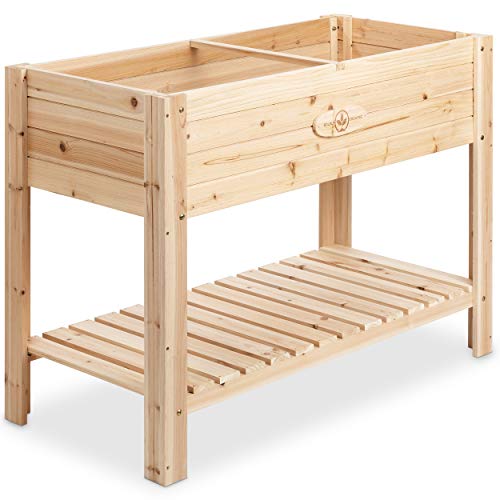
The Boldly Growing planter is a kit-built elevated bed made from unfinished cedar boards, roughly 48 inches long by 24 inches wide and standing about 33 inches tall once assembled. That footprint holds a useful patch of herbs, salad greens, or compact flowers at waist height, so planting, weeding, and harvesting happen without kneeling or bending to ground level. Assembly is part of the deal: the boards go together with screws, and the hardware is included in the kit.
Cedar is the draw here. It resists rot better than pine or fir, and because the wood is left unfinished you can stain it to match a porch or let it weather to a silvery gray. There is no sealed bottom to trap water, so excess moisture works its way down through the base rather than pooling around roots, and raising the soil off the deck keeps the ground underneath from staying damp all season.
The honest limits: a kit needs a level surface and some assembly time, and the soil volume suits shallow and medium-rooted plants rather than deep-rooted crops. Like every wooden box, this one will slowly rot from the inside, where soil stays in contact with the boards; a liner slows that process down. Gardeners with sore backs, small porches, and a taste for fresh herbs will get the most from it.
Lechuza Balconera Cottage 80 Self-Watering Planter

The Balconera Cottage 80 is a resin trough from Lechuza, finished in a woven wicker look in mocha. It measures about 31.5 inches long by 7.5 inches wide by 7.5 inches tall, and inside it works differently from a plain box. Two removable liners hold the plants, a layer of the included Lechuza-Pon substrate separates soil from water, and a reservoir below holds about 5 liters (roughly 1.3 gallons) that wicks up to the roots as the soil dries. A water-level indicator shows at a glance when the reservoir needs refilling, and the planting volume is about 12 liters.
Lechuza builds the shell from UV-resistant, frost-resistant plastic, so it can live outside through the seasons, and it can sit on a ledge or hang from a railing or wall. Note that the hanging brackets are a separate purchase, not part of the set.
The limits are real. The planting depth is shallow, which suits herbs, lettuce, and flowering annuals but not deep-rooted vegetables. The reservoir stretches the gap between waterings by days, not weeks, and the indicator still needs an occasional glance. Anyone who travels for long weekends, forgets to water, or wants a tidy herb row on a balcony will appreciate it most; anyone set on a natural wood or metal look should look elsewhere in this guide.
Mayne Fairfield 3-Foot Window Box

The Fairfield is the traditional choice in this guide: a paneled window box from Mayne, molded from polyethylene with a double-wall build that gives it the crisp, painted-wood look of New England trim without any painting. This 3-foot version measures 36 inches long by 11 inches deep by 10.8 inches tall, weighs about 13.5 pounds empty, and arrives with the steel wall-mount brackets in the box.
Under the soil, a sub-irrigation reservoir holds about 2.5 gallons of water beneath roughly 3.5 gallons of soil, and a built-in overflow drain keeps heavy rain from flooding the roots. Built-in UV inhibitors help the finish hold its color, and Mayne says a rinse from a garden hose is all the cleaning it needs.
The limits: those brackets must be screwed firmly into the wall, so renters and anyone unwilling to drill into siding should weigh that first, and a box full of wet soil is heavy, which makes solid mounting non-negotiable. The reservoir softens the watering routine but does not remove it during a heat wave. Choose the Fairfield if you want the classic under-window flower display, in white, black, espresso, or graphite, and you are comfortable with a one-time, careful installation.
Apollo Exports International 24-Inch Adjustable Railing Planter

The Apollo planter solves a specific problem: how to grow on a railing without drilling, straps, or guesswork about fit. The 24-inch plastic box carries adjustable arms that open to fit rails from 1 inch to 4 inches wide, and it goes on with no tools at all. Apollo makes the planter in Italy, in several colors, and the design works on wood, metal, and composite rails as well as chain-link fence.
Inside, a hidden tray lifts the soil above a built-in reservoir that holds about 6 cups of water, with an automatic overflow so a downpour does not leave roots sitting in water. That reservoir is a genuine help on a sunny balcony, where a small box can dry out within a day.
The limits follow from the size and the arms. Measure your rail before ordering, because anything wider than 4 inches will not fit, and the plastic arms can flex when the box is loaded with wet soil and mature plants. The soil volume is modest, so thirsty plants still need regular attention despite the reservoir. Balcony gardeners, renters, and anyone with a fence line begging for color will find this the simplest route to a row of herbs or annuals at rail height.
Achla Designs Classic Oval Galvanized Tub with Folding Stand

Achla takes the farmhouse route: an oval tub of galvanized steel, about 24 inches long by 15 inches wide with a 10-gallon capacity, resting in a black wrought-iron folding stand that brings the whole piece to about 15.75 inches tall. Achla suggests it for salad greens, strawberries, flowers, and herbs, and the stand earns its keep by lifting the tub off the deck, which improves air circulation and keeps plant debris and rust stains off the boards below.
Galvanized steel shrugs off knocks that would crack resin, and the zinc finish fits farmhouse and cottage porches well. The same tub shape doubles as a drinks cooler at gatherings, which explains the beverage-tub heritage of the design.
The honest catch is drainage. The tub leaves the factory without drainage, and Achla’s own guidance is to add holes yourself or to set nursery pots inside and treat the tub as a decorative outer shell. Drilling galvanized steel is simple enough with the right bit, but it is a step you must plan for. The finish will also weather over time, and metal in full sun warms the soil, a point covered in the buying advice below. Pick this one for looks and durability on a covered porch, not for unattended growing.
How to choose
Drainage comes first. Outdoors, a planter box without drainage holes is a bucket, and roots sitting in standing water after every rain will rot. Every box here either drains through its base, has a built-in overflow, or, in the case of the Achla tub, needs holes added before planting. Treat drainage as non-negotiable, and be wary of any box that promises to solve the problem with a layer of gravel; gravel does not stop soil from staying saturated.
Know how wood ages. A cedar box rots from the inside out, because the inner faces stay in contact with damp soil for years. Cedar slows that process, and a plastic or fabric liner between soil and boards slows it further, buying extra seasons of service. No liner makes wood permanent, though, so budget a wooden box as a multi-year purchase, not a lifetime one.
Be realistic about reservoirs. A self-watering reservoir is a buffer, not a substitute for watering. In summer heat it typically buys you days of grace, not weeks, and small railing boxes dry out fastest of all. If you travel for a week at a time, arrange a neighbor or a drip line regardless of what the reservoir promises.
Size for the mature plant. A box that looks generous under seedlings can crowd roots by midsummer. Check the soil depth and volume against the plant at full size: herbs and annuals manage in 6 to 8 inches of soil, while peppers and compact tomatoes want 10 inches or more. Depth matters more than length.
Watch metal in the sun. Dark metal boxes absorb heat, and in a hot climate the soil along the walls can get hot enough to stress roots. Site metal planters where they get afternoon shade, choose lighter finishes, or line the inner walls. In cooler regions that same warmth can be a small advantage in spring.
Who should skip
Skip planter boxes altogether if your goal is a large vegetable harvest; in-ground beds and big raised beds give roots far more room for the same effort. Skip the wall-mounted window box if you rent and cannot drill into the exterior wall, and skip railing planters if your building or homeowners association bans anything attached to the rail. Also think twice if your only outdoor spot sits in deep shade all day, because most herbs and flowering annuals will sulk there no matter how good the box is, or if you know you will not water at all for weeks at a time, because no reservoir in this size class covers that.
Frequently Asked Questions
How deep should a planter box be?
Most herbs, lettuce, and flowering annuals grow well in 6 to 8 inches of soil. Peppers, compact tomatoes, and other fruiting plants do better with 10 to 12 inches. When in doubt, choose depth over length, because roots use vertical room first and a shallow box dries out faster in summer heat.
Do I need to line a wooden planter box?
A liner is not required, but it helps. Cedar rots from the inside where soil touches it, and a plastic or fabric liner keeps that contact drier and extends the life of the box. Leave the drainage path open at the bottom, or the liner turns the box into a pond.
Can a planter box sit directly on a wood deck?
It can, but feet, a stand, or a tray underneath is kinder to the deck. Constant moisture under a box can stain and soften deck boards over time. Raised designs like the cedar bed and the Achla stand keep air moving underneath, which is one reason they suit porches so well.
How often will I need to water?
In warm weather, small boxes and railing planters may need water every day or two, while a reservoir model stretches that to several days. Check with a finger pushed an inch into the soil; if it feels dry at that depth, water thoroughly until it drains from the base.
Final verdict
For most porches, the Boldly Growing cedar bed is the pick: real wood, a back-friendly height, and enough soil for a season of herbs and greens. If watering discipline is your weak point, the Lechuza Balconera and its reservoir are the safer buy, while the Mayne Fairfield delivers the classic window-box look with the least upkeep once mounted. Renters and balcony gardeners should go straight to the Apollo railing planter, and anyone decorating a farmhouse porch will enjoy the Achla tub, provided they handle drainage before planting. Match the box to the spot and the plant, and any of the five will earn its place.
Product and ASIN Reference
| Product | ASIN |
|---|---|
| Boldly Growing Cedar Raised Planter Box with Legs | B094N7ZP7L |
| Lechuza Balconera Cottage 80 Self-Watering Planter | B003JBTW2O |
| Mayne Fairfield 3-Foot Window Box | B002YVQC50 |
| Apollo Exports International 24-Inch Adjustable Railing Planter | B0869D8B1D |
| Achla Designs Classic Oval Galvanized Tub with Folding Stand | B07Y2LDVPX |
More from Amazon
Programs that pair well with the guide above. Offers and eligibility are set by Amazon and may change.
Collect the home and kitchen items you want in one registry that guests can shop from.
Create a wedding registrySet up recurring deliveries of everyday items on eligible products. Terms and savings are set by Amazon.
Explore Subscribe & SaveFree shipping on eligible items, Prime Video and more. Eligible new members can start with a free trial.
Start a Prime free trialAudiobooks and podcasts to listen to on the go. Eligible new members can start with a free trial.
Try Audible freeAs an Amazon Associate we earn from qualifying purchases.



Write Your Review
No reviews yet. Be the first to share your experience!