

Key takeaways
- Find the best garden edging for your beds, from no-dig plastic and galvanized steel to faux stone, recycled rubber, and deep terrace board rolls.
A bed without an edge is never really finished. Mulch migrates into the lawn after every rain, grass runners creep into the soil a little further every week, and the crisp line you cut in spring blurs by midsummer. Garden edging is the thin barrier that holds that line. The right choice depends less on looks than on three practical questions: how deep your grass roots run, how deep you pile mulch, and how much digging you are willing to do on installation day.
This guide compares five edging styles covering nearly every residential situation: a mainstream no-dig plastic kit, galvanized steel panels, faux stone blocks, recycled rubber edging with a mow-over flange, and a deep terrace board coil for long runs. Each entry lists the kit contents and dimensions from the product page, who it suits, and one honest limitation.
As an Amazon Associate, we earn from qualifying purchases.
Quick answer
For most homeowners, the EasyFlex No-Dig kit is the sensible default: it installs in an afternoon with a mallet and holds a clean line around curved beds. Choose the STIRLINGEAR steel panels for straight, modern borders and deeper root blocking, Beuta blocks for a stone look, EcoBorder rubber where you mow right up to the bed, and Master Mark Terrace Board for long runs that need a five-inch barrier.
EasyFlex No-Dig Landscape Edging, 40 Foot Kit: the mainstream no-dig plastic pick

Specs
- 40 ft coil; 1.5 in tall; recycled plastic; black; 16 spiral anchoring spikes (8 in) included; straight top profile; cuts to length with garden shears.
EasyFlex, made by Dimex, is the edging most people picture when they picture no-dig edging, and it earns that position by being genuinely simple. The coil has an L-shaped profile with mounting tabs along the bottom. You score the ground line, lay the edging with the tabs facing into the bed, hammer the spiral spikes through the tabs at intervals of no more than 40 inches, and backfill mulch to the top of the strip. There is no trench, which matters around established trees and shrubs, where digging means cutting roots. The coil also handles tight curves and full tree rings that rigid panels cannot follow.
Who it suits: first-time edgers, renters who cannot commit to permanent borders, and anyone edging around mature plantings where roots rule out digging.
The honest limitation is height. At 1.5 inches tall, this is a surface line keeper, not a root barrier. Aggressive grasses with deep rhizomes, such as Bermuda, can grow underneath it, and mulch piled deeper than the strip will spill over the top. Plan on reseating sections every year or two in frost country.
STIRLINGEAR Galvanized Steel Landscape Edging, 6-Pack: the metal pick

Specs
- 6 panels, each 40 in long, for 20 ft of total coverage; 8 in tall; powder-coated galvanized steel; black; hammer-in installation.
Steel edging is the opposite philosophy from the plastic coil: instead of sitting on the surface, these panels drive down into the soil and present a thin, nearly invisible line at ground level. Each panel is 40 inches long and 8 inches tall, so roughly half the panel can sit below grade as a genuine root barrier while the top edge defines the bed. The galvanized steel carries a black powder coat, giving the crisp, architectural look that suits modern landscaping, gravel paths, and driveway borders. Panels butt together end to end; installation takes a mallet and a block of wood to protect the top edge.
Who it suits: homeowners who want a border that disappears visually, anyone fighting deep-running grass, and people edging straight runs along paths, driveways, and raised beds.
The honest limitation is geometry. Rigid 40-inch panels do straight lines beautifully and curves grudgingly; a bed with tight, wavy edges will fight you, and small-radius turns are effectively off the table. Twenty feet per box also means a full yard of beds takes several boxes, and freshly cut panel ends are sharp enough that gloves are not optional.
Beuta Faux Stone Blocks, 4 Pack: the stone-look pick

Specs
- 4 sections, each made of 6 connected blocks; each section 48 in long, 4 in wide, and 6.5 in tall; resin; Greystone color; 8 spikes included; 16 ft of total coverage.
Beuta sells the look of a stacked stone border without the masonry. Each four-foot section is molded as six connected blocks with a stone texture; the sections link with a patent-pending connection system, then pin down with the included spikes. At 6.5 inches tall and 4 inches wide, these read as a real low wall from the street, which makes them a front-yard product. The resin will not crack the way thin concrete edging stones can in freeze and thaw cycles, and start, stop, and turn shapes make corners a planned feature.
Who it suits: front beds, tree rings, and mailbox plantings where the border is decorative first, and anyone who wants a stone border without mixing mortar or hauling real rock.
The honest limitation is coverage and footprint. Sixteen feet per box is the least ground covered by any pick in this guide, and the four-inch-wide blocks eat into the bed itself, which matters in narrow plantings. Corner and end pieces are sold separately, so a design with many turns needs those extras planned from the beginning.
EcoBorder Recycled Rubber Edging, 6-Piece Box: the recycled rubber pick
Specs
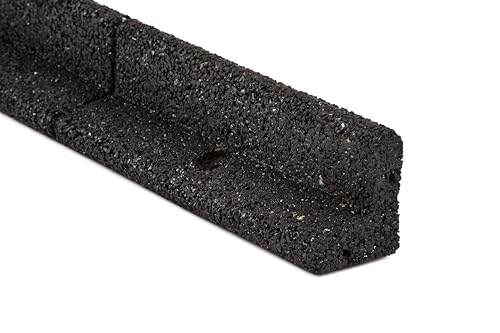
- 6 pieces, each 4 ft long, for 24 ft of total coverage; recycled rubber made from tires; black; L-shaped profile; anchoring stakes and connector dowels included.
EcoBorder is built from recycled tire rubber, and its L-shaped profile is designed around the mower. The vertical face holds mulch in the bed while the horizontal flange sits on the lawn side, so a mower wheel can ride along the flange and cut right up to the edge, largely eliminating the trimmer pass most borders demand. The four-foot pieces connect with dowels, stake down with the included hardware, and flex through gentle curves, up to about 70 degrees end to end according to the maker. The rubber is dense and heavy for its size, which keeps it planted, and it will not rot, crack in frost, or corrode.
Who it suits: anyone whose weekly mowing runs along the beds, households that prefer recycled materials, and play areas where a soft edge beats steel or stone.
The honest limitation is the low above-ground profile. The vertical lip rises only about three inches, which contains a normal mulch layer but not a deep one, and it offers little resistance to grass roots passing underneath. The pieces are also heavy to position alone, and the line they draw is functional rather than decorative.
Master Mark Terrace Board, 5 in by 40 ft Coil: the deep border roll pick

Specs
- 40 ft coil; 5 in tall; HDPE plastic; brown; textured wood-look finish; this coil listing is the board only, with stakes sold separately.
Terrace Board is the old-school bender board landscapers have used for decades, and the five-inch depth is the point. Buried in a shallow trench with a modest reveal above ground, it puts several inches of HDPE below the soil line, deep enough to block the rhizomes of most lawn grasses rather than merely drawing a line on the surface. The coil unrolls along sweeping curves and straight runs alike, carries a wood-grain texture, and the HDPE will not rot, splinter, or rust.
Who it suits: gardeners edging long beds, and anyone battling running grasses that defeat shallow edging.
The honest limitation is installation effort. Unlike every other pick here, this one wants a trench: dig a shallow slot, unroll a coil that has been rolled tight and would like to stay that way, stake it, and backfill. Warm the coil in the sun first or it will fight you. It is a Saturday project, not a one-hour fix, and stakes are a separate purchase.
How to choose
Start with the honest install question. No-dig edging sits on the surface and pins down, which is fast and root-friendly, but a surface barrier does not stop grass that travels underground; rhizomes pass beneath shallow strips and pop up in the bed. Trench-installed edging like the Terrace Board or the steel panels puts material below grade and blocks that route. If your lawn is a clumping type and your problem is mostly mulch migration, no-dig is enough. If grass is invading the bed, buy depth, not convenience.
Match height to mulch depth next. Your edging should stand at least an inch above the settled mulch layer, or the first heavy rain floats mulch over the line. A 1.5-inch strip manages thin top-dressing; a three-inch lip handles a standard bed; deep mulch wants taller panels or blocks.
Think about frost and stakes. In freeze and thaw country, soil heave works edging upward a little each winter. Longer stakes, closer spacing, and spikes set through the edging’s tabs or flange resist that movement; skimping on stake spacing is the most common reason no-dig edging looks wavy by its second spring. Steel and buried board move least because most of their body sits below the surface layer.
Consider what hits the edge every week. String trimmers chew soft plastic over time, bounce off steel, and scuff resin blocks. A mower wheel riding a rubber flange removes the trimming chore altogether. Where a border meets a driveway or path, a rigid panel or block tolerates the occasional wheelbarrow wheel far better than a surface strip.
Finally, measure before you order. Walk the bed perimeter with a tape or a length of rope laid along the curve, then add a margin for cuts and mistakes; curves consume more material than the straight-line distance suggests. Check what the kit includes: coil kits vary in spike counts, block systems sell corners separately, and the Terrace Board coil needs stakes bought alongside it.
Who should skip
Skip all five of these if what you actually want is a permanent structural border. A poured concrete curb, a mortared stone edge, or a properly based paver border is hardscaping, worth hiring out when the border must double as a retaining edge on a slope. Likewise, if your soil is mostly rock or hardpan, spikes and hammer-in panels will bend or refuse; a spade-cut trench edge, maintained with a half-moon edger a few times a season, may serve you better than any product. And if your beds change shape every year, the humble cut edge, refreshed each spring, beats installing and removing hardware.
Frequently Asked Questions
How much of the edging should be above ground?
Enough to stand about an inch above your settled mulch. For surface no-dig strips, nearly all of the height shows. For steel panels and terrace board, bury most of the depth so the buried portion can block roots, and leave a reveal of an inch or two to hold mulch and draw the line.
Will edging stop grass from growing into my beds completely?
Deep, trench-installed edging blocks most rhizome spread. No surface product stops grass entirely: seeds still land in the bed, and runners can cross a low strip. Expect edging to reduce the chore to occasional pulling rather than weekly warfare, and expect more from buried board than from a surface strip.
Can I mow right up to these borders?
With the EcoBorder rubber edging, yes: its flange is designed for a mower wheel to ride on, which is its main selling point. With steel, blocks, and plastic strips, you can mow close, but most people still make a light trimmer pass. Keep the trimmer line off soft plastic where you can, since repeated contact chews the top edge over time.
How long does each material last outdoors?
Steel and HDPE board are the longest-lived options here and typically serve for many years. Recycled rubber does not rot or crack in frost and holds up well, though its color softens with sun exposure. Surface plastic strips are the shortest-lived and may need sections lifted and reset after a few winters of frost heave.
Final verdict
Match the edging to the job it has to do. For a fast, friendly first border around curved beds, the EasyFlex No-Dig kit is the pick, with the understanding that it keeps a line rather than blocking roots. For straight runs and genuine underground defense, choose the STIRLINGEAR steel panels or the Master Mark Terrace Board, accepting the trenching and hammering they ask in return. Where the border is part of the view, Beuta’s faux stone blocks deliver the look without the masonry, and where the weekly mow meets the bed, EcoBorder’s rubber flange design quietly removes a chore. Measure the perimeter and buy the depth your grass demands.
Product and ASIN Reference
| Product | ASIN |
|---|---|
| EasyFlex No-Dig Landscape Edging, 40 Foot Kit, Black | B00HF4VLWK |
| STIRLINGEAR Galvanized Steel Landscape Edging, 6-Pack, 40 in by 8 in | B0D7MFFCMF |
| Beuta Faux Stone Blocks Landscape Edging, 4 Pack, Greystone | B0B94X6HBV |
| EcoBorder Recycled Rubber Lawn Edging, 4 ft, 6-Piece Box, Black | B09Z7SL3F2 |
| Master Mark Terrace Board Landscape Edging Coil, 5 in by 40 ft, Brown | B000LNRVXK |
More from Amazon
Programs that pair well with the guide above. Offers and eligibility are set by Amazon and may change.
Collect the home and kitchen items you want in one registry that guests can shop from.
Create a wedding registrySet up recurring deliveries of everyday items on eligible products. Terms and savings are set by Amazon.
Explore Subscribe & SaveFree shipping on eligible items, Prime Video and more. Eligible new members can start with a free trial.
Start a Prime free trialAudiobooks and podcasts to listen to on the go. Eligible new members can start with a free trial.
Try Audible freeAs an Amazon Associate we earn from qualifying purchases.


Write Your Review
No reviews yet. Be the first to share your experience!