

Key takeaways
- Compare five hummingbird feeders that are easy to fill and clean, including glass bottle, saucer, window-mounted, large-capacity and top-fill designs.
A hummingbird feeder earns its place on a patio only if it is easy to live with. The birds are not picky about decoration, but they are quick to abandon a feeder with cloudy, fermented nectar, and the person maintaining it soon decides whether refilling feels like a small pleasure or a sticky chore. Feeders that come apart fully, fill without spills, and keep insects away from the ports stay up all season.
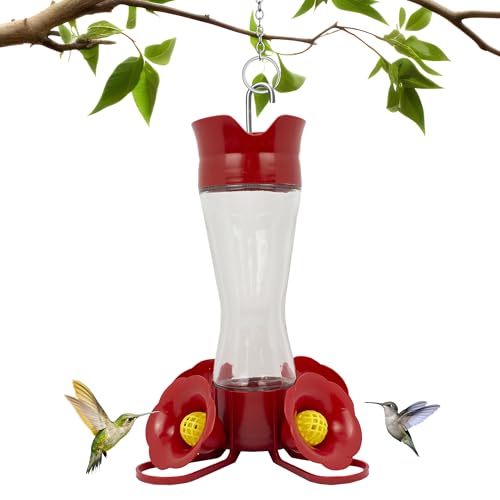

This guide compares five feeder styles that cover most yards: a classic glass bottle, a bee-resistant saucer, a window-mounted model for close viewing, a large-capacity bottle for busy yards, and a top-fill design built around painless cleaning. Each pick below covers capacity, materials, port count, and the trade-offs that matter in daily use.
As an Amazon Associate, we earn from qualifying purchases.
Quick answer
For most patios, the Perky-Pet Pinch-Waist glass feeder is the dependable classic, while the Aspects HummZinger Ultra saucer is the pick when bees are a problem. Add the Aspects Jewel Box for window viewing, the 30-ounce Perky-Pet 209B for busy yards, and the Perky-Pet 136TF top-fill when easy cleaning matters most.
Perky-Pet 203CPBN Pinch-Waist Glass Hummingbird Feeder
The Pinch-Waist is the classic bottle feeder shape most people picture: an 8-ounce glass reservoir that narrows in the middle, a red base with four flower-shaped feeding ports, and perches that let birds sit while they drink. The lid carries a built-in ant moat you fill with water, and bee guards sit over the ports to keep insects from crawling into the nectar.
Glass is the main reason to choose this style. It does not absorb odors, it resists the clouding that plastic picks up over a season, and the wide mouth makes scrubbing the inside realistic. The base separates into pieces, so the port area where mold likes to hide can be washed properly instead of rinsed and hoped for the best.
The limits are the familiar ones for bottle feeders. Eight ounces is a modest supply, and in a yard with several territorial birds you may refill every couple of days during peak season, though that pace matches how often the nectar should be changed anyway. Glass is heavier than plastic and will break if it falls onto stone or concrete. Like any inverted bottle, it can weep a little when cold nectar warms and expands in the sun, so hang it in light shade. This is the right first feeder for a small patio with a handful of regular visitors.
Aspects 367 HummZinger Ultra Hummingbird Feeder
The HummZinger Ultra takes the opposite approach to a bottle: a shallow 12-ounce polycarbonate saucer with a red cover, four feeding ports, and a wrap-around perch. Because the nectar sits in an open bowl rather than being fed by gravity through a seal, there is no vacuum to fail and very little tendency to drip, which is why this design is the standard recommendation for yards where bees and wasps mob bottle feeders.
Two layers of insect defense are built in. The center of the hanger forms an ant moat, and the ports accept Aspects Nectar-Guard tips, flexible membranes that let a hummingbird’s bill through while blocking bees. Raised flowers around the ports shed rain away from the nectar. The cover lifts straight off, the bowl is one smooth piece, and cleaning takes a fraction of the time a bottle needs. The polycarbonate is UV-resistant and the feeder is made in the USA with a lifetime guarantee.
The trade-offs are capacity and looks. Twelve ounces runs dry quickly when a yard hosts a crowd, and the plain red-and-clear saucer is functional rather than decorative. The guard tips are small parts that need their own rinse and will eventually need replacing. If insects are your main frustration, this is the feeder that solves it.
Aspects 407 Jewel Box Window Hummingbird Feeder

The Jewel Box brings the birds to the glass. This 8-ounce polycarbonate feeder mounts on the outside of a window with a suction-cup bracket, and its three feeding ports sit below a raised HighView perch, so a seated bird is fully visible from indoors. The red cover lifts off for filling, and the whole unit detaches from its bracket for washing at the sink.
Window mounting changes the experience more than any other feature here. Hummingbirds feed a few inches away, close enough to see individual feathers, which makes this a favorite for kitchen windows, home offices, and anyone introducing kids to birdwatching. Because the feeder sits almost against the glass, birds approach it slowly, which is the safe way to feed near windows.
Suction cups are the honest weak point. They need smooth, clean glass, they lose grip gradually in cold weather, and the feeder should be pressed back into place every so often. Eight ounces is also a small reservoir, though at a window the refill trip is short. Choose it when close-up viewing matters more than capacity, or as a second feeder alongside a hanging model.
Perky-Pet 209B-1SR Our Best Glass Hummingbird Feeder
When a yard hosts a dozen or more hummingbirds, small feeders become a daily chore, and that is the problem the 209B is built to solve. Its glass bottle holds 30 ounces of nectar, and the base offers six feeding ports with perches, so more birds can feed at once. A built-in ant moat in the cap and bee guards at the ports carry over the insect protection from the smaller models.
The wide mouth and fully separating base keep cleaning manageable for a feeder of this size, and glass again avoids the odor retention and scratching that large plastic reservoirs develop. Hung from a sturdy hook near flowers, it becomes the main station of a busy garden.
Size cuts both ways. Thirty ounces only helps if your birds actually drink it down within a few days; nectar that sits for a week in summer heat spoils, and pouring out old nectar from a big feeder wastes sugar and time. A full 30-ounce glass bottle is also heavy, so the hanger and hook need to be solid. Pick this feeder for proven heavy traffic, migration stopovers, and rural yards, not as a first feeder for a yard that sees two birds a week.
Perky-Pet 136TF Perky’s Finest Top Fill Hummingbird Feeder

The 136TF attacks the two annoyances of bottle feeders: the spill when you flip a filled bottle over, and the narrow neck that makes scrubbing miserable. Its 16-ounce shatter-resistant plastic bottle fills from the top through a wide mouth, so there is no inverting a filled bottle. Four soft, flower-shaped ports with perches sit in the base, and a built-in ant moat in the cap adds insect protection.
Every part of this feeder separates, including the base, which means the corners where black mold usually establishes itself can actually be reached with a brush. For anyone who has abandoned a feeder over cleaning, that full teardown is the feature that keeps this one in service. The plastic construction also shrugs off the drops and bumps that would end a glass bottle, which matters for feeders hung over decks and patios.
Plastic is the compromise. Over a few seasons it can cloud and scratch in ways glass does not, and the top-fill lid must be seated correctly or the feeder can leak at the seal. Sixteen ounces is a middle capacity that suits moderate traffic. This is the best fit for households that want the cleaning routine to be as short as possible, for gifts to new birdwatchers, and for anyone whose previous feeder died of neglect in the back of a cupboard.
How to choose
Begin with the nectar, because the feeder matters less than what is inside it. Skip the red dye entirely. Plain sugar water made from four parts water to one part plain white sugar is the standard recipe, hummingbirds find red feeder parts perfectly well on their own, and dye adds nothing for the birds. Do not use honey or brown and powdered sugars.
Then be honest about cleaning. Nectar is sugar water, and in warm weather it ferments and grows mold quickly. Feeders need emptying and washing every few days in mild weather and every day or two in real heat, because mold and bacteria in spoiled nectar can make hummingbirds sick. A feeder you will actually clean beats a beautiful one you will not.
For insects, layer your defenses. An ant moat filled with water stops crawling ants, and bee guards or guard tips stop most bees at the ports. Understand the limit, though: no feeder is fully bee-proof when nectar drips or smears on the outside, since bees will happily feed on the spill itself. Saucer designs drip least, and moving a mobbed feeder often breaks the bees’ routine.
Materials set the maintenance horizon. Glass is heavier and breakable, but it stays clear, resists odors, and handles years of scrubbing. Plastic is light and forgiving of drops, yet it can warp in strong sun and cloud over seasons of use, hiding nectar levels and early mold; high-grade polycarbonate, like the Aspects feeders use, holds up noticeably better than thin molded plastic. Finally, mind placement near glass: hang feeders either very close to a window, within about a meter, or well away from it, at nine meters or more. The dangerous zone is the middle distance, where a bird leaving the feeder has room to reach full speed before it reaches the glass. A spot with morning sun and afternoon shade keeps nectar fresher and the birds comfortable.
Who should skip
Skip hummingbird feeders altogether if your schedule keeps you away for weeks during the season. An untended feeder serving spoiled nectar is worse than no feeder at all, and a bed of native flowering plants will feed the same birds. Skip the large-capacity models if your yard only draws a bird or two; you will throw away more nectar than the birds drink, and a small feeder changed often is healthier. Skip window mounting if your windows are textured, screened on the outside, or too dirty for suction cups to hold, and skip glass bottles if the only available hanging spot is above stone paving and the feeder will be handled by small children. Finally, if local guidance in your area asks residents to take feeders down during a disease outbreak or a bear season, follow it; the birds will manage.
Frequently Asked Questions
How often should I clean a hummingbird feeder?
In mild weather, every three to four days is a workable rhythm; in hot weather, every one to two days. If the nectar looks cloudy, has dark specks, or smells fermented, clean the feeder immediately regardless of the calendar. Wash all parts in hot water with a bottle brush, rinse thoroughly, and let everything dry before refilling.
What is the correct sugar water recipe for hummingbirds?
Mix four parts water with one part plain white sugar, heat the water enough to dissolve the sugar fully, then cool the mixture before filling the feeder. Extra nectar keeps in the refrigerator for up to a week. Never use honey, brown sugar, powdered sugar, or red dye; plain white sugar water is the closest match to flower nectar.
Why are bees swarming my feeder, and how do I stop it?
Bees usually arrive because nectar is leaking or smeared on the outside of the feeder. Check for drips, wipe the outside clean, and choose a feeder with bee guards or guard tips, or a saucer design that keeps nectar below bee reach. Moving the feeder a few meters often helps: bees tend to keep searching the old spot while hummingbirds relocate it quickly.
Where is the safest place to hang a feeder near windows?
Either very close to the glass or far from it. A window-mounted feeder or one hung within about a meter of the window is safe because birds cannot build up speed over that distance. Feeders hung several meters out are the risky ones, since a bird leaving at speed can hit the glass. If a mid-distance spot is your only option, window decals or hanging cords on the outside of the glass help birds see it.
Final verdict
Match the feeder to the job. The Perky-Pet Pinch-Waist is the classic glass bottle for a small patio, the Aspects HummZinger Ultra is the answer when bees run the yard, and the Aspects Jewel Box turns a kitchen window into a front-row seat. Busy gardens justify the 30-ounce Perky-Pet 209B, provided the birds drain it before the nectar turns, and the Perky-Pet 136TF is the pick when easy top filling and full teardown cleaning keep you feeding all season. Whichever you choose, fresh plain sugar water and a short cleaning routine will do more for your hummingbirds than any single feature on this list.
Product and ASIN Reference
| Product | ASIN |
|---|---|
| Perky-Pet 203CPBN Pinch-Waist Glass Hummingbird Feeder | B00GSQ6HXO |
| Aspects 367 HummZinger Ultra Hummingbird Feeder | B000CSH7VA |
| Aspects 407 Jewel Box Window Hummingbird Feeder | B003E5X9GK |
| Perky-Pet 209B-1SR Our Best Glass Hummingbird Feeder | B00GSQBYNC |
| Perky-Pet 136TF Perky’s Finest Top Fill Hummingbird Feeder | B00HRJOVSY |
More from Amazon
Programs that pair well with the guide above. Offers and eligibility are set by Amazon and may change.
Collect the home and kitchen items you want in one registry that guests can shop from.
Create a wedding registrySet up recurring deliveries of everyday items on eligible products. Terms and savings are set by Amazon.
Explore Subscribe & SaveFree shipping on eligible items, Prime Video and more. Eligible new members can start with a free trial.
Start a Prime free trialAudiobooks and podcasts to listen to on the go. Eligible new members can start with a free trial.
Try Audible freeAs an Amazon Associate we earn from qualifying purchases.

Write Your Review
No reviews yet. Be the first to share your experience!