

Key takeaways
- Compare the best raised garden beds by material and form, from galvanized steel and cedar kits to fabric, elevated and tiered beds for small yards.
A raised bed looks like a simple box, but the material that box is made from decides almost everything that follows: how many seasons it survives, how it handles constant contact with wet soil, how long assembly takes, and whether you can move it once it is full. Two beds with identical dimensions can be completely different purchases once one is powder-coated steel and the other is thin cedar or felt fabric.

This guide picks one strong option per material or form rather than five near-identical steel boxes: a galvanized metal bed for the mainstream vegetable plot, a cedar kit for gardeners who want wood, a fabric bed for renters and tight budgets, an elevated bed on legs for anyone done with kneeling, and a tiered steel bed that stacks growing space upward in a small yard.
As an Amazon Associate, we earn from qualifying purchases.
Quick answer
For most vegetable gardens, the Best Choice Products 8x4x2ft metal bed is the default pick: deep, durable, and tool-free to build. Choose the Greenes Fence cedar kit for a natural wood bed, the KLEWEE fabric bed for the lowest-effort rental setup, the FOYUEE legged bed to garden standing up, and the Outsunny three-tier bed when yard space runs short.
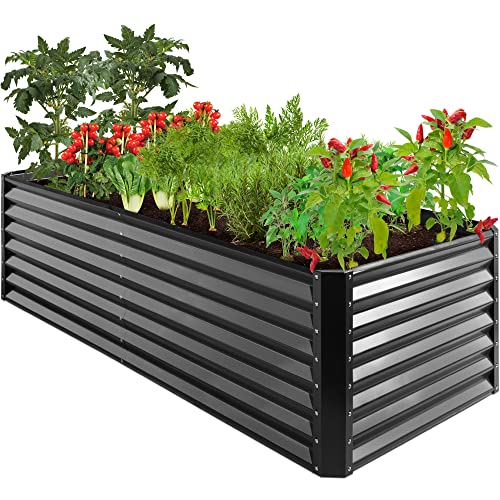
Best Choice Products 8x4x2ft Outdoor Metal Raised Garden Bed
This is the mainstream galvanized option: a powder-coated steel bed measuring 96 by 48 by 24 inches, with a stated soil capacity of 478 gallons, or about 64 cubic feet. The 24-inch depth is the headline, because it swallows deep-rooted crops like carrots, parsnips, and potatoes without roots hitting the native ground too soon, and it holds enough soil volume to buffer watering on hot days. Three stabilizing rods span the long sides to keep the panels from bowing outward under the weight of wet soil.
Assembly is the other draw. The panels join with bolts and wingnuts, so the bed goes together by hand with no tools, and a rubber strip runs along the top edge to cover the metal rim. The bottom is open, which means drainage goes straight into the ground below and roots can push past the bed into native soil over time. That open bottom also means the bed belongs on soil or gravel, not on a deck you want to keep clean.
It suits anyone setting up a first serious vegetable plot who wants one bed that lasts. The honest limitation is the fill bill: 64 cubic feet is a lot of soil to buy and move, and the deep bed is heavy work to empty if you ever relocate it. Steel also warms faster in spring sun, which tender roots near the walls can feel in hot climates.
Greenes Fence Premium Cedar Raised Garden Bed, 4 x 12 ft
The wood pick is a kit of North American cedar boards, 3/4 inch thick, that slide together with dovetail joints at the corner posts. The bed measures 4 by 12 feet, and the boards stack to give a working depth of 7 to 10.5 inches depending on how you configure the kit. No screws, no tools, and no treated lumber: cedar carries its own natural resistance to rot and insects, which is why it remains the default wood for soil contact. The kit is made in the USA, and the boards arrive unfinished, so the bed weathers to a gray tone unless you oil it.
At full height the bed takes roughly 42 cubic feet of soil mix, spread over a long, narrow footprint that is easy to reach across from both sides. The open bottom sits directly on the ground, so drainage is free and earthworms move up into the bed on their own. Gardeners who want a bed that looks like furniture-grade garden carpentry rather than hardware will feel at home here.
It suits patient growers planting salads, herbs, flowers, and shallow-rooted vegetables in a permanent spot. The honest limitation is lifespan and depth: even cedar softens after years of soil contact, so expect a shorter service life than steel, and the 10.5-inch maximum depth is not enough for long carrot varieties or other deep taproots.
KLEWEE Fabric Raised Garden Bed, 6 x 3 ft
The fabric pick skips the frame entirely. This bed is a thick non-woven felt bag measuring 6 by 3 feet and 12 inches deep, with a stated capacity of 128 gallons and stitched dividers that split the surface into eight planting grids. You unfold it, set it on any flat surface, and fill it. The fabric is breathable, so excess water drains through the walls and bottom instead of pooling, and air reaches the root zone from every side, which discourages roots from circling the way they do in smooth plastic pots.
Because the bottom is closed fabric rather than an open frame, this is the one bed on the list that can sit on a patio slab, a driveway edge, or rental-yard ground you are not allowed to dig up. When the season ends or the lease does, you can empty it, fold it flat, and store it in a fraction of the space a rigid bed needs. Reinforced stitching holds the seams against the outward push of wet soil.
It suits renters, first-season experimenters, and anyone who wants a big planting area running within the hour. The honest limitation is durability and neatness: felt degrades under years of sun, the walls bulge slightly when full, and the bed will not give a crisp, landscaped edge. Plan on a few seasons of service rather than a decade.
FOYUEE Galvanized Raised Garden Bed with Legs, 2-Pack

The elevated pick raises the soil to working height. Each bed in this two-pack measures 48 by 24 inches and stands 32 inches tall on steel legs, so planting, weeding, and harvesting happen standing up or seated on a stool, with no kneeling and no bending to ground level. The boxes are galvanized steel panels with a closed bottom and drainage holes, so they work on patios, balconies, and decks where an open-bottom bed would stain and leak soil. The listing rates the pair at 48 gallons of soil capacity.
A closed bottom changes the gardening in ways worth knowing. Drainage depends entirely on the holes provided, so the soil mix needs enough coarse material to keep them flowing, and the shallower soil column dries out faster than a ground bed of the same footprint. In exchange, you gain total control of the soil, zero weed pressure from below, and a bed that keeps rabbits and crawling pests at a disadvantage. Assembly is a bolt-together job with basic tools.
It suits gardeners with bad knees or backs, balcony growers, and anyone tending herbs and salads close to the kitchen door. The honest limitation is crop range: the modest depth and volume rule out big, hungry plants like full-size tomatoes or sweet corn, and two smaller boxes give less total growing room than one large ground bed.
Outsunny 3-Tier Galvanized Steel Raised Garden Bed Kit

The tiered pick trades footprint for height. Three galvanized steel boxes step upward like a staircase, giving an overall unit of about 62 by 43 by 32 inches that fits a corner or a fence line where a full 8-foot bed would never go. Each tier is its own planting level, so shallow herbs and flowers can sit in the upper steps while deeper-rooted vegetables take the lowest, deepest tier. Rubber strip edging caps the steel rims, and the boxes combine into one stepped unit rather than three separate planters.
The bottom is open, so the unit needs to sit on soil, and the stepped shape means each level holds a different soil depth, which you plan around rather than fight. Galvanized panels shrug off rain and watering, and the steel frame keeps the tidy, squared look that fabric and weathered wood cannot. Assembly involves bolting the tier frames together, a longer job than a single box but still basic hand-tool work.
It suits small yards, side yards, and corner plots, plus gardeners who like the organized look of a stepped display for flowers. The honest limitation is total volume: three small tiers hold far less soil than one big bed, the upper tiers dry quickly, and the fixed staircase shape cannot be rearranged once you have filled it.
How to choose
Start with depth, because depth decides what you can grow. Roots and soil volume, not the frame, are what feed the plants. Six to eight inches grows lettuce and herbs, ten to twelve inches covers most vegetables, and anything with a long taproot or a big root ball wants eighteen inches or more. A beautiful frame filled with too little soil is just an expensive border.
Next, think in seasons, not in purchase day. Material lifespan differs by years: galvanized steel serves the longest, cedar gives a solid middle run before the boards soften, and fabric is a short-term answer priced accordingly. Spread over its life, the cheapest bed per season is often the durable one, while the fabric bed wins only when you know the garden itself is temporary.
Then budget the soil before the frame. Filling a bed takes far more mix than buyers expect: a single 8 by 4 by 2 foot bed swallows about 64 cubic feet, which is dozens of bags or a bulk delivery. Price the fill, the compost, and the hauling before choosing the deepest bed on the page, or step down a size and put the savings into better soil.
Finally, place the bed for sun and hose reach first. A filled bed does not move without emptying it, so count the hours of direct sun, check that the hose reaches without a fight, and leave room to work on every side. A well-placed average bed outgrows a premium bed stuck in shade.
Who should skip
Skip raised beds entirely if your native soil is already loose, deep, and fertile: in-ground rows cost nothing but labor and give roots unlimited depth. Garden in containers instead if you grow on a balcony with weight limits, need to chase sun around a small patio, or grow invasive spreaders like mint that must stay confined. Build from lumber yourself if you have carpentry tools and want exact custom dimensions, an unusual height, or beds matched to reclaimed timber you already own; a kit charges for convenience you may not need. And if your ground slopes hard or your yard is mostly tree roots, fix the site first, because no frame on this page levels itself.
Frequently Asked Questions
How deep should a raised bed be for vegetables?
Most vegetables grow well in ten to twelve inches of soil. Leafy greens and herbs manage in six to eight inches, while carrots, parsnips, and potatoes do better with eighteen inches or more so roots can develop without hitting the ground below the bed.
Do raised beds need a bottom?
Open-bottom beds drain freely and let roots and worms move between the bed and the native soil, which suits beds placed on the ground. Closed-bottom beds, including elevated and fabric designs, protect decks and patios and give full control of the soil, but they rely on drainage holes and dry out faster.
Can I put a raised bed on concrete or a patio?
Yes, but choose a closed-bottom design such as a fabric bed or an elevated bed with drainage holes, and expect to water more often. An open-bottom frame on concrete will leak soil and stain the surface, and it gains none of the soil contact benefits it is designed for.
How long do the different bed materials last?
Galvanized steel beds typically serve the longest, often well beyond a decade. Cedar resists rot naturally but softens after years of soil contact, so plan on a mid-length service life. Fabric beds are the shortest-lived option, usually a few seasons, which matches their role as a low-cost, portable choice.
Final verdict
Pick by material and the rest falls into place. The Best Choice Products steel bed is the right default for a deep, long-lived vegetable plot, the Greenes Fence cedar kit serves gardeners who want natural wood, the KLEWEE fabric bed is the renter and beginner answer, the FOYUEE legged beds protect your back, and the Outsunny tiered kit turns a small corner into three levels of growing space. Decide where the bed will sit, how deep your crops need, and how many seasons you expect from it, and the correct row in the table below picks itself.
Product and ASIN Reference
| Product | ASIN |
|---|---|
| Best Choice Products 8x4x2ft Outdoor Metal Raised Garden Bed, Gray | B09SQZJV67 |
| Greenes Fence Premium Cedar Raised Garden Bed, 4 x 12 ft, 3/4 in boards | B00L1GOGZ2 |
| KLEWEE Fabric Raised Garden Bed, 6 x 3 ft, 128 Gallon, 8 Grids | B0CQ22Z1VP |
| FOYUEE Galvanized Raised Garden Bed with Legs, 2-Pack, 48 x 24 x 32 in | B0FFSJD3V6 |
| Outsunny 3-Tier Galvanized Steel Raised Garden Bed Kit, 62.25 x 43 in | B0CT82R6K1 |
More from Amazon
Programs that pair well with the guide above. Offers and eligibility are set by Amazon and may change.
Collect the home and kitchen items you want in one registry that guests can shop from.
Create a wedding registrySet up recurring deliveries of everyday items on eligible products. Terms and savings are set by Amazon.
Explore Subscribe & SaveFree shipping on eligible items, Prime Video and more. Eligible new members can start with a free trial.
Start a Prime free trialAudiobooks and podcasts to listen to on the go. Eligible new members can start with a free trial.
Try Audible freeAs an Amazon Associate we earn from qualifying purchases.
Write Your Review
No reviews yet. Be the first to share your experience!