
Our Short List of 3
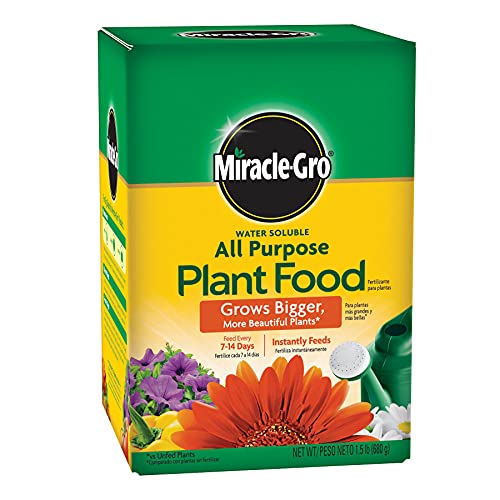
- Best for: Fast feeding for hungry patio pots, flowers, and vegetables that need a quick lift.
- Bag size: 1.5 lbs
- Form: water-soluble granules
- NPK: 24-8-16
- Feeding: every 7-14 days

- Best for: Simple organic feeding for mixed patio pots, vegetables, and flowers from a single bag.
- Bag size: 4 lbs Bag
- Form: granular
- Organic: OMRI Listed for organic use
- Use: vegetables, flowers, shrubs, trees, and plants

- Best for: Vegetable beds and tomato pots where fruit and flavor matter more than leafy growth.
- Bag size: 4lb
- NPK: 4-6-3
- Form: organic granular fertilizer
- Microbes: TruBiotic beneficial soil microbes plus mycorrhizae
All 3 Picks at a Glance
| Product | Specs | Action |
|---|---|---|
| Miracle-Gro Water Soluble All Purpose Plant Food |
| Check price on Amazon |
| Jobe’s Organics Granular All Purpose Fertilizer |
| Check price on Amazon |
| Dr. Earth Home Grown Tomato, Vegetable & Herb Fertilizer |
| Check price on Amazon |
Key takeaways
- Compare the best garden fertilizers for patio gardens, from fast water-soluble feeds to slow organic granules, and match the feed to your pots and beds.
Choosing a fertilizer for a patio garden is really a choice about how often you want to feed and how much room for error you want. A fast water-soluble feed works within days but asks you to mix and apply it every week or two, and a heavy hand can burn roots. A slow granular feed asks almost nothing of you for months, yet it will not rescue a hungry tomato that is already yellowing. The bag you buy decides which side of that trade you live on all season.
This guide serves patio vegetable growers, flower-pot gardeners, herb growers, and anyone feeding a few containers on a balcony or porch. The five fertilizers below were chosen from the names and specs on their Amazon pages, covering water-soluble feeds, slow-release granules, and organic options, so you can match the feed to the pots and beds you actually own.
Quick Picks
As an Amazon Associate we earn from qualifying purchases.
| Product | Best for | Key spec from title |
|---|---|---|
| Miracle-Gro Water Soluble All Purpose Plant Food | Fast feeding for hungry patio pots | 1.5 lbs |
| Osmocote Smart-Release Plant Food Plus Outdoor & Indoor | Feeding once for a whole season | 2 lbs. |
| Espoma Organic Plant-Tone 5-3-3 | Organic feeding for edible patio crops | 4 lb. Bag |
| Jobe’s Organics Granular All Purpose Fertilizer | Simple organic feeding for mixed pots | 4 lbs Bag |
| Dr. Earth Home Grown Tomato, Vegetable & Herb Fertilizer | Vegetable beds and tomato pots | 4lb |
How to Choose
Match the form to how often you want to feed
Fertilizer form decides your routine more than any other factor. A water-soluble powder dissolves in a watering can and feeds the moment it reaches the roots, which suits a gardener who checks pots every few days and likes fast results. A coated slow-release granule meters nutrients out over months, which suits someone who would rather feed once at planting and then forget about it. A plain organic granular sits between the two: it breaks down as soil life works on it, so feeding is steady but never instant. Pick the form that matches the schedule you will actually keep, because a feeding routine you abandon helps no plant at all.
Decide organic or synthetic before you buy
Whether the feed is organic or synthetic matters most when the harvest ends up on a plate. Organic blends built from meals, castings, and minerals suit herbs, salads, and vegetables that you plan to eat, and they also feed the soil life that keeps container mix open and healthy. Synthetic feeds act faster and cost less per feeding, which makes them a strong choice for ornamental flowers and foliage where speed matters more than the ingredient list. Check the bag for an OMRI listing when organic certification matters to you, and match the feed to what you grow rather than to the brand name on the front.
Read the three numbers for the job at hand
Every fertilizer bag carries three numbers that state its nitrogen, phosphorus, and potassium in that order, and they tell you what the feed pushes a plant to do. A high first number favors leafy growth, which suits herbs, salads, and young plants building size. A higher middle number favors blooms and fruit set, which suits flowering pots, tomatoes, and peppers once they start to set. A balanced blend feeds everything moderately and suits a mixed patio where one bag must serve flowers, herbs, and vegetables alike. Read those numbers against the plants you own, not against the picture on the bag.
Check coverage and bag size against your pot count
A bag that looks cheap can turn expensive once you count how many pots it must feed. Small bags suit one or two containers, while a large bag or a two-pack suits a full patio of planters and a raised bed. Water-soluble feeds stretch further because a small scoop treats a whole watering can, while granular feeds are measured by the handful per pot or per square foot of bed. Work out how many pots you own and how many feedings the season needs, then buy the size that covers the whole job with a little spare, rather than running out halfway through summer.
The 5 Best Options
Miracle-Gro Water Soluble All Purpose Plant Food
- Best for: Fast feeding for hungry patio pots, flowers, and vegetables that need a quick lift.
- Bag size: 1.5 lbs
- Form: water-soluble granules
- NPK: 24-8-16
- Feeding: every 7-14 days
Fast feeding for hungry patio pots, flowers, and vegetables that need a quick lift.
Measure each scoop carefully, since a water-soluble feed is easy to over-apply and a strong mix can burn roots.
Miracle-Gro Water Soluble All Purpose Plant Food is the fast option for patio pots that need help right now. It dissolves in a watering can and feeds the moment it reaches the roots, so a yellowing tomato or a pale petunia can turn around within days rather than weeks. The formula covers indoor and outdoor plants, roses, flowers, vegetables, houseplants, trees, and shrubs, which means one box can feed a whole mixed patio. Its feeding rhythm of every week or two suits a gardener who already waters by hand and does not mind mixing a scoop into the can.
Watch out for: Measure each scoop carefully, since a water-soluble feed is easy to over-apply and a strong mix can burn roots.
Osmocote Smart-Release Plant Food Plus Outdoor & Indoor
Osmocote Smart-Release Plant Food Plus is the feed-once option for gardeners who would rather plant than keep a feeding calendar. Its coated granules release nutrients gradually as warmth and moisture reach them, so one application feeds for up to six months. The formula carries eleven essential nutrients and works for most plant types in the ground and in containers, which covers a patio that mixes flower pots, vegetable beds, and shrubs. The No-Burn Pledge on the label is a useful promise for beginners, since coated granules are far more forgiving than a strong liquid feed.
Specs
- Bag size: 2 lbs.
- Form: granular, continuous release
- Nutrients: 11 essential nutrients
- Feeding: feeds up to 6 months
- Use: outdoor and indoor plants, in-ground and container plants
- Pledge: No-Burn Pledge when used as directed
Best for: Feeding once for a whole season across mixed patio pots, beds, and shrubs.
Watch out for: Granules release faster in hot, wet weather, so check the label rate for pots versus beds before you scatter.
Espoma Organic Plant-Tone 5-3-3
Espoma Organic Plant-Tone is the pick for a gardener who wants an organic bag for flowers, vegetables, trees, and shrubs alike. Its blend of natural meals and minerals carries a 5-3-3 analysis, and it includes the maker’s Bio-tone blend of beneficial microbes meant to support root growth. With no synthetic plant foods or chemicals, it suits edible planting and organic routines on a patio where herbs and salads grow beside the flowers. The single 4-pound bag is a sensible size for a small herb patio or a few vegetable pots, and it stores well between feedings.
Specs
- Bag size: 4 lb. Bag
- NPK: 5-3-3
- Form: natural and organic granular plant food
- Microbes: Bio-tone blend of beneficial microbes
- Organic gardening: no synthetic plant foods or chemicals
- Use: all flowers, vegetables, trees, and shrubs
Best for: Organic feeding for edible patio crops, herbs, and mixed flower and vegetable pots.
Watch out for: Organic granules break down slowly, so hungry plants show results over weeks rather than days.
Jobe’s Organics Granular All Purpose Fertilizer
- Best for: Simple organic feeding for mixed patio pots, vegetables, and flowers from a single bag.
- Bag size: 4 lbs Bag
- Form: granular
- Organic: OMRI Listed for organic use
- Use: vegetables, flowers, shrubs, trees, and plants
Simple organic feeding for mixed patio pots, vegetables, and flowers from a single bag.
Water the granules in after spreading so they reach the soil instead of sitting on dry leaves.
Jobe’s Organics Granular All Purpose Fertilizer is the straightforward organic choice for a patio of mixed pots. It is OMRI Listed for organic use and feeds vegetables, flowers, shrubs, trees, and plants from one bag, which means a gardener with a little of everything does not need a separate feed for each pot. The granular form scatters easily around the base of a plant and works into the top of the mix, and the 4-pound bag is light enough to carry between containers. Its easy plant care approach suits a gardener who wants organic feeding without a complicated routine.
Watch out for: Water the granules in after spreading so they reach the soil instead of sitting on dry leaves.
Dr. Earth Home Grown Tomato, Vegetable & Herb Fertilizer
- Best for: Vegetable beds and tomato pots where fruit and flavor matter more than leafy growth.
- Bag size: 4lb
- NPK: 4-6-3
- Form: organic granular fertilizer
- Microbes: TruBiotic beneficial soil microbes plus mycorrhizae
Vegetable beds and tomato pots where fruit and flavor matter more than leafy growth.
Fish and bone ingredients can attract dogs and carry a strong smell, so store the bag sealed and away from pets.
Dr. Earth Home Grown is the vegetable-bed pick, built for tomatoes, vegetables, and herbs rather than for everything at once. Its 4-6-3 analysis favors fruit set over leafy growth, and the blend carries TruBiotic beneficial soil microbes plus mycorrhizae meant to help roots take up nutrients. It is OMRI listed and made with no synthetic ingredients, which suits a kitchen garden where the harvest is eaten. One 4-pound bag covers about 60 square feet, which fits a patio raised bed or a row of large tomato pots without buying a bulk sack.
Watch out for: Fish and bone ingredients can attract dogs and carry a strong smell, so store the bag sealed and away from pets.
Which One Fits Your Situation
Feeding a patio full of hungry flower pots
When every pot on the patio looks pale at once, speed matters more than anything else. Miracle-Gro Water Soluble All Purpose Plant Food feeds the moment it reaches the roots, so a weekly watering-can round can lift a whole patio in days. Osmocote Smart-Release Plant Food Plus is the backup for the same patio once the plants recover, since one granular application keeps feeding for months without another mixing session.
Growing vegetables and herbs to eat
Edible planting calls for an organic ingredient list and no synthetic plant food. Espoma Organic Plant-Tone and Jobe’s Organics Granular All Purpose both suit herbs, salads, and vegetables, with natural meals instead of synthetic feeds. Dr. Earth Home Grown is the pick when tomatoes and peppers lead the bed, since its 4-6-3 analysis favors fruit set and its microbes support the roots that feed the harvest.
Feeding once and forgetting it for the season
Some gardeners would rather plant and then walk away, and that is a fair choice for a busy patio. Osmocote Smart-Release Plant Food Plus feeds for up to six months from a single application, so one spring scattering covers the whole growing season. Jobe’s Organics Granular All Purpose is the organic version of the same habit, feeding slowly as soil life breaks the granules down over weeks.
Starting out with one or two pots
A first-time container gardener should keep it simple: one small bag, one or two pots, and a watering routine. Miracle-Gro Water Soluble All Purpose Plant Food in the 1.5-pound box is easy to measure into a watering can and feeds for weeks from a single purchase. Espoma Organic Plant-Tone is the organic alternative at a similar size, with a blend that works for a first herb pot or a single tomato plant.
Common Mistakes
- Feeding dry soil, which concentrates salts around roots, so water the pots first and feed after.
- Doubling the dose of a water-soluble feed to speed results, which burns roots instead of helping them.
- Using a lawn fertilizer on patio pots, since lawn blends are built for grass and can scorch container plants.
- Feeding plants in the dormant season, when they cannot use the nutrients and the salts simply build up in the mix.
- Scattering granules over leaves instead of onto the soil, where they can sit, cake, and damage foliage.
Frequently Asked Questions
How often should I fertilize patio container plants?
Container plants need feeding more often than plants in the ground, because watering washes nutrients out of the mix. A water-soluble feed goes on every week or two through the growing season, while a coated slow-release granular lasts for months from one application. Organic granules sit between the two, feeding steadily as soil life breaks them down.
Can I use the same fertilizer for vegetables and flowers?
Yes, an all-purpose fertilizer feeds both, and the picks in this guide are labeled for flowers, vegetables, herbs, and more. The difference is emphasis: a balanced or high-nitrogen blend suits leafy herbs and foliage, while a blend with a higher middle number suits flowering plants and fruiting vegetables. For vegetables you plan to eat, an organic granular is the safer choice.
What is the difference between water-soluble and granular fertilizer?
A water-soluble fertilizer dissolves in a watering can and feeds the moment it reaches the roots, so results show within days. A granular fertilizer is scattered on the soil and releases nutrients as it breaks down, which takes longer but lasts for weeks or months. Water-soluble feeds suit quick rescue work, while granules suit gardeners who want to feed once and move on.
Is organic fertilizer better for edible patio crops?
Organic fertilizer is the better choice for edible crops because it is built from natural meals, minerals, and microbes rather than synthetic salts, and it feeds the soil life in the mix. It works more slowly than a synthetic feed, so hungry plants take weeks to show a change. For herbs, salads, and vegetables you plan to eat, that gentler feeding is a fair trade for the cleaner ingredient list.
More from Amazon
Programs that pair well with the guide above. Offers and eligibility are set by Amazon and may change.
Collect the home and kitchen items you want in one registry that guests can shop from.
Create a wedding registrySet up recurring deliveries of everyday items on eligible products. Terms and savings are set by Amazon.
Explore Subscribe & SaveFree shipping on eligible items, Prime Video and more. Eligible new members can start with a free trial.
Start a Prime free trialAudiobooks and podcasts to listen to on the go. Eligible new members can start with a free trial.
Try Audible freeAs an Amazon Associate we earn from qualifying purchases.


Write Your Review
No reviews yet. Be the first to share your experience!