

Key takeaways
- Best for large parties: Ninja SLUSHi FS301, with an 88-ounce maximum liquid capacity and preset frozen-drink programs.
- Best for classic margarita texture: Margaritaville Frozen Concoction Maker models, which shave ice into the blending chamber rather than relying only on ice cubes.
- Best for occasional use: A high-powered blender with a 48- to 64-ounce jar. It costs less than a dedicated machine, but requires more hands-on measuring and ice management.
- Best for compact counters: A personal or compact frozen-drink blender, provided you are making one or two drinks at a time.
- Best for frozen, alcohol-free drinks: A slush machine with a compressor and adjustable temperature or consistency controls, because it can hold a batch without immediately melting it.
The best frozen concoction makers for parties are the Ninja SLUSHi for large, no-ice batches, a Margaritaville frozen-concoction machine for shaved-ice margaritas, and a high-powered blender for occasional small servings when counter space matters most.
Our top picks
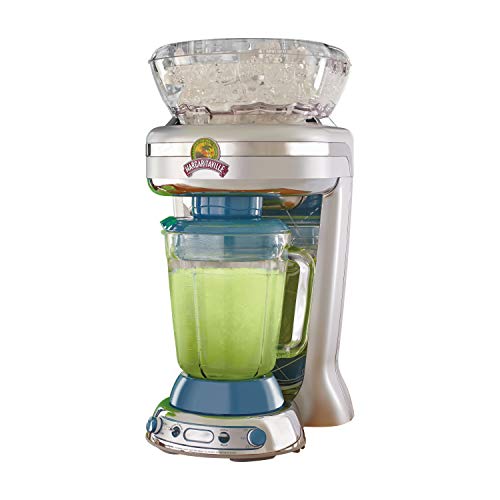
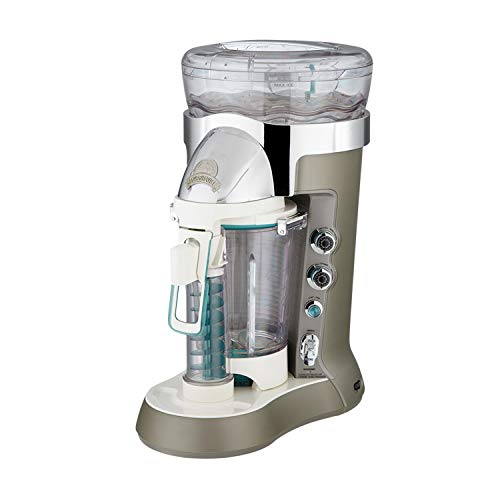


As an Amazon Associate we earn from qualifying purchases at no extra cost to you. Ratings are shown as listed on Amazon.
Quick picks by entertaining style
- Best for large parties: Ninja SLUSHi FS301, with an 88-ounce maximum liquid capacity and preset frozen-drink programs.
- Best for classic margarita texture: Margaritaville Frozen Concoction Maker models, which shave ice into the blending chamber rather than relying only on ice cubes.
- Best for occasional use: A high-powered blender with a 48- to 64-ounce jar. It costs less than a dedicated machine, but requires more hands-on measuring and ice management.
- Best for compact counters: A personal or compact frozen-drink blender, provided you are making one or two drinks at a time.
- Best for frozen, alcohol-free drinks: A slush machine with a compressor and adjustable temperature or consistency controls, because it can hold a batch without immediately melting it.
Frozen concoction makers compared
These appliances do not all solve the same problem. A blender pulverizes ice quickly, a shaved-ice machine creates a softer and more uniform drink, and a compressor slush machine freezes a prepared liquid gradually. The right choice depends on whether you value speed, batch holding, texture, or easy storage.
| Type or example | Typical usable batch | Ice requirement | Speed | Consistency control | Counter footprint | Typical market range |
|---|---|---|---|---|---|---|
| Ninja SLUSHi FS301 | Up to 88 fl oz liquid capacity | None; use chilled liquid | About 15–60 minutes, depending on starting temperature and recipe | Five preset programs plus adjustable temperature | Approximately 16.3 × 6.8 × 17.1 in | $300–$450 |
| Margaritaville frozen-concoction machine | Commonly about 24–36 fl oz per pitcher | Yes; the machine shaves ice | Usually a few minutes per pitcher | Recipe and ice-shaving controls; less precise than compressor units | Roughly 8–12 in wide and 18–22 in deep | $150–$400 |
| High-powered blender | About 48–64 fl oz jar capacity | Yes; ice and liquid must be balanced | About 30–90 seconds per batch | Manual speed and pulse control | Approximately 7–9 in wide and 8–10 in deep | $100–$700 |
| Commercial-style countertop slush machine | About 1.5–3 gallons per bowl | None; prepared liquid is chilled mechanically | Often 1–3 hours to reach serving texture | Temperature and texture adjustments | Typically 14–20 in wide and 20–30 in deep | $700–$2,000+ |
Capacities are not interchangeable: a listed pitcher size may include headspace, while a slush machine’s bowl capacity may be far above its recommended minimum fill. Always check the operating manual before filling to the rim.
Head-to-head: which machine handles a party best?
Ninja SLUSHi versus a blender
The Ninja SLUSHi wins when you want to prepare a large batch in advance and keep it at a drinkable frozen consistency. It does not require ice, so the recipe is less likely to become watery as cubes melt. Its main limitation is waiting time: it chills and freezes the liquid instead of producing a drink in under a minute.
A blender wins for immediate service. Add ice, liquid, and flavorings, blend, and pour. It is also more versatile for smoothies, sauces, and crushed ice. However, large parties require repeated batches, and the texture changes as each batch warms. A blender can also stall when the mixture is too thick or when there is insufficient liquid around the blades.
Margaritaville versus a blender
A Margaritaville-style machine is designed around the classic frozen margarita workflow: add ingredients, load ice, and let the appliance shave and blend. Shaved ice generally produces a smoother texture than throwing large cubes directly onto blender blades. It is a strong choice for a themed patio party where margaritas are the main attraction.
The trade-off is capacity. A 24- to 36-ounce pitcher produces only about four to six 6-ounce servings, so a larger gathering means several cycles. The shaving mechanism also adds parts to rinse, and the machine is less useful for soups, smoothies, or other everyday blending.
Compressor slush machine versus both
A compressor unit is the most party-oriented option for long service. It can freeze a prepared mixture and maintain its texture without adding ice. This is useful for lemonade slush, mocktails, and lower-alcohol drinks, but many machines have minimum-fill requirements and need substantial counter space. They are slower to start and harder to store than a blender.
Alcohol deserves special attention: too much alcohol lowers the freezing point and can prevent a slush machine from reaching the desired texture. Follow the appliance’s recipe limits rather than assuming a standard cocktail ratio will work.
Decision matrix for buying
| Your situation | Best fit | Why | What to accept |
|---|---|---|---|
| Budget under $200, fewer than six guests | Blender or entry-level shaved-ice maker | Lowest purchase cost and useful beyond cocktails | More ice dilution and repeated batches |
| Six to twelve guests, regular patio parties | Ninja SLUSHi or similar large slush maker | Large batch, no ice, preset programs | Needs a permanent or planned storage location |
| Traditional margarita nights | Margaritaville-style shaved-ice machine | Fast, recognizable margarita texture and presentation | Smaller pitcher and more cleanup |
| Limited counter space | High-powered blender | Smallest footprint and broadest usefulness | No automatic holding or consistency control |
| Frequent events or self-serve station | Compressor slush machine | Designed for extended serving and repeat refills | Higher price, weight, noise, and cleaning workload |
Batch-size math: how much do you really need?
Estimate one serving as 6 ounces for a frozen cocktail or 8 ounces for a mocktail. For ten guests having two 6-ounce drinks, you need 120 ounces of finished beverage. A machine with an 88-ounce liquid capacity will not cover the entire event in one fill, particularly if the manual requires empty space for circulation. Plan on one full batch plus a smaller second batch, or reduce the serving size to 5 ounces.
With a 36-ounce pitcher, the same event requires at least four cycles. That may still be practical if each cycle takes three to five minutes, but it creates more opportunities for melting, waiting, and inconsistent proportions. Batch size matters more than motor wattage when entertaining.
Controls, noise, and counter space
Preset programs are useful when several people are serving themselves: they reduce the chance that someone will over-blend or add too little liquid. Adjustable temperature controls are more valuable than a long list of cocktail buttons because recipes vary in sugar, alcohol, and acidity.
Blenders are usually the loudest during operation, often producing a short burst of roughly 85–95 decibels near the machine. Shaved-ice machines are also noisy while their motor and ice mechanism run. Compressor slush machines tend to be quieter than a blender at any one moment, but their compressor and fan may hum for hours.
Measure more than the appliance’s width. Leave room above the lid, space behind ventilation openings, and a clear path for removing the pitcher or bowl. A tall slush machine that fits beneath cabinets may still be awkward if the lid cannot open fully.
Cleaning and durability realities
The parts most likely to cause trouble are seals, blade assemblies, ice-shaving mechanisms, and removable dispensing valves. Sticky syrups and fruit pulp can harden in these areas. Rinse immediately after serving, then wash removable components with warm water and mild dish soap. Do not assume a part is dishwasher-safe unless the manual says so.
- Do not run a dry blender or ice-shaving mechanism.
- Do not use oversized or unusually hard ice if the manufacturer specifies smaller cubes.
- Do not fill above the maximum line; frozen mixtures expand and need room to circulate.
- Do not leave dairy, fresh fruit, or sugary drink residue overnight.
- For compressor machines, allow the unit to stand upright after transport if the manual requires it.
For the lowest ownership hassle, choose a model with removable food-contact parts, replaceable seals or blades, and a clearly documented cleaning cycle. A cheaper appliance that cannot be cleaned around its dispensing path may cost more in wasted ingredients and replacement parts.
Bottom line
Choose the Ninja SLUSHi when your priority is a large, consistent batch without ice dilution. Choose a Margaritaville frozen-concoction maker when the party centers on quick, classic shaved-ice margaritas. Choose a high-powered blender when you want the smallest investment and the most general-purpose appliance. For frequent, extended entertaining, a compressor slush machine offers the best holding performance—if you have the budget, ventilation, and storage space to accommodate it.



Write Your Review
No reviews yet. Be the first to share your experience!