

Key takeaways
- Put the stone on a cold or room-temperature grill grate before turning on the burners or adding charcoal.
- Increase heat gradually, particularly when using a ceramic or thick stone.
- Do not move a hot stone onto a cold metal surface or damp patio.
- Never place a hot stone in water. Let it cool completely first.
- Keep frozen dough, ice, and wet pans off the heated surface.
- Use a peel dusted lightly with flour or semolina rather than building a wet pizza directly on the stone.
The best grill pizza stones for crispy crusts are usually 15-inch cordierite stones about ¾ inch thick, provided your grill has enough clearance for the lid to close and can hold a stable 500–600°F cooking temperature.
Our top picks

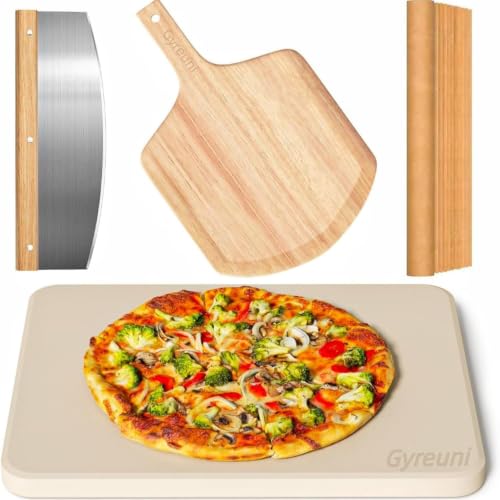


As an Amazon Associate we earn from qualifying purchases at no extra cost to you. Ratings are shown as listed on Amazon.
What makes a grill pizza stone “best”?
A pizza stone has two jobs: it must absorb enough heat to brown the dough quickly, then transfer that heat evenly without cracking. The stone material, thickness, diameter, and the way it sits inside your grill determine whether the result is a crisp, dry base or a pale, flexible crust.
For most gas and charcoal grills, cordierite is the safest all-purpose material. It tolerates repeated heating and cooling better than ordinary ceramic, while remaining affordable. Dense firebrick or high-quality ceramic can produce excellent browning, but these materials may be heavier and more vulnerable to damage from sudden temperature changes. Steel is not a stone, but it is worth considering if speed and very dark bottom browning matter more to you than gentle heat retention.
Key specifications compared
| Stone type or specification | Typical size or performance | Best use | Main limitation |
|---|---|---|---|
| Thin ceramic stone | 10–12 inches; ¼–½ inch thick; preheats in about 20–30 minutes | Small grills and occasional pizza nights | More likely to crack from thermal shock; loses heat quickly |
| Standard cordierite stone | 12–15 inches; ½–¾ inch thick; preheats in about 30–45 minutes | Most gas, pellet, and charcoal grills | Requires careful preheating and dry storage |
| Heavy cordierite or firebrick-style stone | 14–16 inches; ¾–1 inch thick; preheats in about 45–60 minutes | Frequent cooking and multiple pizzas | Heavy, slower to heat, and demanding on small grill grates |
| Pizza steel | 12–14 inches; roughly ¼–⅜ inch thick; preheats in about 20–35 minutes | Fast baking and strongly browned bases | Can burn the underside before the top is finished; becomes extremely hot |
| Raised or ventilated stone kit | Usually 12–15 inches with a rack or spacer | Improved airflow and indirect grilling | Needs additional vertical clearance under the lid |
Choose by your grill and cooking habits
| Your situation | Recommended choice | Why |
|---|---|---|
| Small 2-burner gas grill | 12-inch cordierite, ½–¾ inch thick | Leaves room for indirect heat and is less likely to restrict airflow |
| Large gas grill with a tall lid | 14–16-inch cordierite, about ¾ inch thick | Supports larger pizzas and retains heat between bakes |
| Charcoal kettle grill | 12–14-inch cordierite or a dedicated heat-deflector setup | Handles high heat, but requires clearance from direct coals |
| Beginner making pizza once a month | Medium cordierite stone with a simple 12–14-inch diameter | Forgiving, affordable, and easier to maneuver than a thick premium slab |
| Weekly cooking or several pizzas per session | ¾–1-inch cordierite or firebrick-style stone | Recovers heat better after each pizza |
| Very limited storage or weak grill grates | ½-inch stone no larger than 12 inches | Reduces weight and makes handling safer |
Material: cordierite, ceramic, or steel?
Cordierite
Cordierite is the strongest default choice for a grill pizza stone. It has relatively low thermal expansion, so it is better equipped to survive the repeated heating cycles common in outdoor cooking. It also holds heat well enough to produce a crisp underside without making the pizza difficult to manage.
Look for a food-safe cordierite stone rated for at least 900°F, even if you normally cook at 500–600°F. The higher rating provides useful headroom, but it does not make the stone immune to thermal shock.
Traditional ceramic
Ceramic stones can bake evenly and may cost less, particularly in thinner formats. Their weakness is abrupt temperature change. Placing a cold ceramic stone on a blazing-hot grate, adding a frozen pizza, or rinsing the hot stone with water can cause cracking. Ceramic is reasonable for controlled gas-grill use, but cordierite is generally the safer choice for charcoal.
Steel
Steel transfers heat much faster than stone. That can create a deeply browned crust in a shorter bake, but it also reduces the margin for error. If the grill runs hot underneath, the base may scorch while the cheese is still melting. Steel is best for experienced cooks who monitor the underside and can adjust burner or coal placement.
Diameter and grill clearance matter more than maximum size
A 16-inch stone is not automatically better than a 12-inch stone. Measure the usable cooking area between the grill’s side walls, burner covers, and lid. The stone should have at least 1 inch of open space around its sides; 2 inches is preferable on a gas grill so heat can circulate rather than collect in one concentrated area.
Check vertical clearance as well. Measure from the top of the cooking grate to the lowest point of the closed lid, then subtract the stone thickness and the pizza’s expected height. A raised stone or rack can add 1–2 inches and may make the lid impossible to close. The pizza needs space above it for hot air to circulate, especially if the grill is being used as an indirect oven.
For sizing, a 12-inch stone is usually enough for a 10–11-inch pizza, leaving a handling margin. A 14-inch stone suits a 12–13-inch pizza. Avoid placing dough right against the edge: a small border helps prevent toppings and cheese from slipping into the grill.
Thickness, preheating, and heat recovery
Thickness determines how much heat the stone stores. A ½-inch stone is lighter and faster to preheat, but its temperature drops more after a cold pizza is placed on it. A ¾-inch stone offers a useful balance for most grills. A 1-inch stone is excellent for back-to-back pizzas, but it may take nearly an hour to saturate with heat and can weigh more than 10 pounds at larger diameters.
Preheat the grill and stone together with the lid closed. At a grill temperature of 500–550°F, allow approximately 30–45 minutes for a ½–¾-inch cordierite stone. Do not rely solely on the grill’s lid thermometer: it measures air temperature, not the stone surface. An infrared thermometer can reveal whether the center and edges have reached a similar temperature.
As a practical example, suppose a ¾-inch stone needs 40 minutes to heat and then takes 8 minutes to bake each pizza. For three pizzas, the session takes roughly 40 + 24 = 64 minutes, excluding launching and topping time. A thinner stone might shorten preheating by 10–15 minutes but require longer recovery between pizzas, reducing or eliminating the apparent time savings.
Thermal-shock resistance and safe setup
- Put the stone on a cold or room-temperature grill grate before turning on the burners or adding charcoal.
- Increase heat gradually, particularly when using a ceramic or thick stone.
- Do not move a hot stone onto a cold metal surface or damp patio.
- Never place a hot stone in water. Let it cool completely first.
- Keep frozen dough, ice, and wet pans off the heated surface.
- Use a peel dusted lightly with flour or semolina rather than building a wet pizza directly on the stone.
Thermal shock is caused by uneven expansion, not simply by high temperature. A stone rated to 900°F can still crack if one section is rapidly cooled while another remains hot.
How to cook on a grill pizza stone
- Arrange the heat. On a gas grill, use the burners beneath or beside the stone according to the manufacturer’s guidance, while leaving enough open space for circulation. On charcoal, bank coals to the sides when possible rather than concentrating them directly below the center.
- Preheat gradually. Heat the stone for 30–45 minutes, aiming for a surface temperature around 450–550°F for most homemade pizzas.
- Prepare a dry, lightly topped pizza. Excess sauce, fresh mozzarella, and watery vegetables release steam and can soften the crust.
- Launch quickly. Open the lid only when necessary, then close it immediately to preserve top heat.
- Rotate once if needed. Grills often have hotter zones. Rotate the pizza after 3–4 minutes for more even browning.
- Allow recovery. Wait several minutes between pizzas, especially with a thin stone. The next pizza should not be launched while the surface is visibly losing heat.
Ownership realities: cleaning, wear, and replacement
Pizza stones naturally darken and develop baked-on marks. That is normal and does not mean the surface is dirty. After the stone cools, scrape away loose residue with a plastic or wooden scraper and brush off crumbs. Use a small amount of water only when necessary, then allow the stone to dry completely before storage.
Avoid soap unless the manufacturer specifically permits it. Porous stones can absorb detergent and moisture. Do not oil the surface: oil can smoke, turn rancid, and encourage sticky buildup.
The first parts to show wear are usually the edges, handling surface, and underside where grease or dampness accumulates. Hairline cracks are a warning to retire the stone, particularly if sections move independently. Store it flat in a dry cabinet, protected from impacts. If your grill remains outdoors, remove the stone after cooking rather than leaving it exposed to rain, frost, and repeated temperature swings.
Bottom line
For most people, the best grill pizza stones are medium-to-large cordierite models, 12–15 inches wide and ½–¾ inch thick, with a stated heat rating of at least 900°F and enough clearance for indirect airflow. Choose thinner for limited space and occasional use; choose thicker for frequent, back-to-back pizzas. The ideal stone is not the largest or heaviest one—it is the one that fits your grill, reaches baking temperature evenly, and can be handled without sudden temperature changes.



Write Your Review
No reviews yet. Be the first to share your experience!