

Key takeaways
- Best Overall: Step2 Lakewood Rain Barrel with Stand, 60 gallons
- Best Flat-Back Barrel: RTS Home Accents Premium 55-Gallon Eco Rain Barrel
- Best Value Fixed Barrel: FCMP Outdoor Raincatcher 4000, 50 gallons
- Best Looking: Good Ideas Rain Wizard, 50 gallons, faux oak
- Best with a Stand and Color Choice: RTS Home Accents 50-Gallon Newport Rain Barrel with Stand
- Best Collapsible Budget Pick: Diyfire Collapsible Rain Barrel, 50 gallons
- Best Larger Collapsible: Laspeiraux Collapsible Rain Barrel, 53 gallons
The best rain barrels for most patios and small yards are the Step2 Lakewood 60-gallon barrel with a built-in stand and the RTS Home Accents 55-gallon Eco barrel with a removable lid. The Step2 is the easiest all-in-one choice because the stand is included and the capacity is the largest in this group of fixed barrels. The RTS Eco is our runner-up for people who want a flat back that sits snug against a wall and a lid that comes off for cleaning.
A barrel is only half of a working rain-collection setup. You also need a way to get water into it (a downspout diverter), a way to keep leaves and insects out (a fine screen), and a place to put it (a level, sturdy base). This guide covers all three parts, so you can build the setup around your patio, garden bed or shed. It is research-based: we reviewed listing details and maker information, and we did not personally use these products. Where a detail is not shown, we write “not listed”. We also avoid any claim that collected water is safe to drink, and we suggest checking your local rules before you install a system.
Our top picks



As an Amazon Associate we earn from qualifying purchases at no extra cost to you.
Top Picks at a Glance
- Best Overall: Step2 Lakewood Rain Barrel with Stand, 60 gallons
- Best Flat-Back Barrel: RTS Home Accents Premium 55-Gallon Eco Rain Barrel
- Best Value Fixed Barrel: FCMP Outdoor Raincatcher 4000, 50 gallons
- Best Looking: Good Ideas Rain Wizard, 50 gallons, faux oak
- Best with a Stand and Color Choice: RTS Home Accents 50-Gallon Newport Rain Barrel with Stand
- Best Collapsible Budget Pick: Diyfire Collapsible Rain Barrel, 50 gallons
- Best Larger Collapsible: Laspeiraux Collapsible Rain Barrel, 53 gallons
Comparison Table
| Product | Best for | Key specs (from listing) | Watch for | Price tier |
|---|---|---|---|---|
| Step2 Lakewood | Easy first barrel | 60 gal, stand included, brown | Large footprint | Premium |
| RTS Eco 55-Gallon | Tight wall spaces | 55 gal, flat back, removable lid | Stand not mentioned in the title | Premium |
| FCMP Raincatcher 4000 | Plain, proven design | 50 gal, flat back, spigots, brown | Plain look | Mid-range |
| Good Ideas Rain Wizard | Visible front yards | 50 gal, faux wood design | Plastic, not real wood | Mid-range |
| RTS Newport 50-Gallon | Choice of colors | 50 gal, stand, removable lid | Color variants differ by listing | Mid-range |
| Diyfire Collapsible 50 gal | Renters and small budgets | 50 gal, folds flat, PVC | Needs support when full | Budget |
| Laspeiraux Collapsible 53 gal | Seasonal storage | 53 gal, portable, folds | Spigot and filter details limited | Budget |
1. Step2 Lakewood Rain Barrel with Stand: Best Overall
- 60-gallon capacity
- Stand included
- Brown finish, built for outdoor water conservation
- Material: not listed in the title; check the listing
Best for: a first rain barrel at a patio corner or garage downspout. Skip if: your space beside the downspout is narrow.
The stand matters more than most buyers expect. A full barrel carries a lot of weight: water is about 8.3 pounds per gallon, so 60 gallons is roughly 500 pounds before you add the barrel itself. Putting the barrel on a raised base also improves flow, because gravity pushes water out of the spigot and into a watering can or hose. Having the stand in the box removes the need to build a cinder-block platform that has to be perfectly level.
Step2 is a long-time maker of molded plastic products, and this model is a sensible all-around size for a small garden. A 60-gallon barrel will fill in a single moderate storm if your roof is large enough, and it holds enough to water containers and raised beds for a few sessions. We cannot report flow rates or leak resistance because we did not use it; follow the manufacturer’s setup instructions for the overflow and the spigot fittings.
Pros: largest fixed barrel here; stand included; simple look; good size for patio beds. Cons: takes more room; higher cost; overflow hardware may be sold separately (check the listing).
2. RTS Home Accents Premium 55-Gallon Eco Rain Barrel: Best Flat-Back
- 55-gallon capacity
- Removable lid
- Flat-back design for placing against a wall
- Described as made with recycled material (see the listing for details)
Best for: narrow side yards and walls. Skip if: you want a ready-to-use stand in the box.
A flat back is a small design choice with a large effect. Round barrels waste space where they touch a wall, while a flat-back barrel can sit within a few inches of the siding and take up less of a path or patio edge. The removable lid also helps with cleaning: you can lift it, scoop out leaf debris and rinse the inside once or twice a season.
The lid matters for another reason. An open barrel is a magnet for mosquitoes, and a lid that fits well with a fine-mesh inlet screen helps keep them out. We talk more about that in the screens section. Because the Eco model does not list a stand in the title, plan for a sturdy level base; four concrete blocks over compacted gravel is a common DIY approach.
Pros: flat back saves space; removable lid; recycled-content positioning; generous 55 gal. Cons: stand may not be included; cost similar to the larger Step2; limited detail on fittings.
3. FCMP Outdoor Raincatcher 4000: Best Value Fixed Barrel
- 50-gallon capacity
- Flat-back, portable water source
- Spigots included
- Brown finish
Best for: homeowners who want a simple, conventional barrel that works with a standard diverter kit. Skip if: you want a decorative look.
The Raincatcher is a plain workhorse. It is a 50-gallon flat-back barrel with spigots, and it is a common choice when someone just wants water for the tomatoes. It lacks the bells and whistles of the premium options, which keeps cost down. As with any fixed plastic barrel, a darker color can help limit algae growth because less light passes through the wall; we do not make any other performance claims.
Pair it with a diverter kit and a screen, and you have a full system for roughly the cost of the premium barrel alone. Check where the overflow port sits and how it connects, since this is the part that protects your foundation during heavy rain.
Pros: flat back; spigots included; simple and proven; lower cost than the premium barrels. Cons: plain appearance; stand not included; fewer features.
4. Good Ideas Rain Wizard: Best Looking
- 50-gallon capacity
- Faux wood (oak) design in plastic
- Marketed as an outdoor home rain barrel
Best for: front yards and patios where the barrel is visible. Skip if: you want real wood or a large capacity.
The Rain Wizard is built to look like a half-barrel planter or whiskey cask. That is a worthwhile feature if the barrel sits beside a front porch or a garden gate, and a neighbor or homeowner association may find it easier to accept than a plain gray tank. It is plastic, so it does not need the sealing or seasonal care that a real wood barrel requires.
The capacity is 50 gallons, which is average. Think of it as a style-first option at a mid-range cost, and plan the base and diverter as for any other barrel. We could not verify fitting sizes from the listing, so confirm the spigot thread type if you plan to attach a hose.
Pros: attractive faux oak; plastic, so no wood upkeep; 50 gal. Cons: mid-range cost for the capacity; fitting details limited; stand not included.
5. RTS Home Accents 50-Gallon Newport Rain Barrel with Stand: Best with Color Choice
- 50-gallon capacity
- Stand included
- Removable lid
- Offered in several colors, including bronze and slate
Best for: people who want a stand included and a color that suits their siding. Skip if: you need more than 50 gallons.
The Newport fills the middle ground. It includes a stand, which saves a weekend afternoon, and it has a removable lid for cleaning. The variety of colors helps blend the barrel into stone, brick or painted siding. Each color is its own listing, so double-check that you open the right one before ordering.
This is a good model for a vegetable-bed setup. Place the stand on level ground, and keep the spigot above the height of your watering can. Because RTS makes two models in this list, we kept the others below the two-per-brand limit.
Pros: stand and lid included; color choices; manageable size. Cons: 50 gal is just average; colors cost slightly different amounts; fittings not detailed in the title.
6. Diyfire Collapsible Rain Barrel: Best Collapsible Budget Pick
- 50-gallon capacity
- Collapsible, portable PVC construction
- Designed for rainwater collection and storage
Best for: renters, seasonal setups and gardeners on a small budget. Skip if: you want a permanent, rigid barrel with a high spigot.
Collapsible barrels fold flat for winter and cost much less than rigid ones. They are also easy to move, which helps when you do not own the property. The tradeoff is rigidity: a flexible wall bulges when full, and a spigot near the base gives less pressure than a raised rigid barrel. Put the bag on a flat pad and keep sharp objects away from it.
Another point is that a flexible barrel is usually not designed for a direct downspout connection in the same way. Check the inlet details on the listing, and use a diverter or an overflow hose. We could not confirm material thickness or UV resistance, so shade it when possible.
Pros: low cost; folds flat; light; easy to move. Cons: less rigid; lower spigot pressure; details like wall thickness not listed.
7. Laspeiraux Collapsible Rain Barrel: Best Larger Collapsible
- 53-gallon capacity (a 105-gallon version also exists)
- Portable, collapsible water storage
- Made for rainwater collection
Best for: larger gardens that need extra storage without a permanent installation. Skip if: you want a decorative piece.
The Laspeiraux collapsible comes in a 53-gallon size and a larger 105-gallon option. That flexibility can be useful if you have a big vegetable plot but cannot commit to a large rigid tank. It stores flat in a shed over the winter, and you can set it up again in spring.
Because collapsibles hold less shape, they are best in a spot protected from wind and animals. We recommend a screen or cover over the opening, and a check of the spigot fitting before first fill. Remember that no collapsible barrel replaces a purpose-built tank for long-term storage.
Pros: larger sizes available; stores flat; budget-friendly. Cons: less rigid; spigot and filter details limited; not decorative.
Also Consider: Diverters and Screens
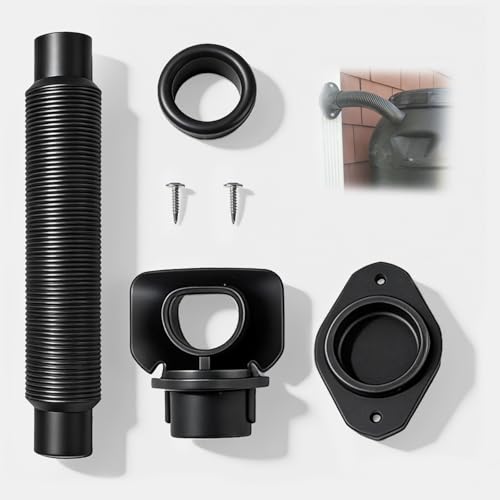
- Anivia Rain Barrel Diverter Kit: fits 2×3 or 3×4 in downspouts and includes a valve and filter. A good pairing with any fixed barrel.
- Prestantious Downspout Rainwater Diverter: fits 3×4 and 2×3 in downspouts with an adjustable valve. Look at this one if you want an alternative to the Anivia kit.
- ANTOBLE Rain Barrel Screen, 6 in fine mesh aluminum: a top screen made to keep debris and mosquitoes out of an open port.
- Bvqvur Rain Barrel Mesh Cover, 4-pack: a drawstring mesh cover, 23.6 in flat diameter, for wider openings.
How to Install a Rain Barrel Diverter on a Gutter Downspout
Many readers want to know how to install a rain barrel diverter on a gutter downspout. A diverter kit replaces a short section of the downspout and sends water into a hose that leads to the barrel. When the barrel is full, the water continues down the downspout as before. Kits fit standard sizes, such as 2×3 or 3×4 in, so measure your downspout first.
- Measure and choose. Check whether your downspout is rectangular (2×3 or 3×4 in) or round, and buy a kit that matches.
- Place the barrel. Set the stand on level, compacted ground beside the downspout. Make sure the barrel’s inlet is below the diverter height.
- Mark the cut. Hold the diverter on the downspout at the height recommended by the maker, and mark the cut lines.
- Cut the downspout. Use a hacksaw or tin snips, wear gloves and eye protection, and file the cut edges.
- Fit the diverter and hose. Slide the diverter in, connect the hose to the barrel inlet, and set the valve to fill.
- Plan the overflow. Point the overflow hose away from your foundation, toward a rain garden or lawn.
Work from a stable ladder, or have someone steady it. If a gutter system is old, brittle or full of debris, clean or repair it first.
How to Keep Rain Barrel Water Clean and Mosquito-Free
Mosquitoes lay eggs in standing water, so a barrel needs protection at every opening. Use a fine mesh screen over the inlet and keep the lid on. Check that the overflow port is also covered with mesh. Rinse out leaves and silt once or twice a season, and set the barrel in shade or choose a dark, opaque color to reduce algae growth.
Use the water on ornamental plants and garden beds, and ask your local extension office for advice before using it near edible plants. We make no claim about drinking, cooking or bathing, and we do not suggest using stored rainwater for any of those purposes. Roof materials, bird droppings and airborne dust all affect what is in the water.
How to Calculate Rainwater Harvesting Yield from a Roof
A simple formula lets you estimate rainwater harvesting yield. One inch of rain on 1,000 square feet of roof surface produces about 623 gallons of runoff in theory. Multiply your roof’s collecting area (in square feet) by the rainfall in inches, then by 0.623. Real-world yield is lower because of splash, evaporation, first-flush loss and gutter overflow, so many guides apply an efficiency factor of roughly 75 to 90 percent.
For example, a 400-square-foot section of roof draining to one downspout and a quarter inch of rain gives roughly 62 gallons in theory (400 x 0.25 x 0.623). That is already more than most single barrels hold, which tells you why overflow planning is as important as the barrel itself. If your downspout drains a large roof, consider linking two barrels or adding a larger tank.
How We Chose
This guide is research-based. We reviewed listing details, maker descriptions and guidance from university extension services and municipal water-conservation programs on rain barrel placement, mosquito control and maintenance. We compared capacity, shape, stand, lid, fittings and material when stated. We did not personally use these products, so we do not report leak rates, fill speeds or lifespan, and we do not give ratings or scores.
We chose five rigid barrels and two collapsible options to cover the main shopping paths, and we limited each brand to two products. The diverters and screens appear in the Also Consider section because they decide whether a barrel actually works.
Buying Guide
Size the barrel for your roof and your garden
For container gardens and a few raised beds, 40 to 60 gallons is a manageable size. For a larger vegetable plot, plan on two linked barrels or a bigger tank. Remember that a full barrel is heavy, so check the base before you fill it.
Choose a rigid or collapsible design
Rigid barrels hold a spigot high and keep a consistent shape. They last longer in permanent installations. Collapsible barrels cost less and store flat but need a flat support and more care around sharp edges.
Check the fittings
Look for a spigot with a standard garden-hose thread, an overflow port at least as large as the inlet, and a screened inlet. Barrels without these features may need add-on parts.
Get the base right
A stand lifts the spigot so a watering can fits underneath and improves flow. Use compacted gravel or pavers under the stand so it stays level when the ground gets wet. Never place a full barrel on a surface that can shift.
Think about the season
In regions with freezing winters, drain the barrel and disconnect the diverter before the first hard freeze, or ice can crack the plastic. Collapsible barrels are simpler to store for the winter.
Common Mistakes
- Skipping a screen and finding a barrel full of larvae by midsummer.
- Placing the barrel on soft soil without a level base, and tipping when full.
- Forgetting the overflow route and flooding the foundation in a storm.
- Leaving the barrel full through a freeze.
- Treating collected rainwater as drinking water.
Frequently Asked Questions
What is the best rain barrel for a small yard?
For most small yards, the Step2 Lakewood 60-gallon barrel with a stand is the easiest choice, and the RTS Eco 55-gallon flat-back barrel is best for tight wall spaces. Both pair well with a standard diverter kit.
How big should a rain barrel be?
A 50 to 60 gallon barrel suits most patio and raised-bed gardens. Larger roofs and bigger gardens benefit from two linked barrels, because even a small storm can produce more runoff than one barrel holds.
Do rain barrels attract mosquitoes?
They can if openings are not covered. Use a fine mesh screen on the inlet and overflow, keep the lid on, and empty and clean the barrel regularly.
Is collapsible or rigid better?
Rigid is better for permanent installations because it keeps its shape and holds the spigot high. Collapsible is better for renters, seasonal use and small budgets.
How do I attach a diverter to my downspout?
Measure the downspout, choose a matching kit, cut the downspout where the maker specifies, fit the diverter, and connect the hose to the barrel inlet. Point the overflow away from the foundation.
Can I drink rain barrel water?
We do not recommend it and we make no safety claims. Treat the water as suitable only for ornamental watering unless a qualified source tells you otherwise, and check local rules on rainwater collection.
How do I estimate how much rain I can collect?
Multiply roof area in square feet by rainfall in inches by 0.623 to get theoretical gallons, then reduce the figure for real-world losses.
Which One Should You Buy?
If you want the simplest route, buy the Step2 Lakewood with its stand and add a diverter kit and a mesh screen. If the barrel has to hug a wall, pick the RTS Eco flat-back model. For a plain, lower-cost fixed barrel, the FCMP Raincatcher is the sensible choice, and the Good Ideas Rain Wizard is the one to buy when appearance counts. Renters and part-year gardeners will like the Diyfire or Laspeiraux collapsible options. Whatever you pick, cover the openings, build a level base and plan the overflow before the first rain.
Sources
- Product listing details and maker descriptions for each product named above
- University extension service guidance on rain barrels and mosquito control
- Municipal water-conservation program guides on rainwater harvesting
- Rainwater harvesting calculation guidance from extension publications
Last updated: October 2026




Write Your Review
No reviews yet. Be the first to share your experience!