

Key takeaways
- Compare the best rain gauges for gardens, from simple tubes and large collectors to wireless digital and dual-scale models, with tips for accuracy.
Knowing how much rain actually fell on your beds changes almost every watering decision in a garden. A passing shower can wet the surface while leaving roots dry, and a quiet overnight rain can soak the soil far deeper than it looked from the window. Airport and weather app totals help, but rain varies a lot over short distances, so a gauge in your own yard gives the number that matters for your lawn, vegetables, and containers.
This guide covers five kinds of rain gauges, from a simple tube you read at eye level to a wireless model that reports to a display indoors. Each pick suits a different habit, whether you want a quick glance after breakfast, a careful log for the season, or a decorative stake that blends into a flower border. Placement and care matter as much as the model, so the guide also explains where to put a gauge and how to keep readings honest.
As an Amazon Associate, we earn from qualifying purchases.
Quick answer
For most gardens, a clear tube gauge on a level post in open ground gives the most trustworthy reading for the least fuss. Choose the Stratus collector if you log rain for records or live where storms drop several inches at once, and choose a wireless digital model if you want totals indoors without walking outside after every shower.
Taylor Precision Products 2715 2-in-1 Rain and Sprinkler Gauge
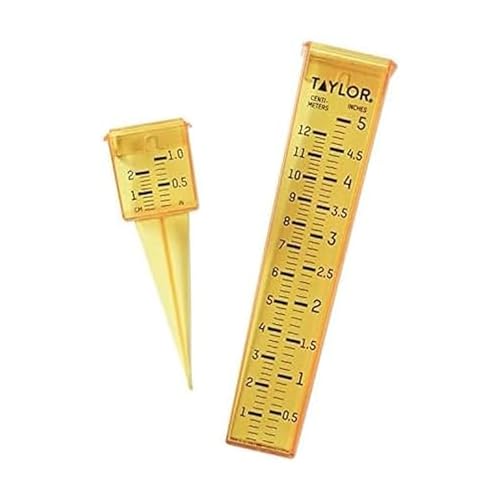
The Taylor 2715 is the classic standard tube gauge, and it remains the easiest way to begin tracking rain at home. The clear tube carries bold markings in inches and millimeters, reads at a glance from a few steps away, and holds up to five inches before it needs emptying. A pointed base pushes into soil, and the flat back also suits a fence post or deck rail with a simple bracket or screws, so you can place it where you will actually check it.
Because there are no electronics and no moving parts, there is little to go wrong beyond the plastic slowly clouding after many seasons in strong sun. The dual purpose design also measures sprinkler output, which helps when you set watering times in summer. Place a few readings from the tube beside your watering can routine and you soon learn how long your system needs to deliver a deep drink.
This is a good fit for beginners, for a second gauge at the far end of a plot, and for anyone who wants a cheap reference to check a digital gauge against now and then. Read it at eye level for accuracy, empty it after each storm, and bring it indoors before hard freezes, since water left inside can expand and crack the tube.
Stratus Precision Rain Gauge with Mounting Bracket

The Stratus is the large-capacity collector in this group, built around a funnel, an inner measuring tube, and a much larger outer cylinder. Rain funnels into the inner tube, which measures the first inch in fine hundredths. Any extra flows into the outer cylinder, and you pour it back through the inner tube in measured portions to reach totals up to eleven inches. That design is why weather observer networks favor this pattern for careful records.
The polycarbonate body handles sun and rough weather better than thin bargain tubes, and the included bracket mounts to a post for a level, stable install. Readings take a little more time than a basic tube, especially after a big storm when you measure overflow in stages, but the payoff is precision that a simple garden tube cannot match. Snow can also be melted and measured as water, which extends its use beyond the growing season.
Choose the Stratus if you keep a garden journal, report rainfall to a community network, or live where a single storm can overwhelm a five inch tube. It looks more like an instrument than an ornament, so place it in a working part of the yard where accuracy matters more than appearance. Keep the funnel clear of leaves and seeds for clean collection.
AcuRite Wireless Digital Rain Gauge with Self-Emptying Collector

The AcuRite 00899 pairs an outdoor self-emptying collector with an indoor display, so totals appear on a counter or desk without a trip outside in wet shoes. The collector uses a tipping mechanism that empties itself as rain passes through, sends readings wirelessly to the display, and records daily, weekly, and longer totals along with a rainfall history and alerts. For gardeners who irrigate by weekly totals, that running record is the main appeal.
Setup means mounting the collector level and in open ground, away from roofs and trees that would block or drip extra water into it, then pairing it with the display and setting the clock. Batteries power both parts, so add a note to check them before the wet season. Like every tipping design, it can undercount slightly in very heavy downpours and can clog if debris settles in the funnel, so rinse the collector now and then.
The honest check for any digital gauge is a simple tube gauge placed nearby. Compare the two after a few storms, and if they track closely you can trust the indoor display for daily decisions. Pick the AcuRite if you love data, have mobility limits that make yard trips hard, or simply know you will not read a manual gauge every morning.
BIUWING Rain Gauge Outdoor with Stake

The BIUWING gauge is the decorative garden-stake option, combining a clear glass measuring tube with a metal stake that pushes into a border, raised bed, or large container. The tube lifts out of its holder for reading and emptying, the scale is printed in large figures, and the stake keeps the gauge upright without a post or bracket. In a flower bed it reads as part of the planting rather than as a piece of equipment, which is exactly the point of this class.
Glass gives a crisp, clear view of the water line and does not yellow the way some plastics do, but it asks for a little more care. Keep it away from mower edges and play areas, and bring the tube indoors before freezing nights, because ice can crack glass even more readily than plastic. Capacity suits ordinary garden tracking rather than record keeping, and the scale favors easy reading over fine hundredths.
Choose the BIUWING if appearance matters, if your only open spot is inside a bed, or if you are giving a gauge as a gift to a gardener who values looks as well as use. Place it where surrounding plants will not grow tall enough to shelter it from rain, and level the stake so the tube sits straight for a true reading.
Outdoor Home Rain Gauge Professional 6 Inch Capacity

The Outdoor Home gauge is the professional dual-scale pick, a heavy duty polycarbonate tube marked in both inches and millimeters on a raised, easy to read scale. Six inches of capacity covers most rain events without emptying mid-storm, and the wedge shape and wide opening collect rain evenly while resisting tipping. It mounts to a fence or post with the included bracket and screws, giving a firm, level position that stays put in wind.
Dual scales help if you follow gardening advice from sources that use metric units, share readings with family overseas, or teach children to work in both systems. The maker notes the gauge is not guaranteed freeze proof, so treat winter care seriously and store it under cover when hard cold arrives. The clear body and bold markings make early morning readings quick, even in flat light.
This model suits gardeners who want one durable manual gauge and nothing more, without the overflow routine of a collector gauge or the batteries of a digital one. It sits between the basic Taylor tube and the Stratus in precision and effort, which makes it a sensible main gauge for a larger yard or small farm. Rinse it occasionally to keep the scale legible and check the bracket screws each spring.
How to choose
Begin with how you will use the number. If you only need to know whether to water today, a standard tube gauge with bold markings is enough, and its simplicity means you will read it often. If you log rainfall by week or season, look for finer graduations and larger capacity, either in a collector design like the Stratus or in a digital model that keeps totals for you. If the gauge will sit in a visible border, a stake design trades a little precision for looks you will enjoy daily.
Placement decides accuracy more than price or brand does. Put the gauge in open ground, level, and away from roofs, fences, trees, and sprinklers. A roof edge can pour extra water in or shelter the gauge from wind blown rain, a fence can block rain on one side, and a sprinkler can add water that never fell from the sky. Keep the top of the gauge above surrounding grass and low plants, and leave enough clear space around it that rain can fall in naturally from all sides.
Capacity and scale come next. Five to six inches covers most single storms in many regions, while an eleven inch collector suits tropical downpours and anyone who cannot empty a gauge daily. Fine markings help record keepers, while large figures help anyone reading in a hurry. For digital models, check display range from your kitchen, battery access, and whether totals reset the way you expect.
Care habits keep any gauge honest. Empty the gauge after storms once you have noted the total, so the next reading begins from zero and evaporation does not blur the result. Rinse out algae and debris, and in cold climates bring gauges in for winter, since freezing water cracks tubes and can split seams. Check a digital gauge against a simple tube gauge now and then, after a few comparable storms, to confirm both still agree.
Who should skip
Skip a rain gauge altogether if your watering is fully handled by a soil moisture sensor system you already trust, or if you garden only in containers on a covered porch where rain never reaches the pots. In those cases a gauge in the yard tells you about weather, not about the water your plants received.
Skip the fine collector style if you know you will not measure overflow in stages after a storm, because an unread gauge helps no one. Skip decorative glass stakes if your beds sit beside a busy path, a soccer game, or a dog run, where a knock can break the tube. Skip digital models if you dislike changing batteries or if thick walls and long distances would weaken the wireless link between collector and display. A simple tube on a post, read daily, beats a fancy gauge that sits ignored.
Frequently Asked Questions
How far from the house should a rain gauge sit?
Place it in open ground at least a few paces from walls, roofs, and fences, with clear sky above it. The goal is rain falling naturally, without drip from eaves or shelter from a building. Level ground and a straight, upright mount matter just as much as distance.
How often should I empty my rain gauge?
Empty it after each storm once you have written down or noted the reading. Leaving water standing invites evaporation errors, algae growth, and mosquito breeding in summer. In freezing weather, empty it promptly and bring the gauge indoors so ice does not crack the tube.
Why does my gauge disagree with the weather app?
Rainfall varies sharply over short distances, especially in summer storms, so your yard can receive much more or less than a station miles away. Check placement first, since roofs, trees, and sprinklers skew readings. If placement is open and level, trust your gauge for your garden.
Can a rain gauge stay outside all winter?
Most manual gauges should come indoors for winter in cold climates, because water left inside freezes, expands, and cracks tubes and seams. Digital collectors also benefit from storage or at least a funnel check before freezes. In mild climates, emptying after rain and watching forecasts may be enough.
Final verdict
For most home gardeners, the Taylor 2715 tube and the Outdoor Home dual-scale gauge cover daily watering decisions with little fuss and no batteries. Move to the Stratus collector when you want record grade totals and large storm capacity, choose the AcuRite when indoor totals and history will keep you tracking consistently, and pick the BIUWING stake when the gauge must earn its place in a flower border. Whichever you choose, open placement, a level mount, and emptying after storms will do more for accuracy than any single feature.
Product and ASIN Reference
| Product | ASIN |
|---|---|
| Taylor Precision Products 2715 2-in-1 Rain and Sprinkler Gauge | B071DGT36H |
| Stratus Precision Rain Gauge with Mounting Bracket | B000X3KTHS |
| AcuRite Wireless Digital Rain Gauge with Self-Emptying Collector | B004V1XJW0 |
| BIUWING Rain Gauge Outdoor with Stake | B0BY35D6PG |
| Outdoor Home Rain Gauge Professional 6 Inch Capacity | B00Y7RGHWM |
More from Amazon
Programs that pair well with the guide above. Offers and eligibility are set by Amazon and may change.
Collect the home and kitchen items you want in one registry that guests can shop from.
Create a wedding registrySet up recurring deliveries of everyday items on eligible products. Terms and savings are set by Amazon.
Explore Subscribe & SaveFree shipping on eligible items, Prime Video and more. Eligible new members can start with a free trial.
Start a Prime free trialAudiobooks and podcasts to listen to on the go. Eligible new members can start with a free trial.
Try Audible freeAs an Amazon Associate we earn from qualifying purchases.



Write Your Review
No reviews yet. Be the first to share your experience!