

Key takeaways
- 24–36 inches between nozzles for a fine, reasonably even perimeter mist.
- 36–48 inches where water is scarce, the space is narrow, or the system uses larger droplets.
- 12–24 inches only for unusually hot, dry conditions or layouts where occupants sit close to the line.
- At least 18–24 inches from walls, lights, fans, and electronics unless the spray direction is carefully controlled.
The best patio misting systems for hot days are usually high-pressure systems with brass or stainless-steel nozzles, 24–36-inch nozzle spacing, and enough tubing to follow the perimeter of your seating area without sharp bends.
For occasional use on a small patio, a low-cost hose-connected kit is easier to install. For daily cooling across a large pergola, choose a pump-assisted system: it produces finer mist, covers more area evenly, and leaves less standing water when correctly adjusted. The right choice depends less on the number of nozzles than on pressure, spacing, tubing layout, and how often you are willing to clean the system.
Our top picks

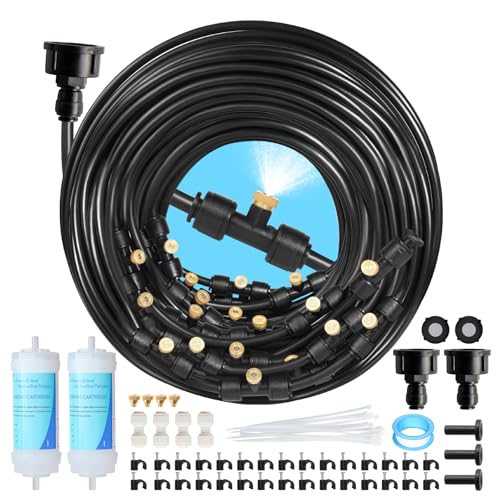

As an Amazon Associate we earn from qualifying purchases at no extra cost to you. Ratings are shown as listed on Amazon.
Best patio misting systems by situation
| Patio situation | Best system type | Typical coverage | Typical cost range | Why it fits |
|---|---|---|---|---|
| Small balcony or 6–10 ft umbrella | Hose-connected low-pressure kit | 30–60 sq. ft. | $20–$60 | Lowest installation effort; no pump required |
| 10–20 ft pergola used a few times per week | Medium-pressure perimeter kit | 100–250 sq. ft. | $60–$180 | Better nozzle control and more even cooling |
| Large seating or dining area used daily | Pump-assisted high-pressure system | 200–500 sq. ft. | $180–$600+ | Finer droplets, longer runs, and improved consistency |
| Permanent commercial-style installation | Dedicated high-pressure pump and filtered manifold | 400–1,000+ sq. ft. | $600–$2,000+ | Designed for multiple zones and frequent operation |
What separates the leading system types
Low-pressure hose systems: easiest, but least refined
These kits connect directly to an outdoor faucet and commonly use flexible vinyl tubing with plastic or inexpensive metal nozzles. They are suitable for a short run along a small umbrella, balcony railing, or compact pergola.
The tradeoff is droplet size. Household water pressure often produces a visibly wet spray rather than a very fine fog, especially when several nozzles are open at once. That can still feel cooler, but furniture, cushions, flooring, and nearby electronics may become damp. A pressure regulator and filter are valuable even on an inexpensive kit.
Medium-pressure systems: the practical patio compromise
A medium-pressure kit typically uses more durable tubing, threaded nozzle bodies, and a faucet connection designed for several nozzles. It is a good choice for a homeowner who wants a perimeter mist line but does not want to install a pump.
Keep the run reasonably short. A 20-foot line with six to eight nozzles may perform acceptably, while extending the same line to 40 feet can reduce output at the far end. If the patio is larger, split the layout into two shorter branches rather than adding nozzles indefinitely.
High-pressure pump systems: best coverage and finest mist
Pump-assisted systems use a dedicated pump to raise water pressure substantially above ordinary hose pressure. The resulting droplets evaporate more readily and are less likely to leave large wet spots. These systems are the strongest choice for hot, dry climates, large pergolas, and frequent daily use.
They also introduce ownership responsibilities: a pump needs a protected, ventilated location; the intake needs filtration; the system must be drained before freezing weather; and replacement pump seals, filters, or nozzles may eventually be needed. A pump does not compensate for poor spacing or a dirty nozzle.
How much coverage do you actually need?
Mist cools people in the occupied zone, not every square foot of the patio. Measure the seating and dining footprint first, then place the line around that area. For a rectangular pergola, a single perimeter line is often adequate. A very wide space may need a second line or two independently controlled zones.
A useful starting point is:
- 24–36 inches between nozzles for a fine, reasonably even perimeter mist.
- 36–48 inches where water is scarce, the space is narrow, or the system uses larger droplets.
- 12–24 inches only for unusually hot, dry conditions or layouts where occupants sit close to the line.
- At least 18–24 inches from walls, lights, fans, and electronics unless the spray direction is carefully controlled.
For example, a 12-by-16-foot pergola has a 56-foot perimeter. Using 30-inch spacing would require roughly 22 or 23 nozzles, which may exceed the capacity of a basic faucet kit. A more sensible design could mist only the two long sides and the seating-facing half of the short sides: approximately 36 feet, or about 14–15 nozzles. That reduces water demand and makes pressure easier to maintain.
Head-to-head comparison: the specifications that matter
| Feature | Hose-connected kit | Medium-pressure kit | Pump-assisted kit |
|---|---|---|---|
| Recommended line length | 10–20 ft | 20–50 ft, preferably split into branches | 30–100+ ft, depending on pump |
| Typical nozzle count | 4–8 | 6–16 | 10–40 per zone |
| Common tubing material | Vinyl or soft PVC | UV-resistant polyurethane or reinforced PVC | High-pressure nylon, polyethylene, or stainless components |
| Pressure requirement | Ordinary household supply | Stable household supply, often with regulator | Dedicated pump, commonly 700–1,000+ psi for true fogging systems |
| Installation effort | 30–90 minutes | 1–3 hours | Half a day or more |
| Water use | About 0.5–2 gallons per hour per nozzle | About 0.2–1 gallon per hour per nozzle | Often 0.05–0.3 gallon per hour per nozzle |
| Best maintenance feature | Removable inline filter | Filter, regulator, and flush valve | Fine sediment filter, automatic drain, and replaceable nozzle inserts |
Pressure figures and water consumption vary widely by nozzle orifice and pump design. Treat the table as a planning range, not a guarantee. Check the manufacturer’s flow rating before connecting a faucet kit to a long run.
Installation details that prevent common failures
- Draw the route first. Mark where people sit, where the water source is, and where spray must not reach. Avoid placing nozzles directly above cushions or dining surfaces.
- Install filtration before the tubing. A 40–100 mesh filter can catch particles that would otherwise block small nozzle orifices. Use the mesh size recommended for the nozzle.
- Use a regulator when required. Excess pressure can force fittings apart in a low-pressure kit, while insufficient pressure creates large droplets and uneven output.
- Keep the tubing supported and gently curved. Clips every 12–24 inches reduce sagging. Do not kink the line at corners; use proper elbows or make a broad bend.
- Flush before installing nozzles. Run clean water through the open line for several minutes. This removes plastic shavings and construction debris.
- Install nozzles last and aim away from structures. Slightly downward and inward is usually better than spraying directly at a wall or roof.
- Test in short intervals. Begin with five minutes, inspect the patio for wetting, then adjust nozzle direction or spacing before committing to a longer run.
Mineral buildup and long-term ownership
Hard water is the main reason a misting system performs well at first and poorly later. Dissolved calcium and magnesium can narrow a nozzle opening, clog a filter, and leave white deposits on dark furniture. The finer the nozzle, the more sensitive it is.
- Use an inline sediment filter on every system and replace or rinse it on the schedule specified for your water quality.
- Flush the line after extended storage and whenever the water supply has been shut off for repairs.
- Remove clogged nozzles and soak them only in a cleaner approved for the nozzle material; do not enlarge the opening with a needle.
- Drain tubing and pump chambers before freezing temperatures. Frozen water can split fittings and damage pump components.
- Store removable nozzles in a clean container rather than leaving them exposed to dust over winter.
If your water leaves heavy scale on faucets or showerheads, consider a cartridge-based scale filter or a professionally designed treatment system. A filter that removes sediment will not necessarily remove dissolved minerals.
Final buying recommendation
Choose a low-pressure kit for a small space used occasionally, a medium-pressure kit for the best balance of price and performance, and a pump-assisted system when you need fine mist over a large area or plan to run it most days. Prioritize nozzle spacing, a replaceable filter, compatible tubing, and accessible replacement parts over a high nozzle count. The best patio misting systems are the ones sized to the available pressure and maintained before deposits turn a cooling upgrade into a leaking, uneven spray line.




Write Your Review
No reviews yet. Be the first to share your experience!