

Our Top Picks
 BEACHBUB ALL-IN-ONE BEACH UMBRELLA SYSTEM. Includes ULTRA Base7.5 inch90 x 90 x 61 Inches9 poundsCheck on Amazon
The best beach umbrella for most people is a seven or eight foot canopy with a sand anchor and some way to tilt it, and the two AMMSUN models on this list fit that description on paper. They are not the only sensible choice, though. If you want a system built around a base that claims to meet a published beach umbrella safety standard, one listing here makes that claim. If you want something small and simple, the six foot models are the lighter and cheaper route.
This guide covers six listings. Every statement about a product comes from its Amazon title; anything else is marked “check the listing.” Because a beach umbrella that comes loose can hurt someone, we spend as much time on anchoring and setup as on shade size.
Top picks at a glance

LOTTAFUN 6ft Beach Umbrella - Heavy Duty Wind Resistant UV 50+ Portable Sun Shade with Sand Anchor & Carry Bag, Outdoor Folding Umbrella for Beach, Pool, Patio, Garden (Blue Stripe) No Tilt The sand needs to exceed the spiral 6inch


As an Amazon Associate we earn from qualifying purchases. Product prices and availability are accurate as of the date/time indicated.

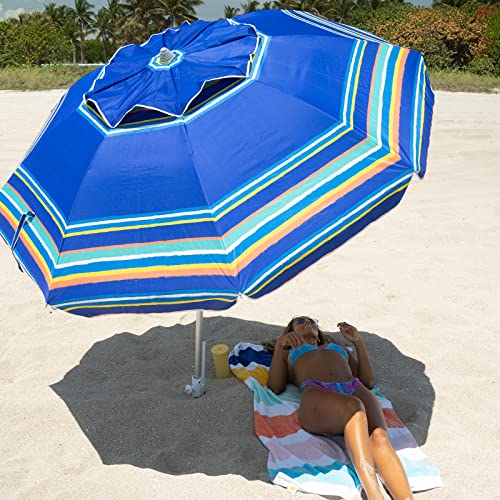
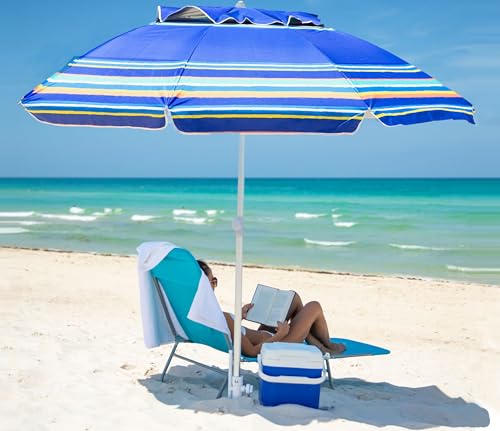
AMMSUN 7ft Heavy Duty High Wind Beach Umbrella Parasols with Sand Anchor Vent Tilt UPF 50+ Sun Protection Portable Outdoor Sunshade Umbrellas Carry Bag for Patio Garden Pool Backyard Blue


As an Amazon Associate we earn from qualifying purchases. Product prices and availability are accurate as of the date/time indicated.

AMMSUN 8 Feet Large Beach Umbrella with Sand Anchor Heavy Duty High Wind Portable Outdoor Umbrellas UV 50+ Protection Air Vent Tilt Patio Garden Pool (Blue Stripe)


As an Amazon Associate we earn from qualifying purchases. Product prices and availability are accurate as of the date/time indicated.
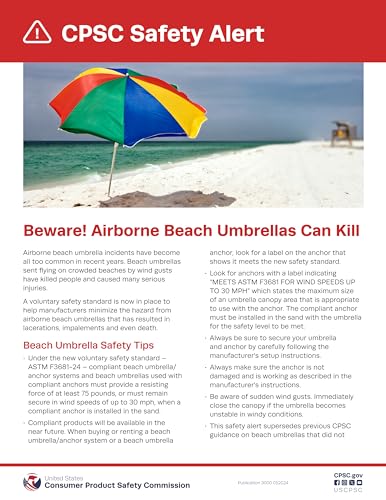
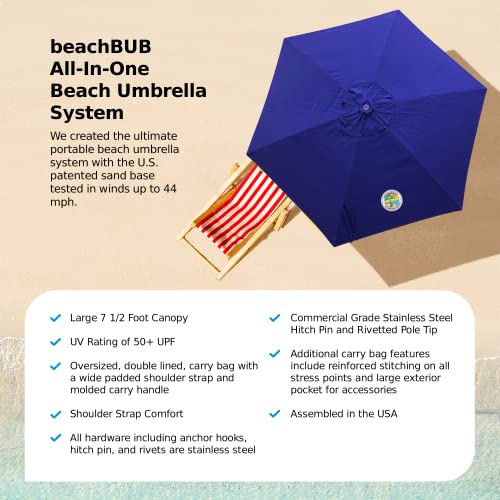
BEACHBUB ALL-IN-ONE BEACH UMBRELLA SYSTEM. Includes ULTRA Base (compliant with the ASTM F3681-24 Beach Umbrella Safety Standard). (Deep Ocean Blue)





As an Amazon Associate we earn from qualifying purchases. Product prices and availability are accurate as of the date/time indicated.
| Model | Key point from the title | Price tier | Best for |
|---|---|---|---|
| LOTTAFUN 6ft Beach Umbrella (blue stripe) | 6 ft, UV 50+, sand anchor, carry bag, no tilt | Budget | Solo or couple beach trips |
| AMMSUN 7ft Heavy Duty Beach Umbrella | 7 ft, vent, tilt, UPF 50+, sand anchor | Mid-range | Small groups on breezy days |
| AMMSUN 8 Feet Large Beach Umbrella | 8 ft, air vent, tilt, UV 50+, sand anchor | Mid-range | Families wanting the widest shade |
| BEACHBUB All-in-One Beach Umbrella System | Base said to comply with ASTM F3681-24 | Premium | Buyers who prioritize anchoring |
| LOTTAFUN Portable Beach Umbrella 6ft (lightweight) | 6 ft, adjustable, sand anchor, no tilt | Budget | Light packers |
| Wondershade Ultimate Portable Sun Shade Umbrella | Tripod base, lightweight, adjustable | Mid-range | Firm sand, grass or hard ground |
What is changing in beach umbrellas
Beach umbrellas used to be a simple pole and a cloth top sold at a seaside shop, and most people pushed the pole into the sand and hoped. Listings today look different. Many now bundle a screw-in sand anchor and a carry bag, and several describe a vented canopy to let gusts pass through. The trend is toward systems rather than parts: canopy, pole, anchor and bag arrive together, and the title often tells you which wind features to expect.
Safety is getting more attention. A wind-lifted beach umbrella is a known hazard, and one listing here refers to a published beach umbrella safety standard by name. That is a seller claim, and what a standard covers is something to read for yourself, but the fact that a standard is mentioned at all suggests buyers are asking harder questions about anchoring than they used to.
Fabric claims are also more specific. Titles use UPF 50+ or UV 50+ language, which is a rating for how much ultraviolet light passes through the canopy. That is helpful, yet it is easy to over-read. Shade lowers exposure; it does not replace sunscreen, hats or common sense, particularly because sand and water reflect light back at you.
Another shift is how listings talk about weight and portability. Lightweight is now a selling point on its own, and it is easy to see why: the walk from the car to the water is the part of a beach day people remember. Yet lighter poles and thinner fabric can mean less margin in a gust, so lightweight and heavy duty are not the same promise.
Finally, the market is split between sand-anchor designs and tripod designs. A sand anchor digs into the beach and relies on soil grip, while a tripod base sits on three legs and works on more surfaces but takes more floor space. Neither is automatically better. Which one wins depends on the surface you actually stand on and how windy your usual spot is.
How we picked these
This list is built from published specifications, manufacturer documentation and buyer reviews, read through the lens of the keyword. We looked for listings that are clearly beach umbrellas, cover a spread of sizes, and say what anchoring system comes with them. Nobody on the team used or measured these units. Where a title is silent on a detail, such as canopy fabric weight, pole material or packed length, we say “check the listing” instead of guessing. Price tiers are relative within this set, and we do not quote prices because they change.
The six beach umbrellas, one by one
LOTTAFUN 6ft Beach Umbrella, Blue Stripe
The title calls this a heavy duty, wind resistant, UV 50+ portable sun shade, and says it comes with a sand anchor and a carry bag. It is described as folding, and it is advertised for the beach, pool, patio and garden. The title also says “no tilt” and adds a note about how deep the sand needs to be, which looks truncated in the listing, so read the full text before you buy.
Who it suits: a person or couple who wants a small canopy that is quick to plant and carry. A six foot top covers a chair and a cooler, not a family. In use, picture a short afternoon on a calm shore: you screw the anchor in, open the canopy, and leave it facing into the breeze.
- Pro: The title lists the anchor and carry bag together, so there is less to buy separately.
- Pro: Smaller canopies are easier to close fast when a gust arrives.
- Con: No tilt, so you move the chair as the sun shifts.
- Con: “Heavy duty” and “wind resistant” are seller words, not measured results.
Check the listing for pole material, canopy fabric, packed length and the full sand depth instruction. A question to ask yourself: is the beach where you go firm enough for a screw-style anchor to bite?
One more point on this model: the title lists pool, patio and garden alongside the beach. Treat that as a note on portability rather than a promise. Wherever it goes, the pole still needs something to hold it, and a sand anchor is no help on a pool deck. Packing a flat rock or a small mallet for pressing the sand down around the pole is a cheap habit.
AMMSUN 7ft Heavy Duty High Wind Beach Umbrella
This one states a seven foot canopy with a sand anchor, a vent, a tilt function, UPF 50+ sun protection and a carry bag. It names patio, garden, pool and backyard as other uses, and the colour is blue. The vent is aimed at letting wind move through the canopy, and the tilt is meant for following the sun.
Who it suits: a small group of two to four that wants a step up in coverage without the bulk of an eight footer. Picture a family sitting low on beach chairs for a few hours with a moderate breeze; the vent and tilt are both the sort of features you would use in that situation.
- Pro: Vent and tilt both listed, which many six foot models skip.
- Pro: UPF 50+ claim is stated in the title.
- Con: Tilt mechanisms add moving parts that can loosen over time; check the listing for how it locks.
- Con: Larger than the six foot options, so more canopy for the wind to grab.
Check the listing for weight, packed length and anchor length. Ask before buying: do you have a plan for taking it down quickly if the wind rises?
The tilt joint deserves a close look in photos and buyer reviews. A tilt that locks firmly is a convenience; one that slips under the weight of a wet canopy becomes an annoyance. Because the title says “heavy duty,” a reasonable expectation is a sturdier pole than the cheapest six footers, but the title does not say what the pole is made of, so confirm that on the listing page.
AMMSUN 8 Feet Large Beach Umbrella
The widest canopy in this group at eight feet, with a heavy duty sand anchor, an air vent, tilt, UV 50+ protection and a blue stripe design. It also lists patio, garden and pool use. The title is relatively short, so most specifics are left for the listing.
Who it suits: a larger family or friend group that wants as much shade as a portable umbrella can offer. Imagine four people with towels and a cooler sharing one canopy at midday. More width means more shade, but also more surface that wind can push on.
- Pro: Largest canopy listed here.
- Pro: Vent, tilt and sand anchor are all stated.
- Con: More size means a bigger load on the anchor in gusty conditions.
- Con: Carry bag is not mentioned in this title, so check the listing.
Check the listing for pole diameter, packed length and what is included. A question to ask: will you really use the extra width often enough to justify handling a larger umbrella?
Practical note: eight feet is a lot of fabric to wrestle when the breeze is up. If you choose this size, plan to plant it early, before the wind builds in the afternoon, angle the vent side toward the prevailing gusts, and close it the moment the sky or the sand starts to move. Larger canopies reward a little discipline.
BEACHBUB All-in-One Beach Umbrella System, Deep Ocean Blue
The title describes an all-in-one umbrella system that includes an “ULTRA Base,” and says the base complies with the ASTM F3681-24 Beach Umbrella Safety Standard. That is the only listing here that names a safety standard. It is a seller claim, so look for how the maker documents compliance and what the standard covers. Colour is Deep Ocean Blue. The title does not give the canopy size.
Who it suits: a buyer whose first concern is how the umbrella stays put, such as someone who regularly goes to a windy shoreline or who wants a ready-made setup rather than assembling parts. It is also the premium tier in this set, so expect to weigh the cost against the size and features you get.
- Pro: The only title that mentions a safety standard.
- Pro: Sold as a system, so the base and umbrella are designed to work together.
- Con: Canopy size, tilt and UPF rating are not in the title, so you must check the listing.
- Con: Premium tier relative to this set.
Ask before buying: what exactly does the standard require, and does the listing show the documentation? Also confirm the canopy size is big enough for your group.
It is worth reading the product page for how the base is meant to be installed and removed, since a base-first design changes your routine at the beach. Compliance with a standard describes the base, not the whole day: you still need to follow the setup instructions, watch the weather and close the umbrella when conditions worsen.
LOTTAFUN Portable Beach Umbrella 6ft, Lightweight Adjustable
Another LOTTAFUN six footer, described as lightweight and adjustable, with a sand anchor and carry bag, folding design and “no tilt.” The title also includes a note about the sand needing to exceed the spiral depth, again truncated. Compared with the other LOTTAFUN listing, this reads like a near duplicate: same brand, same size, same bag-and-anchor idea, and similar wording.
Who it suits: someone who wants the lightest, cheapest way to plant a bit of shade near a chair. If you cannot tell the two LOTTAFUN listings apart from the titles, the practical answer is to compare the full descriptions for differences in pole material, weight or canopy colour.
- Pro: Lightweight is a headline feature.
- Pro: Low price tier relative to the group.
- Con: No tilt.
- Con: Near-duplicate of another listing, which makes the choice between them hard from titles alone.
Ask before buying: does the lighter build mean a lighter pole that flexes more in a gust? Check the listing for specifics.
Lightweight gear suits people who carry everything in one trip: chairs, cooler, towels and shade. The trade-off is that low mass gives the wind less to push against but also gives you less margin if the anchor loosens. If you go with a model like this, push the anchor down further than feels necessary and check it now and then.
Wondershade Ultimate Portable Sun Shade Umbrella with Tripod Base
The odd one out in the set. The title calls it a lightweight, adjustable outdoor patio and beach umbrella that stands on a tripod base, in blue. There is no sand anchor mentioned, which is the point: a tripod base can sit on sand, grass or a hard surface without digging in. The title gives no size, UPF rating or wind claims.
Who it suits: someone who also wants shade at the park, a soccer sideline or a backyard, not just on a beach. Think of a day where the ground changes and you want one umbrella that handles all of it.
- Pro: Tripod base is not tied to soft sand.
- Pro: Lightweight and adjustable stated in the title.
- Con: Tripod legs take floor space and can be a trip hazard.
- Con: Canopy size and UPF rating are not in the title.
Check the listing for canopy width, packed size and how the legs lock. A question to ask: is the base heavy and wide enough for the wind where you plan to use it?
One scenario where a tripod makes sense: a youth sports sideline on grass, where nobody wants to drive a screw anchor into the field. On sand it will sit on top rather than dig in, so a breezy beach may call for a different style. As always, read the manufacturer’s instructions for stabilizing it.
Buying guide: choosing a beach umbrella
Start with the anchor, not the canopy
Shade is the reason you buy an umbrella, but anchoring is what decides whether it stays where you put it. A screw-style sand anchor holds by friction in packed sand. It does best in damp, firm sand and worst in dry, loose sand near the dunes. A tripod base relies on its footprint and weight. A heavier system base, such as the one in the BEACHBUB listing, takes a different approach again. Whatever you pick, follow the manufacturer’s instructions for setting depth and angle, and do not leave the umbrella open and unattended.
Canopy size and group size
Canopy diameter is not the same as shaded ground. Sun angle shrinks the useful area, so a six foot canopy shades about one lounger comfortably, while seven or eight feet suits two to four people sitting close. A rough rule many buyers use is to size up if you are sharing, then check that the larger canopy does not demand an anchor the sand cannot provide.
Vents and tilt
A vent lets some wind pass through the top instead of pushing against it, which can reduce the load on the pole. Tilt lets you follow the sun without moving your chair. Both appear in the AMMSUN titles; the six foot LOTTAFUN titles say “no tilt.” Treat vents as helpful rather than magical. A vent does not make an umbrella safe in strong wind.
Fabric, UPF and color
UPF 50+ and UV 50+ are seller labels for ultraviolet blocking. Dark or tightly woven canopies generally block more than thin light ones, but check the listing for details. Remember that sand and water reflect UV back at you from below, so shade is one part of the plan.
Setup and takedown habits
Even a well built umbrella depends on how you plant it. Choose a spot away from other beachgoers and from walkways, since a loose canopy is a risk to anyone nearby. Dig or screw the anchor in before opening the canopy, and open it only after the pole is solid. If the wind picks up, close it fully, lay it flat or take it down, and do not try to hold it against a strong gust. This is general guidance; the manufacturer’s instructions for each model take priority.
Weight and packed length
Beach walks are long and sand is heavy going. Compare packed length and weight before you buy, and see whether the carry bag has a shoulder strap. Titles here do not give weights, so check the listings.
Worked example: sizing for a family of four
Assumptions, all estimates and not measurements: a family of four, two adults and two young children, sitting on towels and low chairs within about four feet of the pole, on a moderate breeze day, in firm damp sand. A six foot canopy offers roughly three feet of radius at its widest, which leaves little margin once the sun is not overhead. An eight foot canopy gives roughly four feet of radius. In that scenario the larger umbrella is the better fit for shade, yet it asks more of the anchor. If your beach is windy, a mid-size seven footer with a vent could be a reasonable compromise.
| Spec concept | What to look for | Why it matters |
|---|---|---|
| Anchor type | Screw sand anchor, tripod base or weighted base | Decides where it can be used and how well it stays put |
| Canopy diameter | 6 ft solo or pair, 7 to 8 ft for groups | Bigger shade means bigger wind load |
| Vent | Air vent or vented top | Lets some wind pass through |
| Tilt | Adjustable angle with a locking joint | Follows the sun without moving chairs |
| UPF rating | UPF or UV 50+ claim, fabric description | Indicates how much UV passes through |
| Safety documentation | Named standard and maker documentation | Helps verify anchoring claims |
| Carry bag | Included, with strap | Makes the walk to the beach easier |
Questions to ask before you click buy
Before choosing, run through a short list. What is the canopy diameter, and does the listing show it with a tape-measure style photo? What is the pole made of and how thick is it? How long is the anchor, and does the listing say how deep it must go? Is the carry bag included, and does it have a strap? Is there a return window if the umbrella arrives bent? Answers to these questions separate a well described listing from one that relies on adjectives, and they cost nothing to check.
Mistakes buyers make
Trusting a wind rating that has no number. “Heavy duty” and “wind resistant” are marketing phrases. If the listing does not give a wind speed or a standard, treat the claim as unproven.
Ignoring the sand. A sand anchor cannot grip dry, loose sand as well as damp, packed sand. Dig deeper than the shallowest guidance in the listing and recheck the grip after a while.
Buying the biggest canopy by reflex. A larger umbrella is a larger sail. If you hike a long way or the beach is breezy, the smaller one that stays put is the better shade.
Leaving it open when you walk away. Even a well anchored umbrella can come loose in a gust. Close it when you go for a swim.
Skipping the weather check. Beach conditions change quickly. If a forecast mentions strong gusts, the safest umbrella is the one you leave in the car, however well anchored it is.
Using a sand anchor on a deck or pool surround. The pole needs a base made for the surface.
Verdict by use case
Families and groups: the AMMSUN 8 Feet model offers the widest canopy with vent, tilt and sand anchor on paper. Small groups on breezy days: the AMMSUN 7ft balances size and features. Safety-first buyers: the BEACHBUB system is the one that names a safety standard, at a premium. Light packers on a budget: either LOTTAFUN six footer, noting they look near identical. Mixed surfaces: the Wondershade tripod design.
If you want a fixed umbrella for your yard instead, see our guides to market umbrellas for shade and style or cantilever patio umbrellas.
Related guides
- Cordless Leaf Blower For Small Yard Under 150
- Outdoor Curtains For Pergolas And Porches
- Repel Windproof Travel Umbrella Review
Frequently asked questions
How do I keep a beach umbrella from blowing away?
Start with the anchor, because the canopy is only as secure as what holds the pole. Several listings here describe a screw-style sand anchor, which only works when it is driven deep into firm, damp sand; one title says the sand needs to exceed a stated depth. Angle the canopy so wind pushes it down onto the pole rather than under it, close it when gusts build, and never leave it unattended. Follow the manufacturer’s instructions for your model.
Is a bigger beach umbrella always better?
Not always. A wider canopy covers more people, but it also catches more wind and puts more strain on the pole and anchor. An eight foot canopy is a comfortable fit for a small group, while a six foot model is easier to carry, plant and close quickly. Match the size to how many people need shade and how breezy your usual beach is, then choose the anchor system that suits that size.
What does UPF 50+ or UV 50+ mean on a beach umbrella?
These are seller claims about how much ultraviolet light the canopy fabric blocks. A UPF 50+ rating generally indicates the fabric blocks the large majority of UV rays passing straight through it, but it says nothing about reflected light from sand and water. Shade is one layer of sun protection, not the whole plan, so keep wearing sunscreen and protective clothing, and check the listing for how the rating is described.
Do I need a tilt feature on a beach umbrella?
Tilt is useful when the sun moves across the sky and you want to keep your chair in shade without relocating the whole setup. Two models in this list mention a tilt, while the two six foot models say there is no tilt. If you rarely stay put for more than an hour or two, you can live without it. For long beach days, an adjustable angle is easier than dragging chairs around.
Can a beach umbrella be used in a backyard or at the pool?
Several titles mention pool, patio and garden use alongside the beach, but the anchor matters. A sand anchor does nothing on a deck or concrete, so you would need a weighted stand or a base made for that surface. Tripod-style models stand on the ground without digging in, which can help on grass. Check the listing for what stabilizing hardware is included and what it was designed to grip.
Why do two of the listings look almost the same?
Two LOTTAFUN six foot listings share a brand, size, carry bag, sand anchor and no-tilt design, and their titles differ mostly in wording. Sellers often run near-duplicate listings with small differences in colour, pole or packaging. Compare the full descriptions, photos and reviews for each before choosing, and do not assume the more expensive one is the better build.





Write Your Review
No reviews yet. Be the first to share your experience!