

Key takeaways
- Five fabric grow bags for patio vegetables compared, from 10-gallon multipacks for tomatoes to potato bags with harvest windows, plus sizing and care tips.
A patio can grow a serious amount of food without a single raised bed. Fabric grow bags turn a sunny slab of concrete or a deck corner into a vegetable plot: they drain freely, they keep roots from circling the way they do in smooth plastic pots, and they fold flat when the season ends. For renters and anyone whose soil is poor, compacted, or simply absent, a row of bags is often the fastest route to homegrown tomatoes, peppers, and potatoes.
The five bags below cover the main ways patio gardeners actually use this format. There are two big multipacks of round 10-gallon bags for general vegetable growing, the original American-made fabric pot for gardeners who buy once and reuse for years, and two tall potato bags with features built around checking and harvesting tubers. All five are sized for vegetables first, not ornamentals, and all five can be emptied, rinsed, and stored in a fraction of the space a stack of rigid pots would take.
As an Amazon Associate, we earn from qualifying purchases.
Quick answer
For most patio vegetable growers, the Gardzen 10-pack of 10-gallon bags is the sensible default: thick 300G fabric, ten bags in the box, and a size that suits one tomato or a pair of pepper plants per bag. Gardeners planting a whole row should look at the JERIA 12-pack, while anyone growing potatoes should skip straight to the Cavisoo or Homyhoo bags, which are taller and built for tuber harvests.
Gardzen 10-Pack 10 Gallon Grow Bags

Gardzen’s 10-gallon bag is the workhorse of this roundup. The fabric is a 300G thickened nonwoven material, the weight class that holds its shape when filled yet still breathes along the whole wall of the bag. That breathability is the point of the format: air reaching the root zone prunes root tips naturally, so roots branch instead of spiraling around the inside of the container, and excess water escapes through the fabric rather than pooling at the base.
Ten bags in one pack is enough for a complete patio plot — a couple of tomatoes, several peppers, a bag of bush beans, and a spare for succession sowings of lettuce or radishes. The listed footprint is wide and moderately low, which keeps top-heavy crops steadier than a narrow, tall pot of the same volume. Handles are sewn on for moving bags into or out of the sun, though a filled 10-gallon bag is still a two-handed lift best done before watering, not after.
Specs
- Capacity: 10 gallons per bag
- Material: 300G thickened nonwoven aeration fabric
- Dimensions: 16 x 16 x 12 inches
- Pack count: 10 bags
- Handles: sewn strap handles
- Model number: GGB-10G
JERIA 12-Pack 10 Gallon Grow Bags

JERIA sells the biggest bundle here: twelve 10-gallon bags, each made from 300G thickened nonwoven fabric, with a set of plant labels included in the box. For a patio gardener laying out a full grid of vegetables in one go — or splitting the pack between a patio and a balcony — the dozen-count format removes the need to mix bag brands with slightly different heights and drainage behavior.
The bags share the same listed dimensions as the Gardzen set, so a mixed row of the two brands would still look uniform, but the JERIA pack distinguishes itself on the small details. The handles are reinforced, and the included labels matter more than they sound: once six identical black bags hold six different pepper varieties, a label is the only reliable record of which is which. Like all bags in this class, they fold flat for storage and can be hosed out between crops.
Specs
- Capacity: 10 gallons per bag
- Material: 300G thickened nonwoven fabric
- Dimensions: 16 x 16 x 12 inches
- Pack count: 12 bags
- Handles: reinforced handles
- Included extras: 12 plant labels
Smart Pot 10-Gallon Soft-Sided Container, Tan with Cut Handles

Smart Pot is the company that popularized the fabric container, and its 10-gallon pot is the long-service option in this group. The patented porous fabric is designed to air-prune roots, release excess heat in hot weather instead of baking the root zone, and drain evenly. The pots are made in the USA, and the fabric is BPA-free, which matters to gardeners growing food in full sun.
This tan version suits patios where a row of black bags would look harsh or absorb more heat than the plants want; the lighter color is the decorative option in the Smart Pot line. Cut handles are built into the upper wall rather than sewn on as straps, which gives a secure grip with fewer stitched seams to fail. Sold singly, it costs more per bag than the multipacks, so it fits gardeners who want a few permanent stations for their best crops rather than a dozen seasonal bags. Its listed size matches the other 10-gallon picks at roughly 16 inches across and about a foot tall.
Specs
- Capacity: 10 gallons
- Material: patented porous aeration fabric, BPA-free
- Dimensions: 16 inches diameter x 11.5 inches high
- Pack count: 1 pot
- Handles: cut handles built into the wall
- Model number: RCT10H
Cavisoo 5-Pack 10 Gallon Potato Grow Bags
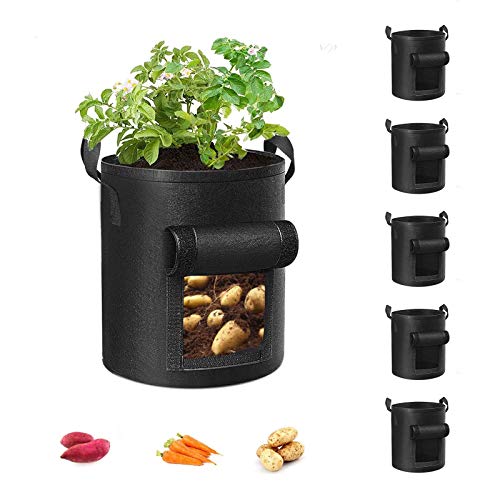
Potatoes want depth more than width, and the Cavisoo bag is shaped accordingly: at 18 inches tall it stands noticeably higher than the round vegetable bags above, giving tubers room to form in layers as the plant is hilled up with mix through the season. The 300g nonwoven fabric keeps the usual drainage and aeration benefits, and the maker describes a visualization window in the wall of the bag for checking tuber development without digging.
The handles are the strongest design here on paper: polypropylene webbing with X-shaped stitching, built to carry a full bag of soil without the stitching creeping. Five bags let a gardener run several potato varieties at once, or dedicate a bag each to potatoes, carrots, and other deep-rooted crops that appreciate the extra height. At season’s end the simplest harvest is still to tip the bag out, but the tall shape and reinforced handles make that job manageable rather than a wrestling match.
Specs
- Capacity: 10 gallons per bag
- Material: 300g thick nonwoven fabric
- Dimensions: 14 inches diameter x 18 inches high
- Pack count: 5 bags
- Handles: polypropylene webbing with X-shaped stitching
- Window: visualization window described by the manufacturer
Homyhoo Potato Grow Bags with Flap, 10 Gallon, 4 Pack
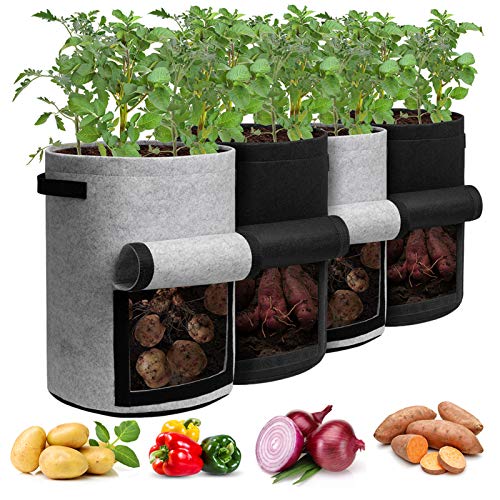
The Homyhoo bag takes the potato brief one step further with a harvest window covered by a flap: open it to check on tubers or pick a few early potatoes, then close it to keep light off the rest of the crop so the remaining tubers keep sizing up undisturbed. That light exclusion matters, because exposed potatoes green in the sun, and a closable window is the feature that separates dedicated potato bags from plain tall bags.
The fabric is a double-layer nonwoven construction with a felt feel, described by the maker as breathable and better at buffering the root zone against temperature swings than a single thin wall. At just under 18 inches tall and about 14 inches across, each bag holds a modest planting of seed potatoes — the listing suggests roughly four to six seed potato plants per bag. The set of four mixes black and gray bags, and the whole pack folds down flat for storage once the harvest is in.
Specs
- Capacity: 10 gallons per bag
- Material: double-layer nonwoven fabric
- Dimensions: 13.8 x 13.8 x 17.8 inches
- Pack count: 4 bags
- Handles: sewn handles
- Window: harvest window with closing flap
- Model number: FD-ZJ-221107-003
How to choose
Start with size, because it decides what you can grow well. A 5-gallon bag handles a single pepper, a compact herb planting, or a short row of bush beans. A 7-gallon bag is the comfortable minimum for a determinate tomato. A 10-gallon bag — the size of every pick above — suits one indeterminate tomato, a squash plant, or a layered potato planting, and it is the most versatile single size for a mixed patio plot. As a rough planning figure, a 10-gallon bag takes about a cubic foot of potting mix to fill.
Fabric weight is the second decision. Most of the bags here use fabric around the 300G class, which balances durability, drainage, and easy folding. Heavier fabrics hold their shape better and tolerate more seasons of dragging across concrete, but they dry out more slowly and fold less compactly. Whatever the weight, look for reinforced or webbing handles if you plan to move filled bags; a full 10-gallon bag of wet mix is heavy, and handle stitching is the most common failure point.
Shape matters by crop. Wide, lower bags are steadier for tall, top-heavy plants like tomatoes that will be staked or caged. Tall, narrower bags serve root crops — potatoes above all — because the crop forms down the depth of the bag. If potatoes are the goal, a harvest window with a flap is worth prioritizing, since it lets you check and pick without emptying the bag.
Finally, plan for water. Fabric walls lose moisture on every side, so patio bags need watering far more often than in-ground beds, daily in hot weather. A saucer or tray under each bag protects deck boards and keeps runoff off the concrete, and grouping bags together shades the fabric walls and slows drying.
Who should skip
Fabric grow bags are the wrong tool for a few situations. If you have decent in-ground soil or already own raised beds, bags add watering work without adding anything. If your patio is a sun-baked slab and nobody can water daily in midsummer, thirsty fabric containers will punish the plants; a large self-watering rigid planter is a kinder choice. Gardeners who want a permanent, decorative container that looks finished in winter should also look elsewhere — an empty fabric bag is functional, not ornamental. And if you cannot lift much weight, fill bags where they will sit, because a planted 10-gallon bag is not something to carry across a patio.
FAQ
What size grow bag is best for tomatoes on a patio?
A 10-gallon bag per plant is the reliable choice for indeterminate tomatoes, giving the root system enough volume to support a tall, heavily cropping plant. Determinate and patio-type tomatoes can manage in 7 gallons. Smaller bags dry out too quickly for a full-size tomato in summer sun.
Do fabric grow bags need saucers on a patio or deck?
They do not need one to function, since drainage through the fabric is the point of the design. A saucer or shallow tray is still worth using on wood decking or pale concrete, where constant runoff leaves stains and keeps boards damp. On plain ground or gravel, set bags directly down.
How long do fabric grow bags last?
It depends on fabric weight, sun exposure, and how they are handled. Makers of the 300G-class bags in this roundup describe several seasons of reuse, and heavier fabrics generally last longer. Rinsing bags out, letting them dry fully before storage, and keeping them out of winter weather all extend their working life considerably.
Can grow bags be reused the following season?
Yes. Tip out the spent mix, brush or hose off the fabric, let the bag dry completely, and fold it flat. Many gardeners refresh the old mix with fresh compost rather than replacing all of it. Check handle stitching and seams before refilling, since those are the parts that wear first.
Final verdict
For a general patio vegetable plot, the Gardzen 10-pack is the easiest recommendation: proven 300G fabric, ten bags, and a size that covers almost every crop. The JERIA 12-pack wins on sheer count for gardeners planting a full grid at once. The Smart Pot is the buy-once option, made in the USA with a long track record. And for potatoes specifically, the tall Cavisoo and the flap-windowed Homyhoo are the two bags actually designed around the crop. Match the bag to the crop and the format is hard to beat on a patio.
Product and ASIN Reference
| Product | ASIN |
|---|---|
| Gardzen 10-Pack 10 Gallon Grow Bags | B07CTD9SDS |
| JERIA 12-Pack 10 Gallon Grow Bags | B089SG6KPP |
| Smart Pot 10-Gallon Soft-Sided Container, Tan with Cut Handles | B008X0M4OE |
| Cavisoo 5-Pack 10 Gallon Potato Grow Bags | B08L5WNQK5 |
| Homyhoo Potato Grow Bags with Flap, 10 Gallon, 4 Pack | B086QVJDTX |
More from Amazon
Programs that pair well with the guide above. Offers and eligibility are set by Amazon and may change.
Collect the home and kitchen items you want in one registry that guests can shop from.
Create a wedding registrySet up recurring deliveries of everyday items on eligible products. Terms and savings are set by Amazon.
Explore Subscribe & SaveFree shipping on eligible items, Prime Video and more. Eligible new members can start with a free trial.
Start a Prime free trialAudiobooks and podcasts to listen to on the go. Eligible new members can start with a free trial.
Try Audible freeAs an Amazon Associate we earn from qualifying purchases.


Write Your Review
No reviews yet. Be the first to share your experience!