

Key takeaways
- The best fishing vests for kids compared: adjustable fly vests, an all-cotton vest and a reflective cargo vest, with fit and pocket advice for parents.
The real decision behind a child’s first fishing vest is not how it looks in the driveway. It is whether the vest is a scaled-down piece of fishing equipment, with tool attachment points and pockets sized for small fly boxes and lure trays, or a general outdoor cargo vest that happens to work at the pond. Fit decides the rest: most youth vests are one-size designs tightened down with straps, while a few come in graded sizes, and the wrong choice leaves a vest swinging loose or outgrown by spring.
This guide serves three groups: parents kitting out a first-time angler, fly-fishing families who want a genuine youth fly vest rather than a costume, and buyers who need one vest to cover fishing, hiking and backyard exploring. Every product below was chosen from the names, fabrics, pocket counts and size details published on its Amazon page, and the four finalists split cleanly into two true fly vests and two cotton all-rounders.
Quick Picks
As an Amazon Associate we earn from qualifying purchases.
| Product | Best for | Key spec from title |
|---|---|---|
| Bassdash Youth Fly Fishing Vest FV09 | Growing kids who need one adjustable vest for several seasons | Adjustable size with multiple pockets |
| Fishpond Tenderfoot Youth Vest | Young fly anglers who fish alongside adults | 14 pockets with a back net D-ring |
| Maxcatch Kids Fly Fishing Vest | Parents who prefer natural fabric and a sized fit | All-cotton build in graded sizes |
| Eagle Eye Explorer Kids Cargo Vest | Kids who split time between fishing and exploring | Reflective safety straps |
How to Choose
Fit and Room to Grow
Children change size faster than fishing seasons change, so fit is the first filter. One-size youth vests use adjustable shoulder and waist straps to cinch a single shell down to a smaller frame, which buys several seasons of use but can leave extra fabric bunching on a slight six-year-old. Sized vests, usually offered in two or three sizes, sit cleaner on the body and move less when a child casts, but each size has a shorter useful life. Measure your child’s chest, check it against the size information on the listing, and think about whether the vest must fit over a fleece in April as well as over a T-shirt in July.
Pocket Layout and Closures
Pockets are the whole point of a vest, yet the layout matters more than the raw count. Zippered pockets keep hooks, small lure boxes and a phone belonging to a parent from working loose when a child scrambles over bankside rocks. Hook-and-loop pockets open faster with cold or wet fingers, which suits snacks and less valuable bits. A deep back pocket earns its place on longer outings because it swallows a light rain layer, a sandwich or a small water bottle. Check where the pockets sit, too: chest-high pockets stay dry when a child wades a little deeper than planned, while low pockets dip toward the waterline.
Fabric for Heat, Splashes and Mud
Synthetic shells in polyester or nylon shrug off splashes, dry quickly after a dunked sleeve or a muddy bank, and weigh very little even when damp. That makes them the practical choice for summer pond fishing and for children who treat every outing as a swimming opportunity. Cotton vests feel softer against the skin, breathe well in dry heat and hold up to rough handling, but cotton absorbs water, dries slowly and gets heavy once soaked. Neither fabric is wrong in itself. The mistake is matching the fabric to the wrong kind of trip, so decide whether your child’s fishing is mostly dry-bank casting or involves wading, rain and wet grass.
Attachment Points and the Flotation Line
Serious youth fly vests add the hardware adult anglers take for granted: D-rings for a net, tool attachment tabs for nippers and forceps, and a rod holder strap that frees both hands for unhooking a fish. Cargo-style vests usually offer D-rings and big pockets but skip the fishing-specific hardware. One line must stay clear in every buyer’s mind: a fishing vest is not a flotation device, and none of the vests in this guide provides buoyancy. A child who cannot swim confidently needs a properly fitted, approved life jacket worn separately whenever the fishing happens in or beside deeper water.
The 4 Best Options
Bassdash Youth Fly Fishing Vest FV09
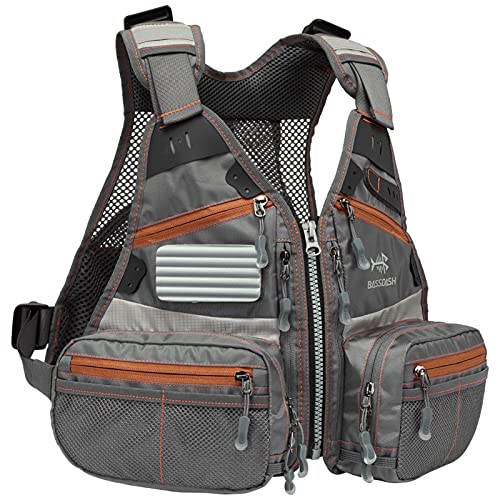
The FV09 is the pragmatic middle of this guide: a proper fishing vest layout, with zippered storage where it counts, in a one-size shell that adjusts at the shoulders and waist to follow a child through several growth spurts. Its polyester build suits bank fishing in warm weather, because splashes bead off and the vest dries fast between trips. With eighteen pockets it carries more than a beginner needs, which means a parent can stash spare tackle, sunscreen and snacks in the same vest the child is wearing.
Specs
- Brand: BASSDASH
- Model: FV09 Youth
- Material: Polyester
- Pockets: 18, including 11 zippered pockets
- Fit: One size fits most youth, adjustable shoulder and waist straps
- Colors: Grey, Chocolate
- Weight: not stated
Best for: A growing child who needs one vest to last several seasons of pond, creek and lake fishing.
Watch out for: The pocket count is generous but individual pockets are small, so an oversized tackle tray will not fit; confirm the strap range adjusts down small enough for a younger child.
ASIN: B0951M232C
Fishpond Tenderfoot Youth Vest

Fishpond built the Tenderfoot as a true youth fly vest rather than a novelty, and it shows in the details: fourteen pockets, tool attachment points, a back D-ring for a net and an integrated rod holder, all in a durable recycled-nylon fabric with reinforced accents at wear points. The adjustable shoulder and waist straps let the fit track a growing angler, and the mesh interior keeps it bearable on warm afternoons. This is the vest for a child who fishes with fly-fishing parents and wants gear that works the way the adult version does.
Specs
- Brand: Fishpond
- Fabric: 210D nylon Cyclepond fabric with ballistic fabric accents
- Pockets: 14
- Weight: 1 lb 1 oz
- Fit: Youth size, adjustable shoulder and waist straps
- Features: Hypalon tool attachment points, back D-ring for net attachment, integrated rod holder, mesh interior lining
- Color: Gray
Best for: A young fly angler who fishes regularly with adults and needs real tool storage and a net attachment.
Watch out for: It does not include a foam fly patch, so plan on adding one separately; the single youth size means very small children may find the shell roomy even with the straps tightened.
ASIN: B07ZTTPW4K
Maxcatch Kids Fly Fishing Vest

Maxcatch takes the opposite route from the synthetic shells: an all-cotton vest in graded sizes, for parents who would rather have a natural fabric sitting against a child’s skin and a fit that does not depend on strap adjustment alone. The twelve pockets mix hook-and-loop closures with a deep zippered back pocket, and the layout includes the fly-fishing basics, a fly patch, a rod holder strap and D-rings for tools. Cotton makes it a cooler-season and dry-bank choice rather than a wading vest, because it holds water once soaked, but for pond and riverbank casting it is comfortable and hard-wearing.
Specs
- Brand: M MAXIMUMCATCH (Maxcatch)
- Material: Cotton
- Pockets: 12, including a deep zippered back pocket
- Sizes: 3 sizes; fits up to a 38 in chest
- Features: Fly patch, hook-and-loop rod holder, D-rings, accessory loops
- Weight: not stated
Best for: Parents who prefer a natural-fabric vest with a sized fit for dry-bank and cool-weather fishing.
Watch out for: Cotton absorbs water and dries slowly, so it is a poor match for wading or rainy trips; measure your child’s chest before ordering, because the sizes are graded rather than adjustable.
ASIN: B08111K6V2
Eagle Eye Explorer Kids Cargo Vest

The Eagle Eye Explorer is the generalist of the four: a cotton cargo vest built for children who fish one hour and hunt for beetles, birds and interesting stones the next. Two large zippered pockets swallow binoculars or a small field guide, hook-and-loop pockets and mesh pouches handle the smaller finds, and four D-rings give clip-on points for a whistle or a small net. Reflective safety straps are the detail parents notice most, because they keep a child visible at dusk, in a car park or along a path. It is less fishing-specific than the two fly vests, with no rod holder, but far more versatile.
Specs
- Brand: Eagle Eye Explorer
- Material: Cotton
- Pockets: 2 large zippered pockets, 2 hook-and-loop pockets, 2 mesh pouches
- D-rings: 4
- Features: Reflective safety straps, reinforced stitching
- Sizes: S/M and M/L; the cited listing is the M/L size
Best for: A child whose outdoor time mixes fishing with hiking, nature play and backyard exploring.
Watch out for: There is no rod holder or fly patch, so dedicated fly gear has fewer places to live; choose between the S/M and M/L sizes by your child’s build rather than by age alone.
ASIN: B07ZHGV4CH
Which One Fits Your Situation
Your Child Is Learning to Fly Fish
Start with the Fishpond Tenderfoot. Its tool attachment points, net D-ring and rod holder mirror the setup on an adult fly vest, so casting practice, fly changes and landing fish all build the right habits from the beginning. The Maxcatch vest also covers the fly basics with its fly patch and rod holder strap, and suits a learner whose fishing stays on dry banks.
One Vest for Fishing, Hiking and Exploring
Choose the Eagle Eye Explorer. The big zippered pockets were sized with binoculars in mind, the mesh pouches keep found objects visible, and the reflective straps add a margin of visibility on the walk back at dusk. A child who only occasionally holds a rod gets more total use from this vest than from a fishing-only design.
Your Child Is Growing Fast
The Bassdash FV09 is built for this problem. One size, adjusted at the shoulders and waist, means the vest bought this spring still fits after next year’s growth spurt, and the polyester shell tolerates the mud, splashes and rough treatment that come with heavy use. It is the lowest-fuss option for siblings who will share or inherit the same vest.
Long Family Days at the Lake
Storage and comfort decide long days. The Bassdash carries spare tackle and snacks across its eighteen pockets, while the Maxcatch adds a deep back pocket that swallows a light layer for one child. If the day involves boats or deep water off a dock, pair either vest with a separate, properly fitted life jacket, because no vest in this guide adds flotation.
Common Mistakes
- Buying a small adult vest instead of a youth cut, which leaves the hem hanging near the water and the pockets out of a child’s reach.
- Treating a fishing vest as safety equipment; it provides storage, not buoyancy, and never replaces a life jacket.
- Counting pockets without checking closures, then losing hooks and small lures from loose hook-and-loop pockets on the walk to the water.
- Choosing cotton for a child who wades, without accounting for how heavy and slow to dry it becomes once soaked.
- Sizing up so far that the vest swings while casting and snags on brush, instead of using the adjustable straps the vest already has.
Frequently Asked Questions
Does a kids’ fishing vest help a child float?
No. A fishing vest is a storage garment, and none of the vests in this guide is designed or approved as a flotation device. A child who is not a confident swimmer should wear a properly fitted life jacket, chosen for their weight and worn over or instead of the fishing vest, whenever they fish from a boat, a dock or a steep bank.
How do I choose between an adjustable one-size vest and a sized vest?
Measure your child’s chest and compare it with the size information on the listing. Adjustable one-size vests, tightened at the shoulders and waist, cover the widest span of growth and suit fast-growing children. Sized vests fit closer and move less during casting, but each size is outgrown sooner. If your child is between sizes, the adjustable design is usually the safer purchase.
How many pockets does a child actually need?
Most young anglers use six to ten pockets: a couple for tackle, one for a snack, one for finds. Very high pocket counts help mainly when a parent loads the vest with shared gear for a long day. Closure type matters more than count, because zippered pockets protect small, sharp or valuable items far better than open or lightly fastened ones.
How should a fishing vest be cleaned after muddy trips?
Empty every pocket first, including the back pocket, and shake out grit and hooks. Most synthetic vests rinse clean with cool water and a mild soap, then air-dry out of direct sun. Cotton vests usually tolerate a gentle machine wash, but check the care label on the specific vest, hang it to dry, and store it fully dry so zips and fabric stay in good condition.
More from Amazon
Programs that pair well with the guide above. Offers and eligibility are set by Amazon and may change.
Collect the home and kitchen items you want in one registry that guests can shop from.
Create a wedding registrySet up recurring deliveries of everyday items on eligible products. Terms and savings are set by Amazon.
Explore Subscribe & SaveFree shipping on eligible items, Prime Video and more. Eligible new members can start with a free trial.
Start a Prime free trialAudiobooks and podcasts to listen to on the go. Eligible new members can start with a free trial.
Try Audible freeAs an Amazon Associate we earn from qualifying purchases.
Write Your Review
No reviews yet. Be the first to share your experience!