

Key takeaways
- Compare five dive toys for kids, from gliding Toypedo torpedoes and soft dive sticks to Intex fish rings and Banzai dive gems, with ages and sink styles.
The real decision with dive toys is not which set looks cutest in the pack. It is how each toy behaves once it leaves your child’s hand: how fast it sinks, whether it lands standing up or flat, and whether a new swimmer can reach it before confidence runs out. A slow, wobbly sinker suits a child making first shallow-end dives, while a gliding torpedo only rewards a swimmer who can already chase a moving target across the deep end.
This guide serves three groups: parents of beginners who need forgiving, slow-sinking toys, families with confident swimmers who want races and point games, and anyone stocking a pool for mixed-age parties or swim lessons. Every product below was chosen from the names and specifications on its Amazon page, covering torpedoes, soft sticks, rings and dive gems.
Quick Picks
As an Amazon Associate we earn from qualifying purchases.
| Product | Best for | Key spec from title |
|---|---|---|
| SwimWays Toypedo Bandits Pool Diving Toys, Pack of 4 | Confident swimmers who chase gliding targets | Pack of 4 |
| SwimWays SquiDivers Kids Pool Diving Toys, 3 Pack | Beginners learning to dive in the shallow end | 3 pack, ages 5 and up |
| SwimWays Fish Styx Kids Fish-Shaped Pool Diving Toys, 3 Pack | Young swimmers who grab at slow, wiggly sinkers | Fish-shaped, 3 pack |
| Intex Underwater Fish Rings | Classic ring retrieval games for ages 6 and up | Underwater fish rings |
| Banzai Precious Dive Gems | Treasure-hunt games and the youngest divers | Dive gems, 4 count |
How to Choose
Sink Speed and How the Toy Travels
Sink behavior decides whether a dive toy teaches or frustrates. Slow sinkers that wiggle on the way down, like the SquiDivers and Fish Styx in this guide, give a beginner time to take a breath, push off and arrive before the toy settles. Fast, flat sinkers demand an immediate dive. Gliding torpedoes are a third pattern entirely: a Toypedo travels forward as it drops, so the retrieval point is several feet from the throw point. Match the pattern to the swimmer. A child still ducking under in the shallow end needs a toy that sinks almost straight down, slowly, within arm’s reach of where it was dropped.
Soft and Flexible Versus Rigid Construction
Construction matters more in this category than in most toy aisles. Federal safety regulators have recalled hard plastic dive sticks over impalement risk, including a large recent recall of rigid sticks sold under the Sloosh name, because a child who jumps or falls onto a stiff upright stick can be seriously hurt. Soft, flexible toys bend on contact and remove most of that risk, which is why the beginner picks in this guide are soft-bodied. Rigid pieces still appear in rings and gems, where the shapes present no upright point. Whatever you buy, check the model against current recall lists before the first swim.
Shape, Size and Grip for Small Hands
A dive toy has to be grabbable by a wet, small hand on the first pass, often while the other hand is busy keeping its owner afloat. Rings are the easiest shape to hook with two fingers and suit structured retrieval games. Sticks and squid shapes land upright, which makes them visible and gives the hand a clear target. Flat gems and small treasures are the hardest to pick up from a smooth pool floor and work better as scoring pieces for older children. If your swimmer wears goggles that fog or has small hands, favor the biggest, most upright shapes in the set.
Piece Count, Color and Visibility on the Pool Floor
A toy nobody can see is a toy nobody retrieves. Bright, contrasting colors matter more than piece count, and sets whose pieces land standing up stay visible far longer than flat pieces that blend into a patterned liner. Count pieces against your pool size and group size: three pieces are plenty for one learner practicing alone, while a party of six children burns through a small set in one round and starts arguing over turns. Treasure-style sets earn their keep here, because numbered or colored pieces let you assign point values and keep a game running without buying a second pack.
The 5 Best Options
SwimWays Toypedo Bandits Pool Diving Toys, Pack of 4

Toypedo Bandits are the pick for swimmers who have outgrown toys that sink straight down. Each torpedo is thrown underwater and glides forward before settling, so retrieval becomes a chase across the pool rather than a simple duck-under. The four bandits carry different point values, which turns a throw into a scored game for two or more players. Because the landing spot depends on throw strength, this set suits children who can already swim underwater confidently and judge distance, rather than beginners still working near the wall in the shallow end.
Specs
- Pieces included: 4
- Toy type: Gliding underwater torpedoes
- Colors: Multicolor
- Item dimensions: not stated
- Recommended age: not stated
Best for: Confident young swimmers who want distance throws, races and point-scoring games.
Watch out for: Confirm you are ordering the Bandits 4-pack, since SwimWays sells several Toypedo variants, including light-up versions, under similar names.
ASIN: B0038ZVPFI
SwimWays SquiDivers Kids Pool Diving Toys, 3 Pack

SquiDivers are built for the first stage of dive learning. Each soft squid is weighted to sink slowly, wiggling as it drops, and it lands nose down with its tentacles floating upright, so a hesitant child can spot it, plan the grab and still arrive in time. The slow descent also lets a parent or instructor call out encouragement during the dive instead of after it. For children aged five and up who are moving from holding the wall to short underwater reaches in the shallow end, this is the most forgiving shape in the guide.
Specs
- Pieces included: 3
- Recommended age: 5 years and up
- Model number: 6069478
- Sink style: Slow-sinking, lands nose down
- Material: not stated
Best for: Beginners aged five and up practicing first dives in shallow water.
Watch out for: The soft tentacles are the grab point, so check them for tears before the season starts and retire any piece with a split seam.
ASIN: B0CCW4RM6B
SwimWays Fish Styx Kids Fish-Shaped Pool Diving Toys, 3 Pack

Fish Styx take the same learn-to-dive idea as the SquiDivers and wrap it in a fish shape that many younger children find easier to read underwater. The three soft, flexible fish wiggle and jiggle toward the bottom instead of dropping straight, which stretches out the chase for swimmers who are ready for slightly more movement. The listing frames the set for two players, and the fish format works well for follow-the-leader games where one child drops a fish and the other retrieves it. It is a natural step up once the squid set feels too easy.
Specs
- Pieces included: 3
- Recommended age: 5 years and up
- Model number: 12090
- Material: Plastic
- Item weight: 0.13 kilograms
- Item dimensions: 0.75 x 8 x 7.5 inches
Best for: Young swimmers ready for a livelier sink than the SquiDivers, and two-player practice games.
Watch out for: The fish are small and light, so in a large or deep pool they can drift from the drop point; keep early sessions in the shallow end.
ASIN: B00G7M3E4O
Intex Underwater Fish Rings
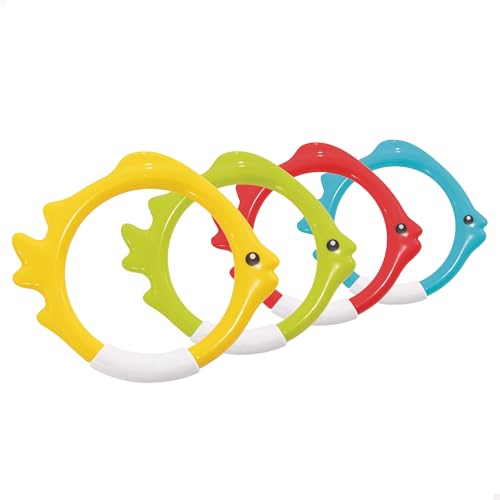
The Intex fish rings are the traditional option in this guide: four bright fish-shaped rings that sink and stand on the pool floor waiting to be hooked and lifted. Rings remain the easiest shape for a child to grab with one or two fingers, and the four distinct colors, blue, green, red and yellow, make it simple to call a color and send a swimmer after a specific target. The set is rated for ages six and up, a year older than the soft SwimWays sticks, and the PVC build gives the rings a firmer feel that older children tend to prefer for timed retrieval drills.
Specs
- Pieces included: 4 fish rings
- Colors: Blue, green, red and yellow
- Material: PVC
- Model number: 55501
- Item weight: 0.17 kilograms
- Recommended age: 6 years and up
Best for: Structured retrieval games, swim lessons and color-calling drills for ages six and up.
Watch out for: Intex uses similar names and packaging across its ring lines, so check the model number 55501 on the listing to be sure you are getting the fish rings.
ASIN: B004FEEQNO
Banzai Precious Dive Gems
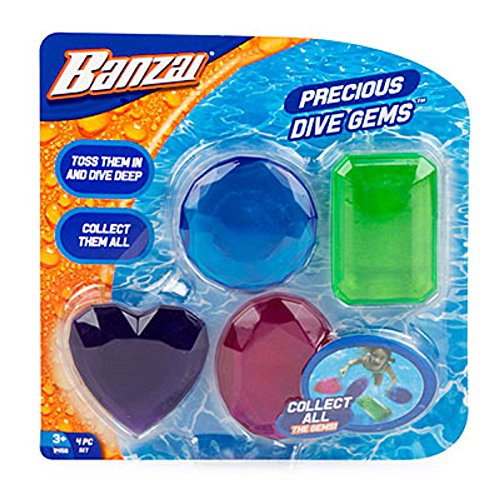
The Banzai dive gems serve the treasure-hunt end of the category. Four brightly colored gems sink to the floor and wait to be collected, and because each gem can carry a point value, a handful of gems supports scoring games that keep older siblings engaged alongside younger divers. The set carries the youngest age guidance in this guide, ages three and up, although the flat shape is genuinely harder for small hands to lift off a smooth floor than a ring or an upright stick. Treat the gems as the game layer you add once basic retrieval is already comfortable.
Specs
- Pieces included: 4 gems
- Recommended age: 3 years and up
- Item weight: 7 ounces
- Package dimensions: 8 x 8 x 0.7 inches
- Model number: not stated
Best for: Treasure hunts and point games layered onto pools where basic diving is already established.
Watch out for: Flat gems sit flush on the pool floor and can be hard to see on patterned liners, so scatter them in the shallow end first.
ASIN: B00UXJGUTS
Which One Fits Your Situation
Your Child Is Making First Dives in the Shallow End
Start with the SquiDivers. Their slow, wobbling descent and nose-down landing give a new diver the two things that matter most: time and a visible target. The Fish Styx are the follow-up once those dives feel routine, adding a livelier sink without changing the basic game. Keep sessions short, stay within standing depth for the child, and let the swimmer choose which piece to chase, since picking the target is half the motivation at this stage.
Your Swimmers Want Races and Point Games
The Toypedo Bandits were made for this. Numbered point values and a long underwater glide turn every throw into a scored round, and two children can compete without any extra equipment. Add the Banzai dive gems when the group grows, scattering them as bonus targets between torpedo rounds. Agree the scoring before the first throw, because the arguments about whether a far glide counts double start immediately otherwise.
You Host Pool Parties With Mixed Ages
Buy for the youngest confident swimmer, not the oldest. The SquiDivers and Fish Styx keep five-year-olds involved, the Intex rings give older children a drill they can time, and the gems let you run a treasure hunt that mixes both groups in one game. Avoid throwing every piece in at once; small sets released in rounds keep the water calmer and the turns fairer. One adult should own the throwing and the scoring while another watches the water.
You Are Supporting Swim Lessons or Practice Drills
The Intex fish rings are the lesson tool here. Four colors mean an instructor can call a target, the upright stance keeps each ring visible from the deck, and the firm PVC shape tolerates daily use. The Fish Styx listing is framed for two players, which suits paired practice. Whichever set you choose, rinse the pieces after each session, because lesson gear that lives in chlorinated water fades and stiffens faster than party toys.
Common Mistakes
- Buying rigid hard-plastic dive sticks for a beginner, when soft flexible toys remove the upright-point hazard that has driven past recalls in this category.
- Scattering dive toys in water deeper than the child’s comfortable diving depth, which turns a confidence game into a breath-holding contest.
- Choosing small, dark or flat pieces that disappear against a patterned pool liner, then blaming the swimmer for not finding them.
- Leaving dive toys floating in chlorinated water or baking on the deck between swims, which fades colors and makes plastics brittle.
- Ignoring the age guidance on the pack, especially giving small gem-style pieces to toddlers who are still mouthing toys.
Frequently Asked Questions
At what age can a child start using dive toys?
Most sets in this guide start at age five, with the Intex rings at six and up and the Banzai gems at three and up. Age labels assume the child is already comfortable putting their face in the water. A confident four-year-old in standing-depth water may manage slow sinkers with an adult beside them, while a nervous seven-year-old may need the same shallow start.
Are dive sticks safe for young swimmers?
Soft, flexible dive toys are the safer form of this category. Federal regulators have recalled rigid hard-plastic dive sticks, including Sloosh models, because a child landing on an upright stiff stick can be impaled. The beginner picks in this guide are soft-bodied for exactly that reason. Whatever you own, check model numbers against recall lists, store sticks flat, and keep an adult in the water during play.
How deep should the water be for dive toy games?
Start in water where the child can stand with their head comfortably above the surface, so retrieval is a short duck under rather than a true dive. Move to deeper water only when the swimmer can reach the bottom, grab a toy and return without pushing off in a panic. Torpedo games need the most room, since a hard throw can carry the toy well into deeper water.
How should dive toys be cleaned and stored?
Rinse every piece after swimming to wash off chlorine or salt, then let the set dry before it goes into a bag or bin, since trapped moisture grows mildew inside seams and hollow pieces. Store the toys out of direct sun. At the start of each season, squeeze and flex every piece and retire anything cracked, split or faded to the point of being hard to see.
More from Amazon
Programs that pair well with the guide above. Offers and eligibility are set by Amazon and may change.
Collect the home and kitchen items you want in one registry that guests can shop from.
Create a wedding registrySet up recurring deliveries of everyday items on eligible products. Terms and savings are set by Amazon.
Explore Subscribe & SaveFree shipping on eligible items, Prime Video and more. Eligible new members can start with a free trial.
Start a Prime free trialAudiobooks and podcasts to listen to on the go. Eligible new members can start with a free trial.
Try Audible freeAs an Amazon Associate we earn from qualifying purchases.
Write Your Review
No reviews yet. Be the first to share your experience!