

Key takeaways
- Best Overall: Felco F2, a Swiss-made bypass pruner built to be repaired rather than replaced
- Best Value: Corona BP 3180D, a forged bypass pruner with a 1 inch cutting capacity
- Best Budget Classic: Fiskars Bypass Pruning Shears, the familiar 5/8 inch garden clipper
- Best Premium Alternative: ARS HP-VS8Z Signature Heavy Duty Pruner, a Japanese-style professional tool
- Best for Weak Grip: Corona Tools Ratchet Hand Pruner, which cuts in stages
- Best Low-Cost Extra: VOTREK 8.5 inch Bypass Pruning Shears with an SK5 blade
The top rated pruners for most gardeners are the Felco F2 if you want a tool that can be sharpened, rebuilt and handed down, and the Corona BP 3180D if you want most of that cutting quality for roughly a third of the cost. This guide ranks six hand pruners, adds four more worth a look, and explains how to choose among bypass, anvil and ratchet designs so you buy the right blade action for the plants you actually grow.
Searches for the best garden pruners and the best hand pruners usually return the same handful of names, but the useful question is not which brand is famous. It is which tool fits your hand, your plants and your patience for maintenance. A rose bed full of green stems needs a clean bypass cut. A tangle of dead branches on an old shrub is easier with an anvil or ratchet pruner. A gardener with sore hands may care more about leverage than about blade steel. We organized the picks around those situations, and we describe what each specification means in the garden rather than repeating a catalog.
Our top picks

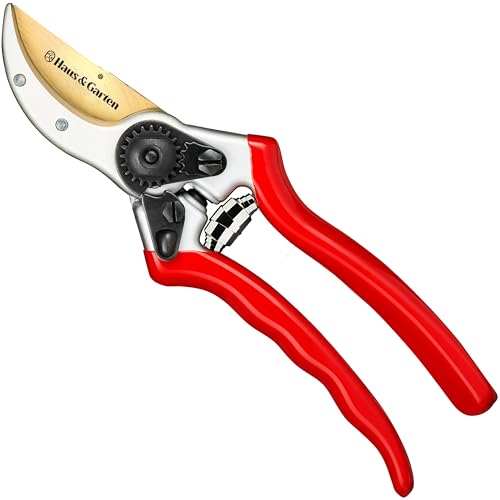


As an Amazon Associate we earn from qualifying purchases at no extra cost to you.
Top Picks at a Glance
- Best Overall: Felco F2, a Swiss-made bypass pruner built to be repaired rather than replaced
- Best Value: Corona BP 3180D, a forged bypass pruner with a 1 inch cutting capacity
- Best Budget Classic: Fiskars Bypass Pruning Shears, the familiar 5/8 inch garden clipper
- Best Premium Alternative: ARS HP-VS8Z Signature Heavy Duty Pruner, a Japanese-style professional tool
- Best for Weak Grip: Corona Tools Ratchet Hand Pruner, which cuts in stages
- Best Low-Cost Extra: VOTREK 8.5 inch Bypass Pruning Shears with an SK5 blade
Comparison Table
| Product | Best for | Key specs from the listing | Watch for | Price tier |
|---|---|---|---|---|
| Felco F2 | Daily use, long-term ownership | Bypass, 9.25 in overall, Swiss-made | Premium cost; larger tool | Premium |
| Corona BP 3180D | Roses, shrubs, perennials, light branches | Bypass, forged, 1 in cutting capacity | Likely replaced rather than rebuilt | Mid-range |
| Fiskars Bypass Pruning Shears | Small gardens, first pruner | Bypass, 5/8 in cut capacity, sap groove | Thin handle on large jobs | Budget |
| ARS HP-VS8Z Signature | Heavy pruning sessions | Heavy duty pruner; cut capacity not listed | Verify size and capacity before buying | Mid-range to Premium |
| Corona Tools Ratchet Hand Pruner | Arthritic or weak hands | Ratchet action, 3/4 in cut capacity | Slower, multi-squeeze cuts | Budget |
| VOTREK 8.5 in Bypass Shears | Spare pair for the shed | Bypass, 8.5 in, SK5 blade, jam-proof spring | Brand has a short track record | Budget |
1. Felco F2: Best Overall for Long-Term Gardeners
- Blade action: bypass, with a hardened steel blade and a sharpening-friendly shape
- Overall length: 9.25 inches in the listing
- Origin: Swiss-made, per the listing
- Cutting capacity: about 1 inch according to independent reviews; confirm on the maker page
- Parts: replaceable blade, spring and other components, which is the whole point of the model
Best for: Gardeners who prune weekly and want one tool for roses, grapevines, shrubs and light fruit-tree work.
Skip if: You only prune a few times a season, or you tend to lose tools in the border.
The Felco F2 has been the benchmark for hand pruners for decades, and most independent roundups still use it as the standard the others are judged against. The reasons are practical. The blade geometry slides past the hook with very little friction, the handles are shaped so that the squeeze comes from the whole hand and not just the fingers, and nearly every part can be bought separately. That last point is what justifies the cost: a pruner that you can refresh for decades has a low cost per year.
In use, a bypass pruner like this makes a scissor-style cut that leaves the living stem cleaner than a crushing anvil would. That matters on roses, raspberries and any plant where a ragged wound invites disease or dieback. Reviewers who compare it with cheaper forged pruners agree on two things: the Felco feels smoother through a long session, and it keeps an edge longer if you wipe and oil it. Weight figures vary between sources (roughly 7.7 to 8.8 ounces), so treat any exact number with caution and check the maker page.
The honest drawbacks are cost and fit. It is a medium-large tool, and people with small hands sometimes prefer a smaller Felco model or a pruner with an adjustable grip. It also assumes you will maintain it. If you never clean sap or oil the pivot, a premium pruner will not stay premium.
Pros
- Replaceable parts and long service life
- Smooth bypass cut that suits live stems
- Widely praised in independent reviews
- Sharpens well with a basic diamond file
Cons
- Highest cost in this group
- A little large for very small hands
2. Corona BP 3180D: Best Value Bypass Pruner
- Blade action: bypass
- Cutting capacity: 1 inch in the listing
- Construction: forged classic pruner, red handles in the listing
- Reviews put its weight near 6.7 ounces, but sources conflict, so check the maker page
Best for: Gardeners who want serious cutting capacity without the Felco price.
Skip if: You expect to rebuild the tool in ten years; this one is more likely to be replaced.
Corona’s classic forged bypass pruner is the one most independent guides name as the value pick, because it gets close to the cutting quality of a premium tool at a much lower cost. A 1 inch capacity is generous for a hand pruner. It is enough for woody rose canes, mature lavender, fruiting raspberry stems and the thicker shoots you find when renovating a hedge or a hydrangea.
The practical benefit is confidence. A pruner that handles 1 inch stems means you can keep it in your apron for the whole shed-to-border workflow without swapping to loppers for every other branch. The handles are plain and the tool is not fancy, but the forged build is why it tends to stay tight and aligned longer than stamped alternatives.
The trade-off appears over years. Pruners at this tier can usually be sharpened, but the design is not built around swapping every part. If you accidentally drop it into the compost heap, it is a lower-regret loss than a premium tool. That alone makes it a good garden-bag pruner.
Pros
- Large 1 inch capacity at a mid-range tier
- Forged build
- Clean bypass cuts on green wood
- Simple design that is easy to clean
Cons
- Less repairable than premium pruners
- Basic grip comfort for long sessions
3. Fiskars Bypass Pruning Shears: Best Budget Classic
- Blade action: bypass
- Cutting capacity: 5/8 inch in the listing
- Features: self-cleaning sap groove and non-slip grip, per the listing
- Design: coated blade intended to reduce sticking
Best for: First-time gardeners, small beds and container plants.
Skip if: You prune thick branches or spend hours at a time pruning.
This Fiskars is the pruner many people already own without remembering buying it. The sap groove on the blade is a real feature: sticky sap on conifers and fruit trees slows pruning and makes the blade drag, and a groove that sheds residue keeps the cut smoother. At 5/8 inch capacity, it handles perennials, herbs, rose stems and soft shrub growth comfortably.
Independent reviewers describe it as great value with a thin grip, which is fair. The handle works well for light pruning and feels less supportive when you are making dozens of cuts in an afternoon. The lock is usable but is not as positive as the lock on premium tools. If you plan to use it twice a month, it is a good fit; if you plan to use it every weekend, step up.
For households with several gardeners, it is also a sensible tool to keep in the kitchen drawer for deadheading flowers and cutting herbs without borrowing the good pruners.
Pros
- Budget tier
- Sap groove helps with sticky stems
- Light and easy to carry
- Widely available, replacement parts are common
Cons
- Thin grip for long sessions
- Lower capacity than forged competitors
4. ARS HP-VS8Z Signature Heavy Duty Pruner: Best Premium Alternative
- Blade action: not stated in the short listing title; check the maker page
- Cut capacity: not listed in the title
- Positioning: Signature, heavy duty pruner from ARS
- Length: the model code suggests an 8 inch tool, but verify on the maker page
Best for: Gardeners who prefer Japanese-style tools and long pruning days.
Skip if: You need confirmed specs before you buy; read the maker page first.
ARS is a Japanese cutting-tool maker that sells a lot of pruners to professional growers, and the Signature series is aimed at that audience. The listing name for this model is brief, which is why we do not quote capacity or weight: specifications that are not on the listing are marked not listed rather than guessed.
What can be said safely is that ARS pruners generally aim at keeping an edge and at smooth operation under repeated use. Professionals in nurseries and orchards prefer them for exactly that reason, and the price tier sits between a basic forged pruner and a Felco. Whether it beats the Felco depends on hand size and personal preference more than on any chart.
If you are comparing it with the Felco F2, try to hold both in a shop before you buy. Pruner comfort is highly individual, and a tool that fits your hand will always beat a tool with slightly better steel.
Pros
- Professional-grade brand
- Heavy duty positioning
- Mid-range to premium tier
Cons
- Limited specs on the listing
- Fewer independent comparisons than Felco or Corona
5. Corona Tools Ratchet Hand Pruner: Best for Weak Grip
- Blade action: ratchet, anvil-style
- Cutting capacity: 3/4 inch in the listing
- Design: heavy-duty ratcheting mechanism, per the listing
- Cuts in stages, so you can release and re-squeeze
Best for: Gardeners with arthritis, weak grip or limited hand strength.
Skip if: You prune live roses and want clean bypass cuts; choose a bypass tool.
A ratchet pruner is not a better pruner in general, but it is the right pruner for many hands. The ratchet lets you squeeze a little, hold, squeeze again, and cut through a branch in stages. If a branch is too thick for a single squeeze, you finish it with several. For anyone who has stopped pruning because the effort hurts, that single feature changes the whole job.
The anvil blade crushes against a flat surface rather than slicing past it, which suits dead wood and dry stems. It is less ideal for live green stems that you want to heal cleanly, because the crushing cut leaves a rougher wound. A good routine is to keep a bypass pruner for live growth and the ratchet for dead wood and stubborn old branches.
At a budget tier, it is also a low-cost way to try the style before buying a premium ratchet model.
Pros
- Staged cutting reduces hand effort
- 3/4 inch capacity
- Budget tier
- Good for dead branches
Cons
- Slower than a bypass tool
- Crush cut is not ideal for live stems
6. VOTREK 8.5 inch Bypass Pruning Shears: Best Low-Cost Extra
- Blade action: bypass
- Length: 8.5 inches
- Blade: SK5 steel, anti-rust per the listing
- Features: jam-proof spring clippers and an ergonomic grip, per the listing
Best for: A spare pair for the shed, the car or a friend who always borrows yours.
Skip if: You want a pruner that will outlast a decade of weekly use.
SK5 is a Japanese-grade high-carbon steel that appears in many value pruners. It can hold a sharp edge but needs wiping and oiling to avoid rust, so the anti-rust claim is helpful but not magic. The listing highlights a jam-proof spring, meaning the spring is designed not to pop out when the tool is dirty.
This is a tool you buy because the cost is low, not because it has a long record. Treat it as a second pruner: use it on weeds, tape, wire tie trimming and rough work, and keep your better pruner for the plants you care about.
Pros
- Budget tier
- Bypass cut
- SK5 steel blade
- Lightweight 8.5 inch body
Cons
- Short track record for the brand
- Not designed for rebuilding
Also Consider
Fiskars Power-Lever Anvil Pruning Shears
5/8 inch capacity anvil pruner, positioned for dry and dead stems and small branches. A good companion to a bypass tool.
Felco F31 Anvil Pruner
8.3 inch anvil tool for dry and hard wood. Premium cost, but handy for deadwood work and for gardeners who already trust Felco.
Gerossi Ratchet Pruning Shears
8 inch ratchet pruner marketed for arthritis and weak grip. A mid-budget alternative to the Corona ratchet.
Hooyman Ratchet Pruner
Ratchet pruner with a non-slip ergonomic grip, an SK5 blade and a blade lock per the listing.
How We Chose
This guide is research-based. We did not personally use these products. We compared manufacturer product pages and listing details (blade action, cut capacity, length, steel type), then read independent roundups that compare Felco, Corona, Fiskars and ARS, including pruner comparisons from outdoor and garden publications.
We kept only pruners currently sold, limited each brand to two products, and covered every price tier. Where sources disagree on weight or capacity, we say so instead of picking a number, and where the listing does not state a spec, we mark it not listed.
Buying Guide
Bypass, anvil or ratchet
Bypass pruners have two blades that pass each other like scissors, which gives the cleanest cut on live stems. Anvil pruners press a blade onto a flat surface, which works on dead wood but crushes live tissue. Ratchet pruners are anvil-style tools that cut in stages. If you only buy one, buy bypass; if you garden with limited hand strength, add a ratchet pruner.
Cutting capacity
Capacity is the thickest stem the tool can cut cleanly. A 1/2 inch tool suits flowers and herbs, 5/8 to 3/4 inch suits most roses and shrubs, and 1 inch suits renovation work. Never force a pruner beyond its capacity: twisting a blade to finish a thick branch is the most common way to bend or loosen one. For branches over an inch, use loppers or a pruning saw.
Hand size and grip
An oversized pruner is tiring and an undersized one is hard to squeeze. Your fingers should wrap comfortably, with the handles open to roughly a hand span. Look for a lock you can operate one-handed, and a left-handed option if you are left-handed. Some Fiskars models are listed for both right- and left-handed use, but most bypass pruners are right-hand biased, so check before you buy.
Blade steel and coatings
SK5 and similar high-carbon steels sharpen easily and keep an edge but rust if neglected. Stainless is more forgiving but harder to resharpen. Non-stick coatings help with sap, though they wear off. Whichever you choose, wipe the blade after each session, and disinfect it between plants when you are cutting out diseased wood.
Repairability and long-term cost
Cost per year matters more than cost per tool. A premium pruner at 25 years of use is cheap per season. A budget pruner replaced every three years is cheap each time but adds up. Tools with replaceable blades and springs, like the Felco F2, tilt the maths toward longevity if you prune often.
A quick decision table
| Your situation | Lean toward |
|---|---|
| Prune weekly, want one tool for life | Felco F2 |
| Want best value with 1 in capacity | Corona BP 3180D |
| Small garden, rare use | Fiskars Bypass Pruning Shears |
| Weak grip or arthritis | Corona Tools Ratchet Hand Pruner |
| Need a spare or a gift | VOTREK 8.5 in Bypass Shears |
Common Pruning Mistakes
- Cutting too far from the bud: leave about a quarter inch above an outward-facing bud and slant the cut away from it.
- Forcing a pruner past its capacity, which twists the blades and loosens the pivot.
- Pruning with dull blades, which tear the bark and leave more room for disease.
- Skipping cleaning: sap and soil dull the edge and promote rust. Wipe and oil after use.
- Using a bypass pruner on wire, which nicks the edge quickly. Keep an old tool for rough work.
How to Keep Any Pruner Cutting Cleanly
A simple routine adds years to any tool on this list. After each session, wipe the blades with a rag to remove sap and soil, then add a drop of light machine oil to the pivot and the blade edge. Once or twice a season, take a diamond file and follow the original bevel in one direction only, from the heel of the blade to the tip, until you can feel a light burr on the flat side. Then strip the burr with a few strokes on the flat face.
Check the pivot bolt for looseness. A pruner that wobbles will chew stems rather than slice them, and the fix usually takes thirty seconds with the right key. If the tool has a replaceable spring, keep a spare in the shed, because springs are the first small part to fail. Store pruners dry, ideally hanging or in a sheath, since a damp shed is harder on blades than any amount of pruning.
Finally, match the tool to the job. Use the bypass pruner for green stems, the ratchet or anvil model for dead wood, and a saw or loppers once you pass an inch. Swapping tools is faster than repairing a bent blade, and it keeps your best pruner sharp for the plants that need it most.
Frequently Asked Questions
What are the top rated pruners for home gardeners?
The names that appear most often in independent roundups are Felco, Corona, Fiskars and ARS. Felco F2 is the common pick for long-term use, Corona BP 3180D for value, and Fiskars for budget bypass pruners.
Are bypass pruners better than anvil pruners?
For live stems, yes, because the scissor-style cut is cleaner. Anvil pruners are better suited to dry, dead wood, where a crush cut does not matter.
What is the best hand pruner for roses?
A bypass pruner with at least a 5/8 inch capacity, such as the Felco F2, Corona BP 3180D or the Fiskars bypass model, gives a clean cut and leaves the cane healthy.
How often should I sharpen pruners?
Touch up the edge a few times each season with a diamond file, and sharpen thoroughly when you notice crushing or tearing instead of clean cuts.
Can pruners cut thick branches?
Only up to their stated capacity, usually 1/2 to 1 inch. For thicker branches, switch to loppers or a saw so you do not damage the blades.
Are ratchet pruners good for arthritis?
They reduce the effort of each squeeze, which many gardeners with limited hand strength find helpful. If you have pain or a medical condition, ask a doctor or occupational therapist about tools that suit you.
Should I disinfect pruners?
Yes, when cutting diseased wood or moving between plants that share pests. Wipe with rubbing alcohol or a diluted disinfectant, then dry and oil the blade.
Which One Should You Buy?
If you prune often and want a tool you will still be using in a decade, buy the Felco F2. If you want the best performance for the money, buy the Corona BP 3180D. If you only want a simple bypass pruner for flowers and herbs, the Fiskars is enough.
Add the Corona ratchet if your hands tire easily, and keep the VOTREK or another low-cost pruner for rough jobs. Whichever you choose, spend a few minutes on blade care each session, because maintenance matters as much as the brand.
Sources
- Felco, Corona, Fiskars, ARS and VOTREK manufacturer product pages
- Outdoor Plant Care comparison of bypass pruners
- Tool Box review of the Felco F-2
- Toptrusted Products review of Fiskars pruning shears
- New York Garden roundup of professional pruning shears
Last updated: October 2026







Write Your Review
No reviews yet. Be the first to share your experience!