

Key takeaways
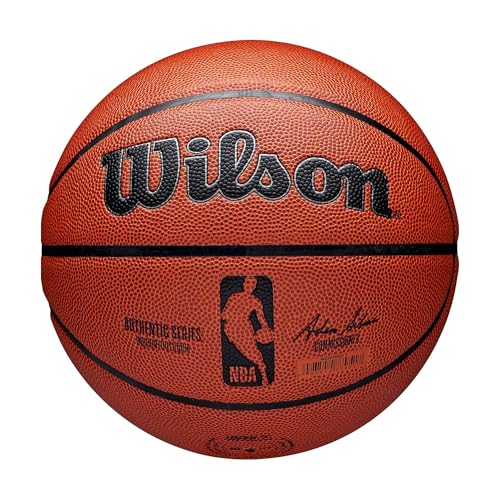
- Best Overall Outdoor Basketball: Wilson NBA DRV Series (size 7)
- Best Indoor/Outdoor Composite: Spalding Zi/O Excel
- Best Value Premium Feel: Wilson NBA Forge Indoor/Outdoor
- Best Rough-Surface Street Ball: Spalding Street Outdoor
- Best Budget: AND1 Chaos Rubber Basketball
- Best Heavy-Duty Rubber for Shared Courts: Champion Sports Rubber Official Basketball
- Best Alternative Brand Composite: adidas All-Court PU Composite
The best outdoor basketball for most backyards, driveways and park courts is the Wilson NBA DRV Series ball if you want a rubber-cover ball built for rough concrete at a low price, and the Spalding Zi/O Excel if you also play indoors and want a composite cover with a softer feel. Those two answer the question most buyers really have: do I need a tough, cheap rubber ball that I can leave on the patio, or a nicer composite ball that can move between a gym and the driveway? This guide walks through seven outdoor-friendly basketballs, explains what the specs mean on concrete, asphalt and pool-deck surfaces, and ends with a clear way to choose.
This is a research-based guide. We did not personally use these balls and we do not claim our own results. We worked from maker pages, listing details and general sporting-goods rules such as official ball sizes. Where a detail such as cover material is not stated, we write “not listed”. We also use tier words (Budget, Mid-range, Premium) rather than quoting prices, since prices move often.
Our top picks


As an Amazon Associate we earn from qualifying purchases at no extra cost to you.
Top Picks at a Glance
- Best Overall Outdoor Basketball: Wilson NBA DRV Series (size 7)
- Best Indoor/Outdoor Composite: Spalding Zi/O Excel
- Best Value Premium Feel: Wilson NBA Forge Indoor/Outdoor
- Best Rough-Surface Street Ball: Spalding Street Outdoor
- Best Budget: AND1 Chaos Rubber Basketball
- Best Heavy-Duty Rubber for Shared Courts: Champion Sports Rubber Official Basketball
- Best Alternative Brand Composite: adidas All-Court PU Composite
Comparison Table
| Product | Best for | Key specs (as listed) | Watch for | Price tier |
|---|---|---|---|---|
| Wilson NBA DRV Series | Daily outdoor play | Size 7, 29.5 in; rubber performance cover; outdoor-built | Rubber feels harder than composite | Budget |
| Spalding Zi/O Excel | Indoor and outdoor use | Size 7, 29.5 in; composite cover; size 6 version exists | Composite wears faster on rough concrete | Mid-range |
| Wilson NBA Forge Indoor/Outdoor | Step up in feel | Size 7, 29.5 in; sizes 6 and 7; cover material not listed in title | Verify cover on the label | Mid-range |
| Spalding Street Outdoor | Blacktop and driveway | 29.5 in; outdoor focus; cover material not listed | Few listed specs | Mid-range |
| AND1 Chaos Rubber | Casual, low-cost play | Rubber; regulation size 29.5 in; indoor/outdoor | Basic feel | Budget |
| Champion Sports Rubber Official | Parks, schools, groups | Rubber; heavy duty; various sizes | Basic grip | Budget |
| adidas All-Court PU Composite | Players who want a composite cover | PU composite cover; indoor/outdoor; size varies by version | Check the size on the version you choose | Mid-range |
1. Wilson NBA DRV Series: Best Overall
- Size: 7 (29.5 in); smaller sizes 6 and 5 also sold
- Cover: rubber, called a performance cover by Wilson
- Built for: outdoor play, with grip on rough surfaces
- Construction notes: air-retention lining and NBA pro-style seams are described on the maker pages
- Weight and pressure range: not listed on the listing, check Wilson
Best for: kids and adults who play on a driveway, patio court or park and do not want to worry about the ball. Skip if: you play mostly indoors or want a soft, tacky composite feel.
The DRV line is Wilson’s entry point into outdoor play, and that is exactly why it is the top pick here. A rubber cover is the standard recommendation for outdoor basketball because concrete and asphalt grind down leather and many composite covers quickly, while a rubber cover wears slowly and keeps its pebble texture longer. The tradeoff is feel: rubber is firmer and a little less tacky than composite, so passes can feel slightly harder at first.
The DRV is also easy to match to the player. Wilson sells it in size 7 (29.5 inches) for adults and older teens, size 6 (28.5 inches) and size 5 (27.5 inches), plus a mini. Those sizes follow standard youth and adult conventions, which makes it a flexible choice for a household with several players. If you want a more premium outdoor feel, Wilson also sells a DRV Pro with a step-up Tackskin cover, but we focus on the standard model here because it is the easiest to recommend on cost.
Ownership reality: no outdoor ball is permanent. Expect the pebbling to flatten over a season or two of daily play on rough pavement. Keeping the ball off wet grass and out of direct afternoon sun on a hot patio extends its life, and checking pressure every couple of weeks keeps the bounce consistent.
Pros:
- Rubber cover suited to concrete and asphalt
- Several sizes for different ages
- Low price tier for a name-brand ball
- Air-retention lining described by the maker
Cons:
- Firmer feel than composite
- Not intended as an indoor game ball
2. Spalding Zi/O Excel: Best Indoor/Outdoor Composite
- Size: official size 7 (29.5 in); size 6 (28.5 in) also made
- Cover: Zi/O tournament composite; described by Spalding as composite
- Construction: foam-backed for feel; bladder details differ by retailer
- Weight: Spalding’s size chart gives about 20 to 22 oz for size 7
- Use: indoor and outdoor
Best for: players who split time between a gym or rec center and the driveway and want one ball. Skip if: your court is very rough and you only play outside.
The Zi/O Excel is the composite option that most often comes up when players want a ball that feels closer to a game ball while still being allowed outdoors. The cover is soft and slightly tacky, which helps with palming and ball control. The foam backing is meant to cushion the feel on catches and dribbles.
The tradeoff is simple physics: a softer, more tacky cover wears faster against abrasive concrete than a hard rubber cover. If you only play on smooth, sealed patio surfaces, that wear is slow. On rough blacktop, you may find the pebbling smoothing out in a season. That is why this ball sits one tier above rubber options and why we position it as the best all-around choice for mixed indoor and outdoor play, not as the best pure outdoor ball.
One caution: some listings give an item weight that conflicts with Spalding’s own size chart, which gives about 20 to 22 oz for a size 7 ball. If weight matters to you, use the maker’s chart, not a retailer’s figure.
Pros:
- Composite cover with a game-ball feel
- Works indoors and outdoors
- Size 6 available for younger or smaller players
- Backed by a well-known brand
Cons:
- Wears faster on rough concrete
- Higher price tier than basic rubber
3. Wilson NBA Forge Indoor/Outdoor: Best Value Premium Feel
- Size: 7 (29.5 in); size 6 (28.5 in) also sold
- Use: indoor and outdoor
- Cover material: not listed in the title, check the packaging
- A Forge Pro step-up model exists at a higher tier
Best for: teens and adults who want a step above basic rubber without paying for a top-tier ball. Skip if: you need confirmed cover material before buying.
The Forge sits between Wilson’s entry-level DRV and its top Authentic ball. The name tells you the positioning: indoor/outdoor, with the NBA branding and a feel meant to be closer to a game ball. Because the cover material is not stated in the information we could verify, treat it as a general-purpose ball and check the packaging if you want a specific cover.
Why mention it at all? Because the indoor/outdoor label is useful. Many households have a court that is partly sheltered, a garage hoop and an outdoor driveway, and an indoor/outdoor ball means one purchase covers all three. The size 6 version is a sensible option for a middle schooler or for women’s play.
Pros:
- Indoor/outdoor flexibility
- Sizes 6 and 7 available
- Familiar brand with a ladder of step-up models
Cons:
- Cover material not stated in the data we verified
- Costs more than rubber basics
4. Spalding Street Outdoor: Best Rough-Surface Street Ball
- Size: 29.5 in
- Use: outdoor, as the name states
- Cover material and weight: not listed
Best for: blacktop, driveways and neighborhood pickup games. Skip if: you want detailed specs before buying.
Spalding’s Street line has long been associated with outdoor courts. The listing is thin on technical detail, so the honest take is that this is a straightforward street ball with an outdoor focus and the regulation 29.5 inch size. If you already know you like Spalding’s feel from past balls, it is a safe choice; if you want verifiable cover details, the DRV or Zi/O Excel give more information.
Pros:
- Outdoor focus
- Regulation size
- Recognizable brand
Cons:
- Few verified specs
- Not meant for indoor courts
5. AND1 Chaos Rubber Basketball: Best Budget
- Cover: rubber
- Size: regulation, 29.5 in
- Use: indoor and outdoor
Best for: casual players, gifts, and backyard hoops where the ball will get a lot of rough treatment. Skip if: you care about tacky grip.
AND1 has a streetball identity, and the Chaos is a plain rubber ball aimed at casual play. For a patio hoop that kids use daily, rubber is a rational choice because it survives scuffs, dirt and the occasional trip into a flower bed. The price tier is the main selling point. The tradeoff is grip: rubber is slicker than composite, particularly when hands are sweaty.
Pros:
- Low price tier
- Rubber cover for durability
- Indoor and outdoor use
Cons:
- Basic grip and feel
- Few extra features
6. Champion Sports Rubber Official Basketball: Best Heavy-Duty Group Ball
- Cover: rubber, advertised as heavy duty
- Sizes: various sizes offered
- Use: parks, schools, group play
Best for: schools, camps, community courts and families who need a ball they will not baby. Skip if: you want a branded NBA or collegiate feel.
Champion Sports supplies a lot of institutional sporting goods, and this rubber ball is built for that kind of use. It is a no-frills pick, and for patios or pool decks where balls bounce into hard edges and rough surfaces, that is a strength. Multiple sizes mean you can buy a set that fits different ages in one household.
Pros:
- Heavy-duty rubber
- Multiple sizes
- Budget price tier
Cons:
- No brand-name feel
- Basic grip
7. adidas All-Court PU Composite: Best Alternative Brand Composite
- Cover: PU composite
- Use: indoor and outdoor, “all-court”
- Size: varies by version; check the one you choose
Best for: players who want a composite cover but prefer a brand other than Wilson or Spalding. Skip if: you want to be sure of the exact size without checking the listing.
PU, or polyurethane, composite covers are the standard step up from rubber. They are softer and tackier, and many players find them easier to control. This adidas ball positions itself for all levels and both indoor and outdoor courts. As with any composite, expect faster surface wear if you use it on rough blacktop every day.
Pros:
- PU composite cover
- Indoor/outdoor use
- Different brand look
Cons:
- Version and size need checking
- Composite wears faster outdoors
Also Consider
Wilson NBA Authentic Indoor/Outdoor
The step-up premium ball from Wilson, sold in sizes 6 and 7. Consider it if you want the most game-like feel and will still use it both inside and outside. It sits at the Premium tier.
Wilson NCAA Final Four Edition Indoor/Outdoor
A collegiate-branded indoor/outdoor ball in size 7. A decent alternative to the Forge if you like the NCAA styling.
Spalding Rookie Gear Youth Indoor-Outdoor (27.5 in)
A smaller ball for younger kids. Size 5 (27.5 in) is the standard size for roughly ages 9 to 11, so check your player’s age and hand size.
Lifeworks Rubber Basketball
A low-cost rubber ball for indoor and outdoor play. Note that the listing says it is sold deflated and a pump is not included, so you will need a hand pump and needle.
How We Chose
This guide is research-based. We looked at what each maker or listing states about cover material, size and intended surface, and we cross-checked the general rules that matter outdoors: rubber covers resist abrasion better, composite covers feel better but wear faster, and size should match the player. We did not personally use these balls. We kept to no more than two products per brand and covered Budget, Mid-range and Premium tiers so you have a clear ladder.
Information came from manufacturer product pages for Wilson and Spalding, the listing details for AND1, Champion Sports and adidas, and general sizing guidance used by youth basketball organizations. Anything we could not verify is labelled “not listed”.
Buying Guide
Pick the right cover for your surface
Rubber covers are the default for outdoor concrete, asphalt and rough patio surfaces. They are durable, inexpensive and handle moisture well. Composite or PU covers feel softer and tackier and are better for control, but they wear faster on abrasive pavement. If your hoop sits on a smooth sealed driveway or a sport-court surface, composite is a fair choice. If your court is old, cracked asphalt, go rubber and consider the ball a consumable.
Choose the right size
Standard sizes are widely used: size 7 is 29.5 inches around and is the official men’s and older-teen size; size 6 is 28.5 inches, used for women’s play and many middle-school players; size 5 is 27.5 inches and suits roughly ages 9 to 11; and mini balls of about 22 inches or smaller suit toddlers and mini hoops. A ball that is too big makes shooting form worse for younger players, so go down a size if in doubt.
Think about grip, weight and bounce
Grip comes from the cover texture and the pebble pattern. Weight for a size 7 ball is typically around 20 to 22 oz according to maker charts like Spalding’s. Bounce is mostly a function of correct inflation, so a pump is part of the purchase. Many makers list a recommended pressure range printed near the valve; keep to it. As a quick check, drop the ball from shoulder height onto a hard surface and look for a rebound to about waist height.
Weather, storage and lifespan
Sun and heat degrade covers and expand air inside, while cold air makes the ball feel flat. Store balls indoors or in a shaded bin when not in use. Wipe off dirt with a damp cloth, avoid soaking, and let the ball dry before storing. Expect a rubber outdoor ball to give one or two seasons of daily play and a composite ball less on rough surfaces.
Budget for a pump and a spare
If you buy a ball that arrives deflated, you will need a hand pump and a needle. A second ball is also worth having for a household with more than one player, because balls vanish into hedges, pools and neighbors’ yards.
Common Mistakes to Avoid
- Buying a leather ball for outdoor play. Genuine leather wears quickly on concrete.
- Ignoring size. A size 7 ball for a young child hurts shooting form.
- Overinflating. This makes the ball hard and shortens its life.
- Leaving it on a hot patio. Heat and sun damage covers and change pressure.
- Using a composite ball on rough pavement daily. Save it for smoother or indoor courts.
Setting Up Your Patio or Driveway Court
The ball is only half of the experience. A hoop on a patio or driveway changes how the ball wears and where it ends up. Start with the surface: smooth poured concrete and sealed sport tiles are gentle on covers, while broom-finished concrete and old asphalt grind the pebbling quickly. If your surface is rough, plan on a rubber ball and treat it as a seasonal item. Next, think about runoff. A hoop that faces a street, a pool or a garden bed will lose balls, so a net behind the hoop or a fence line saves both the ball and your plants.
Plan clearance as well. A regulation ball needs a free zone of at least a few feet behind the baseline so that rebounds do not hit a wall, a window or patio furniture. Many households choose a lightweight youth size or a mini ball for spaces such as a covered porch, precisely to protect glass and planters. Finally, keep a small bin by the door for the ball and pump. A ball that lives indoors between sessions lasts noticeably longer than one left in the sun, and you will always know where the pump is when the ball goes soft on a cold morning.
A simple routine keeps any of these balls in shape: check pressure every two weeks, wipe the cover after wet sessions, rotate between two balls if you have them, and replace the ball when the pebbling has gone smooth enough that it feels slippery in dry hands. That is the clearest sign it has reached the end of its useful life, and it is a cheaper fix than pushing a worn ball through another season.
Frequently Asked Questions
What is the best outdoor basketball?
For most people, a rubber-cover ball like the Wilson NBA DRV Series is the best outdoor basketball because it resists wear on concrete and asphalt at a low price. If you also play indoors, the Spalding Zi/O Excel is a better fit.
Can I use an indoor/outdoor basketball outside?
Yes, balls labelled indoor/outdoor are designed for both, though composite covers still wear faster on rough surfaces. Balls labelled indoor-only, often leather, should not be used outside.
What is the difference between a rubber and a composite basketball?
Rubber balls are more durable and cheaper but firmer and less tacky. Composite balls feel softer and grip better but cost more and wear faster outdoors.
What size basketball should I buy?
Size 7 (29.5 inches) is for adults and older teens, size 6 (28.5 inches) for many middle-school players and women’s play, and size 5 (27.5 inches) for kids of roughly 9 to 11. Check your league’s rules if you play organized games.
How long does an outdoor basketball last?
It depends on surface and use, but a rubber ball on rough pavement commonly lasts one to two seasons of regular play. Smooth surfaces and shade storage help it last longer.
Is a heavier basketball better for outdoor play?
Not necessarily. Official size 7 balls are around 20 to 22 oz according to Spalding’s chart. Heavier ball designs are used for training, but for regular play, stay with a standard weight.
Do I need to inflate a new basketball?
Some arrive inflated and some, like certain rubber balls, are sold deflated. Check the listing, and keep a pump and needle on hand.
Which One Should You Buy?
Buy the Wilson NBA DRV Series if you want the best all-around outdoor ball for the least cost. Choose the Spalding Zi/O Excel if you play indoors too and want a composite feel. Pick the AND1 Chaos or Champion Sports ball when the budget is tight or many players share a ball. Choose the Wilson Forge or adidas All-Court if you want a step up in feel, and the Wilson Authentic if you want the most premium option. Size matters as much as brand, so match it to the youngest regular player before you buy.
Sources
- Wilson Sporting Goods product pages for the NBA DRV, Forge and Authentic lines
- Spalding product pages and size chart for the Zi/O Excel and Street lines
- AND1, Champion Sports and adidas product listings
- General youth basketball sizing guidance from sporting-goods retailers and youth organizations
Last updated: October 2026






Write Your Review
No reviews yet. Be the first to share your experience!