

Key takeaways
- Best overall: Coolaroo Premium Shade Sail
- Best value upgrade: Coolaroo Coolhaven Shade Sail
- Best entry-level ready-made: Coolaroo Ready Made Shade Sail
- Best for parties and temporary use: Coolaroo Party Sail
- Best budget triangle: Ohuhu 16 ft Triangle Shade Sail
- Best rectangle (named best overall by a major roundup): Outsunny Rectangle Shade Sail
- Best for windy sites (named best wind-proof by a major roundup): FLYHAWK Shade Sail
- Brand to consider with spec class verification: Sunnyglade Shade Sail
The best shade sail for most patios is the Coolaroo Premium Shade Sail for its 350 GSM HDPE fabric, up to 95 percent UV block, 15-year warranty and included mounting hardware; the Coolaroo Coolhaven is the better-value step down at 230 GSM and a 10-year warranty; and the Ohuhu 16 ft triangle is an entry-level option for buyers who accept a lighter-class fabric. Whatever you buy, a shade sail only works if your anchor points, sail size and tensioning are right.
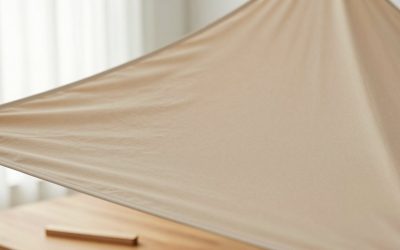
A shade sail is a stretched fabric panel, usually triangular, square or rectangular, hung from three or four anchor points. Unlike a gazebo, it has no frame, which makes it cheaper and more flexible, but it also moves all the wind load into your posts, walls and hardware. This guide covers the fabric specs that matter, sizing math, anchoring and safety, and eight sail options grouped by buyer need.
Our top picks


As an Amazon Associate we earn from qualifying purchases at no extra cost to you.
Quick Picks at a Glance
- Best overall: Coolaroo Premium Shade Sail
- Best value upgrade: Coolaroo Coolhaven Shade Sail
- Best entry-level ready-made: Coolaroo Ready Made Shade Sail
- Best for parties and temporary use: Coolaroo Party Sail
- Best budget triangle: Ohuhu 16 ft Triangle Shade Sail
- Best rectangle (named best overall by a major roundup): Outsunny Rectangle Shade Sail
- Best for windy sites (named best wind-proof by a major roundup): FLYHAWK Shade Sail
- Brand to consider with spec class verification: Sunnyglade Shade Sail
How We Chose
This guide is research-based. We compared manufacturer-stated and retailer-listed specifications, plus the criteria used in published buyer guides: fabric weight in GSM, stated UV block, warranty length, hardware included, and size options. Some figures, particularly GSM and warranty, come from manufacturers and retailers and not from independent measurement. Where we could not confirm a spec for a model, we describe it by spec class and tell you what to check on the label. We did not run product trials and make no claims about long-term performance.
Shade Sail Specs That Matter
HDPE fabric and GSM
Most residential sails use high-density polyethylene (HDPE) knitted fabric. It is breathable, which lets hot air pass through and reduces wind load compared with solid fabric. GSM means grams per square meter, a measure of fabric weight. In the sources compared, budget marketplace sails run roughly 140 to 180 GSM, standard residential fabric sits around 220 to 240 GSM, and a premium class reaches about 350 GSM. Heavier fabric generally resists tearing and sag longer, but it is also pricier and puts more load on anchors.
UV block percentage
UV block is stated as a percentage, commonly 90 to 95 percent for HDPE. The Skin Cancer Foundation recommends shade structures block at least 93 percent of UV, which puts the 90 percent class slightly below that target and the 93 to 95 percent class at or above it. A sail is partial shade, not complete protection, so sunscreen and hats remain important.
Waterproof versus breathable
HDPE sails are breathable and are not waterproof. They shed a light shower but let water drip through in sustained rain. Waterproof PU-coated polyester sails exist, but they catch more wind and need a pitch for drainage. For most patios where cooling is a priority, breathable HDPE is the better choice.
Warranty as a signal
Warranty length tracks fabric class. In published figures, Coolaroo Premium carries a 15-year warranty, Coolhaven 10 years, and the lighter Ready Made and Party lines 3 years. A long warranty does not mean the hardware will last, but it indicates how the maker rates the fabric.
Hardware
Look for stainless steel D-rings sewn into reinforced corners, along with turnbuckles, shackles and eye bolts. Some kits include hardware; others do not. Stainless 316 grade resists corrosion better in coastal areas.
Shape: triangle, square, rectangle
A triangle needs three anchor points and often looks best when one corner is set lower. A square or rectangle needs four, with a deliberate height difference between opposing corners to create a twist, which helps rain run off and prevents flapping.
Comparison Table
| Sail | Fabric | Weight | UV block (stated) | Warranty (stated) | Hardware |
|---|---|---|---|---|---|
| Coolaroo Premium | HDPE, tape and mono | 350 GSM | Up to 95% | 15 years | Mounting and tensioning hardware included |
| Coolaroo Coolhaven | HDPE | 230 GSM | Up to 93% | 10 years | Check kit for hardware |
| Coolaroo Ready Made | HDPE | 125 GSM | Up to 90% | 3 years | Check kit |
| Coolaroo Party Sail | HDPE | 165 GSM | Up to 90% | 3 years | Check kit |
| Ohuhu 16 x 16 x 16 ft triangle | HDPE | Not stated in sources | 95% advertised | Not stated | Hardware kit included; not waterproof |
| Outsunny Rectangle | HDPE class | Unverified | Unverified | Unverified | Check listing |
| FLYHAWK | HDPE class | Unverified | Unverified | Unverified | Check listing |
| Sunnyglade | HDPE class | Unverified | Unverified | Unverified | Check listing |
Information Gain: Size the Sail and the Anchor Spacing
Follow these steps to size a sail correctly.
- Measure the anchor-to-anchor distance between every pair of points, using a tape at the height you will actually mount them.
- Subtract tensioning reach. Hardware (turnbuckle, shackle, D-ring) uses about 12 to 18 inches at each corner. A sail should be sized at least 1.5 to 2 ft smaller than the anchor span on each side, otherwise you cannot tension it.
- Check the shade area. A triangle’s area is half the base times the height. A rectangle is length times width. Equilateral triangle area is about 0.433 x side squared.
- Add a 10 percent shape buffer. A sail pulled into a twist covers less ground than its flat area.
Worked example: You want to shade a 10 x 10 ft seating area and your posts are 18 ft apart. A 16 ft equilateral triangle (like the Ohuhu 16 x 16 x 16) has an area of 0.433 x 16 x 16 = about 111 sq ft. A flat 111 sq ft covers your 100 sq ft area, but after the twist buffer (111 x 0.9 = about 100 sq ft) you have almost zero extra margin. Shade also moves with the sun, so if you need coverage from 11 a.m. to 3 p.m., choose a larger sail or add a second one. If your posts are 18 ft apart, a 16 ft sail leaves 2 ft total for tensioning hardware, which is right at the minimum.
Best Shade Sails by Buyer Need
Coolaroo Premium Shade Sail
Spec line: HDPE tape and mono fabric · 350 GSM · up to 95% UV block · 15-year warranty · mounting and tensioning hardware included
Best for: Permanent installations where you want the longest warranty and the heaviest residential fabric class.
Skip if: You need many colors or unusual sizes, since the Premium line has limited size and color options, or you want an entry-level tier.
- Pros: Heaviest fabric class here; long warranty; hardware included.
- Cons: Limited sizes and colors; higher cost tier; heavy fabric puts load on anchors.
Coolaroo Coolhaven Shade Sail
Spec line: HDPE · 230 GSM · up to 93% UV block · 10-year warranty · colors for 2026 include Heritage, Sahara and Sapphire · square, triangle and right-angle shapes
Best for: Homeowners who want a durable sail with more design choice than the Premium line.
Skip if: You need the longest warranty or the heaviest fabric.
- Pros: Meets the 93 percent UV target; good balance of weight and cost tier; several shapes and colors.
- Cons: Lighter than Premium; check what hardware ships with your size.
Coolaroo Ready Made Shade Sail
Spec line: HDPE · 125 GSM · up to 90% UV block · 3-year warranty
Best for: Short-term, seasonal or rental use where you want inexpensive shade.
Skip if: You want a long-lived permanent installation or you are in a high-wind area. Retailer comparisons rate this line low for durability.
- Pros: Entry-level cost tier; light and easy to hang.
- Cons: Light fabric; 90 percent UV is below the 93 percent target; short warranty.
Coolaroo Party Sail
Spec line: HDPE · 165 GSM · up to 90% UV block · 3-year warranty
Best for: Temporary events and seasonal setups.
Skip if: You plan to leave it up through winter or in a windy spot.
- Pros: Heavier than the Ready Made line; easy to set up.
- Cons: Short warranty; 90 percent UV; not meant for year-round use.
Ohuhu 16 ft Triangle Shade Sail
Spec line: 16 x 16 x 16 ft triangle · HDPE · 95% UV block advertised · 85 to 90% shading rate advertised · hardware kit included · not waterproof · GSM and warranty not stated in sources
Best for: Budget-conscious buyers who need a mid-size triangle with hardware in the box.
Skip if: You want a documented fabric weight and warranty. The listing does not state GSM, so treat it as a lighter, marketplace-class sail.
- Pros: Hardware kit included; large 16 ft size; entry-level cost tier.
- Cons: Fabric weight and warranty not confirmed; breathable, so it does not stop rain.
Outsunny Rectangle Shade Sail
Spec line: Rectangle · HDPE class · named best overall in a 2026 homeowner roundup · weight, UV block and warranty not verified here
Best for: Larger rectangular patios, decks and seating areas where a four-corner layout fits.
Skip if: You need confirmed fabric weight before purchase. Check the listing for GSM, UV block and size.
- Pros: Rectangular shape suits decks; widely recommended in roundups.
- Cons: Specs not independently confirmed; needs four solid anchors.
FLYHAWK Shade Sail
Spec line: HDPE class · named best wind-proof in a 2026 roundup · weight, UV block and warranty not verified here
Best for: Breezier sites where you want a sail built with wind in mind.
Skip if: You cannot install strong anchors. No sail is wind-proof, so take any such claim as relative.
- Pros: Positioned for wind performance; multiple sizes in the line.
- Cons: Details unconfirmed; strong anchors still required.
Sunnyglade Shade Sail
Spec line: HDPE class · multiple sizes and shapes · specs not verified here
Best for: Buyers who want a lower-cost alternative and will verify the label.
Skip if: You need confirmed GSM and warranty figures before ordering.
- Pros: Wide size range in the brand’s lineup; entry-level to mid-range tier.
- Cons: Specs must be confirmed on the label; hardware inclusion varies.
Choosing by Fit: A Decision Matrix
| Your situation | Fabric class to target | Shape | Pick |
|---|---|---|---|
| Permanent, sunny, no wind issues | 350 GSM class | Square or triangle | Coolaroo Premium |
| Permanent, want colors | 220 to 240 GSM class | Square, triangle, right angle | Coolaroo Coolhaven |
| Seasonal or rental | 125 to 165 GSM | Any | Coolaroo Ready Made or Party Sail |
| Limited budget, mid-size triangle | Marketplace class | Triangle | Ohuhu 16 ft triangle |
| Large deck, four posts | Verify GSM | Rectangle | Outsunny Rectangle |
| Breezy yard | Verify GSM and hardware | Any | FLYHAWK |
Installation and Safety
The sail is only as strong as its anchor points. Fabric loads can reach hundreds of pounds on a corner in a gust, and failed anchors cause real injury and property damage.
- Use structural anchors. Attach to house framing, such as a rafter or a fascia backed by solid framing, or to purpose-set posts. Do not attach to a gutter, a trellis, siding alone, or thin fence posts.
- Set posts in concrete. A common practice is posts buried about one-third of their length in concrete footings. Check your local code and talk to a contractor if posts are taller than 8 ft.
- Mount at least 7 ft above the ground at the lowest corner so people do not hit it, and 8 ft or more where tall guests are likely.
- Pitch for drainage. Mount one corner at least 2 to 3 ft lower than the opposite one, so water and debris run off.
- Tension firmly but not to the limit. A taut sail flaps less and lasts longer. Over-tensioning can tear corner rings.
- Take it down for storms and snow. A sail cannot carry snow load. Remove it ahead of strong wind, heavy snow or ice.
- Use stainless hardware. Replace rusting shackles immediately.
- Keep sails away from open flame. Do not hang one over a grill, fire pit or patio heater. HDPE can melt and burn.
Care and Lifespan
Rinse the sail with a hose and mild soap a couple of times a year. Check stitching and corner reinforcements each spring. Lower and store the sail through winter in cold-weather regions, which extends fabric life considerably. Replace hardware before it fails, since a sail with a corroded shackle can tear free.
Common Mistakes
- Buying a sail the exact size of the anchor span. You will not be able to tension it.
- Mounting all corners at the same height. Flat sails flap, sag and pool water.
- Using weak anchors such as gutters.
- Assuming 90 percent UV is the same as 95 percent. The Skin Cancer Foundation recommends at least 93 percent.
- Expecting rain protection from breathable HDPE.
Frequently Asked Questions
What is the best shade sail for a patio?
The Coolaroo Premium Shade Sail is the strongest overall option, with 350 GSM fabric, up to 95 percent UV block and a 15-year warranty.
For a lower cost tier with colors, the Coolaroo Coolhaven at 230 GSM and a 10-year warranty is a solid step down.
How much UV protection does a shade sail provide?
HDPE shade sails commonly block 90 to 95 percent of UV. The Skin Cancer Foundation recommends structures that block at least 93 percent.
Coolaroo Premium (up to 95 percent) and Coolhaven (up to 93 percent) reach that target. Lighter lines at up to 90 percent fall just below it.
Are shade sails waterproof?
HDPE shade sails are breathable and are not waterproof. They let water pass through, though they slow a light shower.
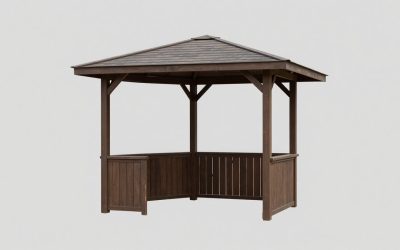
If you want rain cover, look at a waterproof PU-coated sail or a gazebo with a solid roof, and expect it to need a stronger pitch and anchors.
What size shade sail do I need?
Choose a sail 1.5 to 2 ft smaller than your anchor-to-anchor span on each side, to allow room for tensioning hardware.
For an area of 100 sq ft, a 16 ft equilateral triangle (about 111 sq ft) gives little spare margin after the sail twists. Consider a larger sail or a second one if you need all-day coverage.
How high should a shade sail be mounted?
Mount the lowest corner at least 7 ft above the ground, and higher where tall people walk underneath. Set one corner 2 to 3 ft lower than the other for drainage.
A pitched sail sheds water and resists flapping, while a flat one sags and holds water.
Can a shade sail stay up in winter?
In snowy or stormy regions, take the sail down. It cannot carry snow load, and heavy wind puts great strain on anchors.
In mild climates it can stay up, but inspect hardware and stitching after storms.
What is GSM in shade sails?
GSM means grams per square meter, a measure of fabric weight. Heavier fabrics generally resist tearing and sagging longer.
In the sources compared, budget sails run about 140 to 180 GSM, standard residential about 220 to 240 GSM, and Coolaroo Premium reaches 350 GSM.
Can I attach a shade sail to my house?
Yes, if you attach to structural framing such as a rafter or a fascia backed by framing. Do not attach to gutters, thin trim or siding alone.
If you are unsure what is behind the wall, consult a contractor or use freestanding posts set in concrete.
Bottom Line
If you want one durable, permanent sail, choose the Coolaroo Premium; if you want a lower cost tier with color choice, choose the Coolaroo Coolhaven. For temporary use, the Ready Made and Party lines work, and the Ohuhu 16 ft triangle suits tight budgets. Before you buy, measure the anchor span, subtract tensioning hardware, plan a pitch for drainage, and make sure every anchor can take a heavy pull.



Write Your Review
No reviews yet. Be the first to share your experience!