

Key takeaways
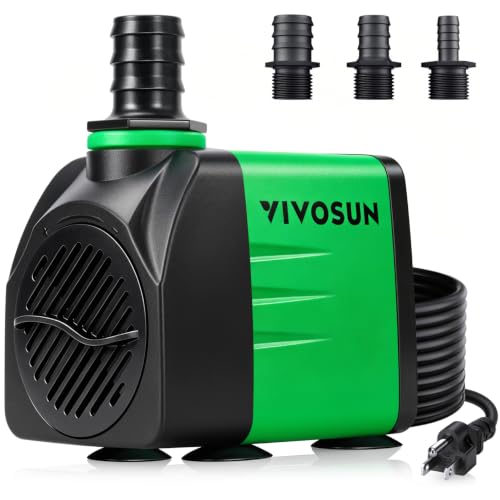
- Best Overall: VIVOSUN 800GPH submersible pump
- Best Value Mid-Size: GROWNEER 550GPH submersible pump
- Best Mini Fountain Pump: hygger 53GPH ultra-quiet mini pump
- Best Small Utility Pump: PULACO 160GPH submersible pump
- Best Pet Fountain Replacement: PetSafe replacement pump for Drinkwell fountains
- Best Aquarium Air Pump: Tetra Whisper air pump (up to 60 gallons)
- Best Pond Aeration Kit: Aquascape Pond Air 2 (double outlet)
For a patio bowl, bird bath or small pond feature, the VIVOSUN 800GPH submersible pump is our top pick for versatility, and the GROWNEER 550GPH is the runner-up when you want a smaller, quieter-class pump with a stated 7.2 ft lift. If your need is smaller still, such as a tabletop fountain, the hygger 53GPH mini pump fits; for a cat or dog fountain that stopped working, the PetSafe replacement pump is the match for Drinkwell models; and for aeration, the Tetra Whisper air pump and the Aquascape Pond Air 2 kit cover tanks and ponds. This guide answers the many small questions behind a broad search for the best pond, fountain and aquarium pumps: mini fountain pumps, pet fountain pumps, pond air pumps, pumps for a 633-gallon pond, pumps for hydroponic systems, and where to place two circulation pumps in a tank.
This guide is research-based. We did not personally use these pumps. We used maker specifications, product listings and published sizing guidance, and we marked anything unverified as “not listed”. We make no claims about fish, coral or other livestock health; for tank-specific advice, ask the maker of your tank or filter and a qualified aquarium retailer.
Our top picks



As an Amazon Associate we earn from qualifying purchases at no extra cost to you.
Top Picks at a Glance
- Best Overall: VIVOSUN 800GPH submersible pump
- Best Value Mid-Size: GROWNEER 550GPH submersible pump
- Best Mini Fountain Pump: hygger 53GPH ultra-quiet mini pump
- Best Small Utility Pump: PULACO 160GPH submersible pump
- Best Pet Fountain Replacement: PetSafe replacement pump for Drinkwell fountains
- Best Aquarium Air Pump: Tetra Whisper air pump (up to 60 gallons)
- Best Pond Aeration Kit: Aquascape Pond Air 2 (double outlet)
Quick Comparison Table
| Pump | Best for | Key specs | Watch for | Price tier |
|---|---|---|---|---|
| VIVOSUN 800GPH | Patio ponds, fountains, statuary | 800 GPH (3000 L/H); 50W; ultra-quiet per listing | Rated flow is at zero lift | Budget |
| GROWNEER 550GPH | Small ponds and fountains | 550 GPH (2000 L/H); 30W; 7.2 ft lift; 3 nozzles | Flow falls with height | Budget |
| hygger 53GPH | Tabletop fountains and bowls | 53 GPH (200 L/H); 3W; 2 nozzles | Too small for ponds | Budget |
| PULACO 160GPH | Larger bowls and tanks | 160 GPH (600 L/H); 10W; 3.3 ft tubing | Lift not listed here | Budget |
| PetSafe replacement | Drinkwell pet fountains | Submersible; fits ceramic, stainless steel and 360 fountains per listing | Confirm your model | Budget |
| Tetra Whisper | Aquarium aeration | For tanks up to 60 gallons; suspended motor; listed as non-UL | Check certification needs | Budget |
| Aquascape Pond Air 2 | Pond aeration | Double outlet aeration kit | Flow figures not listed | Mid-range |
Read This First: How to Read Pump Numbers
Three numbers decide almost every pump purchase: flow (GPH), head height (how high the pump pushes), and power source or noise. The flow on the box is measured at zero head, meaning the pump is pushing into open air with no lift. Once you lift water upward, flow drops. One manufacturer chart cited in published sizing guidance shows 780 GPH at zero lift falling to 620 GPH at 40 inches. “Max lift” is the point where flow falls to nearly nothing, so you want a pump whose max lift is comfortably above your real height. One guide suggests about 50 percent more than the height you measure. Tubing adds loss too; a common rule adds about one foot of head for every ten feet of tubing and one foot for each elbow.
For ponds, a general rule is to circulate the pond volume once every one to two hours. A 633-gallon pond therefore wants roughly 317 to 633 GPH at the real working head, not at the box rating. If a waterfall adds four feet of lift, check the pump curve at four feet. When between sizes, go larger and throttle with a valve rather than undersizing.
1. VIVOSUN 800GPH: Best All-Round Submersible Pump
- Flow: 800 GPH (3000 L/H) at zero lift, per the listing
- Power: 50W
- Use: pond, aquarium, statuary, per the listing
- Lift: not listed in the title
Best for: a small patio pond with a fountain head or a modest waterfall. Skip if: you need a published head-height curve; check the maker sheet.
This is the size where a patio pump becomes flexible. It can drive a spray head, feed a small spillway, or push water to a basic filter. Because the 800 GPH figure is the zero-lift rating, expect less at the nozzle. Size by measuring the vertical rise and checking the curve. The wattage is moderate, which matters if the pump will run all day. Ask whether the pump has a flow adjuster; many do, and an adjuster makes it easier to throttle a larger pump for a smaller feature.
Pros:
- Enough flow for small ponds
- Ultra-quiet per listing
- Multiple uses
- Budget tier
Cons:
- Lift not in the title
- Needs a pre-filter or sponge on dirty water
- Cord length not listed
2. GROWNEER 550GPH: Best Value Mid-Size Pump
- Flow: 550 GPH (2000 L/H), per the listing
- Power: 30W
- Lift: 7.2 ft, per the listing
- Includes: 3 nozzles
Best for: patio fountains and small ponds up to a few hundred gallons. Skip if: you plan a tall waterfall.
A stated 7.2 ft maximum lift gives you something concrete to plan with. Using the rule of thumb of picking a max lift well above your needed height, this pump suits features up to about four or five feet of rise, and it is better for fountains with a short column than for tall spillways. The three nozzles allow different spray shapes, which is useful when you want a bubbler for a bowl and a spray for a bigger basin.
Pros:
- Stated lift
- Three nozzles
- Low wattage
Cons:
- Not for large ponds
- Flow drops with height
- Needs regular cleaning of the intake
3. hygger 53GPH: Best Mini Fountain Pump
- Flow: 53 GPH (200 L/H)
- Power: 3W
- Includes: 2 nozzles
- Use: tabletop fountains, aquariums, per the listing
Best for: a bird bath bubbler, a patio bowl or a desktop fountain. Skip if: you want to run a filter or a waterfall.
The best mini fountain pumps are the ones sized to the feature, because an oversized mini pump makes splash and noise. A 3W pump is gentle enough for a shallow bowl. Keep the water level above the pump at all times, and place the unit on a flat surface so it does not rattle against the container. Clean the intake when you see flow slowing.
Pros:
- Very low power
- Quiet per listing
- Two nozzles
Cons:
- Very small flow
- Short lift
- Not for ponds
4. PULACO 160GPH: Best Small Utility Pump
- Flow: 160 GPH (600 L/H)
- Power: 10W
- Tubing: 3.3 ft included
- Use: aquariums, fountains, per the listing
Best for: a larger bowl, small tank return or a hydroponic reservoir circulation. Skip if: you need to lift water several feet.
This size also fits small water features and compact hydroponic buckets. For hydroponic or “aeroponic” setups, note that aeroponic misting systems usually need a pump designed for the pressure they use; an ordinary fountain pump is generally not the right component. Check the guidance from the maker of your system. For basic reservoir circulation, a small submersible like this is a common choice.
Pros:
- Useful middle size
- Tubing included
- Low power
Cons:
- Lift not stated here
- Limited for ponds
- Needs a clean intake
5. PetSafe Replacement Pump: Best for Pet Fountains
- Type: submersible replacement pump
- Fit: Drinkwell fountains including ceramic, stainless steel and 360 per the listing
- Flow and wattage: not listed
Best for: a Drinkwell fountain whose original pump has failed. Skip if: your fountain is another brand.
Pet fountain pumps are model-specific, so the best choice is the one made for your fountain. Before you buy, find the model name on the base or manual, match it to the listing, and compare the pump shape. Universal-style pumps are sold for certain cat fountains, but fit varies, and a wrong size can leak or run loud. Clean the fountain on the schedule the maker recommends, and replace filters as directed. For anything about your pet’s health or water intake, consult a veterinarian.
Pros:
- Made for a specific family of fountains
- Simple swap
- Budget tier
Cons:
- Only fits compatible models
- Specs not listed
- Wear parts still need cleaning
6. Tetra Whisper Air Pump: Best Aquarium Air Pump
- Capacity: for aquariums up to 60 gallons, per the listing
- Design: suspended motor for quiet operation
- Certification: listed as non-UL
Best for: a mid-size tank where you want bubbles and gentle surface movement. Skip if: you need certified electrical equipment or a very large tank.
Air pumps move air, not water; they feed an air stone, sponge filter or bubbler through tubing. A pump rated for a given tank size should have enough output for the depth of the tank, since deeper tanks need more pressure. As for the question about non-electromechanical aquarium air pumps, we did not find a purpose-built non-electric option in the store, so we cannot recommend one; battery-backed units exist, and you should check maker guidance for emergency use.
Pros:
- Known brand in aeration
- Quiet design per listing
- Clear tank size rating
Cons:
- Non-UL per listing
- Not for large tanks
- Tubing and air stones sold separately
7. Aquascape Pond Air 2: Best Pond Aeration Kit
- Type: double-outlet aeration kit
- Use: backyard ponds
- Flow and tank size rating: not listed here
Best for: a small to medium garden pond where you want extra surface movement and bubbles. Skip if: you need a water-moving pump for a fountain.
The question of the best pond air pumps usually comes with the question of whether you need one at all. An air pump supports bubbling and circulation, but it does not replace the water pump that runs a filter or waterfall. Match the kit to your pond volume as the maker states, and place the air stones as the instructions advise. Keep the air pump above the waterline or use a check valve so water cannot siphon back down the line.
Pros:
- Complete kit
- Two outlets
- Established pond brand
Cons:
- Higher cost than a small aquarium pump
- Specs not listed here
- Check valve not confirmed
Also Consider
Hurmovae 1800 GPH Pond Pump
A 100W pump with a stated 14 ft lift per the listing, for larger ponds and waterfalls. Heavier power use.
NICREW Nano Silent Aquarium Air Pump
A piezo ceramic air pump for tanks up to 10 gallons per the listing; small and quiet.
AQUANEAT 480 GPH Circulation Pump
A powerhead-style circulation pump with a suction cup mount, listed as an aquarium wave maker. Useful for adding water movement, not for lifting water to a fountain.
Veken P1 Replacement Pump
A replacement pump for Veken cat fountains, listed as fitting the C1, C1 Classic, C2 and C2 Max series. Another example of model-specific fit.
Answers to Common Pump Questions
What are the best pond pumps around 1000 GPH?
For ponds that need about 1000 GPH, look at pumps that publish a flow curve and show the real flow at your head. The VIVOSUN 800GPH is a smaller option; the Hurmovae 1800 GPH is a larger step. Pick by the curve at your height.
Which pump suits a 633-gallon pond?
Using the one-to-two-hour rule, aim for roughly 317 to 633 GPH at the working head height. A pump rated well above that at zero lift, such as the VIVOSUN 800GPH, may meet it after lift losses, but check the curve and consider a filter load too.
Where should I place two circulation pumps in a tank?
A common approach is to put the pumps at different positions so flows cross and avoid dead spots, then adjust by watching how debris moves. Advice differs by tank type and livestock, so we do not give tank-specific rules here; ask your tank maker or a qualified aquarium retailer.
What pump goes with a 70-gallon tank, an AIO tank or a sump?
The answer depends on the filter or sump design and the maker’s recommended turnover. Read the manual of your tank or sump for the flow range, then choose a pump whose flow at your real head fits that range.
Are pumps for protein skimmers or reef tanks covered here?
No. Those are specialized, and we make no reef-keeping or livestock claims. Use the skimmer maker’s required pump specification.
Can I use a fountain pump for hydroponics?
Basic hydroponic reservoirs often use small submersible pumps, but aeroponic misting needs a pump rated for the pressure the system uses. Follow your system maker’s guidance.
Where is the best place to get a fountain pump?
Buy from a seller with a clear return policy and a listed spec sheet. A local garden or pond supplier can help match the pump to the feature.
Worked Example: Sizing a Pump for a Small Patio Pond
Suppose you have a 300-gallon patio pond with a small spillway. The spillway lip sits 3 feet above the water surface, the tubing run is 10 feet, and there are two elbows. Total head is about 3 feet of lift, plus roughly 1 foot for the tubing, plus 2 feet for the elbows, which gives about 6 feet. Using the one-to-two-hour turnover rule, you would want about 150 to 300 GPH reaching the spillway at that 6 ft head.
Now check candidates. The GROWNEER 550GPH lists a 7.2 ft maximum lift, which is only about 1 ft above the 6 ft head, so flow at the spillway would be small. That is a warning sign; the guidance of choosing max lift about 50 percent above the measured height points to a pump rated for 9 ft or more. A larger pump with a stated lift above that, with a valve to throttle, would be the safer choice. The same pond with a simple bubbler at 1 ft of rise would suit the GROWNEER well. The lesson is that the same pond can need two different pumps depending on the feature, which is why head height comes first.
Placing Pumps and Hiding Cords
Place a submersible pump on a flat, stable surface, such as a paver or the bottom of a basket, so it does not sit in silt. Keep the intake away from leaves. Run the cord up the back of the feature and out through a gap in the rim, and secure it with clips so it does not lie across walking areas. Use a drip loop so water cannot run along the cord into the outlet. For bowl fountains, hide the pump under river stones or a small cover, but leave room for water to reach the intake. For pet fountains, follow the maker instructions for pump placement and filter position, since the housing is designed around one pump shape.
Winter and Seasonal Care
In freezing climates, ice can crack a pump housing or stress a fountain basin. Many makers advise removing the pump, cleaning it and storing it indoors. Drain the plumbing, and store the pump in a small tub of water if the maker recommends keeping seals wet. In summer, check water levels often, since evaporation can leave a pump running dry. Add water as needed and clean the intake whenever flow slows.
How We Chose
This guide is research-based and we did not personally use the products. We used published sizing guidance on flow, head height, tubing loss and pond turnover, together with product listings for each pump. We picked pumps across categories, from tiny fountain pumps to pond air kits, limited each brand to one main pick, and only used figures that appear in the listing or maker sheet. Where flow, lift or power was missing, we wrote “not listed”. We did not use price numbers and made no claims about animal health.
Buying Guide
Start with head height
Measure the vertical distance from the pump to the highest point where water exits. Add roughly one foot for each ten feet of tubing and one foot per elbow. Choose a pump whose max lift is well above that total, and check the flow at that height on the curve.
Choose flow for the job
Bowls and bird baths need tens of GPH. Small patio ponds and fountains sit in the hundreds. Waterfalls and filters need more. Over-sizing is fine if you can throttle it; heavy oversizing wastes power and causes splash.
Think about noise and power
Low wattage pumps cost less to run and are usually quieter. Place the pump on a small pad or in a basket to reduce vibration. Check if the pump has a dry-run protection feature; it is useful if the water level drops.
Plan for cleaning
Every pump clogs eventually. Look for an easy-to-open intake and a removable impeller. Clean on a regular schedule, and unplug before you touch the pump.
Match air pumps to depth
Air pump strength must overcome water depth. A pump rated for a tank size is a better starting point than a random wattage. Keep the pump above the waterline or add a check valve.
Electrical safety
Use outdoor-rated outlets with ground-fault protection, keep plugs and connections off the ground, and follow the pump maker’s instructions. If you are unsure about outdoor wiring, hire a qualified electrician.
Common Mistakes
- Buying by zero-lift GPH without checking lift
- Using an air pump where a water pump is needed
- Ignoring tubing length and elbows
- Skipping intake cleaning
- Buying a universal pet fountain pump without matching the model
- Running a pump dry
Frequently Asked Questions
How do I choose the right fountain pump size?
Measure the head height, add tubing losses, then choose a pump that delivers your target flow at that height on its curve. If the maker gives only a zero-lift figure, assume less flow at the nozzle.
Can a pond pump run all day?
Most pond and fountain pumps are designed for continuous operation, but follow your pump manual and keep the intake clean.
Why did my pet fountain get loud?
Common causes are low water, a dirty impeller or a pump that is not seated properly. Clean the pump and refill the water. If it is still noisy, a model-matched replacement may help.
Do I need an air pump and a water pump for a pond?
They do different jobs. A water pump moves water for fountains and filters; an air pump supplies bubbles through air stones. Many ponds use both.
Are mini pumps safe for bird baths?
Many people use low-power pumps for bubblers, but follow the maker’s instructions and keep the cord away from water surfaces. Clean the bath regularly.
Can a pump freeze in winter?
Freezing can damage pumps. Check the maker guidance; many recommend removing and storing the pump indoors in cold climates.
Which One Should You Buy?
For a small patio pond or fountain, start with the VIVOSUN 800GPH, or the GROWNEER 550GPH if you want a stated 7.2 ft lift and three nozzles. For a bowl or bird bath, the hygger 53GPH is enough, and the PULACO 160GPH covers the in-between size. For a Drinkwell pet fountain, buy the PetSafe replacement and confirm the model. For aeration, the Tetra Whisper suits a tank up to 60 gallons, and the Aquascape Pond Air 2 suits a garden pond. In every case, measure head height first and read the maker sheet before you pay.
Sources
- Fountain Tech Pumps, fountain and pond pump sizing guides
- Pond Pro Direct, how to choose a pond pump
- Outdoor Fountain Pros, outdoor fountain pump size guide
- Product listings from VIVOSUN, GROWNEER, hygger, PULACO, PetSafe, Tetra and Aquascape
Last updated: October 2026




Write Your Review
No reviews yet. Be the first to share your experience!