

Key takeaways
- For travel: Prioritize folded length and total carry weight. Choose the Sirui P-326 if a compact carbon-fiber support fits your load and budget.
- For regular sports or events: Favor fast-to-operate locks and a foot that stays planted during panning. The Manfrotto XPRO+ is the balanced aluminum option here.
- For large wildlife lenses: Prioritize stiffness, capacity headroom, and a compatible lens-collar mount. The Gitzo GM4562 is the premium choice among these three.
- For occasional, budget-conscious use: Look at aluminum monopods from established camera-support makers with a suitable load rating, replaceable foot, and readily available parts. You may gain more by buying a sturdy model than by paying extra for carbon fiber you rarely carry.
The best camera monopods depend on what you need to carry and shoot: choose the Manfrotto XPRO+ 5-section for a versatile travel kit, the Sirui P-326 for a light carbon-fiber option, or the Gitzo GM4562 for heavy professional gear and demanding wildlife work.
A monopod reduces the strain and shake of handheld shooting, but it is not a tripod: it still needs support from you, and it cannot hold a camera upright on its own. Before buying, check the complete camera-and-lens weight, folded length against your bag, how quickly the locks operate, and whether the foot suits your terrain.
Our top picks
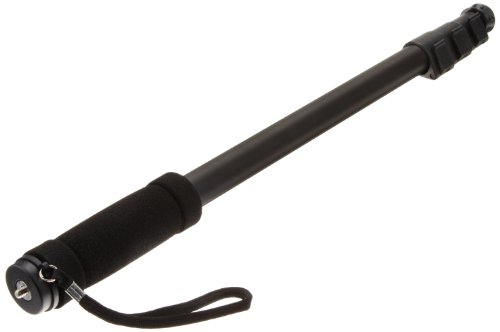


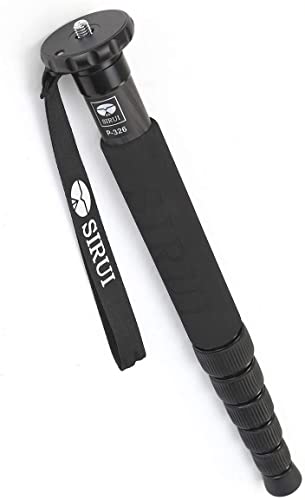
As an Amazon Associate we earn from qualifying purchases at no extra cost to you. Ratings are shown as listed on Amazon.
Quick comparison: three choices for different kits
| Model | Material | Sections | Maximum height | Folded length | Weight | Rated load |
|---|---|---|---|---|---|---|
| Manfrotto XPRO+ 5-section (MMXPROA5B) | Aluminum | 5 | About 163 cm | About 44 cm | About 0.7 kg | About 6 kg |
| Sirui P-326 | Carbon fiber | 6 | About 154 cm | About 38 cm | About 0.4 kg | About 10 kg |
| Gitzo GM4562 | Carbon fiber | 6 | About 154 cm | About 44 cm | About 0.6 kg | About 30 kg |
Specifications are approximate and can vary by version or region. Maximum load ratings are manufacturer figures, not a promise that every head-and-camera combination will feel equally rigid. A head, quick-release plate, and accessories add weight and height; include them when checking your setup.
Choose by shooting situation
Travel and compact camera bags: Sirui P-326
The P-326 is the lightest and shortest-folding pick here, making it attractive for day hikes, city travel, and wildlife walks where every item competes for space. Its six sections pack down neatly, but more sections mean more locks to extend and clean. For a light mirrorless kit or a moderate telephoto, that trade-off can make sense.
Its high listed capacity should not be read as meaning it will feel equally steady with a long, front-heavy lens. A monopod’s diameter, section overlap, head, and technique matter alongside its rating. If you regularly use a large super-telephoto, favor a stouter support and verify the assembled setup with the lens collar.
One monopod for sports and general use: Manfrotto XPRO+ 5-section
The aluminum XPRO+ is a practical middle ground for sideline sports, events, and occasional travel. It folds to roughly 44 cm and has fewer sections than the Sirui, so deployment is less fiddly. Aluminum generally costs less than comparable carbon fiber, though it is heavier and can feel colder to hold in winter.
This is the sensible choice for photographers who want a familiar, all-purpose support without prioritizing the lightest possible pack. Its load rating is lower than the two carbon-fiber options in this comparison, so check the weight of your camera, lens, head, and accessories together.
Large wildlife lenses and frequent professional use: Gitzo GM4562
The GM4562 is the premium, high-capacity option. Its carbon-fiber construction keeps weight moderate for its class, while its rated load makes it a better match for substantial camera-and-lens combinations than a compact travel monopod. That extra headroom is useful when tracking wildlife or supporting a heavy lens through a long event.
It costs considerably more than entry-level aluminum models and folds longer than the Sirui P-326. Choose it when the lens and frequency of use justify the investment, not just because the biggest capacity number looks reassuring. For very long lenses, mount the monopod to the lens’s tripod collar when the lens maker recommends it; attaching support only to the camera body can place awkward leverage on the mount.
What matters more than the headline capacity
Load capacity and usable height
Add the camera, lens, head, plate, microphone, and any other gear that stays on the monopod. Leave a margin rather than shopping right at the stated limit, particularly with a long lens that shifts the center of gravity. Also compare maximum height with your eye-level shooting position. A monopod that is too short forces a hunched stance; a tall model can be extended less, which may improve rigidity.
Folded length and portability
Measure your bag’s longest usable compartment, not just its outside dimensions. A compact six-section model is easier to stow, while fewer sections can mean faster setup and less time cleaning locks. If the monopod will be carried externally, check the closed length against airline or local transport rules rather than assuming it qualifies as cabin baggage.
Foot designs: fixed, rubber, or spiked
A broad rubber foot grips indoor floors and hard surfaces while helping avoid scratches. A small, replaceable rubber foot is a straightforward general-purpose choice, but it can skate on slick ground. A retractable or replaceable spike can bite into soil and grass; it is less suitable for polished floors and can damage surfaces. Some monopods use a pivoting foot for tracking, letting the shaft angle while the foot stays planted. That is useful for sports panning, but a pivot does not turn the monopod into a self-supporting tripod.
Locking systems: twist versus flip
Flip locks are easy to see and operate quickly, including with gloves, but exposed levers can catch on straps and may need occasional tension adjustment. Twist locks have a cleaner profile and can be less likely to snag, but they require a firm, consistent turn and are harder to judge at a glance. Whichever style you choose, extend the sections fully and check each lock before mounting expensive gear.
A quick fit check before buying
- For travel: Prioritize folded length and total carry weight. Choose the Sirui P-326 if a compact carbon-fiber support fits your load and budget.
- For regular sports or events: Favor fast-to-operate locks and a foot that stays planted during panning. The Manfrotto XPRO+ is the balanced aluminum option here.
- For large wildlife lenses: Prioritize stiffness, capacity headroom, and a compatible lens-collar mount. The Gitzo GM4562 is the premium choice among these three.
- For occasional, budget-conscious use: Look at aluminum monopods from established camera-support makers with a suitable load rating, replaceable foot, and readily available parts. You may gain more by buying a sturdy model than by paying extra for carbon fiber you rarely carry.
Use and ownership: keep it stable and working
Set the foot on firm ground, spread your stance, and lean the monopod slightly toward your body so you can control it. Avoid extending the thinnest sections more than necessary with a heavy lens. When following action, pivot smoothly from the foot and keep the camera balanced rather than forcing the monopod sideways through its locks.
Dirt and grit are common causes of sticky sections and worn locks. After beach or dusty use, wipe the exterior before collapsing the legs; grit pushed inside can scratch the tubes. If the manufacturer permits disassembly, clean sections according to its instructions and let them dry fully before storage. Do not add oil or grease unless the maker specifies it, since lubricant can attract debris or interfere with locking surfaces.
Inspect rubber feet for splits and loss of grip, spikes for looseness, and locks for slipping. Replace worn feet and tighten or service locks using the manufacturer’s guidance. A monopod is only as reliable as its contact with the ground and its weakest lock, so a brief check before each shoot is worthwhile.


Write Your Review
No reviews yet. Be the first to share your experience!