

Key takeaways
- Compare the best compost bins for small yards, from compact sealed tumblers to tidy static bins that keep odor down in tight outdoor spaces.
- Top Pick: FCMP Outdoor IM4000 Dual Chamber Tumbling Composter
- Runner-up: Miracle-Gro Dual Chamber Compost Tumbler
- Also consider: Envirocycle Composting Tumbler Bin and Compost Tea Maker
A small yard changes the composting equation. There is no far corner where a steaming open pile can sit unnoticed, and the bin usually ends up a few steps from the patio door, the grill, or a neighbor’s fence. That means the two things that matter most are footprint and smell. A bin that seals well, drains properly, and keeps the mix balanced will stay nearly odorless even in warm weather, while a loose, soggy pile in the same spot can sour a whole seating area within days.
The good news is that compact composting gear has improved a lot. Sealed tumblers keep scraps enclosed and off the ground, dual chambers let one batch finish while the other keeps taking fresh peelings, and smaller static bins now come with vented walls and locking lids that manage airflow without inviting flies. This guide compares five well-regarded options sized for tight lots and side yards.
As an Amazon Associate, we earn from qualifying purchases.
Quick answer
For most small yards, a sealed dual chamber tumbler is the safest bet: the FCMP Outdoor IM4000 and the Miracle-Gro Dual Chamber both enclose scraps fully, turn without a fork, and keep odor contained. Choose the Envirocycle if looks matter near a patio, the VIVOSUN for a larger dual chamber on a frame, and the Redmon if you prefer a simple stationary bin with ground contact.
How to choose
Start with footprint, not capacity
Measure the patch you can actually give up, including the swing room a tumbler needs to rotate and space to stand with a bucket. Most compact tumblers occupy a square of roughly two to three feet per side. Static bins sit still, so they can tuck into a narrower strip along a fence, but you still need room to lift the lid and reach in with a fork. If the only spot is a paved patio corner, an enclosed tumbler on a stand keeps everything contained and avoids staining the surface below.
Match capacity to your scraps
A household that cooks most nights produces a steady flow of vegetable trimmings, coffee grounds, and eggshells, plus seasonal waves of leaves and grass. Small yards rarely generate mountains of yard waste, so bins in the range of about 35 to 65 gallons suit most homes. Dual chamber designs effectively double your working room because one side cures while the other fills. Oversizing is a real mistake in a tight space: a half-empty large bin dries out, cools down, and breaks material down slowly.
Odor control comes from balance and sealing
Smell is almost never caused by the bin itself. It comes from a mix that is too wet, too heavy on fresh kitchen scraps, or starved of air. A well-designed bin helps in three ways. A lid that closes firmly keeps flies out and holds light odors in. Vents or fins move air through the pile so the process stays aerobic, the single biggest factor in keeping things sweet rather than sour. And drainage matters: tumblers that collect or shed excess liquid prevent the swampy bottom layer that produces the worst smells. Whatever bin you pick, layer dry leaves, shredded cardboard, or straw over each addition of kitchen scraps. That habit does more for odor than any feature on a spec sheet.
Tumbler or static bin
Tumblers mix with a turn of the drum, which speeds things up and keeps the contents fully enclosed, a real advantage near seating areas and curious pets. The trade-off is capacity per batch and the effort of spinning a heavy, wet drum. Static bins hold more for their footprint and let worms and soil organisms move in from below, but they rely on you to stir with a fork and they expose the top layer whenever you add scraps.
Materials and weather
Look for UV-resistant recycled resin or sturdy polypropylene that will not crack through freeze and thaw cycles. Metal frames should be galvanized or powder coated to resist rust. Latches and doors get daily use, so doors that stay on their tracks and lids that seat with a positive click matter more than decorative touches.
FCMP Outdoor IM4000 Dual Chamber Tumbling Composter

The IM4000 is the benchmark compact tumbler, and its 37 gallon capacity split across two chambers fits the rhythm of a small household well. One side fills with fresh scraps while the other finishes, so you always have somewhere to put tonight’s peelings without disturbing a nearly done batch. The octagonal drum rolls smoothly on its frame, and deep fins give your hands purchase even with gloves on. Aeration holes around the body keep air moving, the main reason owners report so little smell from a bin that sits close to the house.
Because the drum is fully enclosed and raised off the ground, it discourages rodents and keeps dogs from investigating. The sliding door is wide enough for a kitchen caddy, and the black recycled resin absorbs warmth from the sun to keep the process active. The finished unit tucks into a corner roughly the size of a large patio chair. For a first composter in a tight yard, this is the design most people end up recommending to neighbors.
Miracle-Gro Dual Chamber Compost Tumbler
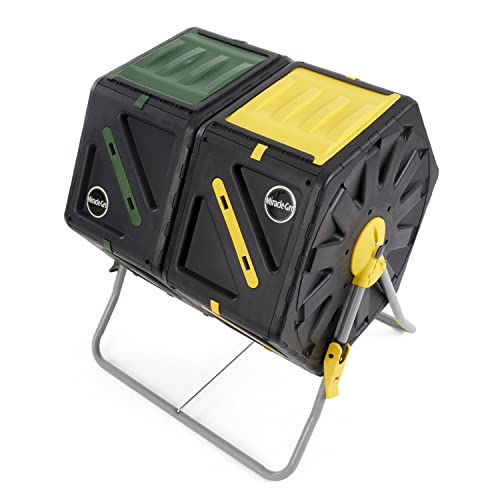
Miracle-Gro’s smaller dual chamber model pairs two 18.5 gallon sections in a footprint that suits patios and narrow side yards. The barrel turns on a sturdy base, and internal mixing bars break up clumps as it rotates, so material processes evenly instead of forming a single wet ball. Two sliding doors, one per chamber, keep the filling side and the finishing side straight.
The heavy-duty resin construction is built for year-round outdoor use, and the enclosed design keeps odor contained and pests out. Gardeners with modest scrap volume, a couple or a small family, often find this size easier to keep hot and active than a larger drum they cannot fill. It also looks tidy enough to sit near a back door, which encourages the daily habit that makes composting work.
Envirocycle Composting Tumbler Bin and Compost Tea Maker

The Envirocycle takes a different approach: a rounded 35 gallon drum that rolls directly on its own base rather than spinning on a frame. There is no assembly at all, and the smooth shape is the least obtrusive option here for a visible patio corner. As the drum turns, liquid drains into the base reservoir, producing compost tea you can dilute and pour on beds, while the solids stay drier above, a combination that keeps odor notably low.
The door locks securely, the materials are food safe and free of rust concerns, and the whole unit can be rolled aside for cleaning or into a sunnier spot in winter. Capacity is modest, so it suits households whose waste is mostly kitchen scraps rather than autumn leaves. If appearance and simplicity rank as high as speed, this is the bin that blends into a designed outdoor space instead of announcing itself.
VIVOSUN Outdoor Tumbling Composter Dual Rotating Batch Bin

The VIVOSUN offers a 43 gallon dual chamber drum on a galvanized steel frame, giving a little more working volume than the smallest tumblers while staying compact. Adjustable air vents let you tune airflow to the season, opening them in summer when the mix runs wet and closing them to hold warmth in cooler months. Deep fins make the drum easy to rotate even when one side is fully loaded.
Twin chambers support the same continuous routine as the other dual designs here: fill one, let it cook, and harvest while the second takes over. The polypropylene body resists sun and weather, and the enclosed barrel keeps smells in and animals out. Households that generate a bit more green waste, or that garden actively and want finished compost on a steady cycle, will appreciate the extra room.
Redmon Green Culture 65 Gallon Compost Bin

Not everyone wants a tumbler. The Redmon Green Culture is a stationary 65 gallon bin with a lift-off lid, four access doors at the base, and vent holes in the walls. It sits directly on soil, so worms and microbes move up into the pile and finished compost can be drawn from the bottom doors while fresh material goes in the top.
The footprint is about 26 inches square, similar to a tumbler, but the taller profile holds more per square foot of ground. There is no drum to spin, so turning is up to you and a fork, and odor control depends on your layering habits rather than a sealed barrel. Made largely from recycled plastic with UV protection, it assembles in minutes without tools. For a sheltered corner where the bin can sit on bare earth and stay mostly out of sight, it is a practical, low-maintenance choice.
Who should skip
Skip compost bins altogether if your household produces almost no plant-based scraps, in which case a countertop collection caddy with municipal pickup may serve you better. Skip the larger static bins if your yard is mostly paved, since they need soil contact to work as designed. Skip tumblers if rotating a heavy drum would be difficult; a static bin with a good aerator tool is kinder on backs. And skip the smallest models if you rake up several bags of leaves each fall, because leaf volume overwhelms compact chambers quickly and a simple open bay handles that surge better.
Frequently Asked Questions
How do I keep a compost bin from smelling in a small yard?
Keep the mix roughly balanced between fresh green scraps and dry brown material such as leaves, straw, or shredded cardboard, and add a layer of browns every time you add kitchen waste. Turn or tumble regularly to keep air in the pile, and avoid meat, dairy, and oils, which cause most complaints. A sealed tumbler in partial sun usually stays close to odorless.
How long does compost take in a tumbler?
A well-fed, regularly turned tumbler can produce finished compost in four to eight weeks in warm weather, though most batches take two to three months. Cold winters slow the process considerably. Dual chamber models help because one side finishes undisturbed while you keep adding scraps to the other.
Can I compost on a patio or paved surface?
Yes, with an enclosed tumbler on a stand or base. Tumblers contain liquid and material, so they work on paving without staining when they drain as designed. Static bins are meant to sit on soil, where they benefit from worms and drainage, so they are a poor match for solid surfaces.
What should never go into a backyard compost bin?
Leave out meat, bones, dairy, cooking oils, and sauces, since they attract pests and create odors. Also avoid diseased plants, weeds that have gone to seed, glossy paper, and pet waste. Citrus and onion scraps are fine in modest amounts despite old advice to the contrary.
Final verdict
For a small yard, the winning formula is an enclosed bin, a modest footprint, and a routine you can keep up. The FCMP Outdoor IM4000 is the most balanced starting point, with two chambers, proven aeration, and a size that fits both the space and the scrap output of most homes. The Miracle-Gro suits smaller households and tighter patios, the Envirocycle wins on looks and simplicity, the VIVOSUN adds capacity and adjustable vents, and the Redmon serves gardeners who prefer a stationary bin on soil. Pick the design that matches your surface and your scraps, layer dry material over every addition, and odor should never be the reason the bin ends up neglected.
More from Amazon
Programs that pair well with the guide above. Offers and eligibility are set by Amazon and may change.
Collect the home and kitchen items you want in one registry that guests can shop from.
Create a wedding registrySet up recurring deliveries of everyday items on eligible products. Terms and savings are set by Amazon.
Explore Subscribe & SaveFree shipping on eligible items, Prime Video and more. Eligible new members can start with a free trial.
Start a Prime free trialAudiobooks and podcasts to listen to on the go. Eligible new members can start with a free trial.
Try Audible freeAs an Amazon Associate we earn from qualifying purchases.






Write Your Review
No reviews yet. Be the first to share your experience!