

Key takeaways
- The best contact grill for countertop cooking is the one whose plate area, hinge movement, temperature control, and cleanup routine match the food you make most often—not necessarily the model with the highest wattage. Our top picksTop pickCuisinart Panini Press…
The best contact grill for countertop cooking is the one whose plate area, hinge movement, temperature control, and cleanup routine match the food you make most often—not necessarily the model with the highest wattage.
Our top picks

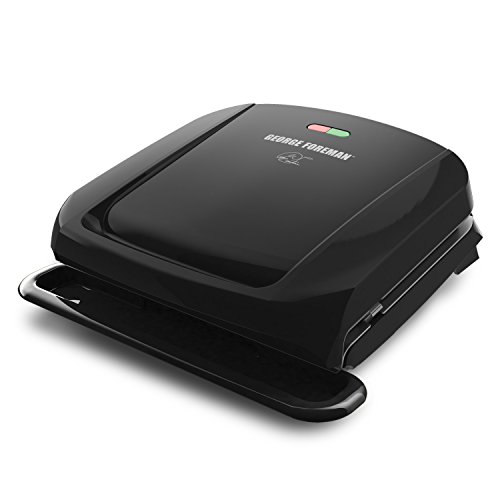


As an Amazon Associate we earn from qualifying purchases at no extra cost to you. Ratings are shown as listed on Amazon.
Quick picks by cooking situation
| Best for | Recommended type or model | Why it fits | What to compromise on |
|---|---|---|---|
| Small kitchens and occasional sandwiches | Compact two-plate panini press | Usually 9–11 inches wide, simple controls, easy storage | Limited room for more than two small sandwiches |
| Families cooking several portions | Cuisinart Griddler Elite | Large cooking area, adjustable temperature, reversible plates, and grill/griddle flexibility | Heavier and more expensive than a basic press |
| Precise grilling with minimal guesswork | Breville Smart Grill | Independent plate temperature control, open-flat operation, and a floating top plate | Large storage footprint and premium price |
| Automatic doneness guidance | Tefal OptiGrill range | Automatic programs and thickness-sensing cooking assistance | Electronics add cost and may be unnecessary for simple toasties |
| Lowest purchase cost | Basic hinged sandwich or panini press | Often available for roughly $30–$70 | Usually fixed plates, one heat setting, and less adaptable hinges |
What matters most when comparing contact grills
Cooking-surface size
Plate dimensions determine whether a grill is a snack appliance or a practical meal appliance. A compact press with plates around 9 by 8 inches can usually cook two standard sandwiches, two chicken breasts, or one large quesadilla. Models with plates around 12 by 10 inches provide noticeably more working room and are better for four sandwiches or several portions of vegetables.
Do not compare only the outside dimensions. A grill may be 14 inches wide but have raised borders, sloped plates, or a hinge that makes part of the surface awkward to use. Look for the usable flat area and measure the clearance around the appliance, including space for the lid to open.
For a household cooking contact-grill meals two or three times per week, a surface of approximately 100–120 square inches is a useful middle ground. Smaller plates save counter and cupboard space; larger plates reduce the number of batches and therefore the total cooking time.
Floating hinges: essential for thick food, optional for toast
A floating hinge lets the top plate rise and remain roughly parallel to the food. This matters when cooking thick panini, steak, chicken pieces, or vegetables. Without it, a rigid lid presses hardest near the hinge and may crush the back of a sandwich while leaving the front less browned.
Hinge quality is more important than simply having the feature. A good hinge should move smoothly, hold the lid at several heights, and avoid excessive side-to-side wobble. If your main use is thin sliced bread, a fixed hinge is acceptable. If you regularly cook uneven or thick food, choose a floating or adjustable-height hinge.
Temperature control and cooking feedback
Basic presses often use one thermostat that cycles between a broad temperature range. They can make grilled cheese and panini well, but they offer limited control over delicate foods. Adjustable dial controls are more useful because you can select lower heat for bread and tortillas or higher heat for browning meat and vegetables.
Independent controls for the upper and lower plates, as found on appliances such as the Breville Smart Grill, are helpful when the two surfaces have different jobs. For example, the bottom can provide stronger browning while the top is set lower to reduce scorching on bread.
Preset programs, such as those used by Tefal OptiGrill models, suit cooks who prefer guided operation. They are convenient but do not eliminate the need to check food thickness, starting temperature, and preferred doneness. A simple adjustable dial can be the better value for an experienced cook.
Removable plates and the cleaning trade-off
Removable plates are one of the most valuable ownership features. They let you wash the cooking surfaces separately and make it easier to reach food residue around the hinge. Reversible plates add another layer of usefulness: one side may be ridged for grilling while the other is flat for eggs, pancakes, or a larger searing surface.
Fixed plates can heat evenly and may make the appliance slimmer, but cleaning requires wiping in place. Never assume a plate is dishwasher-safe just because it is removable; check the manufacturer’s instructions. Repeated dishwasher cycles can dull a nonstick coating, especially when abrasive detergent and high heat are involved.
Grease drainage
Look for a channel that leads grease into a removable cup rather than a shallow gap at the front edge. A drainage cup with at least 50–100 milliliters of capacity is generally sufficient for several sandwiches or a batch of lean meat. A sloped plate can help fat move away from food, but too much slope may cause cheese or fillings to slide.
Grease drainage is not a substitute for sensible loading. Excess oil can overflow into the hinge or onto the counter if food is placed directly over the drain channel. Trim visibly heavy fat, use less added oil than you would in a frying pan, and empty the cup before it becomes difficult to handle.
Head-to-head: compact press versus multifunction grill
A compact panini press wins when storage and simplicity are the priority. It heats quickly, has fewer parts to fail, and is often inexpensive. Its limitations are predictable: a smaller plate, fewer temperature settings, and little scope for cooking food flat or using the appliance as an open grill.
A multifunction grill such as the Cuisinart Griddler Elite takes more cupboard space but can replace several smaller appliances. Its removable, reversible plates and open-flat configuration make it suitable for sandwiches, burgers, vegetables, and breakfast foods. The cost is greater weight, more pieces to clean, and a longer setup time.
The Breville Smart Grill sits toward the premium end and is particularly attractive if you want strong temperature control and the option to cook with the lid open or closed. It is less appealing for a small apartment where the grill will spend most of its life stored in a narrow cupboard.
Decision matrix for real kitchens
| Your situation | Look for | Avoid overpaying for |
|---|---|---|
| Budget under about $70 | Reliable thermostat, cool-touch handle, drip channel, and a coating with clear care instructions | App connectivity and complicated presets |
| Cooking for one or two | 80–100 square inches of usable plate area and a vertical or compact storage design | A large open-flat grill unless you use that function often |
| Cooking four or more portions | At least 110 square inches, a floating hinge, and a removable grease cup | A very small press that forces multiple batches |
| New to countertop grilling | Preset programs, clear indicator lights, and an audible completion signal | Very high maximum temperature without feedback |
| Frequent use | Replaceable or durable plates, a strong hinge, accessible drain channels, and a warranty | Thin plastic hinges and plates that cannot be removed |
Counter and storage calculations
Measure the appliance in its stored position, then allow room to lift the lid. As an example, a grill measuring 14 by 13 inches occupies about 182 square inches of counter footprint. A compact 11 by 10-inch press occupies about 110 square inches—roughly 40 percent less counter area. That difference is meaningful in a small kitchen, particularly if the grill cannot be stored vertically.
For cooking capacity, assume that a 12 by 10-inch surface provides 120 square inches before subtracting borders and spacing. If each sandwich needs about 45 square inches to avoid touching its neighbor, the practical capacity is two sandwiches, not four. A larger plate may still save time if it allows two thick sandwiches to cook without crowding or leaking filling.
How to use and maintain a contact grill
- Place the grill on a heat-resistant, level surface with open space around the sides and rear. Do not push it against a wall while operating.
- Preheat fully before adding food. Starting on a cold plate encourages sticking and produces uneven browning.
- Use moderate quantities of filling. Overstuffed sandwiches are a common cause of grease and cheese entering the hinge.
- Close the lid gently instead of forcing it down. Let the floating hinge accommodate the food’s thickness.
- Unplug the appliance and allow it to cool until warm, not hot. Wipe loose residue with a soft cloth, then wash removable plates according to their instructions.
- Clean the drainage channel and grease cup after every greasy meal. Dried fat is harder to remove and can produce smoke during the next use.
The coating is usually the first surface to show wear, especially when metal utensils, aerosol oil sprays, or abrasive sponges are used. Silicone or wooden tools, a soft sponge, and hand-washing when recommended will extend its useful life. If the coating is peeling, the plate is warped, or the hinge no longer sits level, replacement is safer and more practical than trying to restore the surface.
Final buying recommendation
Choose a compact fixed-plate press for occasional sandwiches and limited storage. Choose a removable-plate multifunction grill for varied meals and frequent use. Choose a premium model with independent controls or automatic programs when precise cooking is worth the extra cost. For most countertops, the strongest all-round specification is around 100–120 usable square inches, a smooth floating hinge, adjustable heat, removable plates, and a properly designed grease cup.


Write Your Review
No reviews yet. Be the first to share your experience!