
Our Short List of 3

- Best for: gardeners with arthritis, carpal tunnel, or limited grip strength who dig in loose to medium soil.
- Blade material: die-cast aluminum, rust proof
- Grip: Natural Radius Grip, non-latex thermoplastic
- Blade shape: pointed trowel for digging and planting
- Dimensions: not stated

- Best for: filling pots and planters, moving potting mix, and scooping compost in bulk.
- Item dimensions: 15 x 4 x 3.75 inches
- Blade material: die-cast aluminum, serrated edge
- Grip: Natural Radius Grip, non-latex thermoplastic
- Model number: 106
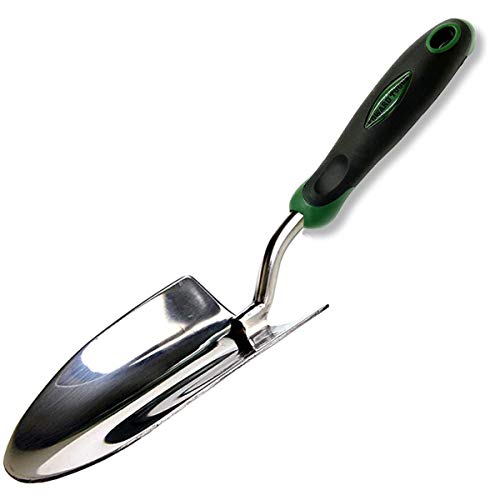
- Best for: digging in rocky soil, heavy clay, and compacted beds where aluminum blades flex or bend.
- Material: polished stainless steel, rust resistant
- Grip type: contoured, ergonomic, soft rubber
- Head: oversized trowel head for quicker digging
- Design: one-piece, bend proof
All 4 Picks at a Glance
| Product | Specs | Action |
|---|---|---|
| Radius Garden 100 Ergonomic Aluminum Hand Trowel |
| Check price on Amazon |
| Radius Garden 106 Ergonomic Aluminum Hand Scooper |
| Check price on Amazon |
| Edward Tools Bend-Proof Garden Trowel |
| Check price on Amazon |
 Edward Tools Transplanter Trowel |
| Check price on Amazon |
Key takeaways
- Compare four ergonomic garden hand tools with comfort grips that ease wrist strain, from a radius-grip trowel and scooper to bend-proof steel picks.
A standard hand trowel asks the fingers and wrist to do all the work, with a straight handle that forces a tight squeeze and a bent wrist on every scoop. An ergonomic tool changes that bargain by shaping the grip around the hand, so the palm and forearm carry more of the load and the wrist stays closer to neutral. The trade-off is real: the most comfortable grips are bulkier to store, and some comfort-first blades are softer than forged steel, so the right choice depends on whether sore joints or tough soil matters more in your beds.
This guide serves gardeners whose hands tire before their beds are finished, including people with arthritis or carpal tunnel, raised-bed growers who plant in long sessions, and container gardeners who work at close range. The four tools below were chosen from the names and specifications on their Amazon pages, with the grip design, blade material, and published dimensions weighed against the jobs each tool actually does.
Quick Picks
As an Amazon Associate we earn from qualifying purchases.
| Product | Best for | Key spec from title |
|---|---|---|
| Radius Garden 100 Ergonomic Aluminum Hand Trowel | Sore wrists and everyday digging | Ergonomic aluminum hand trowel |
| Radius Garden 106 Ergonomic Aluminum Hand Scooper | Moving large scoops of potting mix | Ergonomic aluminum hand scooper |
| Edward Tools Bend-Proof Garden Trowel | Rocky or heavy clay soil | Heavy duty polished stainless steel |
| Edward Tools Transplanter Trowel | Seedlings and bulbs at even depth | Transplanter trowel with depth guide |
How to Choose
Grip shape and wrist position
The grip decides how a hand tool feels after an hour, more than the blade does. A looped or circular grip lets the palm push instead of the fingers squeezing, which spreads force across the hand and keeps the wrist straighter. A contoured rubber grip with finger grooves and a palm rest gives a similar benefit in a slimmer package that fits a crowded tool tote. For your own hands: a wide loop suits large palms and weak grips, while a slim contoured handle suits small hands and precise work. Check whether the listing names the grip as ergonomic rather than merely soft, since a thin rubber sleeve over a straight handle does little for wrist strain.
Blade material and soil type
Aluminum blades are light and never rust, which makes them kind to tired arms and safe to leave damp in a tote, yet they flex sooner than steel when pried against stones or thick roots. Stainless steel stays sharp, resists rust, and powers through rocky ground, but it adds weight that tired wrists notice by the end of a session. Carbon steel is the toughest of the three and holds an edge well, though it needs wiping and drying to stay rust free. Match the metal to your ground: loose potting mix and raised-bed soil suit aluminum, while heavy clay, gravel, and root-filled beds call for steel.
Length, width, and reach
Overall length and blade width decide whether a tool fits the job or fights it. A trowel around twelve inches long gives enough leverage for digging without forcing the gardener to crouch low over the bed, while a wider blade moves more soil per scoop and a narrow blade slips between crowded seedlings without disturbing their roots. Scoopers run larger still, trading precision for volume when filling pots. Compare the published dimensions on the listing before buying, and treat a missing dimension as a warning sign rather than a detail to guess. A tool that is too short strains the back, and one that is too wide cannot work close to stems.
Weight and balance for long sessions
A few ounces separate a tool that feels lively from one that drags the arm down over a morning of planting. Lightweight aluminum tools in the six to eight ounce range let gardeners with limited strength keep working, while heavier steel tools repay their weight with digging power in stubborn ground. Balance matters as much as total weight: a head-heavy tool pulls the wrist forward with every lift, while a tool balanced near the grip feels steadier and more controlled. When a listing states the weight, use it to compare tools of the same type, and favor the lighter option when two tools would otherwise do the same job.
The 4 Best Options
Radius Garden 100 Ergonomic Aluminum Hand Trowel
- Best for: gardeners with arthritis, carpal tunnel, or limited grip strength who dig in loose to medium soil.
- Blade material: die-cast aluminum, rust proof
- Grip: Natural Radius Grip, non-latex thermoplastic
- Blade shape: pointed trowel for digging and planting
- Dimensions: not stated
gardeners with arthritis, carpal tunnel, or limited grip strength who dig in loose to medium soil.
the wide loop grip takes more storage space than a straight handle, and the aluminum blade is not meant for prying against stones.
The Radius Garden 100 is the tool for gardeners whose wrists give out before their planting list does. Its patented circular Natural Radius Grip fills the palm and lets the gardener push with the whole hand instead of squeezing a narrow handle, which keeps the wrist near neutral through repeated digging. The die-cast aluminum blade is light, rust proof, and strong enough for loose and medium soils, and the non-latex thermoplastic grip stays secure when wet or muddy. It suits everyday planting, transplanting, and weeding in raised beds and containers.
Radius Garden 106 Ergonomic Aluminum Hand Scooper
- Best for: filling pots and planters, moving potting mix, and scooping compost in bulk.
- Item dimensions: 15 x 4 x 3.75 inches
- Blade material: die-cast aluminum, serrated edge
- Grip: Natural Radius Grip, non-latex thermoplastic
- Model number: 106
filling pots and planters, moving potting mix, and scooping compost in bulk.
the large blade is clumsy in tight spots between crowded seedlings, so keep a narrow trowel for close work.
The Radius Garden 106 turns the same Natural Radius Grip into a soil-moving tool for potting days. Its oversized scooper blade carries far more mix per scoop than a standard trowel, so filling a row of containers takes fewer trips between the bag and the bench. A serrated edge on the blade cuts through soil bags and twine, which saves a separate trip for scissors. The die-cast aluminum body stays light despite its size, and the comfortable grip keeps the wrist steady while lifting full scoops. It is the pick for gardeners who move a lot of mix in one session.
Edward Tools Bend-Proof Garden Trowel
- Best for: digging in rocky soil, heavy clay, and compacted beds where aluminum blades flex or bend.
- Material: polished stainless steel, rust resistant
- Grip type: contoured, ergonomic, soft rubber
- Head: oversized trowel head for quicker digging
- Design: one-piece, bend proof
digging in rocky soil, heavy clay, and compacted beds where aluminum blades flex or bend.
the oversized head and steel body weigh more than an aluminum trowel, so it tires weak wrists faster on long potting days.
The Edward Tools Bend-Proof Trowel is built for ground that stops lighter tools, with a one-piece polished stainless steel body that resists bending in rocky and heavy clay soils. The oversized head moves more soil with each scoop, which speeds up bed preparation when the ground fights back. A contoured ergonomic grip with soft rubber finger holds and a palm rest reduces hand fatigue during long digging sessions, and the rust-resistant finish stands up to damp storage. It suits gardeners who need strength first and comfort second, without giving up either entirely.
Edward Tools Transplanter Trowel
- Best for: transplanting seedlings, planting bulbs, and setting small plants at consistent depth.
- Blade material: bend-proof, rust-proof aluminum
- Depth guide: engraved depth markings on the blade
- Handle: large soft rubber grip with palm rest
- Warranty: lifetime warranty
transplanting seedlings, planting bulbs, and setting small plants at consistent depth.
the narrow blade moves little soil per scoop, so it is slow for filling pots, and the aluminum blade should not be used to pry rocks.
The Edward Tools Transplanter Trowel is the precision tool of this group, made for setting seedlings and bulbs at the same depth every time. Its narrow aluminum blade slips between crowded plants without disturbing nearby roots, while engraved depth markings on the blade let the gardener check planting depth at a glance. The large soft rubber handle with a palm rest spreads pressure across the hand, and the bend-proof, rust-proof blade holds up through seasons of transplanting. A lifetime warranty backs the build, which makes it a steady choice for gardeners who transplant often.
Which One Fits Your Situation
Your wrists or hands give out first
Choose the Radius Garden 100 when sore joints are the main limit, since its circular grip spreads the load across the palm and keeps the wrist near neutral. The Radius Garden 106 suits the same gardener on potting days, when the job is moving mix rather than digging. Both keep the hand open and relaxed, and either one lets a gardener with arthritis or carpal tunnel work longer before needing a rest.
Your soil is heavy clay or full of stones
Choose the Edward Tools Bend-Proof Trowel, because its one-piece stainless steel body and oversized head power through ground that bends aluminum blades. The Radius tools suit loose and medium soils, but they are the wrong pick where the blade must lever against buried stones or thick roots. Keep the steel trowel for the hard beds and save the lighter tools for the easy ones.
You fill pots and planters all afternoon
Choose the Radius Garden 106 scooper, since its large blade carries more mix per scoop and its serrated edge opens soil bags without a second tool. The Edward Tools Transplanter is the wrong tool here, as its narrow blade would take many more scoops to fill the same pots. Pair the scooper with the Radius 100 for the planting holes that follow.
You transplant seedlings and bulbs
Choose the Edward Tools Transplanter Trowel, because its narrow blade and engraved depth markings place each plant at the same depth without disturbing its neighbors. The Radius Garden 100 can dig the holes, yet it lacks the depth guide and the slim profile that make transplanting precise. Use the transplanter whenever spacing is tight and depth matters.
Common Mistakes
- Buying a comfort grip without checking the blade metal, then bending an aluminum trowel in rocky soil.
- Choosing the widest blade available and finding it cannot work between crowded seedlings.
- Ignoring published dimensions and ending up with a tool too short for comfortable digging.
- Storing tools loose in a damp shed instead of hanging them, which shortens the life of any grip.
- Using a trowel as a pry bar against stones and roots, which bends blades and cracks handles.
Frequently Asked Questions
What makes a garden tool ergonomic?
An ergonomic garden tool shapes the grip around the hand so the wrist stays near neutral and the palm shares the load. Looped grips, contoured rubber handles with palm rests, and finger grooves all reduce the squeezing force needed, which eases strain for gardeners with arthritis, carpal tunnel, or simply tired hands after a long session.
Are aluminum garden trowels strong enough for everyday use?
Aluminum trowels handle everyday digging, planting, and weeding in loose to medium soils without trouble, and their rust-proof blades suit damp conditions. They flex sooner than steel when pried against stones or thick roots, so gardeners with heavy clay or rocky beds should choose stainless steel instead.
How do I choose between a trowel and a scooper?
Choose a trowel for digging planting holes, transplanting, and working close to stems, since its pointed blade offers control in tight spaces. Choose a scooper for moving potting mix, compost, or soil in volume, because its wide blade carries more per scoop and speeds up filling pots and planters.
Do ergonomic grips help with arthritis?
A well-shaped ergonomic grip can help by spreading force across the palm and reducing the squeeze needed to hold the tool, which many gardeners with arthritis find easier on sore joints. Look for a looped or palm-rest grip rather than a thin rubber sleeve, and stop to rest when pain appears rather than pushing through it.
More from Amazon
Programs that pair well with the guide above. Offers and eligibility are set by Amazon and may change.
Collect the home and kitchen items you want in one registry that guests can shop from.
Create a wedding registrySet up recurring deliveries of everyday items on eligible products. Terms and savings are set by Amazon.
Explore Subscribe & SaveFree shipping on eligible items, Prime Video and more. Eligible new members can start with a free trial.
Start a Prime free trialAudiobooks and podcasts to listen to on the go. Eligible new members can start with a free trial.
Try Audible freeAs an Amazon Associate we earn from qualifying purchases.
Write Your Review
No reviews yet. Be the first to share your experience!