

Key takeaways
- Typical power: 1,200–3,400 watts for residential patio units.
- Coverage: roughly 25–100 square feet of useful comfort, depending on wind, mounting height, and climate.
- Mounting: wall, ceiling, recessed ceiling, pole, tripod, or portable stand.
- Operating sound: silent in models without a fan.
- Installation: plug-in units may be simple, but 2,000 watts at 120 volts draws about 16.7 amps and can overload a shared circuit.
The best infrared patio heaters are electric short-wave models for clean, targeted heat and simple installation, while gas-fired infrared heaters are the better choice for large, open patios where maximum coverage and portable placement matter more than convenience.
Our top picks

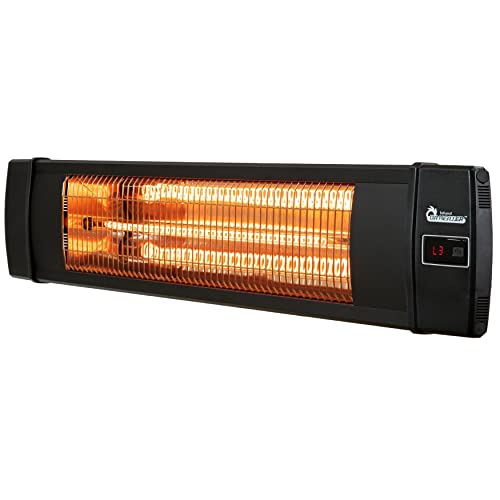


As an Amazon Associate we earn from qualifying purchases at no extra cost to you. Ratings are shown as listed on Amazon.
Quick picks by patio situation
| Situation | Best choice | Why it fits | Typical purchase range |
|---|---|---|---|
| Small covered balcony or dining area | 1,500–2,400 W electric wall or ceiling heater | Focused warmth, no fuel storage, quiet operation | $250–$800 |
| Large open patio used frequently | Gas infrared tower or overhead unit | Higher heat output and no dependence on a high-amperage circuit | $300–$1,500 |
| Rental home or occasional use | Portable electric infrared heater | Moves without permanent installation and avoids propane handling | $150–$500 |
| Built-in outdoor kitchen or premium entertaining area | Recessed electric short-wave heater | Low visual profile and precise zone heating | $700–$2,000 per unit |
Electric versus gas infrared: the important difference
Infrared heaters warm people, furniture, and nearby surfaces directly instead of primarily heating the air. That makes them more useful than conventional fan heaters in breezy outdoor spaces, but the coverage is still directional. A heater rated for a particular area will not deliver uniform warmth if it is mounted too high, blocked by a beam, or aimed away from the seating.
Electric infrared heaters
Electric models use a heating element behind a grille or reflector. Short-wave units, often marketed as infrared or radiant patio heaters, provide a strong, focused sensation of heat and lose less effectiveness to moving air. Medium-wave and long-wave designs feel gentler and can be more comfortable under a roof, although they may require longer warm-up times or closer positioning.
- Typical power: 1,200–3,400 watts for residential patio units.
- Coverage: roughly 25–100 square feet of useful comfort, depending on wind, mounting height, and climate.
- Mounting: wall, ceiling, recessed ceiling, pole, tripod, or portable stand.
- Operating sound: silent in models without a fan.
- Installation: plug-in units may be simple, but 2,000 watts at 120 volts draws about 16.7 amps and can overload a shared circuit.
Electric is usually the better choice for a covered patio, balcony, screened porch, or seating zone close to the house. It is also the easiest option when you want heat at the push of a button, timer controls, remote operation, or integration with a smart switch. Its main limitations are wiring and the cost of electricity during long sessions.
Gas infrared heaters
Gas models burn propane or natural gas and direct the flame’s heat through a ceramic or metal emitter. They generally produce more heat than residential plug-in electric units and can serve a larger, more open area. Portable propane towers are flexible; natural-gas units are convenient once permanently connected but need a qualified installation.
- Typical output: 30,000–50,000 BTU per hour for portable propane heaters; larger fixed units may be higher.
- Coverage: approximately 100–200 square feet in favorable conditions, with less effective coverage in strong wind.
- Mounting: freestanding tower, wall, ceiling, or purpose-built overhead post.
- Fuel: a standard 20-pound propane cylinder or a permanently installed natural-gas line.
- Installation: ventilation, clearances, stable placement, and local code compliance are essential.
Gas is often the practical answer for an uncovered terrace, a large entertaining area, or a site where installing a dedicated electrical circuit would be expensive. It is less suitable beneath a low ceiling or in a tightly enclosed porch. Never use a fuel-burning patio heater in an enclosed room or where combustion gases can accumulate.
Comparison of the best infrared patio heater types
| Type | Heat output | Useful coverage | Typical running cost | Weather and maintenance considerations |
|---|---|---|---|---|
| 1,500 W plug-in electric | 5,120 BTU/h equivalent | 25–50 sq. ft. | About $0.24–$0.45 per hour at $0.16–$0.30/kWh | Choose a weather-rated enclosure; inspect cord and plug regularly |
| 2,400 W hardwired electric | 8,190 BTU/h equivalent | 40–80 sq. ft. | About $0.38–$0.72 per hour | Needs suitable circuit, weatherproof connection, and professional wiring where required |
| 3,400 W electric | 11,600 BTU/h equivalent | 60–100 sq. ft. | About $0.54–$1.02 per hour | Often requires 240-volt service; avoid undersized cables and extension cords |
| 40,000 BTU/h propane infrared | 40,000 BTU/h | 100–175 sq. ft. | About $1.00–$2.00 per hour, depending on propane price | Keep burner and reflector free of dust; inspect hose and regulator |
| 40,000 BTU/h natural gas | 40,000 BTU/h | 100–175 sq. ft. | Often about $0.35–$0.90 per hour, depending on local gas rates | Requires permanent gas connection and approved ventilation |
Electricity prices, propane cylinder prices, climate, and thermostat cycling vary widely, so these are planning estimates rather than guaranteed costs. The BTU equivalent for electric heat is calculated by multiplying watts by 3.412; it does not mean every heater will feel identical at the same rating.
How to choose the right size
Start with the seating zone rather than the entire patio. A 2,400-watt heater aimed at a table for four may feel more effective than two weaker heaters placed at opposite ends of a large space. For a long dining table, two smaller units can create more even comfort and let you heat only the occupied section.
As a practical starting point, allow one 1,500-watt electric heater for a compact two- to four-person zone, 2,400–3,400 watts for a larger table or partially sheltered area, and 30,000–50,000 BTU for an open gas-heated zone. Increase capacity or use multiple units when the patio is exposed to prevailing wind. Mounting height also matters: many electric units work best around 6.5–8 feet above the floor, while the manufacturer’s clearance diagram takes priority.
Worked running-cost example
Suppose a 2,400-watt electric heater runs for three hours at $0.22 per kilowatt-hour:
- 2.4 kW × 3 hours = 7.2 kWh
- 7.2 kWh × $0.22 = $1.58 per evening
- Used three times per week for 20 weeks: $1.58 × 60 = about $95
A propane model may deliver more heat but can cost more per evening at current cylinder prices. Compare the cost with your actual usage: occasional users may value portability, while frequent users often benefit from a hardwired electric unit or natural-gas connection.
Weather resistance and installation details
Look for an outdoor-rated product with a clearly stated ingress-protection rating, not merely the phrase “weatherproof.” A rating such as IP24 offers protection against splashing water, while a higher rating provides better resistance to rain and dust. Even a weather-rated heater should be installed beneath an appropriate overhang when possible and protected from standing water, salt spray, and direct storms.
For electric heaters, check whether the unit is plug-in or hardwired, whether a ground-fault circuit interrupter is required, and whether the existing circuit has enough capacity. Do not hide a high-load cord under rugs or connect a powerful heater through a light-duty extension cord. A licensed electrician should handle new circuits, 240-volt connections, exterior junction boxes, and installations near wet locations.
For gas heaters, follow the specified overhead and side clearances, use a stable level base, and keep the cylinder upright. Wind can extinguish a flame or tip a lightweight tower, so a model with a weighted base and an automatic shutoff is preferable. Natural-gas installation should be performed by a qualified gas professional and inspected according to local requirements.
Ownership realities: what wears out first
On electric heaters, the heating element and its terminals are commonly the first parts to fail. Salt air, moisture trapped behind a cover, and repeated thermal expansion can shorten their life. Clean dust from the grille with the heater switched off and fully cool, and replace a damaged element or cord rather than continuing to use it.
On gas heaters, the emitter screen, igniter, burner ports, hose, and regulator deserve regular inspection. Spiders and insects can obstruct burner tubes after storage. If the flame becomes yellow, weak, noisy, or uneven, stop using the unit and have it serviced. Never poke blocked ports with an oversized metal object or bypass a safety sensor.
Use a fitted cover only after the heater is cool and dry. A cover that traps condensation can cause more corrosion than leaving the heater uncovered under a roof. Store portable propane units away from harsh weather, but keep propane cylinders outdoors in an approved upright position; do not store them in a house, basement, or enclosed shed.
Our buying recommendation
Choose a silent electric infrared heater when your patio is near power, your seating area is compact, and you want low maintenance with simple controls. Choose gas infrared when the space is open, windy, or too large for practical electric coverage. For most homes, the best result comes from heating the occupied zone with one or two correctly positioned units rather than buying the highest-output heater and mounting it too far away.
Frequently asked questions
Are infrared patio heaters safe under a roof?
They can be, provided the model is approved for that installation and all vertical, side, and rear clearances are followed. Gas heaters require adequate ventilation and are not suitable for enclosed spaces. Check the manual and local code before mounting any heater beneath a ceiling.
Can an infrared heater warm the whole patio?
Usually not evenly. Infrared heat is directional, so walls, furniture, wind, and mounting height affect comfort. Design around the seating area and use multiple zones for a large patio.
Is short-wave infrared always the best?
No. Short-wave models provide strong, focused heat and work well in exposed areas, while medium- or long-wave designs may feel more comfortable under shelter. The best wavelength depends on wind, mounting height, and how close people sit to the heater.


Write Your Review
No reviews yet. Be the first to share your experience!