

Key takeaways
- Compare the best plant covers for frost, pests and harsh weather, from floating row cover and drawstring bags to hooped netting kits and heavy winter sets.
A single cold night can blacken tender foliage, and a week of unchecked cabbage moths can strip a bed of greens. Plant covers are the simplest line of defense: a layer of fabric or mesh that holds warmth around a plant after sunset, keeps insects from reaching the leaves, and softens the hit from wind, hail and driving rain. The catch is that covers come in very different forms, from feather-light row fabric sold by the roll to heavy zippered jackets built for a winter outdoors, and the right choice depends on the threat, the plant and the shape of your beds.
This guide compares five covers across the main formats gardeners actually use: a cut-to-fit floating row cover for beds and rows, drawstring bags for shrubs and small trees, fine insect netting for pest pressure, a hooped kit that holds mesh off the foliage, and a heavyweight two-pack for large pots and containers. Each entry lists the material, fabric weight and size from the maker’s listing, explains who it suits, and names one honest limitation.
As an Amazon Associate, we earn from qualifying purchases.
Quick answer
For most gardens, start with a mid-weight floating row cover for beds, drawstring bags for shrubs and potted plants, and fine insect netting where pests are the main threat. Hooped kits keep fabric off foliage on raised beds, while the heaviest zippered covers suit large containers that stay outside all winter.
Agfabric Floating Row Cover, 10 ft x 100 ft, 0.9 oz
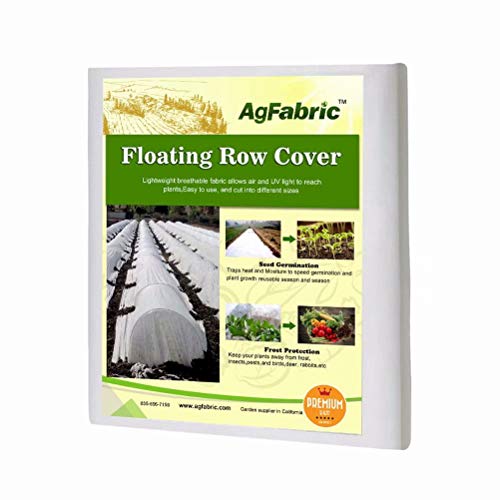
The roll format is the most flexible cover a gardener can own, and this Agfabric sheet is the classic version of it. The fabric is UV-stabilized spun polypropylene at 0.9 oz per square yard, a mid-weight grade in a range the brand sells from 0.55 up to 3.5 oz. At 10 ft wide and 100 ft long, one roll covers several raised beds or long vegetable rows, and it cuts cleanly with scissors, so a single purchase can become bed covers, tree wraps and small pest barriers in whatever sizes the garden needs.
Because the fabric is spun rather than woven tight, light, air and rain pass through it, and plants can be watered with the cover in place. It floats directly on the crop without hoops, which suits low, sturdy plants, and the maker frames fabric weight as the warmth dial: heavier grades hold more heat, while this 0.9 oz grade is the general-purpose middle for frost nights and season extension. There is no stated hard temperature floor on this listing, so treat it as protection for frosty nights rather than deep freezes.
It suits vegetable gardeners with beds and rows to cover, and anyone who wants one adaptable material instead of many fitted pieces. The honest limitation is that the roll arrives as plain fabric: no drawstring, no clips, no stakes. Edges have to be weighted with soil, boards or stones, and on a windy site that anchoring work decides whether the cover is still in place at dawn.
Gardzen 5-Pack Plant Cover, 31 in x 40 in

Ready-made bags remove the measuring and cutting that a roll demands. This Gardzen set includes five covers in a 31 in x 40 in size, each a simple sack of breathable non-woven fabric at 70 gsm, which works out to about 2.06 oz per square yard, noticeably heavier than a floating row cover. A drawstring at the open end pulls tight around a stem, trunk or pot rim, so a cover goes on in seconds before a cold night and comes off just as fast the next morning.
The size fits the plants that most often need individual protection: potted citrus and figs on a patio, young shrubs, rose bushes, tomato plants and hanging baskets brought down for the night. The fabric lets air and moisture through while holding a pocket of warmer air around the foliage, and the five-count pack means a small collection of containers can be covered in one pass rather than one plant at a time.
It suits patio gardeners with a handful of tender pots and anyone planting out young shrubs in an exposed spot. The honest limitation is the fixed size. A 31 in x 40 in bag is generous for a small shrub but too short for a tall young tree, and no drawstring helps if the foliage is wider than the opening, so measure the plant, not the pot, before ordering.
Agfabric Garden Netting, 6.5 ft x 30 ft

When the problem is insects rather than cold, fabric is the wrong tool and mesh is the right one. This Agfabric netting is a fine polyethylene mesh in a 6.5 ft x 30 ft sheet, sized to drape over rows, small fruit bushes and individual beds. The weave is tight enough to block the moths, beetles and flies that lay eggs on brassicas, carrots and leafy greens, while sunlight, rain and air move through almost unimpeded, so plants grow on underneath without the heat build-up a solid cover can cause.
The sheet can lie directly on sturdy crops, rest over hoops, or wrap a blueberry bush or young fruit tree, and it cuts to size for smaller jobs. Edges need burying, pinning or weighting, because a pest barrier only works when there are no gaps at ground level.
It suits vegetable growers fighting cabbage white butterflies, carrot fly and flea beetles, and soft-fruit growers tired of sharing the harvest. The honest limitation is that mesh offers essentially no frost protection: it will not hold warmth on a cold night. It also shuts out pollinators, so covers over flowering crops need lifting while the plants are in bloom.
Himake Garden Netting Kit with Fiberglass Hoops, 10 ft x 33 ft

Covers that touch foliage can rub leaves, transfer cold at contact points and give climbing pests a bridge. This Himake kit solves that with structure: fiberglass hoop rods and connecting pipes form a low tunnel over a raised bed, an ultra-fine mesh net measuring 10 ft x 33 ft drapes over the frame, and 24 clips plus ground pegs hold everything in place. The result is a covered tunnel where the barrier floats above the crop instead of resting on it.
The mesh is fine enough to block small insects while passing light, air and water, and the hoops give growing room for leafy crops that would push against a flat cover. The kit format also makes removal tidy: unclip one side to weed, thin or harvest, then clip it back. Because the cover is mesh rather than frost fabric, the tunnel is primarily a pest and bird barrier with a little shelter from wind and harsh sun.
It suits raised-bed gardeners growing brassicas, salad leaves and herbs under constant pest pressure. The honest limitation is assembly and fit: the hoops need a bed width they can span, the frame takes time to build, and the mesh still gives no real insulation when a hard frost arrives.
LCHUANG Winter Plant Covers, 2 Pack, 71 in x 63 in

At the heavy end of the range sits this LCHUANG two-pack. Each cover measures 71 in x 63 in, big enough to swallow a large container, a small tree or a wide shrub, and the fabric is a thickened non-woven at 3.2 oz per square yard, the heaviest weight in this guide. A full-length zipper lets the cover open and slide around branches instead of being dragged over them, and a drawstring at the base cinches it closed against wind.
That combination of size, weight and closure is aimed at plants that stay outdoors all winter: large potted specimens too heavy to move, container citrus in a mild-winter climate, and shrubs in exposed corners. The heavy fabric holds more warmth than the lighter covers here and shrugs off wind and snow load better, while the zipper makes the regular venting routine realistic rather than a wrestling match.
It suits gardeners overwintering big pots and anyone whose winters bring repeated freezes rather than the odd frosty night. The honest limitation is the flip side of the weight: thick fabric passes less light, so plants left covered for long stretches need the cover opened on bright days, and with only two covers in the pack, a large collection gets expensive to protect this way.
How to choose
Start with fabric weight, because weight decides the frost margin. Light row fabric around 0.55 to 0.9 oz per square yard takes the edge off a frosty night; mid-weight fabric near 2 oz adds a little more; heavy covers above 3 oz hold the most warmth a fabric can. Keep expectations plain, though: a cover buys a few degrees of protection around the plant, not a season change. A tropical plant under the heaviest cover in this guide still faces a hard freeze with only a small cushion, so match the cover to realistic overnight lows, not hopeful ones.
Second, plan for venting. A sealed cover traps the morning sun as efficiently as it trapped the night warmth, and a plant under fabric on a bright day can overheat and scorch faster than it froze the night before. Choose formats you will actually open, drawstring bags and zippers earn their keep here, and lift covers on sunny days even in midwinter.
Third, secure the edges. Wind removes more covers than cold defeats. Weight roll fabric with soil or boards along every edge, cinch drawstrings snugly, peg netting so no gap opens at ground level, and check the garden after the first windy night to see what moved.
Finally, match the cover to the threat. Frost fabric warms, insect netting excludes, and shade cloth cools; the three solve different problems and are not interchangeable. Netting over a bed in a frost gives almost nothing, and frost fabric over brassicas in summer cooks the crop. Buy for the problem in front of you.
Who should skip
Fabric covers have limits, and some situations call for a different tool entirely. Gardeners in cold regions overwintering tender plants in pots should bring those pots indoors, into a garage or a greenhouse, because no cover in this guide turns an exposed patio into a frost-free space. Anyone protecting a whole bed of half-hardy plants through a long winter will get more from a cold frame, which adds a rigid glazed lid, real insulation and headroom that fabric cannot match. And growers whose main problem is summer heat should skip frost formats altogether and look at shade cloth instead.
Frequently Asked Questions
How many degrees of protection does a plant cover add?
A fabric cover typically keeps the air around a plant a few degrees warmer than the outside air on a still, clear night. Heavier fabric holds more warmth than lighter fabric, and two layers hold more than one. Treat every cover as a cushion against a light or moderate frost, not as protection against a deep freeze.
Can plant covers stay on during the day?
Breathable frost fabric and netting can stay on through dull days, since light and air pass through. On bright, sunny days, open or remove covers, especially heavy ones, because heat builds quickly underneath and can scorch foliage. Drawstring and zipper designs exist largely to make that daily routine quick.
Do plant covers keep pests out completely?
Fine insect netting blocks the insects it is fine enough to stop, provided the edges are sealed against the ground with no gaps. It will not stop slugs already in the soil, pests that arrive on transplants, or anything small enough to pass the mesh. It also keeps pollinators out, so lift it from crops that need pollination while they flower.
How do I size a cover for a shrub or small tree?
Measure the plant at its widest point and its full height, then choose a cover with room to spare in both directions, because a cover stretched tight over foliage transfers cold at every contact point and can snap stems. For bags, the foliage must pass through the opening, so width matters as much as height.
Final verdict
For most gardens, the Agfabric row cover roll is the foundation purchase: one adaptable fabric that handles frost nights, season extension and improvised barriers across the whole plot. Add Gardzen drawstring bags for the pots and young shrubs that need individual cover, Agfabric netting where insects do more damage than cold, and the Himake hooped kit for raised beds. Where winter is the main event and the pots are too big to move, the LCHUANG heavyweight pair is the strongest fabric option here.
Product and ASIN Reference
| Product | ASIN |
|---|---|
| Agfabric Floating Row Cover, 10 ft x 100 ft, 0.9 oz | B00XXJL8LU |
| Gardzen 5-Pack Plant Cover, 31 in x 40 in | B08S3FCS9K |
| Agfabric Garden Netting, 6.5 ft x 30 ft | B01G6QR8AG |
| Himake Garden Netting Kit with Fiberglass Hoops, 10 ft x 33 ft | B0GDWDPGRZ |
| LCHUANG Winter Plant Covers, 2 Pack, 71 in x 63 in | B0DFW7HQ8Q |
More from Amazon
Programs that pair well with the guide above. Offers and eligibility are set by Amazon and may change.
Collect the home and kitchen items you want in one registry that guests can shop from.
Create a wedding registrySet up recurring deliveries of everyday items on eligible products. Terms and savings are set by Amazon.
Explore Subscribe & SaveFree shipping on eligible items, Prime Video and more. Eligible new members can start with a free trial.
Start a Prime free trialAudiobooks and podcasts to listen to on the go. Eligible new members can start with a free trial.
Try Audible freeAs an Amazon Associate we earn from qualifying purchases.

Write Your Review
No reviews yet. Be the first to share your experience!