

Key takeaways
- Best for most inground pools (no booster pump): Polaris Vac-Sweep 360.
- Best for heavy leaves, with a booster pump: Polaris Vac-Sweep 280.
- Best Hayward alternative: Hayward TriVac 500.
- Best step-up model with a booster pump: Polaris Vac-Sweep 3900 Sport.
- Booster pump to pair with a 280: Polaris PB4-60.
- Alternate booster pump: Hayward W36060.
- Best robot if you prefer no plumbing at all: Dolphin Nautilus CC.
- Best suction alternative: Zodiac MX6.
The best pressure-side pool cleaners today are the Polaris Vac-Sweep 360 for most inground pools because it runs without a booster pump, the Polaris Vac-Sweep 280 for leaf-heavy pools that can take a booster pump, and the Hayward TriVac 500 as the main non-Polaris alternative. Pressure-side cleaners are the debris-bag specialists of the pool world, and they earn their place when leaves, acorns and pine needles are the real problem.
A pressure-side cleaner is driven by water pushed out of your return line (or from a dedicated booster pump) rather than by suction at the skimmer. The water powers the wheels or belts, and a jet creates enough lift to pull debris into a bag attached to the cleaner. That bag is the key difference from suction cleaners, which send debris to your pump basket and filter, and from robots, which use an internal filter.
Our top picks


As an Amazon Associate we earn from qualifying purchases at no extra cost to you.
Quick picks
- Best for most inground pools (no booster pump): Polaris Vac-Sweep 360.
- Best for heavy leaves, with a booster pump: Polaris Vac-Sweep 280.
- Best Hayward alternative: Hayward TriVac 500.
- Best step-up model with a booster pump: Polaris Vac-Sweep 3900 Sport.
- Booster pump to pair with a 280: Polaris PB4-60.
- Alternate booster pump: Hayward W36060.
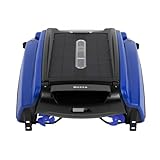
- Best robot if you prefer no plumbing at all: Dolphin Nautilus CC.
- Best suction alternative: Zodiac MX6.
How we chose these cleaners
This is a research-based comparison, not a lab report. We reviewed manufacturer product pages, pool-supply retailer specification sheets and several independent 2026 buyer guides. We kept cleaners that are currently sold for inground pools and that fit one of two categories: pressure-side units with documented booster pump requirements, or reference alternatives in the suction and robotic classes for comparison.
We ranked on booster pump requirement, debris capture, wall behavior, pool-size fit, and wear parts. Where a manufacturer figure could not be confirmed for a specific model, we describe the feature by class instead of quoting a number.
How pressure-side cleaners work
Water enters through a dedicated return fitting or a wall fitting connected to the pressure line. A feed hose carries it to the cleaner. Inside, venturi jets create suction that lifts debris into the bag, while other jets drive the wheels and the tail. Because the debris goes into a bag on the cleaner itself, the pump basket and filter see much less leaf load.
Why a booster pump matters
Many pressure-side cleaners need more pressure and flow than a return line provides, so they use a separate booster pump on its own electrical circuit. Polaris sells the PB4-60, a 3/4 HP pump rated for 115V or 230V, and Hayward lists the W36060 as a 0.75 HP booster pump for inground pools. A booster pump draws only enough power for the cleaner, so your main pump can run on its normal schedule while the cleaner runs for its own cycle.
The Polaris Vac-Sweep 280, 380 and 3900 Sport need a booster pump. The Polaris Vac-Sweep 360 is designed to run off the return line without one, which is why it is the pick for pools where adding a pump and circuit is impractical.
The debris bag benefit for leaf-heavy pools
If a tree drops hundreds of leaves a day, a suction cleaner can clog the skimmer or choke the pump basket. A pressure-side cleaner collects the leaves in its bag, which you empty by hand. Bags come in coarse mesh for leaves and finer mesh for silt and pollen. Match the mesh to the debris, since fine mesh clogs sooner and cuts cleaner performance.
Comparison table
| Model | Class | Booster pump | Key spec | Debris handling | Best pool profile |
|---|---|---|---|---|---|
| Polaris Vac-Sweep 360 | Pressure-side | Not required | 3 venturi jets, all-wheel belt drive | Debris bag | Most inground pools, leaves and general debris |
| Polaris Vac-Sweep 280 | Pressure-side | Required | 2 venturi jets, 2 1/4 in. inlet, shaft drive, about 31 ft feed hose | Debris bag | Leaf-heavy pools |
| Polaris Vac-Sweep 3900 Sport | Pressure-side | Required | Sport-class model | Debris bag | Larger or more complex pools |
| Polaris Vac-Sweep 380 | Pressure-side | Required | Mid-range Polaris | Debris bag | Medium pools with moderate debris |
| Hayward TriVac 500 | Pressure-side | Required | Fast-cycle design, inground | Debris bag | Pools where cycle speed matters |
| Dolphin Nautilus CC | Robotic | None | Up to 33 ft, wall climbing, top-load filter | Internal filter | Small to mid pools, light debris |
| Zodiac MX6 | Suction | None | Cyclonic suction, X-Drive | Pump basket and filter | Pools with variable-speed pumps |
The pressure-side picks
Polaris Vac-Sweep 360
Spec line: Pressure-side · 3 venturi jets · all-wheel belt drive · runs off the existing return line · no booster pump required.
Independent guides name the 360 the best choice for most inground pools in 2026 mainly because it avoids the booster pump. That saves the pump purchase, a dedicated circuit and installation. It still includes a debris bag and wall-climbing behavior, making it a balanced all-round pressure cleaner.
Best for: pools with moderate leaf load and a return line with good flow. Skip if: your return line is weak or your pool is very large and leafy, where a booster-driven model gives more power.
- Pros: no booster pump, debris bag, straightforward install.
- Cons: less power than booster-driven models, depends on return flow.
Polaris Vac-Sweep 280
Spec line: Pressure-side · 2 venturi jets · 2 1/4 in. vacuum inlet · shaft drive · about 31 ft feed hose · universal wall fitting and back-up valve · booster pump required.
The 280 is the classic leaf-focused pressure cleaner, and reviewers regularly rank it highest for leaves. With a dedicated booster pump, it has the most power in this group for its price class. It ships with a feed hose, universal wall fitting and back-up valve, but the booster pump is sold separately.
Best for: pools under trees where leaf volume is the top problem. Skip if: you cannot add a booster pump circuit.
- Pros: strong leaf pickup, long track record, parts widely available.
- Cons: needs a booster pump and circuit, hose can snag on features.
Polaris Vac-Sweep 3900 Sport
Spec line: Pressure-side · Sport-class Polaris · booster pump required · debris bag.
The 3900 Sport sits above the 280 in the Polaris line and suits owners who want more refined movement and coverage. It still depends on a booster pump, so the infrastructure cost matches the 280. Check the manufacturer sheet for the exact tail and sweep configuration before buying.
Best for: larger or more complex pool shapes. Skip if: the 280 already handles your pool.
- Pros: higher-tier Polaris design, pressure-side debris bag.
- Cons: higher cost, needs a booster pump.
Polaris Vac-Sweep 380
Spec line: Pressure-side · mid-range Polaris · booster pump required · debris bag.
The 380 fits between the 280 and the Sport models for owners who want a step up from the base unit. It follows the same booster pump requirement.
Best for: mid-size pools that want a step up from the 280. Skip if: you want a no-booster setup.
- Pros: familiar Polaris platform, debris bag.
- Cons: needs booster pump, limited reasons to choose over the 280 or 360.
Hayward TriVac 500
Spec line: Pressure-side · inground · booster pump required · fast-cycle design.
The TriVac 500 is the leading non-Polaris pressure-side option in 2026 buyer guides, noted for fast cycles. It needs a booster pump, so budget for one, such as the Hayward W36060, a 0.75 HP unit.
Best for: owners who prefer Hayward equipment or want a fast cycle. Skip if: you want a no-booster setup.
- Pros: fast cycle, Hayward support network, debris bag.
- Cons: needs booster pump, pricing similar to Polaris.
Booster pumps
Polaris PB4-60
Spec line: 3/4 HP · 115V or 230V · separate electrical circuit.
The standard match for the Polaris 280 and other booster-driven Polaris models. It needs a dedicated, properly grounded circuit installed by a licensed electrician, and a GFCI as required by local code. Some reviewers describe the water pressure as higher than expected; rely on the manufacturer’s 3/4 HP rating instead of those descriptions.
Hayward W36060
Spec line: 0.75 HP · inground pools · booster pump.
The Hayward counterpart, suitable for Hayward cleaners and compatible with other pressure-side units when connected correctly. Confirm compatibility with your cleaner’s manual before buying.
Pressure-side versus suction versus robotic
| Factor | Pressure-side | Suction | Robotic |
|---|---|---|---|
| Debris destination | Cleaner’s own bag | Pump basket and filter | Internal filter |
| Big leaves and acorns | Best | Can clog skimmer | Depends on basket size |
| Fine silt | Weaker unless fine bag used | Good with a clean filter | Best with fine filters |
| Extra equipment | Booster pump on most | None | Transformer or battery |
| Pump runtime | Booster runs separately | Main pump runs during cycle | Not tied to pump |
| Typical upkeep | Empty bag, replace tires and hoses | Replace diaphragm and cuffs | Clean filter, replace brushes and tracks |
Pool-size fit
Pressure-side cleaners rely on a feed hose that must reach the farthest point of the pool. Manufacturers size the hose set to typical inground dimensions, and extra hose sections are sold separately. Measure the longest diagonal from the wall fitting to the far corner and compare it with the feed hose length. The Polaris 280 ships with about 31 feet of feed hose, which covers the diagonal of many residential pools, but a 20 by 40 foot pool has a diagonal of about 45 feet and may need extra hose.
Very small pools can be a problem in the other direction: a large, powerful cleaner in a tight pool can wrap its hose around steps and ladders. In that case a smaller robot or suction unit may suit better.
Tail sweep and wall-climb behavior
Most pressure-side cleaners include a tail with a small jet or a sweep hose that sweeps debris out of corners and away from walls. The tail also adds movement variety, which breaks up patterns and helps coverage. Wall climbing depends on jet power and wheel traction; booster-driven models generally climb more reliably than return-line models. Set the back-up valve and hose float positions so the cleaner turns away from steps and returns instead of getting stuck.
Weighted hose floats keep the hose from floating to the surface, where it can tangle with skimmers or toys. Adjust them after the first few runs based on where the cleaner hangs up.
Worked example: sizing the setup for a leafy pool
Take a 18 by 36 foot inground pool, 4 to 8 feet deep, with a 1.5 HP main pump and two large maples nearby.
- Measure the diagonal. The diagonal is about the square root of 18 squared plus 36 squared, which is roughly 40 feet. The cleaner’s feed hose must cover it from the wall fitting, so a 31-foot standard set needs extension sections.
- Estimate leaf load. Maples shed large leaves in volume. That favors a bag-based pressure cleaner over a suction unit that could clog the skimmer.
- Check the return line. If your return flow is strong and the pool is not huge, the Polaris 360 can work without a booster pump. If flow is weak, plan on a booster-driven model.
- Add power if needed. A booster pump such as the PB4-60 requires a dedicated circuit. Include the electrician in the project cost.
- Pick the mesh. Use the coarse bag for leaves and swap to the fine bag after the leaf drop.
- Result. With good return flow, the Polaris 360 plus extension hose; with weak return flow, the Polaris 280 plus PB4-60 and extension hose.
Safety and installation notes
- Have a licensed electrician install booster pump circuits. Pool equipment needs proper grounding, bonding and GFCI protection under local electrical code.
- Shut off the pump and the booster before servicing or removing the cleaner.
- Do not run the booster pump dry; confirm water flow before starting.
- Keep the feed hose and cleaner clear of swimmers; do not run the cleaner while people are in the pool.
- Follow the manufacturer’s instructions for pressure settings and fittings, as over-pressurizing can damage hoses and seals.
Maintenance checklist
- Empty the debris bag after each run, or when it is about half full.
- Inspect wheels, tires or belts and the tail for wear at the start of each season.
- Check hose connections and swivels for leaks, which reduce power.
- Clean the pump or return-line strainer so flow stays consistent.
- Replace hose floats and wall fittings when cracked.
Frequently asked questions
Do all pressure-side pool cleaners need a booster pump?
No. Most do, but the Polaris Vac-Sweep 360 is designed to run from the existing return line without a booster pump.
Models such as the Polaris 280, 380 and 3900 Sport, and the Hayward TriVac 500, need a booster pump.
What size booster pump do I need?
Follow the cleaner manufacturer’s recommendation. The Polaris PB4-60 is a 3/4 HP pump, and the Hayward W36060 is also listed as 0.75 HP.
Use the pump the manual specifies, on its own dedicated circuit.
Is a pressure-side cleaner better than a suction cleaner for leaves?
Generally yes. The built-in debris bag collects leaves before they reach your skimmer, pump basket or filter.
Suction cleaners can clog on large leaves and acorns, which is why leafy pools usually favor pressure-side units.
Can a pressure-side cleaner clean the walls?
Yes, to varying degrees. Models with strong jet power and good traction climb walls, and booster-driven units tend to climb more reliably.
Wall coverage depends on pool shape, water level and hose float adjustment, so expect some tuning.
Does a pressure-side cleaner remove fine dust and pollen?
Not as well as a robot with fine filtration. Use a fine-mesh bag for silt, but expect it to fill faster.
If fine debris is your main issue, a robotic cleaner with fine cartridge filtration is usually a better match.
How long does a pressure-side cleaner run each day?
Two to four hours is a common cycle for a residential pool, running the booster pump only during that window.
Adjust the schedule to the pool size, debris load and manufacturer guidance.
Will a pressure-side cleaner work with a variable-speed pump?
The 360 uses the return line, so it depends on return flow at your pump speed. Booster-driven models run on their own pump and are less affected.
If you run low pump speeds, check the cleaner manual for minimum flow and consider a booster-driven model.
Should I choose a pressure-side cleaner or a robot?
Choose pressure-side if leaves and large debris dominate and you can add a booster pump or have good return flow. Choose a robot if you want no plumbing changes and fine filtration.
The Dolphin Nautilus CC is a good example of the robotic alternative.




Write Your Review
No reviews yet. Be the first to share your experience!