
Our Short List of 3
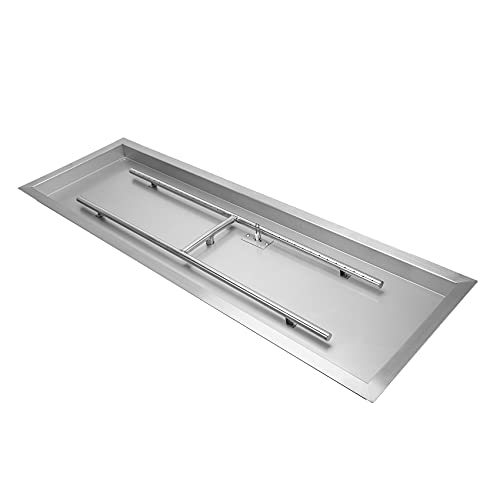
- Best for: DIY builders finishing a mid-size rectangular fire table that needs an even flame across its full length.
- Pan size: 36 x 12 in
- Burner: H-burner, installed
- Maximum output: 150,000 BTU
- Material: 304 stainless steel
- Best for: Large rectangular fire tables where the flame must stretch across a wide seating area without fading at the ends.
- Pan size: 48 x 14 in
- Burner: H-burner, welded
- Maximum output: 185,000 BTU
- Material: 304 stainless steel
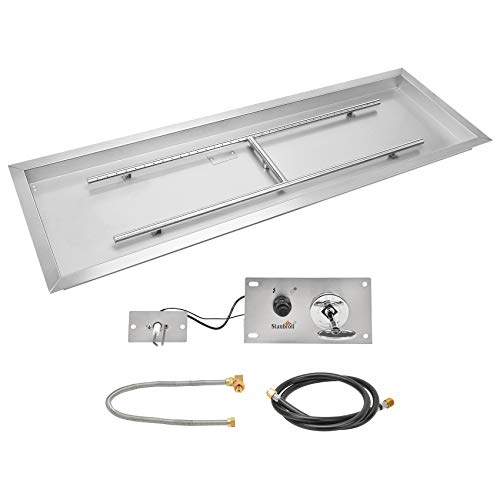
- Best for: Compact rectangular tables on a plumbed natural gas line where the opening is short and the build must stay slim.
- Pan size: 24 x 8 in
- Burner: H-burner
- Maximum output: 90,000 BTU
- Fuel: natural gas
All 3 Picks at a Glance
| Product | Specs | Action |
|---|---|---|
| Stanbroil 36 by 12 Inch Rectangular Drop-in Fire Pit Pan with H-Burner |
| Check price on Amazon |
| Stanbroil 48 x 14 Inch Rectangle Drop-in Fire Pit H-Burner Pan |
| Check price on Amazon |
| Stanbroil 24 x 8 Inch Rectangular Drop-in Fire Pit Burner Kit, Natural Gas |
| Check price on Amazon |
Key takeaways
- Compare the best rectangular fire pit burner pans for DIY gas fire tables, with H-burner sizes, BTU ratings, fuel versions and pan dimensions explained.
Building a rectangular gas fire table from scratch turns on one component more than any other: the drop-in burner pan that sits in the tabletop opening and carries the burner, the fire media and the gas connection. A round pan will not fill a rectangular opening, and a loose burner ring with no pan leaves nowhere for the glass or lava rock to rest, so the shape decision comes first and the size decision follows it. Get the pan wrong and the flame sits off-centre, the media slides into the void below, or the lip never finds a ledge to rest on.
This guide serves DIY builders cutting a new rectangular opening into a fire table, owners replacing a rusted or undersized pan in an existing table, and anyone converting a plain outdoor table into a working gas fire feature. Every pan below was chosen from the names, dimensions and kit contents published on its Amazon page, with pan size, burner shape and maximum output compared directly.
Quick Picks
As an Amazon Associate we earn from qualifying purchases.
| Product | Best for | Key spec from title |
|---|---|---|
| Stanbroil 36 by 12 Inch Rectangular Drop-in Fire Pit Pan with H-Burner | A mid-size fire table that needs a long, even flame | 36 by 12 inch pan, 150,000 BTU max |
| Stanbroil 48 x 14 Inch Rectangle Drop-in Fire Pit H-Burner Pan | An extra-long fire table built for a wide seating area | 48 x 14 inch pan, 185,000 BTU max |
| Stanbroil 24 x 8 Inch Rectangular Drop-in Fire Pit Burner Kit, Natural Gas | A compact rectangular table on a plumbed gas line | 24 x 8 inch pan, 90,000 BTU max |
How to Choose
Match the Pan to the Tabletop Opening
Measure the opening in the tabletop before looking at a single listing, because the pan dimensions are the numbers the whole purchase turns on. Stanbroil states the pan size and the depth separately, and the lip around the pan edge is what holds it in the opening, so the cut needs to sit between the pan body and the outer edge of that lip for the pan to rest level instead of dropping through or perching on the rim. Leave the small expansion gap allowed, since stainless steel grows slightly as it heats and a wedged pan can buckle once hot. A pan that is slightly too wide for the opening cannot be trimmed to fit.
Choose the Burner Shape for the Flame You Want
Rectangular pans in this lineup all carry an H-burner, a burner bent into a squared shape with two long parallel runs joined at one end, and that shape is what spreads flame across the full length of a rectangular table instead of pooling it in the middle. A single straight burner in a long pan leaves the ends dark, while an H-burner puts flame ports along both long edges so the fire reads as a continuous line from one end of the table to the other. Check that the burner runs nearly the full length of the pan, because a short burner inside a long pan wastes the extra pan length and leaves unlit media at both ends.
Confirm the Fuel Version Before Anything Else
Rectangular drop-in kits are sold as dedicated propane or natural gas versions, and the difference is built into the orifices, hoses and fittings rather than being a setting you can change later. The 24 by 8 inch Stanbroil below is the natural gas version, built for a plumbed line from the house, while the larger pans here are sold without a fuel version stated in the title, so the gas connection must be confirmed on the listing before ordering. Check which supply actually reaches your table: a tank hidden in or beside the enclosure, or a plumbed line from the house. Ordering the wrong version means returning the kit or buying conversion parts.
Check the Output Against the Table Size
Maximum output decides whether the flame looks generous across a long table or thin and lost against a wide expanse of fire glass. The compact 24 by 8 inch kit below is rated up to 90,000 BTU, the 36 by 12 inch pan reaches 150,000 BTU, and the 48 by 14 inch pan tops the lineup at 185,000 BTU, so output rises with pan length in a direct line. A long table with a low-output burner shows a narrow ribbon of flame down the centre, while a short table with a very high-output burner can throw heat further than the seating allows. Match the rating to the table length and to how far guests will sit from the flame.
The 3 Best Options
Stanbroil 36 by 12 Inch Rectangular Drop-in Fire Pit Pan with H-Burner
- Best for: DIY builders finishing a mid-size rectangular fire table that needs an even flame across its full length.
- Pan size: 36 x 12 in
- Burner: H-burner, installed
- Maximum output: 150,000 BTU
- Material: 304 stainless steel
DIY builders finishing a mid-size rectangular fire table that needs an even flame across its full length.
The listing does not state a fuel version in the title, so confirm the gas connection and fittings suit your supply before ordering.
This is the pan for a mid-size rectangular fire table, roughly the length of a coffee table, where the goal is a long, even flame without the bulk of the largest pan in the lineup. The 36 by 12 inch pan carries an installed H-burner rated up to 150,000 BTU, which spreads flame along both long edges of the pan so the fire reads as a clean line rather than a single hot spot. Built from 304 stainless steel with a 2 inch pan depth, it drops into a matching rectangular opening and leaves room below for the gas connection and airflow.
Stanbroil 48 x 14 Inch Rectangle Drop-in Fire Pit H-Burner Pan
- Best for: Large rectangular fire tables where the flame must stretch across a wide seating area without fading at the ends.
- Pan size: 48 x 14 in
- Burner: H-burner, welded
- Maximum output: 185,000 BTU
- Material: 304 stainless steel
Large rectangular fire tables where the flame must stretch across a wide seating area without fading at the ends.
Measure the tabletop opening carefully, since a 48 inch pan needs a long, straight cut with a firm ledge all the way around its lip.
The longest pan here suits a full-size fire table built for a wide seating area, where a shorter pan would leave dark, unlit media at both ends of the table. Its 48 by 14 inch pan carries a welded H-burner rated up to 185,000 BTU, the highest output in this lineup, and the pan is hand crafted from 304 stainless steel with drilled burner holes for a quieter flame. A male gas inlet sits at the bottom centre of the tray, and the listing describes the pan as working with both propane and natural gas, so it fits either supply once the connection is made correctly.
Stanbroil 24 x 8 Inch Rectangular Drop-in Fire Pit Burner Kit, Natural Gas
- Best for: Compact rectangular tables on a plumbed natural gas line where the opening is short and the build must stay slim.
- Pan size: 24 x 8 in
- Burner: H-burner
- Maximum output: 90,000 BTU
- Fuel: natural gas
Compact rectangular tables on a plumbed natural gas line where the opening is short and the build must stay slim.
This is the natural gas version only; a propane tank build needs the propane version of the kit instead.
Compact rectangular tables need a pan that fits a short opening without forcing the build wider than the table allows, and this 24 by 8 inch kit is the smallest rectangular option here. It is the natural gas version, rated up to 90,000 BTU, with an H-burner and a spark ignition and hose kit in the box, so a plumbed build gets the burner, pan and lighting parts together. The narrow width suits a slim fire table or a bar-height feature where a wide pan would crowd the tabletop and leave no room for drinks beside the flame.
Which One Fits Your Situation
You Are Building a Mid-Size Table for Everyday Evenings
Choose the 36 by 12 inch Stanbroil when the table is roughly coffee-table length and the flame needs to look even from end to end. Its 150,000 BTU H-burner fills the pan without the extra length and output of the largest option, and the 2 inch pan depth keeps the media close to the tabletop where it can best be seen. Confirm the fuel fittings on the listing first, since no fuel version is stated in its title.
Your Table Seats a Whole Group Along Both Sides
The 48 by 14 inch Stanbroil is the pick when the table is long enough for guests to sit along both sides and the flame must reach the ends. Its 185,000 BTU welded H-burner spreads fire across the full length, and the listing describes it as working with either propane or natural gas. Have the gas line sized for the output, because a long, narrow run can starve a high-output burner.
Your Opening Is Short and Your Supply Is Plumbed Gas
Take the 24 by 8 inch Stanbroil natural gas kit when the opening is compact and a house gas line already reaches the table. The spark ignition and hose kit in the box covers the connection parts a plumbed build usually has to source separately. Keep the enclosure vented, since any leaked gas must have a way out rather than pooling beneath the pan.
You Are Replacing a Rusted Pan in an Existing Table
Measure the old pan across its lip and note the depth before ordering, then match those numbers rather than the size you remember buying. The 36 by 12 inch Stanbroil publishes its pan depth and model number, which makes it the safer replacement pick of the three, and all three keep the same rectangular H-burner layout. If the old installation whistled at full flow, check the gas line size and routing before blaming the pan.
Common Mistakes
- Cutting the tabletop opening to the outside dimensions of the pan instead of the opening the pan body must pass through, then finding the lip has nothing to rest on.
- Buying a natural gas kit for a propane tank, or the reverse, and discovering the mismatch only at connection time.
- Covering the burner with too much fire glass or lava rock, which smothers the flame pattern and soots the media.
- Sealing the enclosure base completely, leaving no ventilation for gas to escape if a connection leaks.
- Lighting the table for the first time without a leak check on every fitting the kit asked you to tighten.
Frequently Asked Questions
How much smaller than the opening should a drop-in pan be?
The pan body should pass through the opening while its lip rests on the ledge, so the opening needs to fall between the pan dimensions and the outer edge of the lip. Measure the opening in both directions before ordering, since a rectangular pan cannot be turned to fit as a round one can, and leave a small expansion gap so the steel does not wedge tight once hot.
Can a propane pan kit be converted to natural gas later?
Conversion involves different orifices and usually air mixer and regulator changes, and not every kit is sold with a supported conversion path. The safer route is to buy the version built for your fuel, as this guide separates them: the 24 by 8 inch Stanbroil is the natural gas version, while the larger pans here need their gas connection confirmed on the listing before ordering.
How deep should the fire glass or lava rock sit over the burner?
Media should cover the burner lightly and evenly, enough to hide the ring and diffuse the flame without burying it. Piling media deep over the ports produces lazy, sooty flames and can trap heat around the pan, while leaving the burner exposed gives a harsh, mechanical look. Spread it, light the burner, and adjust the depth while you can see the flame pattern.
Does a drop-in pan need ventilation in the enclosure?
Yes. Enclosures for gas pans need vent openings, typically low on opposite sides, so fresh air reaches the burner and any leaked gas can escape instead of pooling. This matters most for propane, which is heavier than air and settles at the base. Check the kit instructions for the vent area your build requires and keep the openings clear of mulch and stored items.
More from Amazon
Programs that pair well with the guide above. Offers and eligibility are set by Amazon and may change.
Collect the home and kitchen items you want in one registry that guests can shop from.
Create a wedding registrySet up recurring deliveries of everyday items on eligible products. Terms and savings are set by Amazon.
Explore Subscribe & SaveFree shipping on eligible items, Prime Video and more. Eligible new members can start with a free trial.
Start a Prime free trialAudiobooks and podcasts to listen to on the go. Eligible new members can start with a free trial.
Try Audible freeAs an Amazon Associate we earn from qualifying purchases.


Write Your Review
No reviews yet. Be the first to share your experience!