

Key takeaways
- Door seals: Gaps around the cooking-chamber or firebox doors waste heat. High-temperature gasket material is inexpensive and can be replaced when it becomes brittle.
- Cooking grates: Porcelain-coated grates can chip; uncoated steel can rust if left wet. Scrape, dry, and apply a light food-safe seasoning layer where appropriate.
- Firebox floor: Ash and moisture cause rust fastest here. Remove ash only after it is completely cold, then keep the firebox dry.
- Paint: High-heat paint eventually fades or flakes near the firebox. Surface rust should be brushed away and repaired with rated high-temperature coating.
- Thermometers: Built-in lid gauges can be inaccurate. Verify grate-level temperature with a separate probe before relying on the factory dial.
- Wheels and hardware: Grease wheel axles and inspect bolts, hinges, and chimney dampers at the start of each season.
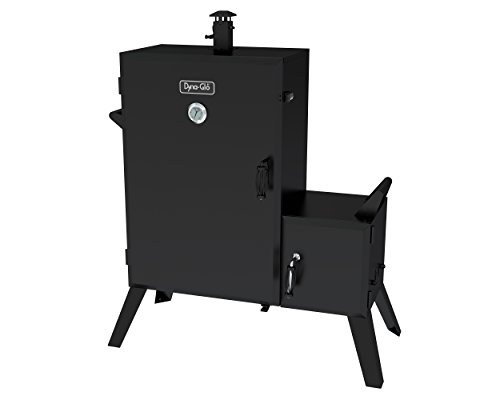
The best offset smokers for most backyard cooks are the Old Country BBQ Pits Brazos for heavy-duty value, the Oklahoma Joe’s Highland Reverse Flow for a lower-cost entry point, and the Workhorse Pits 1975 for cooks who want thicker steel and more stable temperatures without moving to a commercial-size pit.
Offset smokers differ less in their basic layout than in how well they manage heat. The important buying questions are steel thickness, firebox geometry, airflow adjustment, usable grate area, fuel consumption, and whether the cooker can realistically be moved around your patio. A large cooking chamber is not automatically an advantage: thin steel, a small firebox, or poor airflow can make a big smoker harder to run than a smaller, better-built one.
Our top picks


As an Amazon Associate we earn from qualifying purchases at no extra cost to you. Ratings are shown as listed on Amazon.
Best offset smokers by backyard situation
| Backyard situation | Best fit | Why it makes sense | Main compromise |
|---|---|---|---|
| First offset, occasional cooks, tighter budget | Oklahoma Joe’s Highland Reverse Flow | Accessible size, reverse-flow baffle, familiar adjustments, widely available replacement parts | Thinner steel loses heat more quickly in cold or windy weather |
| Frequent backyard barbecue and large family cooks | Old Country BBQ Pits Brazos | Heavy 1/4-inch steel, substantial cooking chamber, strong heat retention | Very heavy and less convenient to reposition |
| Experienced pitmaster seeking premium stability | Workhorse Pits 1975 | Thick construction, carefully designed firebox and collector, good control at long cooking times | Higher purchase price and possible lead-time or delivery considerations |
| Small patio or occasional grilling plus smoking | Compact 20-inch offset, approximately 400–600 square inches | Uses less fuel and occupies less space than a full-size pit | Less room for briskets, ribs, and a separated cool zone |
Head-to-head comparison
| Model or type | Approximate cooking area | Steel and construction | Firebox design | Mobility | Typical market range in 2026 |
|---|---|---|---|---|---|
| Oklahoma Joe’s Highland Reverse Flow | About 900 square inches including the secondary rack | Approximately 3/16-inch chamber steel; thinner firebox construction varies by production version | Side firebox with reverse-flow baffle and removable tuning components | Large wheels, but still a two-person move on uneven ground | About $400–$700 |
| Old Country BBQ Pits Brazos | Approximately 1,000–1,200 square inches, depending on configuration | Commonly built with 1/4-inch steel | Large offset firebox with direct-flow layout and adjustable exhaust | Heavy-duty cart; difficult to move frequently | About $1,000–$1,500 |
| Workhorse Pits 1975 | Approximately 1,000 square inches | Heavy-gauge steel, commonly specified around 1/4 inch for the main body | Offset firebox designed for a clean, controlled draft and easy coal-bed management | Built for stability rather than portability | About $1,500–$2,500 before optional upgrades or delivery |
| Compact 20-inch backyard offset | Approximately 400–600 square inches | Usually 1/8–3/16-inch steel | Smaller side firebox; tuning plate quality varies widely | Usually the easiest class to roll across a patio | About $300–$900 |
Manufacturers may measure cooking area differently, and accessories can change the number of racks or the final weight. Treat these figures as buying benchmarks rather than laboratory measurements. The thickness of the main cooking chamber matters most for thermal stability; a thick lid does not compensate for a very thin firebox or poorly sealed doors.
Why steel thickness matters
Heavy steel acts as a heat reservoir. When you add a split of wood, a thick chamber absorbs heat gradually and releases it gradually, reducing sharp temperature swings. This is especially useful during winter cooks, overnight briskets, and windy conditions. The trade-offs are weight, longer warm-up time, and higher purchase and shipping costs.
A cooker made from roughly 1/8-inch steel can work well in mild weather, but it responds quickly to every change in the fire. That responsiveness is not the same as precision: the pit may rise rapidly after a fresh split and fall rapidly when the split is nearly consumed. Around 3/16-inch steel is a practical middle ground for many homeowners, while 1/4-inch steel gives noticeably more thermal mass.
Firebox design and airflow control
The firebox should be large enough to hold a small, clean-burning fire without forcing logs against the cooking chamber wall. Look for an elevated grate or charcoal basket, intake vents that can be adjusted in small increments, and a door that seals without excessive gaps. An ash bed that blocks the air inlet will make even a well-designed smoker behave poorly.
Direct-flow offsets send hot gases from the firebox into the cooking chamber and out through the exhaust. Tuning plates or a movable baffle help distribute that heat. Reverse-flow models route smoke beneath a solid plate before it turns and travels over the food. They can reduce the hottest spot near the firebox, although the plate adds thermal mass and may require more fuel during startup.
The exhaust stack should remain open during normal cooking. Temperature control primarily comes from managing the fire and adjusting the intake, not from choking the chimney. Closing the exhaust too far can trap dirty smoke and produce bitter flavors.
Cooking capacity: buy for the food you actually cook
A nominal 1,000-square-inch rack does not mean 1,000 square inches of convenient brisket space. Handles, rack supports, the firebox-side hot zone, and clearance from the lid reduce usable area. A full packer brisket commonly needs roughly 600–800 square inches when laid flat, while a rack of pork ribs takes about 250–350 square inches unless you use a rib rack.
For a family of four that cooks one brisket or two pork shoulders occasionally, 500–700 usable square inches is often sufficient. Choose closer to 900–1,200 square inches if you regularly cook for 10 or more people or want to run brisket, ribs, and poultry together. Avoid buying a commercial-size pit for occasional use if storage and fuel costs will discourage you from lighting it.
Fuel use and temperature stability
Fuel consumption depends on insulation, weather, fire size, wood moisture, and how often the lid is opened. As a planning estimate, a well-managed 1/4-inch backyard offset may use about 1.5–3 pounds of seasoned wood per hour after warm-up. A thinner 1/8-inch model can use approximately 2–4 pounds per hour in cool or windy conditions.
For example, a 10-hour cook at an average of 2.5 pounds per hour requires about 25 pounds of wood. If seasoned cooking wood costs $0.60–$1.20 per pound locally, the fuel portion is roughly $15–$30. Add a startup chimney of charcoal if you use one. This calculation is useful when comparing a cheaper thin-walled pit with a more expensive heavy pit: a cooker that saves one or two pounds per hour over repeated cooks can partly offset its higher purchase price, though actual savings depend heavily on weather and technique.
Mobility and patio fit
Check the assembled footprint, not just the cooking chamber dimensions. Leave at least 24 inches around handles, doors, and the firebox where possible, and keep the exhaust away from siding, overhead structures, and low branches. A loaded offset becomes substantially harder to move, so locking casters or large pneumatic wheels are more valuable than decorative wheels.
Heavy models often weigh 500–800 pounds or more, while entry-level offsets may weigh roughly 150–250 pounds. If the smoker must cross steps, gravel, or a narrow gate, confirm the width and plan the route before ordering. A permanent position on a level concrete pad favors a Brazos or Workhorse-style pit; a rented home or multi-use patio favors a smaller cooker.
Ownership realities: what wears first
- Door seals: Gaps around the cooking-chamber or firebox doors waste heat. High-temperature gasket material is inexpensive and can be replaced when it becomes brittle.
- Cooking grates: Porcelain-coated grates can chip; uncoated steel can rust if left wet. Scrape, dry, and apply a light food-safe seasoning layer where appropriate.
- Firebox floor: Ash and moisture cause rust fastest here. Remove ash only after it is completely cold, then keep the firebox dry.
- Paint: High-heat paint eventually fades or flakes near the firebox. Surface rust should be brushed away and repaired with rated high-temperature coating.
- Thermometers: Built-in lid gauges can be inaccurate. Verify grate-level temperature with a separate probe before relying on the factory dial.
- Wheels and hardware: Grease wheel axles and inspect bolts, hinges, and chimney dampers at the start of each season.
How to set up a new offset smoker
- Inspect and seal it. Check door alignment, grate supports, sharp edges, and gaps before lighting a fire.
- Run a burn-in. Remove manufacturing residue with a hot, empty fire, then let the cooker cool.
- Season the cooking surfaces. Wipe interior steel with a thin layer of high-smoke-point cooking oil and heat until the oil bonds to the surface. Follow the manufacturer’s instructions for coated parts.
- Map the temperature zones. Place probes at both ends of the grate during a moderate fire. Record the difference so you know where to place delicate foods.
- Use small, dry splits. Add one split at a time and wait for a clean flame before adding another. Smoldering wood creates dirty smoke and unstable heat.
- Clean after every cook. Empty ash, brush loose residue from the grates, and protect the pit from rain with a ventilated cover.
Bottom line
Choose the Oklahoma Joe’s Highland Reverse Flow if your priority is learning offset cooking at a manageable price. Choose the Old Country Brazos if you cook often, want 1/4-inch-class steel, and have a permanent place for a heavy pit. Choose the Workhorse Pits 1975 when temperature stability, build quality, and long-term ownership matter more than initial cost. For a small patio or occasional use, a compact 20-inch offset is often the better decision than an oversized smoker that consumes more fuel and rarely reaches its full capacity.



Write Your Review
No reviews yet. Be the first to share your experience!