

Key takeaways
- Small balcony: Choose a two-chair bistro conversation set with a round table 18–24 inches wide, stackable or folding chairs, and cushions no thicker than 3 inches.
- Apartment deck: A compact loveseat and two armless chairs around a 30–36-inch coffee table provide four seats without consuming the entire deck.
- Medium patio: A three-seat sofa, two lounge chairs, and a 36–42-inch coffee table are a flexible choice for four to five people.
- Large patio: Use a modular sectional or two facing sofas with a 42–48-inch table. This creates a defined conversation area while leaving room for dining or a grill.
- Frequent entertaining: Prioritize modular seating, removable washable covers, quick-drying foam, and a table that can double as an ottoman or serving surface.
Best Patio Conversation Sets for Every Space
The best patio conversation sets are the ones that fit your available footprint, seat the people you actually host, and use frame and cushion materials suited to your weather—not simply the largest or most expensive set.
Quick picks by outdoor space
- Small balcony: Choose a two-chair bistro conversation set with a round table 18–24 inches wide, stackable or folding chairs, and cushions no thicker than 3 inches.
- Apartment deck: A compact loveseat and two armless chairs around a 30–36-inch coffee table provide four seats without consuming the entire deck.
- Medium patio: A three-seat sofa, two lounge chairs, and a 36–42-inch coffee table are a flexible choice for four to five people.
- Large patio: Use a modular sectional or two facing sofas with a 42–48-inch table. This creates a defined conversation area while leaving room for dining or a grill.
- Frequent entertaining: Prioritize modular seating, removable washable covers, quick-drying foam, and a table that can double as an ottoman or serving surface.
What to measure before choosing a set
Measure the usable area rather than the total patio. Exclude the space needed for doors, gates, planters, railings, steps, grills, and access to storage. Then leave at least 24 inches for walking around furniture; 30–36 inches is more comfortable where chairs are frequently pulled out.
Our top picks



As an Amazon Associate we earn from qualifying purchases at no extra cost to you. Ratings are shown as listed on Amazon.
For a balcony, check the narrowest dimension first. A chair may be only 26 inches wide, but a deep seat and rear legs can make the set difficult to turn into position. Confirm the balcony’s weight rules before buying heavy concrete, stone, or steel furniture. On upper floors, also consider wind: lightweight furniture is easier to move but more likely to shift in gusty conditions.
A useful fit calculation is:
Required width = furniture width + clearance on both sides. For example, a 60-inch loveseat placed against a wall still needs approximately 24 inches of usable access on one end and enough room to avoid blocking a door. A 90-inch-wide zone is a practical minimum, while 108 inches gives a more comfortable approach.
Comparison: the right set for each layout
| Layout | Typical footprint | Seats | Recommended table | Best frame choice | Approximate market range |
|---|---|---|---|---|---|
| Balcony bistro | 4 by 5 feet | 2 | 18–24-inch café table | Aluminum or powder-coated steel | $150–$500 |
| Compact deck | 6 by 8 feet | 3–4 | 30–36-inch coffee table | Aluminum, resin wicker, or steel | $400–$1,200 |
| Medium patio | 8 by 10 feet | 4–5 | 36–42-inch coffee table | Powder-coated aluminum or treated hardwood | $800–$2,500 |
| Large entertaining area | 10 by 12 feet or more | 5–8 | 42–48-inch table or ottoman | Aluminum sectional or steel with durable coating | $1,500–$4,500+ |
These footprints include basic circulation, not just the dimensions printed on a product listing. Always compare the manufacturer’s assembled measurements with the exact space available.
How seating capacity changes the decision
Two-seat sets
Two chairs and a small table are easiest to place on balconies and narrow decks. Look for chairs at least 22 inches wide if you want a relaxed sitting position, but choose armless designs when every inch matters. Folding chairs reduce storage demands, although their hinges and locking mechanisms add maintenance points.
Three- and four-seat sets
A loveseat with two chairs offers better conversation than a straight sofa because people can turn inward. It also gives you more flexibility if one chair must be moved for access. For everyday use, seat cushions around 20–24 inches deep are comfortable for most adults without requiring a large patio.
Sectionals
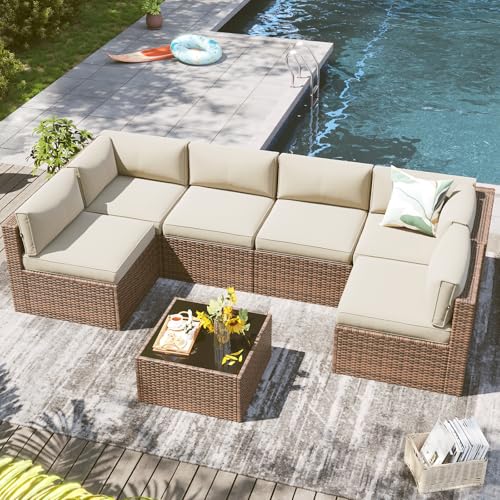
Sectionals make efficient use of corners, but their listed seat count can be optimistic. A nominal five-seat sectional may accommodate only four adults comfortably once arms, corner modules, and side tables are included. Measure each module and confirm whether connectors are supplied. Without connectors, pieces can drift apart on smooth decking.
Cushion materials: comfort versus drying time
The cushion cover is usually the first visible component to fade, stain, or fail. Solution-dyed acrylic and solution-dyed polyester generally offer better outdoor color retention than ordinary indoor fabric. Olefin is often a lower-cost option with good resistance to moisture and fading, though fabric quality varies by weave and coating.
- Quick-dry foam: Best for exposed patios and humid climates. Water drains through the cushion rather than remaining trapped in conventional foam. It usually costs more.
- Standard polyurethane foam: Comfortable and widely available, but it should be protected from prolonged rain. Repeated saturation can produce slow drying and odors.
- Polyester fiber fill: Soft and inexpensive, but it compresses and develops lumps sooner than quality foam.
- Removable covers: A major ownership advantage. Check that zippers, replacement covers, and replacement foam are available before purchase.
Do not leave cushions wet under a cover. A waterproof cover that traps moisture can accelerate mildew. Stand cushions on their edges after rain, remove debris with a soft brush, and follow the fabric maker’s washing instructions rather than using bleach by default.
Frame construction and weather exposure
Powder-coated aluminum is light, rust-resistant, and practical for balconies or furniture that must be moved. It can dent more easily than steel, and thin tubing may feel less substantial. Choose thicker-gauge construction and non-scratching feet for frequent use.
Steel is rigid and often less expensive, but exposed chips in the coating can lead to rust. Inspect welds, drainage holes, fasteners, and the underside of the legs. Touch up damaged coating promptly with a suitable outdoor product.
Resin wicker is a surface material woven over a frame, not a frame material by itself. High-density polyethylene wicker generally holds up better outdoors than inexpensive PVC strands. The internal aluminum or steel frame still determines much of the set’s durability.
Hardwood can look excellent and feel stable, but it needs more routine care. Depending on the species and finish, it may require periodic oiling, sealing, or sanding. Never assume that a wood set can remain uncovered year-round in a wet climate.
Choose the correct table height
- Coffee-table height: Approximately 15–18 inches. Best for lounging, drinks, books, and feet-up seating.
- Chat-table height: Approximately 20–24 inches. A useful compromise for meals and drinks without making the set feel formal.
- Dining height: Approximately 28–30 inches. Pair it with upright dining chairs rather than deep lounge seating.
- Bar height: Approximately 40–42 inches. Usually a poor match for a relaxed conversation set unless you specifically want stools.
A common mistake is pairing a deep, low sofa with a dining-height table. The result feels awkward because the table is too high to reach comfortably. Conversely, a low coffee table will not work well for regular outdoor meals.
Decision matrix for different buyers
| Your situation | Look for | Avoid |
|---|---|---|
| Limited budget | Two-chair aluminum set, replaceable polyester covers, standard sizes | Custom cushions and unusual replacement parts |
| First-time buyer | Preassembled or clearly labeled modular pieces, adjustable feet, simple fasteners | Large sets with many identical-looking bolts |
| Frequent entertaining | Modular seating, quick-dry cushions, 42-inch table, washable covers | Fixed narrow benches and fragile glass-only tables |
| Windy location | Heavier frame, wide legs, connectors, tie-down points | Very light chairs with tall backs and loose cushions |
| Wet or humid climate | Drainage, quick-dry foam, rust-resistant hardware, ventilated covers | Unprotected steel and cushions that cannot be removed |
Assembly difficulty and ownership costs
Small two-seat sets commonly take 30–90 minutes to assemble; larger sectionals can take two to four hours, particularly when each module requires separate leveling and connector installation. Do not fully tighten every bolt until the frame is aligned. Start all fasteners by hand, place the furniture on a flat surface, then tighten them gradually. This prevents misaligned holes and uneven legs.
Budget for more than the initial purchase. Replacement cushion covers, furniture covers, glides, touch-up coating, and hardware may become necessary before the frame itself fails. As a simple example, a $900 set used 90 times per year for three years costs about $3.33 per use before maintenance. A $1,800 set used only 20 times per year for the same period costs $30 per use. Frequency of use can matter more than the sticker price.
Inspect the set at the start and end of each season. Tighten loose hardware, clear drainage holes, check for rust or cracked wicker, and clean spills promptly. Store cushions in a dry, ventilated place when the patio will be unused for several weeks.
Bottom line
For most buyers, the best patio conversation sets combine a powder-coated aluminum or well-protected steel frame, removable solution-dyed covers, seating that matches the true number of users, and a coffee or chat table sized to the room. Measure circulation first, select cushions for your rainfall and storage habits, and treat replacement parts and maintenance access as essential specifications rather than minor details.





Write Your Review
No reviews yet. Be the first to share your experience!