

Key takeaways
- Four people: A 36- to 48-inch round table or a 48- to 60-inch rectangular table.
- Six people: A 54- to 60-inch round table or a 72-inch rectangular table.
- Eight people: An 84- to 96-inch rectangular table, preferably with an extension leaf.
- Ten people: A 96- to 108-inch table, or two matching tables positioned together.
Best Patio Dining Sets for Outdoor Entertaining
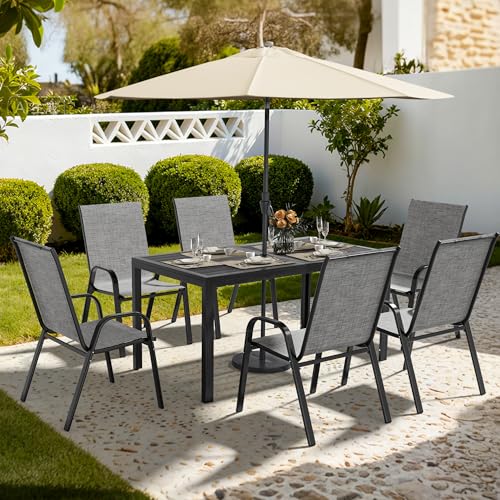
The best patio dining sets for outdoor entertaining are sized around your usual guest count, built from weather-resistant materials suited to your climate, and comfortable enough that people can remain at the table for a full meal.
For most households, a 60-inch round or 72-inch rectangular table is the most useful starting point: it seats four to six people without overwhelming a medium patio. Choose an 84- to 96-inch table if you regularly host six to eight guests, or a compact 30- to 36-inch bistro set when space and storage matter more than capacity.
Our top picks



As an Amazon Associate we earn from qualifying purchases at no extra cost to you. Ratings are shown as listed on Amazon.
Quick Picks by Entertaining Situation
| Situation | Best set type | Recommended dimensions | Why it fits |
|---|---|---|---|
| Small balcony or apartment patio | Folding bistro set | 24–30-inch table, 2 chairs | Stores easily and leaves a clear walking route |
| Weekly meals for four to six | Round or rectangular dining set | 48–60-inch round or 60–72-inch rectangular table | Comfortable everyday capacity without excessive footprint |
| Frequent dinner parties | Extendable rectangular set | 72–96 inches, 6–8 seats | Provides flexibility without storing a second table |
| Large gatherings and buffet-style meals | Long rectangular table plus extra seating | 84–108 inches, 8–10 seats | Supports shared dishes and additional chairs at the ends |
| Windy, exposed location | Heavy steel, cast aluminum, or wrought-iron-style set | Any suitable dining size; prioritize a substantial base | Less likely to shift than lightweight hollow furniture |
How Much Table Space Do You Need?
Allow about 24 inches of table edge per seated adult for a normal meal. That figure permits a plate, glass, utensils, and enough elbow room to avoid bumping neighbors. You can reduce it to about 20 inches for occasional use, but tighter spacing becomes uncomfortable when serving bowls or large platters are on the table.
- Four people: A 36- to 48-inch round table or a 48- to 60-inch rectangular table.
- Six people: A 54- to 60-inch round table or a 72-inch rectangular table.
- Eight people: An 84- to 96-inch rectangular table, preferably with an extension leaf.
- Ten people: A 96- to 108-inch table, or two matching tables positioned together.
Measure the entire furniture footprint, not only the tabletop. Leave at least 36 inches behind occupied chairs for a basic passage; 42 to 48 inches is more comfortable when people need to walk behind seated guests. As a practical example, a 72-inch by 38-inch table with chairs extending roughly 24 inches on each side needs approximately 120 inches by 86 inches before allowing additional clearance. That is about 71 square feet, so it may not suit a narrow deck even if the tabletop itself appears to fit.
Material Head-to-Head: What Holds Up Outdoors?
Powder-coated aluminum
Aluminum is often the best all-around choice for patios because it does not rust, is relatively easy to move, and works well in humid or coastal conditions when the finish remains intact. Hollow aluminum frames are convenient but can be vulnerable to strong wind. Look for wide feet, cross-bracing, or a table weight of roughly 40 pounds or more for a six-person design.
The weak point is usually the coating rather than the metal. Dragging furniture across concrete can expose edges, and damaged finish may allow corrosion around fasteners. Lift rather than drag the set, and touch up small chips with an exterior metal coating recommended by the manufacturer.
Steel
Powder-coated steel provides a solid feel and generally resists movement better than lightweight aluminum. It can be a good choice for windy yards, but scratches, cut edges, and poorly protected welds may eventually rust. Inspect the underside of the tabletop and the joints around chair legs, where water can collect.
Teak and other hardwoods
Outdoor teak is valued for its dense grain and natural resistance to moisture. It can be left to weather to a silver-gray color or treated to retain more of its original tone. Hardwood tables are heavy and stable, but they need periodic cleaning and may require sanding or refinishing if the surface becomes rough or stained.
Do not assume every wood-looking set is solid hardwood. Veneer, acacia, eucalyptus, and composite wood products vary considerably in sealing and maintenance requirements. Confirm whether the furniture is intended for uncovered outdoor use and whether replacement finish is readily available.
Wicker and resin
All-weather wicker is usually a woven resin material over an aluminum or steel frame. It offers a softer, more residential appearance than bare metal. The weave itself is not the main durability concern; the frame, connectors, and UV exposure matter more. Choose tightly woven resin with a rust-resistant frame, and avoid placing cushions where rainwater can remain trapped.
Glass, stone, and ceramic tabletops
Tempered glass is easy to wipe clean and does not absorb spills, but it can show fingerprints and may become hot in direct sun. Stone and ceramic tabletops are substantial and visually durable, though they add weight and can chip at exposed corners. Any tabletop with a separate surface panel should have secure retaining clips or a stable frame rather than simply resting on small supports.
Comfort and Storage Features Worth Paying For
Seat dimensions matter as much as the table size. Aim for a chair seat about 17 to 20 inches wide and at least 17 inches deep for broad everyday comfort. Armchairs are pleasant for long meals, but their arms must fit beneath the table; allow roughly 26 to 30 inches from the ground to the underside of the tabletop and check the arm height before buying.
For cushion-based sets, removable covers with full-length zippers are easier to clean than permanently attached upholstery. Quick-drying foam or mesh panels can reduce the time cushions remain damp, but no outdoor cushion should be stored wet. A ventilated deck box is preferable to a sealed container if cushions are put away before they are completely dry.
Folding chairs save space but may have narrower seats and less lateral stability. Stackable chairs are convenient for frequent rearrangement, while benches can increase capacity at a lower storage cost. However, a bench without a backrest is less suitable for long dinners. If you need to store the table, select a folding or drop-leaf design and check its folded dimensions against your shed or storage closet before ordering.
Decision Matrix for Choosing the Right Set
| Your priority | Recommended construction | Size target | Trade-off |
|---|---|---|---|
| Lowest initial cost | Powder-coated steel or basic resin | 48–60 inches, 4–6 seats | More attention may be needed for rust, fading, or loose hardware |
| Minimal maintenance | Powder-coated aluminum with solution-dyed fabric | 54–72 inches, 4–6 seats | Lightweight frames may need anchoring in exposed areas |
| Premium longevity | Teak, substantial aluminum, or quality steel | 60–96 inches, 6–8 seats | Higher purchase price and greater weight |
| Limited storage | Folding or nesting furniture | 24–48 inches, 2–4 seats | Often less comfortable for extended meals |
| Regular large groups | Extendable aluminum, hardwood, or steel table | 72–108 inches, 6–10 seats | Needs generous clearance and a place for spare chairs |
Assembly, Maintenance, and Ownership Realities
Assembly quality affects stability more than many listings indicate. Assemble the frame on a level surface, leave every bolt slightly loose until the tabletop and legs are aligned, and then tighten gradually in a diagonal pattern. This prevents a leg from being pulled out of square. Recheck fasteners after two or three uses because initial settling can create wobble.
- Inspect the package before assembly. Check for bent legs, chipped coating, missing washers, and cracked tabletop panels.
- Level the furniture. Use adjustable feet or outdoor-rated shims rather than forcing a twisted frame into position.
- Clean monthly during the season. Use mild soap, water, and a soft brush; rinse residue away so it does not attract grit.
- Deal with standing water. Wipe table joints and cushion seams after rain, especially where fabric meets a metal frame.
- Protect during severe weather. Secure or store lightweight pieces before high winds. Covers should be breathable and properly vented, not sealed tightly against damp furniture.
The parts that commonly wear first are chair glides, cushion fabric, elastic straps, hinge hardware, and protective coating at contact points. Replacement glides and covers can extend the life of a set, so check whether the manufacturer lists spare parts before purchase. Avoid pressure-washing cushions or using abrasive cleaners on powder coating; both can damage finishes faster than ordinary outdoor exposure.
Final Buying Recommendation
For a versatile choice, select a 60- to 72-inch rectangular aluminum table with six comfortable chairs, a durable powder-coated finish, and either an extension leaf or two spare folding chairs for occasional guests. Choose teak or heavier steel when stability and long-term ownership matter more than easy relocation. For a compact patio, prioritize folding or nesting furniture and measure the stored dimensions—not just the assembled set—before committing.





Write Your Review
No reviews yet. Be the first to share your experience!