

Key takeaways
- Powder-coated aluminum: Lightweight, rust-resistant, and easy to move. It is a strong all-around choice for decks and rooftops, although thin tubing can flex or dent.
- Galvanized or stainless steel: Heavier and often more stable in wind. Check welds, fasteners, and coating quality because exposed scratches can become corrosion points.
- Teak and other exterior-rated hardwoods: Warm-looking and sturdy, but they gradually weather silver-gray unless cleaned and treated. Wood should not sit in constantly standing water.
- All-weather resin wicker: Comfortable visually and often lighter than wood, but the underlying frame matters. Resin strands can split or become brittle after prolonged ultraviolet exposure if they are not outdoor-rated.
The best daybeds for stylish outdoor lounging are the ones that fit your available floor area, provide a genuinely comfortable sleeping-length surface, and use cushions and frame materials suited to how often you will leave them outdoors.
Our top picks


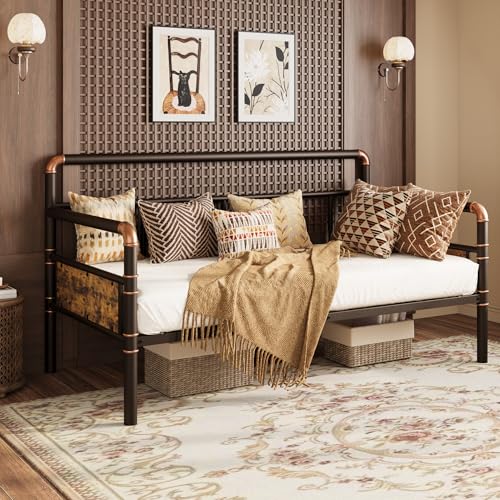

As an Amazon Associate we earn from qualifying purchases at no extra cost to you. Ratings are shown as listed on Amazon.
Best daybeds by patio situation
| Best for | Recommended daybed type | Useful target specifications | Main compromise |
|---|---|---|---|
| Small balcony or compact deck | Single or compact round daybed | 60–75 in. wide; 30–36 in. deep; 18–24 in. seat height | Limited room to stretch out or share |
| Two-person patio lounging | Double daybed with adjustable backrests | 70–84 in. wide; 50–65 in. deep; 5–8 in. cushions | Requires more clearance around the frame |
| Sunny, exposed deck | Powder-coated aluminum daybed with full canopy | Lightweight frame; UV-resistant fabric; canopy covering at least 70% of the mattress | Canopy hardware and fabric add cost |
| Covered porch or seasonal use | Wood or woven-resin daybed | Solid hardwood or all-weather resin weave; removable 4–6 in. cushions | Wood needs more regular finishing or protection |
| Frequent entertaining | Modular sectional daybed | Two or more movable sections; at least 500 lb. combined capacity | More pieces mean more movement and storage |
What separates the best daybeds from attractive but impractical ones?
1. Dimensions that match the way you lounge
A daybed should be long enough for your body rather than merely large enough to look generous in a photograph. For reclining, aim for an interior lounging length of at least 72 inches; taller users may prefer 78–84 inches. A 40–48-inch-wide surface is usually adequate for one person, while two adults are more comfortable with 55–65 inches.
Measure the usable cushion area, not only the outside frame. Thick side rails, wrapped arms, and oversized back cushions can reduce the actual lounging space by several inches. Also allow at least 24 inches for walking clearance on the accessible sides and 36 inches where people will pass frequently.
2. Cushion thickness and construction
Cushion thickness affects both comfort and how quickly the seat bottoms out. For occasional upright sitting, 3–4 inches can be sufficient. For long, horizontal lounging, choose 5–8 inches, preferably with resilient outdoor foam and a wrapped fiber layer. Foam density is often more informative than thickness: approximately 1.8–2.5 pounds per cubic foot is a useful target for a frequently used outdoor seat.
Look for solution-dyed acrylic or solution-dyed polyester covers with concealed zippers. Solution-dyed fibers hold color better because the pigment runs through the fiber rather than sitting only on its surface. Quick-dry cushion construction, with breathable mesh bottoms and water-shedding internal layers, is especially valuable in humid climates.
Do not confuse water-resistant fabric with waterproof cushions. Even excellent covers can develop mildew if cushions are stored wet or pressed tightly against a nonbreathing surface.
3. Frame materials: aluminum, steel, wood, and woven resin
- Powder-coated aluminum: Lightweight, rust-resistant, and easy to move. It is a strong all-around choice for decks and rooftops, although thin tubing can flex or dent.
- Galvanized or stainless steel: Heavier and often more stable in wind. Check welds, fasteners, and coating quality because exposed scratches can become corrosion points.
- Teak and other exterior-rated hardwoods: Warm-looking and sturdy, but they gradually weather silver-gray unless cleaned and treated. Wood should not sit in constantly standing water.
- All-weather resin wicker: Comfortable visually and often lighter than wood, but the underlying frame matters. Resin strands can split or become brittle after prolonged ultraviolet exposure if they are not outdoor-rated.
For a windy patio, weight is a feature rather than a nuisance. A light aluminum frame may need to be positioned against a wall or secured according to the manufacturer’s instructions. Never rely on a canopy as an anchor: the fabric can act like a sail.
Canopy coverage and adjustability
A fixed roof gives the most consistent shade but can make a daybed feel bulky and may block desirable winter sunlight. Retractable canopies provide more flexibility, while adjustable louvers offer better control but add hinges and maintenance points.
Compare the canopy’s actual dimensions with the mattress. A canopy that extends only 4 inches beyond each side may shade the user at midday but provide little protection when the sun is low. For useful all-day coverage, look for a canopy that extends at least 8–12 inches beyond the cushion perimeter and can tilt toward the sun.
Canopy fabric should be removable for cleaning and storage. If the frame includes a gas strut or pivot mechanism, inspect whether replacement hardware is available before buying. Small plastic sliders and cords are commonly among the first parts to wear.
Head-to-head: which construction makes the most sense?
| Construction | Typical weight | Expected usable life with care | Weather resistance | Best setting |
|---|---|---|---|---|
| Powder-coated aluminum | 55–100 lb. | 8–15 years | Very good against rain; inspect chips | Exposed decks and frequent rearranging |
| Steel | 90–180 lb. | 8–15 years | Good if coating and drainage are maintained | Windy patios and permanent placement |
| Exterior hardwood | 100–220 lb. | 10–20 years | Good with drainage and periodic care | Covered patios and traditional designs |
| Resin wicker over metal | 60–130 lb. | 5–12 years | Good, but ultraviolet exposure is decisive | Shaded or partly covered patios |
These ranges are practical planning estimates, not guarantees. Coastal salt, freeze-thaw cycles, standing water, and uncovered storage can shorten them substantially.
How much patio space does a daybed really need?
Use the daybed’s outside dimensions, then add clearance rather than measuring only the mattress. For example, an 80-by-60-inch daybed occupies 33.3 square feet before circulation space. Adding a 24-inch walking strip on two long sides changes the planning rectangle to approximately 84 by 108 inches, or 63 square feet.
This calculation explains why a daybed that appears to fit on a plan can make a patio feel cramped. On a narrow deck, place the long side against the railing or wall and select a model with one-sided access. On a larger patio, leave enough room to pull off the cover, remove cushions, and open the canopy without hitting a table.
Decision matrix for choosing quickly
- Budget-conscious and occasional use: Choose a compact aluminum or resin-wicker model with 4–5-inch removable cushions. Spend more on a fitted cover than on decorative extras.
- Daily use and maximum comfort: Choose 6–8-inch quick-dry cushions, adjustable backrests, and a frame with a reinforced center support. Replaceable covers are worth prioritizing.
- Limited storage: Select a model with a retractable canopy, stackable or removable cushions, and a frame that can remain outdoors under a breathable cover.
- Wet or humid climate: Favor quick-dry foam, elevated feet, drainage gaps, and solution-dyed fabric. Avoid cushions that sit directly on a solid platform.
- Coastal or windy location: Select a heavier frame with corrosion-resistant fasteners and a low profile. Use the canopy only when conditions are calm.
- Design-first patio: Match the frame finish to existing furniture, but verify seat depth and cushion construction before choosing by appearance.
Ownership realities: what wears first
Cushion covers typically show wear before the frame. Sun fading, zipper failure, flattened seat foam, and stains around head and arm areas are common. A removable, machine-washable cover is more valuable than a permanently upholstered cushion.
Frame feet are another weak point. Dirt trapped under plastic glides can hold moisture against metal, while unprotected wood feet can wick water from a wet deck. Clean beneath the daybed several times a year and replace damaged glides promptly.
For routine care, brush off debris, wash fabric with mild soap and cool water, rinse thoroughly, and let every component dry completely before covering. Keep cushions vertically stored in a dry, ventilated place during prolonged rain or winter. Avoid pressure-washing fabric, using chlorine bleach without the manufacturer’s approval, or folding a wet canopy into its housing.
A cover should be breathable and correctly fitted, with vents that reduce condensation. Completely airtight plastic wrapping often creates the damp environment it is meant to prevent.
Final buying checklist
- Does the usable mattress length suit the tallest regular user?
- Are the cushions at least 5 inches thick for extended reclining?
- Can the covers be removed and replaced?
- Does the frame have drainage, center support, and corrosion-resistant hardware?
- Will the canopy shade the cushion rather than only the headrest?
- Can the daybed fit through gates, doors, and stair turns?
- Is there a realistic storage or covering plan for wet weather?
The right choice is rarely the largest daybed available. It is the model whose interior dimensions, cushion construction, canopy, and weather strategy match the way your patio is actually used.





Write Your Review
No reviews yet. Be the first to share your experience!