

Key takeaways
- Ties: Use at least two ties on a seat cushion that sits in a windy or high-traffic area. Four attachment points are useful on long cushions and chaise sections.
- Closure: A full-length zipper makes the cover easier to remove. The zipper should be protected by a flap or positioned away from direct upward rain.
- Welt cord: Piped edges improve shape retention and can protect seams, but they must match the frame’s corners accurately.
- Non-slip backing: Helpful on smooth metal or painted frames, especially when ties cannot be attached.
- Section breaks: Multiple sections are easier to lift and dry. A single long cushion has fewer visible gaps but is heavier and more difficult to store.
Best Replacement Patio Cushions
The best replacement patio cushions are the ones that match your furniture’s exact dimensions, use quick-drying outdoor foam, and have a fabric cover suited to how often the set gets wet, dirty, and exposed to sun.
A low-cost cushion can look attractive but fit poorly, hold water against the frame, or flatten after one season. Before comparing colors and patterns, decide whether you need a firm seat for daily use, a thick lounge cushion for occasional relaxing, or a chaise cushion that will stay comfortable across several support zones.
Our top picks
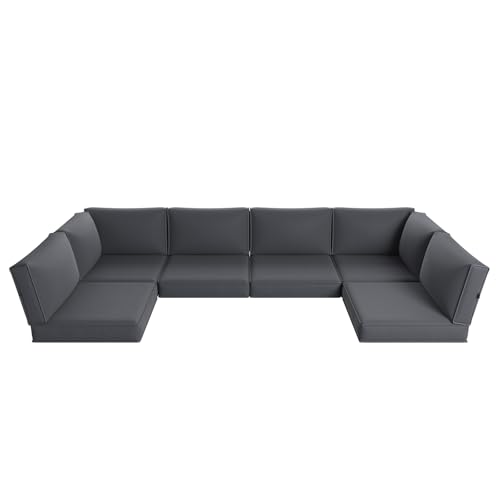


As an Amazon Associate we earn from qualifying purchases at no extra cost to you. Ratings are shown as listed on Amazon.
Quick picks by situation
| Your situation | Best cushion specification | Why it makes sense |
|---|---|---|
| Lowest reasonable budget | 2.5–3 inch polyester-wrapped foam; solution-dyed polyester cover | Lower purchase cost, acceptable comfort, and easier replacement if the set is used occasionally |
| Daily dining or conversation seating | 4 inch medium-firm foam; double-stitched, removable cover; ties | Better support and less sliding during frequent sitting and standing |
| Humid or frequently wet climate | Quick-drying reticulated foam or ventilated foam; breathable fabric; mesh underside | Reduces the time moisture remains inside the cushion |
| Strong sun exposure | Solution-dyed acrylic or solution-dyed polyester; UV-resistant thread | Pigment is integrated into the fibers rather than applied only to the surface |
| Chaise or deep lounge furniture | 5–6 inch cushion, split into sections where possible; adjustable straps | Provides support without making the cushion too difficult to remove and store |
| Furniture with unusual dimensions | Made-to-measure cushion with a paper or digital template | Prevents gaps, overhang, and interference with arms or hinges |
How to measure replacement patio cushions correctly
Measure the furniture frame, not just the old cushion. An old cushion may have compressed, stretched, or changed shape, so use it as a secondary reference.
Seat cushions
- Measure width. Measure from the inside of one arm to the inside of the other at the front and rear of the seat. Record the smaller measurement if the frame narrows.
- Measure depth. Measure from the front edge of the seat platform to the back cushion or rear frame. Do not include the thickness of a back cushion.
- Measure thickness. Measure the old cushion away from a compressed edge. If replacing a thin cushion, check that a thicker one will not raise your knees uncomfortably or prevent the furniture from closing.
- Check the corners. Note rounded fronts, sloped backs, notched corners, and gaps around arms. A rectangle with the correct length and width can still fit badly if the corners are shaped differently.
Measure each matching seat separately. Outdoor furniture can vary by several millimeters from one position to another, particularly after years of movement or weather exposure.
Back cushions
Measure the back cushion’s width, height, and thickness, then record whether it is rectangular, boxed, tapered, or attached to the seat. Measure height at both sides if the back slopes. Also check whether the cushion must fit beneath an arm, rail, or removable headrest.
For a loose back cushion, measure the usable space from the seat cushion to the top of the frame. A replacement that is too tall may bow forward, while one that is too short can leave an uncomfortable gap. If the original has a curved or knife-edge top, photograph the profile and request a template rather than relying on one height measurement.
Chaise cushions
Measure a chaise as separate zones: seat length, back length, total length, width at the head and foot, and thickness. Confirm whether the cushion folds at the seat-back joint. A one-piece cushion generally looks cleaner, but two or three connected sections are easier to carry, store, and replace.
Allow for the frame’s hinge movement. A cushion that fits when the chaise is flat may bunch up when the back is raised. Measure with the chaise in every position you use regularly, and identify where hinges, gaps, and retaining bars sit beneath the cushion.
Foam density and thickness: what actually matters
Thickness affects height and cushioning, but foam density is a better clue to how a seat will retain its shape. Density is normally stated in pounds per cubic foot or kilograms per cubic meter. It is not the same as firmness: two foams with similar density can feel different.
| Foam choice | Typical density | Typical thickness | Best use | Ownership trade-off |
|---|---|---|---|---|
| Basic polyester or low-density polyurethane foam | 1.2–1.5 lb/ft³ | 2–3 inches | Occasional seating and tight budgets | Usually compresses sooner and may retain more moisture |
| Medium-density outdoor polyurethane foam | 1.8–2.5 lb/ft³ | 3–5 inches | Regular dining and conversation seating | Good balance of support, cost, and availability |
| High-resilience or quick-drying foam | 2.5–3.0 lb/ft³ or a reticulated construction | 3–6 inches | Frequent use, humid climates, and deep seating | Higher initial cost; still needs protection from prolonged saturation |
For a dining chair, 2.5–4 inches is often enough. Deep lounge furniture commonly suits 4–6 inches, provided the frame and arm height allow it. Increasing thickness does not fix a cushion that is too soft, too narrow, or poorly supported underneath.
Wrapped foam, often surrounded by polyester batting, gives a fuller appearance and softer edges. It can also make a cushion feel plusher at first. For a firm, tidy seat, look for a well-shaped foam core with a substantial cover rather than relying on extra batting.
Outdoor fabric comparison
Solution-dyed acrylic
Solution-dyed acrylic is a strong choice for exposed patios because the color is incorporated into the fiber before it is spun. It generally offers good fade resistance and a soft, upholstery-like feel. It is often more expensive than ordinary polyester, and textured weaves can collect debris.
Solution-dyed polyester
Solution-dyed polyester usually costs less than acrylic while offering useful UV and abrasion resistance. It is a practical choice for covered patios, rental properties, and families who want to replace cushions without a premium fabric budget. Check the specific fabric’s UV rating rather than assuming every polyester performs equally.
Coated or water-resistant fabric
A coated fabric can shed rain effectively, but a highly impermeable cover may slow drying if water enters through seams or the zipper. Water-resistant does not mean waterproof. Look for water-repellent treatment, covered zippers, welted seams, and a breathable underside rather than relying on a marketing label alone.
Light colors hide heat and may remain more comfortable in direct sun, but they show food stains and pollen. Dark saturated colors conceal dirt better but can show fading sooner if the fabric is exposed continuously. Stripe and heathered patterns often disguise uneven fading better than solid colors.
Ties, thickness, and fit details that prevent frustration
- Ties: Use at least two ties on a seat cushion that sits in a windy or high-traffic area. Four attachment points are useful on long cushions and chaise sections.
- Closure: A full-length zipper makes the cover easier to remove. The zipper should be protected by a flap or positioned away from direct upward rain.
- Welt cord: Piped edges improve shape retention and can protect seams, but they must match the frame’s corners accurately.
- Non-slip backing: Helpful on smooth metal or painted frames, especially when ties cannot be attached.
- Section breaks: Multiple sections are easier to lift and dry. A single long cushion has fewer visible gaps but is heavier and more difficult to store.
Do not deliberately order a cushion several inches larger so it appears fuller. A small amount of compression can hold a cushion in place, but excessive compression strains zippers and seams, creates wrinkles, and may push the cushion off the frame.
Water resistance and care in real ownership
After rain, stand cushions on their edge with space around them rather than leaving them flat on a sealed seat. Brush off loose dirt before cleaning. For ordinary marks, use lukewarm water and mild soap with a soft brush, then rinse thoroughly. Let the cover and core dry completely before storing or stacking.
Do not put a removable cover in a washing machine unless its care label permits it. High heat can shrink fabric, damage water-repellent finishes, or distort the fit. Avoid bleach unless the manufacturer specifically allows it for that fabric. Mildew smell often results from storing a damp cushion, not from a defective cover.
The parts most likely to wear first are exposed seams, zipper pulls, tie attachments, front edges, and foam under the most-used seat position. A cover with replaceable foam is valuable because a worn cover can be renewed without buying a complete cushion. Conversely, a low-priced cushion with permanently sewn construction may be uneconomical to repair.
A simple value calculation
Suppose a patio set needs six cushions. A budget option at $45 each costs about $270; a more durable option at $85 each costs about $510. If the budget cushions last two seasons and the higher-quality cushions last four seasons, the approximate cushion cost per season is $135 in both cases before considering comfort, cleaning, and replacement labor.
The higher-priced option becomes the better value when its fabric and foam actually deliver longer service. It is not automatically better: cushions exposed to full sun, pets, or frequent spills may need replacement earlier regardless of price. Ask for fabric performance information, foam details, and replacement-cover availability before paying the premium.
Final buying checklist
- Measure width, depth, height, corners, and hinge clearances.
- Choose thickness based on frame geometry, not appearance alone.
- Prefer at least medium-density foam for regular seating.
- Choose solution-dyed fabric for strong sun and frequent outdoor exposure.
- Specify ties or a non-slip underside where cushions move.
- Confirm whether the cover is removable and washable.
- Plan where cushions will dry and where they will be stored.
- Compare the expected service life, not just the purchase price.
For most patios, the best replacement patio cushions are medium-firm, 3–5 inches thick, fitted precisely to the frame, covered in solution-dyed outdoor fabric, and built with removable covers, protected seams, and enough ties to stay secure. Upgrade to quick-drying foam or thicker chaise construction when moisture and long sitting sessions matter more than the lowest initial price.


Write Your Review
No reviews yet. Be the first to share your experience!