

Key takeaways
- 6–12 mil: light residential use and low-traffic rooms.
- 20 mil: the practical all-around choice for most sunrooms and covered patios.
- 30 mil or higher: high-traffic rooms, rental properties, or spaces frequently exposed to sand and outdoor debris.
Best LVP Flooring for Patios and Sunrooms
The best LVP flooring for a sunroom or covered patio is a rigid-core, waterproof plank with a 20-mil wear layer, documented UV-resistance testing, and a click-lock installation system that can tolerate seasonal temperature changes. For a fully exposed patio, however, standard indoor LVP is usually the wrong material: most manufacturers exclude outdoor installations from their warranties because direct rain, standing water, freeze-thaw cycles, and intense sunlight can cause fading, expansion, or joint failure.
Quick Picks by Patio Situation
| Situation | Best LVP type | Recommended specification | Installation choice |
|---|---|---|---|
| Enclosed, conditioned sunroom | Premium rigid-core LVP | 20–30 mil wear layer; 6.5–8 mm total thickness | Floating click-lock or manufacturer-approved glue-down |
| Three-season room with temperature swings | Rigid-core SPC or WPC LVP | 20 mil wear layer; attached pad; documented UV protection | Floating installation with expansion gap |
| Covered patio with occasional wind-driven rain | Commercial-grade waterproof LVP, only if approved by the manufacturer | 20–30 mil wear layer; sealed subfloor; strong locking joints | Glue-down where required by the warranty |
| Directly exposed outdoor patio | Outdoor-rated porcelain, tile, or composite decking instead of LVP | Use a material specifically rated for exterior exposure | Exterior installation system |
What to Compare Before Buying
Waterproof construction versus a waterproof claim
Most quality LVP is waterproof at the plank level: the vinyl surface and plastic core will not absorb water like wood. That does not mean the entire floor assembly is waterproof. Water can still enter through perimeter gaps, poorly sealed transitions, damaged click joints, or a concrete slab with moisture vapor transmission.
Our top picks


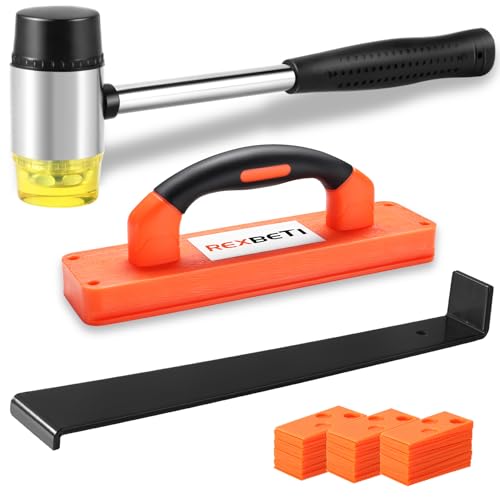
As an Amazon Associate we earn from qualifying purchases at no extra cost to you. Ratings are shown as listed on Amazon.
Look for language describing a waterproof rigid core, waterproof locking system, and an installation warranty that matches your room. “Water resistant” generally provides less protection than “waterproof,” while “waterproof flooring” still may not authorize installation outdoors. Ask whether the warranty covers unconditioned rooms, seasonal buildings, or spaces exposed to sunlight and temperature changes.
Wear layer thickness
The wear layer is the transparent protective coating above the printed design. It is usually measured in mils, not millimeters. A 12-mil layer can work in a lightly used sunroom, but 20 mil is a better target for a patio entrance, pet traffic, dining furniture, and gritty shoes. Commercial products with 30 mil or more offer additional protection, although a thicker wear layer cannot correct a weak core or poor installation.
- 6–12 mil: light residential use and low-traffic rooms.
- 20 mil: the practical all-around choice for most sunrooms and covered patios.
- 30 mil or higher: high-traffic rooms, rental properties, or spaces frequently exposed to sand and outdoor debris.
Wear layers resist scuffing and abrasion; they do not make the flooring scratch-proof. Metal chair legs, dragging planters, and embedded grit can still mark the surface.
UV resistance
Sunrooms can be harder on flooring than ordinary interior rooms because glass concentrates long hours of direct light. Search for a stated UV-resistant finish, accelerated light-exposure data, or a warranty that specifically discusses fading. Many established flooring lines from brands such as COREtec, Shaw, Lifeproof, and Mohawk offer products with protective finishes, but the exact rating and warranty terms differ by collection.
Do not assume that a gray or pale plank will hide fading. Darker colors can show uneven bleaching, while high-contrast wood patterns may reveal furniture-shaped color differences. Solar shades, low-emissivity window film, and rotating furniture can reduce uneven exposure. A product’s indoor UV protection is not the same as an exterior rating.
Plank thickness and core type
Total thickness commonly ranges from about 4 to 8 millimeters. Thicker planks are not automatically more waterproof, but they can provide better dimensional stability, sound reduction, and resistance to minor subfloor imperfections.
- SPC core: stone-plastic composite; firm, dimensionally stable, and useful where temperature changes are common. It can feel hard underfoot.
- WPC core: wood-plastic composite; generally warmer and more forgiving underfoot, but it may be less rigid than SPC.
- Attached underlayment: improves sound and comfort, but it does not replace subfloor preparation or a moisture barrier when one is required.
For a seasonal sunroom, a 5.5–7 mm rigid-core product is often a sensible balance. Avoid choosing solely by thickness: a 6 mm plank with a strong locking profile and 20-mil wear layer can be a better purchase than a thicker plank with a thin wear layer.
Floating, Glue-Down, or Loose-Lay Installation?
Floating click-lock
Floating LVP is usually the most approachable option because planks lock together without adhesive. It can be removed or replaced more easily and works well over a smooth, sound subfloor. The floor must remain free to expand and contract, so leave the manufacturer’s specified perimeter gap—often around 1/4 inch, though some products require more.
Common mistakes include trapping the floor beneath cabinets, installing over an uneven slab, and omitting transition gaps at doorways. Direct sunlight can heat a floating floor substantially, making expansion planning particularly important in a sunroom.
Glue-down
Glue-down LVP stays flatter and can be preferable for large rooms, wheelchair traffic, rolling furniture, or areas where transitions need a low profile. It demands more subfloor preparation and the correct adhesive. A slab that looks smooth may still telegraph cracks, ridges, or trowel marks through the finished floor.
Glue-down flooring is not automatically better for outdoor use. The adhesive, moisture conditions, temperature range, and perimeter detailing all need manufacturer approval.
Loose-lay
Loose-lay planks use friction and weight rather than a full click system or permanent adhesive. They can simplify replacement, but movement is more likely in rooms with strong sunlight, rolling loads, or frequent wet cleaning. Use this method only when the product is specifically designed for it.
Decision Matrix: Which Specification Fits Your Space?
| Your priority | Choose | Why | What to avoid |
|---|---|---|---|
| Lowest initial cost | 12–20 mil rigid-core LVP | Good value for an enclosed room with modest traffic | Thin planks over an uneven slab |
| Frequent use and outdoor dirt | 20–30 mil wear layer | More abrasion protection at entrances | Dark, heavily textured surfaces that retain grit |
| Large temperature swings | SPC core with a robust click profile | Better dimensional stability than softer constructions | Installation without acclimation or expansion gaps |
| Comfort underfoot | WPC core or quality attached pad | Less rigid feel for sitting and standing | Using soft underlayment not approved by the manufacturer |
| Strong afternoon sun | UV-resistant finish plus window shading | Reduces fading and thermal movement | Assuming any waterproof plank is UV-rated |
Worked Cost Calculation
Suppose a 12-by-16-foot sunroom has 192 square feet of floor area. Add 10% for cuts and future repairs: 192 × 1.10 = 211.2 square feet, so purchase about 212 square feet.
- Budget-to-midrange LVP at roughly $2–$4 per square foot: about $424–$848 for flooring.
- Premium or commercial-grade LVP at roughly $4–$8 per square foot: about $848–$1,696.
- Professional installation, subfloor repairs, transitions, adhesive, and moisture testing are additional costs.
The extra 10% is not waste. Keeping a few matching planks can prevent a future repair from requiring replacement of an entire room, especially if the product is discontinued or the floor fades unevenly.
Installation and Ownership Realities
Before installation
- Confirm that the room’s temperature and humidity fall within the product’s installation limits.
- Measure slab flatness with a long straightedge; correct high and low areas rather than expecting thick planks to hide them.
- Check concrete for moisture using the test method specified by the flooring and adhesive manufacturer.
- Acclimate the unopened cartons as directed. Do not assume all rigid-core products have the same acclimation rule.
- Plan door thresholds, steps, drains, and transitions before laying the first row.
Cleaning and maintenance
Sweep or vacuum with a hard-floor setting several times a week in a patio-adjacent room. Grit is often what wears the finish first. Use entry mats that do not contain rubber or latex backing unless approved for vinyl flooring; incompatible backings can discolor the surface. Wipe spills promptly, use a damp—not soaking—microfiber mop, and follow the manufacturer’s cleaner recommendation.
Lift furniture instead of dragging it, place broad protective pads under chair legs, and use saucers beneath plants so standing water does not remain at the seams. Avoid steam mops, wax, abrasive powders, and solvent-based cleaners unless the flooring manufacturer specifically permits them.
Bottom Line
For most enclosed sunrooms, choose rigid-core LVP with a 20-mil wear layer, total thickness of roughly 6–8 mm, a documented UV-resistant finish, and a well-reviewed click-lock design from an established manufacturer. For a covered but unconditioned patio, prioritize the written installation and warranty rules over attractive samples. If the space receives direct rain or remains fully exposed to weather, select an exterior-rated material instead of trying to make indoor LVP perform outdoors.






Write Your Review
No reviews yet. Be the first to share your experience!