

Key takeaways
- Under 100 square feet: A 36- to 44-inch ceiling fan or a 16- to 20-inch circulator is usually sufficient.
- 100 to 225 square feet: Choose a 44- to 52-inch fan, preferably with at least about 4,000 CFM at high speed.
- 225 to 400 square feet: A 52- to 60-inch fan with roughly 5,000 CFM or more is a practical target.
- Over 400 square feet: Two appropriately placed fans usually provide more even comfort than one very large unit.
The best outdoor fans for patio comfort are usually 52- to 60-inch wet-rated ceiling fans for exposed areas, while damp-rated fans are a better value only when the ceiling is substantially protected from rain and wind-driven moisture.
Our top picks

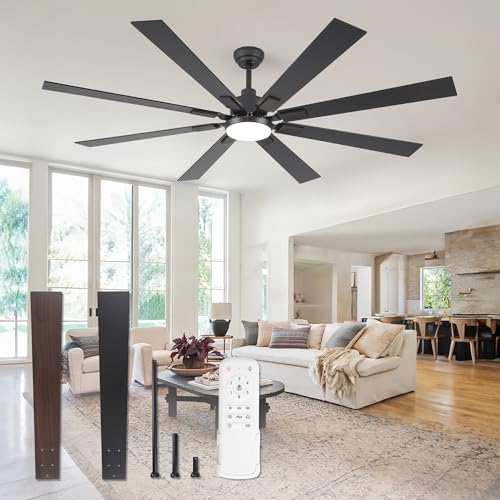


As an Amazon Associate we earn from qualifying purchases at no extra cost to you. Ratings are shown as listed on Amazon.
Quick picks by patio situation
| Patio situation | Best fan type | Recommended size | Why it fits |
|---|---|---|---|
| Open pergola or uncovered terrace | Wet-rated ceiling fan with sealed motor | 52–60 inches | Handles direct moisture and moves enough air for a typical seating area |
| Covered porch with a solid roof and limited side exposure | Damp-rated ceiling fan | 44–52 inches | Lower cost and wider design choice when rain cannot reach the fan directly |
| Small balcony or compact dining nook | Outdoor-rated wall-mount or low-profile fan | 16–24 inches | Uses less ceiling space and directs air toward occupants |
| Large entertaining patio | Two wet-rated ceiling fans | 52–60 inches each | Reduces dead zones more effectively than one oversized fan |
| Rental, temporary setup, or no electrical box | Rechargeable outdoor air circulator | 12–20 inches | No permanent wiring; can be repositioned as seating changes |
Wet-rated versus damp-rated: the decision that matters most
A wet-rated fan is designed for locations where rain, splashing, and wind-driven moisture may reach the housing. Its motor enclosure, wiring connections, and exterior finishes are built to tolerate direct exposure. Wet rating does not mean the fan should be submerged, left in standing water, or installed without following the manufacturer’s mounting instructions, but it is the safer choice for an open pergola or roofless patio.
A damp-rated fan is intended for humid locations where water is present in the air but direct rain is unlikely. A screened porch, enclosed lanai, or covered patio with deep roof overhang may qualify. If rain can blow sideways onto the fan, choose wet-rated construction even when the patio has a roof.
The rating is not merely a durability label. Using a damp-rated fan in an exposed location can shorten motor life, corrode electrical connections, and create a safety problem. For a borderline installation, measure the roof overhang and consider the patio’s prevailing wind direction rather than relying on the word “outdoor” in a product description.
How much airflow does your patio need?
Blade diameter is a useful starting point, but it is not the same as airflow. A well-designed 52-inch fan can outperform a poorly designed 60-inch fan. Look for the airflow rating in cubic feet per minute (CFM), and compare it at the intended speed rather than looking only at the maximum figure.
- Under 100 square feet: A 36- to 44-inch ceiling fan or a 16- to 20-inch circulator is usually sufficient.
- 100 to 225 square feet: Choose a 44- to 52-inch fan, preferably with at least about 4,000 CFM at high speed.
- 225 to 400 square feet: A 52- to 60-inch fan with roughly 5,000 CFM or more is a practical target.
- Over 400 square feet: Two appropriately placed fans usually provide more even comfort than one very large unit.
For example, a 12-by-18-foot patio measures 216 square feet. One 52-inch fan can cover the area if it is centered over the main seating zone. If a grill, dining table, and lounge area divide the space, two smaller fans may be preferable: each can serve a separate zone and run at a lower, quieter speed.
Blade size, ceiling height, and mounting options
Use a 36- to 44-inch fan for compact areas, 48- to 52-inch models for most porches, and 52- to 60-inch models for larger patios. Oversizing can cause unnecessary turbulence in a small space, while undersizing forces a fan to run at maximum speed and may still leave stagnant corners.
Mounting height affects both comfort and safety. The blades should generally be at least 7 feet above the floor, with 8 to 9 feet often producing better air circulation. A downrod helps a fan hang lower from a tall or vaulted ceiling. On a low ceiling, use a listed low-profile mount, but confirm that the finished blade height remains safe.
- Standard downrod mount: Best for ordinary flat ceilings and adjustable for taller structures.
- Low-profile mount: Useful under a low porch roof, though it may slightly reduce airflow efficiency.
- Angled-ceiling adapter: Required when the mounting surface is sloped beyond the fan’s permitted angle.
- Wall-mounted circulator: Practical where joists are unavailable or the ceiling is too low.
- Portable pedestal or rechargeable fan: Flexible, but more vulnerable to being knocked over or exposed to weather.
Never attach a ceiling fan to a decorative ceiling panel, light-duty junction box, or pergola board that has not been engineered for the load and vibration. A fan-rated electrical box must be securely connected to structural framing.
Noise, controls, and electrical requirements
Noise comes from the motor, blade balance, mounting hardware, and wind turbulence. A brushless DC motor is often quieter and more efficient than a traditional AC motor, but the installation still matters. Loose screws, an incorrectly balanced blade, or a flexible mounting surface can create clicking or wobbling that no motor specification will prevent.
Choose a fan with at least three speeds, and consider six or more speeds if the patio is used for both dining and lounging. A reverse function is useful for seasonal circulation, although outdoor comfort in warm weather normally depends on the downdraft setting that moves air toward people.
Most permanently installed outdoor ceiling fans use a standard household circuit, commonly 120 volts in North America. The fan’s manual determines whether it may share a circuit with patio lighting. A light kit may require separate switching, and remote controls may need a compatible receiver installed in the canopy. Outdoor wiring should use weather-resistant boxes, connectors, and covers suitable for the location.
Have a licensed electrician handle new wiring, circuit changes, grounding, and installations where the existing box rating is uncertain. Do not assume that a fan’s wet rating makes an indoor-rated switch, extension cord, or junction box acceptable outdoors.
Market ranges and ownership costs
| Fan category | Typical market range | Typical power draw | Ongoing considerations |
|---|---|---|---|
| Basic damp-rated ceiling fan | $100–$250 | About 20–75 watts | Best value for protected porches; inspect finish for corrosion |
| Wet-rated ceiling fan | $180–$500 | About 25–90 watts | More suitable for exposed patios; sealed parts may cost more to replace |
| Premium DC outdoor ceiling fan | $300–$900 or more | About 5–60 watts | Quiet, efficient, and often offers more speed settings and remote control |
| Rechargeable outdoor circulator | $80–$300 | Battery-powered | Portable, but battery capacity declines with age and heat exposure |
To estimate electricity cost, multiply kilowatts by operating hours and your local electricity rate. A 60-watt fan used for 5 hours costs roughly 0.3 kWh per day. At $0.20 per kWh, that is about 6 cents per day, or approximately $11 for 180 days. Installation and weather-related replacement are usually more significant ownership costs than electricity.
Durability: what wears out first
On outdoor fans, the finish, rubber seals, remote-control batteries, and blade fasteners commonly need attention before the motor fails. Salt air accelerates corrosion, especially near the coast. Plastic blades can become brittle after prolonged ultraviolet exposure, while metal blades may develop surface corrosion if their coating is scratched.
Turn off power before cleaning. Every few months, wipe blades and the motor housing with a damp cloth and mild soap, then dry the surfaces. Remove accumulated pollen and cobwebs because they can unbalance the blades. Do not pressure-wash the motor or spray cleaner into the housing. Check mounting screws at the start of each warm season, and stop using the fan if it develops severe wobble, scraping, or electrical odor.
Common buying mistakes
- Choosing damp-rated construction for a patio that receives wind-driven rain.
- Measuring the patio but ignoring the location of the seating area.
- Installing a large fan too close to a wall, post, light fixture, or heater.
- Assuming a higher maximum CFM means quieter operation at every speed.
- Mounting a ceiling fan to a box that was designed only for a light fixture.
- Placing a portable fan where rain can reach its controls or battery compartment.
Bottom line
For most uncovered patios, the best outdoor fans for patio use are wet-rated 52- to 60-inch ceiling fans with a secure fan-rated box, multiple speed settings, and airflow of roughly 5,000 CFM or more. For a protected porch, a damp-rated 44- to 52-inch model can deliver similar comfort for less money. Prioritize the moisture rating first, then match blade size and airflow to the seating layout, followed by mounting height, noise, controls, and electrical compatibility.


Write Your Review
No reviews yet. Be the first to share your experience!