

Key takeaways
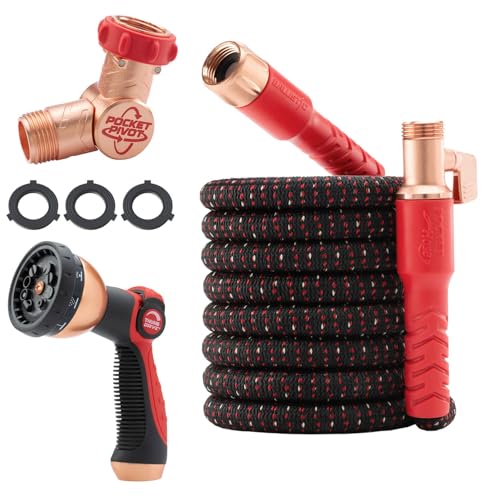
- Best Overall: Pocket Hose Copper Bullet 50 ft.
- Best Reinforced Option: Pocket Hose Ballistic 50 ft with an anti-burst outer sleeve.
- Best for Small Patios: Flexi Hose 50 ft with an 8-function nozzle.
- Best Value Length: tyrellso 75 ft expandable hose.
- Best Long Reach: DayisTools 100 ft expandable hose.
- Best Budget Long Hose: YIRENWEE 100 ft expandable hose.
The best expanding hose for most patios is the Pocket Hose Copper Bullet 50 ft, because the maker publishes real numbers for working pressure, burst pressure and flow, and the brand is easy to find if you ever need support. The runner-up is the Flexi Hose 50 ft with an 8-function nozzle, a lighter-weight, mid-range option that suits small patios and container gardens. If you want the longest reach for the lowest cost, the 75 ft tyrellso and the 100 ft DayisTools and YIRENWEE hoses are worth a look, with a few caveats we explain below. This guide is for people who want an expandable hose that coils into a small space and does not kink on a deck or balcony.
This is a research-based comparison. We did not personally use these hoses. We read maker pages, retailer listings and general hose guidance, and we mark any missing detail as “not listed”. An important reality check up front: expanding hoses are lighter and easier to store than rubber or vinyl hoses, but they are generally not as durable. If your hose will run all day on a high-pressure system or sit in the sun, a conventional hose such as the Flexzilla (covered in “Also Consider”) may last longer.
Our top picks


As an Amazon Associate we earn from qualifying purchases at no extra cost to you.
Top Picks at a Glance
- Best Overall: Pocket Hose Copper Bullet 50 ft.
- Best Reinforced Option: Pocket Hose Ballistic 50 ft with an anti-burst outer sleeve.
- Best for Small Patios: Flexi Hose 50 ft with an 8-function nozzle.
- Best Value Length: tyrellso 75 ft expandable hose.
- Best Long Reach: DayisTools 100 ft expandable hose.
- Best Budget Long Hose: YIRENWEE 100 ft expandable hose.
Comparison Table
| Product | Best for | Key specs | Watch for | Price tier |
|---|---|---|---|---|
| Pocket Hose Copper Bullet 50 ft | All-round patio and garden use | 3/4 inch size, 10-pattern nozzle, 80 PSI working, 650 PSI burst (maker) | Needs about 58 PSI to fully expand | Mid-range |
| Pocket Hose Ballistic 50 ft | Rough surfaces, pets, gravel | Anti-burst sleeve described as bulletproof-style material | Higher cost, same expandable design limits | Premium |
| Flexi Hose 50 ft | Balconies and small yards | Lightweight, 8-function nozzle, 3/4 inch solid brass fittings | Nozzle plastic; do not leave pressurized | Mid-range |
| tyrellso 75 ft | Medium yards on a budget | 75 ft, 10-pattern nozzle, 3/4 inch solid brass connectors | Less maker documentation | Budget |
| DayisTools 100 ft | Reaching far corners | 100 ft, 10-pattern nozzle, solid brass fittings, leak-proof claim | Long hoses are heavy when full | Budget |
| YIRENWEE 100 ft | Lowest cost per foot | 100 ft, 10-function nozzle, retractable, no-kink claim | Limited brand history | Budget |
1. Pocket Hose Copper Bullet 50 ft: Best Overall
- Expands to 50 ft at 3/4 inch, with a 10-pattern thumb-control spray nozzle
- Maker lists 80 PSI maximum working pressure and up to 650 PSI burst pressure
- Needs about 58 PSI to fully expand; at 40 PSI it expands to less than three times its resting length
- Flow listed by the maker as 18 GPM at 55 PSI for the 50 ft hose
- Operating range 32F to 140F; not meant for hot water
- Fittings described as 3/4 inch solid copper anodized aluminum
Best for: patios, decks and small yards with decent household water pressure. Skip if: your tap pressure is low or you plan to leave the hose in the sun all season.
What puts this hose first is the clarity of its specs. Many expanding hoses claim high burst pressure and say little else. Here, the maker separates working pressure from burst pressure and publishes the pressure needed to expand the hose. That matters because an expandable hose that never fully fills will be shorter than advertised and will deliver less flow.
On a patio, the practical benefits are weight and storage. A 50 ft hose collapses into a coil you can hang on a hook or tuck into a deck box, which is a relief on a balcony. The 10-pattern thumb nozzle gives you a mist for seedlings, a shower for pots and a stronger jet for rinsing outdoor furniture. Thumb control means you can lock a pattern on and still turn the water off at the spigot.
The warning is the same as for any expanding hose: do not leave it pressurized in the sun, avoid dragging it over sharp edges and drain it after use. The latex inner tube can degrade with heat and age. Treat it as a light-duty hose and you will be happy; expect it to match a heavy rubber hose and you will not be.
Pros: published pressure and flow figures; lightweight; compact storage; thumb nozzle; recognized brand. Cons: needs adequate pressure; not for hot water; expandable hoses wear faster than conventional ones.
2. Pocket Hose Ballistic 50 ft: Best Reinforced Option
- 50 ft expandable garden hose, described as no-kink
- Anti-burst outer sleeve reinforced with ballistic-style material, according to the listing
- Same general expandable design as the Copper Bullet
- Working and burst pressures for this exact model: not listed in the short listing text
Best for: patios with rough concrete, gravel, pets or kids that tend to chew or drag hoses. Skip if: you only use a hose a few times a month on a clean deck.
The weak point of a typical expanding hose is its outer fabric, which can snag or abrade. A reinforced sleeve addresses that, and it is the reason to pay more for this model. If you water a gravel path, move the hose across brick or rinse a driveway, the added protection is a rational spend.
Keep expectations realistic. A stronger sleeve does not change the fact that the inner tube is flexible latex, and heat and pressure cycles still age it. Drain it after each use, store it in the shade and avoid kinking it at the tap where it is most stressed.
Pros: reinforced outer layer; same compact storage; good for rougher surfaces. Cons: premium cost; fewer published numbers; still an expandable design.
3. Flexi Hose 50 ft with 8-Function Nozzle: Best for Small Patios
- 50 ft lightweight expandable hose
- 8-function spray nozzle
- 3/4 inch solid brass fittings, according to the listing
- No-kink flexibility claim; working pressure and burst figures: not listed in the short listing text
Best for: balconies, townhouse patios and container gardens. Skip if: you need a hose longer than 50 ft.
For a small outdoor space, 50 ft is often plenty. This hose gives you that length in a light package, and the 8-function nozzle covers the main watering styles. Solid brass fittings are a good sign because plastic couplers are a common failure point.
If your spigot is on a wall and your plants are in pots around a patio, a lightweight hose is easier to carry and re-coil than rubber. Pair it with a simple hose hook mounted at the spigot and the hose will dry out and stay in good shape.
Pros: lightweight; brass fittings; mid-range cost; handy size for patios. Cons: fewer published specs; nozzle plastic; not for heavy-duty use.
4. tyrellso 75 ft Expandable Hose: Best Value Length
- 75 ft expandable hose, kink-free design claim
- 10-pattern spray nozzle
- 3/4 inch solid brass connectors, according to the listing
- Pressure ratings and warranty: not listed in the short listing text
Best for: medium yards where 50 ft falls short. Skip if: you want a long-established brand with detailed documentation.
Seventy-five feet is a useful in-between length: long enough to reach a side garden from a front spigot, still short enough to coil easily. The low cost relative to the length makes it a good test of whether expandable hoses suit you before you invest in a premium model.
As with any lesser-known brand, read the return terms before you order and keep the packaging until you are sure it works with your water pressure.
Pros: useful length; 10-pattern nozzle; brass connectors; budget cost. Cons: little published data; unknown long-term durability.
5. DayisTools 100 ft Expandable Hose: Best Long Reach
- 100 ft expandable hose, flexible and lightweight
- 10-pattern nozzle
- Solid brass fittings and a leak-proof claim
- Pressure rating, tube material and warranty: not listed in the short listing text
Best for: large patios with distant planters or backyards. Skip if: your water pressure is low, because long expandable hoses need more pressure to fill.
A 100 ft expandable hose can be useful when a single spigot must serve a deep yard. Remember that water pressure drops with length, and the hose needs enough pressure to expand fully. If your supply is weak, a long expandable hose may only partly extend.
The filled hose is heavier than a 50 ft model, so expect to drag it a little. Drain it after every use to avoid mildew.
Pros: long reach; low cost for the length; brass fittings. Cons: pressure drop; harder to handle when full; limited documentation.
6. YIRENWEE 100 ft Expandable Hose: Best Lowest Cost
- 100 ft expanding water hose, heavy-duty claim
- 10-function spray nozzle
- Retractable, flexible, never-kink claims
- Fitting material and pressure rating: not listed in the short listing text
Best for: occasional watering where the cost per foot matters most. Skip if: you want a durable hose for daily use.
This hose is the cheapest way to get a hundred feet of coverage. The marketing language is bold, so read it as claims rather than facts. For light seasonal use it is a fair gamble; for a hose that will be used every day through summer, a more established brand is safer.
Pros: low cost per foot; long length; many nozzle patterns. Cons: limited brand history; marketing claims not backed by published numbers; durability unknown.
Also Consider
- Flexzilla 5/8 in x 50 ft ZillaGreen: a conventional hybrid-polymer hose with a 150 psi working pressure and crush-resistant aluminum fittings, listed as drinking-water safe. It is heavier but sturdier than expanding hoses.
- Averlio 5/8 in x 50 ft heavy-duty hose: a conventional hose with a swivel brass handle and leak-free connectors, a middle path if you want durability.
- GEEHOME flat 50 ft hose: a lightweight flat hose with a shutoff valve and 3/4 inch metal fittings; easy to coil.
- Greenient 50 ft non-expandable hose: a light conventional alternative if you want less stretch.
How We Chose
This is a research-based guide. We did not personally use these hoses and make no claims about measured flow or lifespan. We started with the search “best expanding hose” and gathered expandable garden hoses available through the site’s product feed. We compared length, fitting material, nozzle type and what the maker publishes about pressure, then checked manufacturer pages and retailer descriptions for the Pocket Hose and Flexzilla figures quoted above. We limited the list to two products per brand and put better-documented products first. Where we could not verify a spec, we said “not listed”.
We also considered the realistic downsides of the category. Expanding hoses are lightweight and compact, but their inner latex tube can degrade with heat, sunlight and pressure cycling, and some owners report bursts after a few months. That is why we include conventional alternatives and avoid treating long, cheap hoses as drop-in replacements for rubber hoses.
Buying Guide
Choose a length you will actually use
Measure from the spigot to the farthest plant. Add ten percent for turns. Most patios need 25 to 50 ft. A longer hose means more weight when full and a greater drop in pressure. A 75 or 100 ft hose makes sense only for large yards.
Check your water pressure
Expandable hoses need enough pressure to extend. The Pocket Hose figure of around 58 PSI to fully expand is a useful benchmark, and household supply is often in the 40 to 80 PSI range. A cheap gauge that screws onto a spigot will tell you in seconds. If your pressure is low, choose a shorter hose or a conventional one.
Look at the fittings
Solid brass or anodized aluminum fittings resist cross-threading and cracking better than plastic. Make sure the thread is the standard garden hose thread and that the hose includes a washer. Hand-tighten only, and replace washers each season.
Think about the nozzle
A multi-pattern nozzle is convenient, but plastic nozzles are among the first things to fail. Be ready to swap in a metal nozzle or a simple shutoff valve. A shutoff valve at the hose end also lets you leave the hose empty between uses, which prolongs its life.
Plan for storage and care
Drain the hose after each use, coil it loosely, keep it out of direct sun and bring it inside in freezing weather. These habits matter more than any spec on a label. Expandable hoses should not be left pressurized with the nozzle closed for long periods, and should not be used with hot water or pressure washers.
Expanding Hose or Conventional Hose?
The honest answer is that it depends on how you use the hose. An expanding hose wins on weight, storage and flexibility. A conventional hose wins on toughness, consistent flow and lifespan. The table below sums up the trade-offs we see in maker descriptions and general hose guidance.
| Factor | Expanding hose | Conventional hose (for example, Flexzilla) |
|---|---|---|
| Weight when empty | Very light | Noticeably heavier |
| Storage | Shrinks to a small coil | Needs a reel or a large loop |
| Kink behavior | Marketed as no-kink, but can still twist at the tap | Hybrid polymer models resist kinks |
| Durability | Lower, inner tube can age | Higher, built for years of use |
| Pressure needs | Needs enough pressure to extend | Works at any normal pressure |
| Best use | Light patio, balcony and pot watering | Daily watering, washing and all-season use |
Many households keep both: an expanding hose for the patio and pots, and a sturdy hose for the yard and car washing. If you can only afford one, think about the worst thing you ask of it. If that is a quick shower for tomatoes and a rinse for the barbecue, an expanding hose is fine. If it is a daily job in hot sun, spend on a conventional hose.
Setting Up an Expanding Hose on a Patio
Start with a clean, tight connection
Check the washer inside the female coupling, screw it onto the spigot by hand and stop when it feels snug. Over-tightening can crush the washer and cause leaks. If your spigot is old or loose, an inexpensive hose connector with a swivel can ease the strain on the hose.
Turn the water on slowly
Open the tap gradually. The hose fills and lengthens, and a sudden surge can stress the inner tube. Keep the nozzle open while it fills to let air escape, then close it. A shutoff valve at the nozzle end lets you hold the hose full without leaking.
Let it extend in a straight line
Before you start, lay the hose out loosely so it can lengthen without catching on planters, chair legs or sharp trellis edges. The fabric sleeve is the part that scrapes. If you have rough decking or a gravel path, lay a strip of old carpet or a rubber mat where the hose usually runs.
Drain and coil after use
Shut off the tap, open the nozzle and let the hose shrink as water drains. Lift one end and walk the length to push remaining water out. Hang it in a loose coil in shade. This one habit probably does more for lifespan than any spec on the label.
Watch for leaks and bulges
If you see water spraying near a coupling, replace the washer first. If you see a bulge in the outer sleeve or the hose looks thin in one place, retire it before it bursts. A burst hose spraying on a patio is more nuisance than danger, but it can soak a cushion or a doormat.
Match the nozzle to the task
Misting is best for seedlings and delicate leaves. A shower setting suits potted plants. A jet or flat spray is for rinsing dirt off tiles and furniture. Switch patterns with the water on low, not at full blast, to protect the nozzle seals.
Which Hose Fits Which Patio?
Balcony or small deck with a few pots
You need 25 to 50 ft at most. The Flexi Hose 50 ft or a shorter Pocket Hose is plenty, and the small coil fits in a corner box. Add a simple wall hook near the tap so the hose is never left in a heap on the floor.
Townhouse patio with a side garden
Fifty feet usually covers it, but if the tap is at the front and the beds are at the back, consider the 75 ft tyrellso. Walk the route before you buy to count the corners, because every turn uses more hose than a straight line.
Large yard with a distant vegetable bed
A 100 ft expandable hose can reach, but check pressure first. If your supply is modest, you may be better off with two shorter hoses joined by a coupling, or a conventional hose in the main run and an expanding hose for the last stretch.
Pets, kids and rough ground
Choose the reinforced Pocket Hose Ballistic or a conventional hose. Pets chew and paws scratch, and thin fabric sleeves are the first casualty. Keep the hose off hot concrete and out of the sun between uses.
Rentals and temporary setups
An expanding hose is easy to pack, so it suits renters who move. Buy the least expensive length you need and keep the receipt in case the washers or fittings fail early.
Mistakes to Avoid
- Buying a 100 ft hose for a 30 ft patio.
- Leaving the hose under pressure in the sun.
- Dragging an expandable hose across rough concrete.
- Ignoring the need for adequate water pressure.
- Using an expandable hose with hot water or a pressure washer.
- Expecting a low-cost hose to match a heavy rubber one for durability.
Frequently Asked Questions
What is the best expanding hose?
The Pocket Hose Copper Bullet 50 ft is our top pick because it publishes pressure and flow numbers and comes from an established brand. The Flexi Hose 50 ft is a good lighter option.
Do expanding hoses last?
Generally less long than rubber or hybrid polymer hoses. Good care, such as draining and storing out of the sun, can extend life, but plan to replace one every few seasons with regular use.
How much water pressure does an expanding hose need?
The Pocket Hose maker says its hose needs around 58 PSI to fully expand. Check your own supply with a spigot gauge before choosing a long model.
Are expandable hoses safe for drinking water?
Not unless the product is explicitly listed as drinking-water safe. Many garden hoses are not. The Flexzilla we mention is listed as drinking-water safe, but check each product page.
Can I use an expandable hose with a pressure washer?
No. They are designed for ordinary household pressure, and the maker of the Copper Bullet lists 80 PSI as its maximum working pressure.
Is a 100 ft expandable hose too long?
For most patios, yes. The extra length adds weight and reduces pressure at the nozzle. Choose it only if you need to reach far corners.
How should I store an expanding hose in winter?
Drain it fully, disconnect it from the spigot and store it indoors or in a shed above freezing. Water left inside can freeze and damage the tube.
Which One Should You Buy?
For most patios, buy the Pocket Hose Copper Bullet 50 ft. If your surface is rough or your yard has pets, pay for the reinforced Ballistic version. If you only have a balcony or a few pots, the Flexi Hose 50 ft is enough. For larger spaces on a tight budget, the tyrellso 75 ft is a sensible middle length, and the 100 ft DayisTools or YIRENWEE hoses are for occasional long reaches. If you want something that survives daily use, choose a conventional hose such as the Flexzilla instead.
Sources
- Pocket Hose, Copper Bullet product page and specifications
- Legacy Manufacturing / Flexzilla ZillaGreen garden hose specification sheets
- Retailer listings for Flexi Hose, tyrellso, DayisTools and YIRENWEE expandable hoses
- General garden hose care guidance from extension and gardening publications
Last updated: October 2026


Write Your Review
No reviews yet. Be the first to share your experience!