

Key takeaways
- Choose a pocket tower when the priority is the smallest footprint and inexpensive herbs or greens. Choose a modular reservoir tower when you want the best balance of capacity, watering access, and repeatable maintenance. Choose a broad-base rigid model when wind and stability are more…
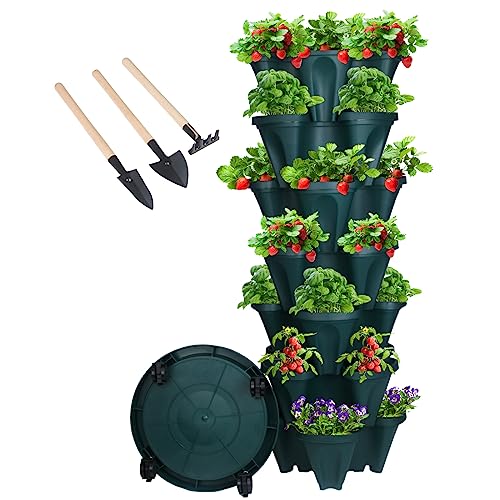
The best garden tower planters for small spaces are usually a modular, deep-reservoir tower for frequent harvests, a lightweight pocket tower for the lowest price and smallest footprint, or a rigid, wide-base planter when wind stability matters more than maximum capacity.
Our top picks


As an Amazon Associate we earn from qualifying purchases at no extra cost to you. Ratings are shown as listed on Amazon.
Quick picks by growing situation
| Situation | Best choice | Why it fits | Main compromise |
|---|---|---|---|
| Balcony with limited floor area | Stacked pocket tower, 8–12 pockets | Usually 12–16 inches wide and easy to move when empty | Small pockets dry quickly and suit herbs or shallow-rooted greens |
| Patio vegetable garden | Modular reservoir tower, 4–5 tiers | Greater soil volume, more even watering, and roughly 20–30 planting sites | Heavier when filled and more expensive |
| Small yard with strong wind | Rigid tower with a broad base or ground anchoring | Better resistance to tipping and less flexing than fabric systems | Larger footprint, commonly 18–24 inches wide |
| First-time container gardener | Self-watering modular tower | Reservoir, simple stacking, and fewer exposed pockets to monitor | Drainage channels need occasional cleaning |
| Lowest initial budget | Fabric or polypropylene pocket tower | Often about $25–$70, depending on size and frame | Fabric seams, clips, and pockets generally wear sooner |
What separates the best garden tower planters
A tower is not automatically space-efficient. Compare the usable planting volume, not just the number of pockets. Ten tiny pockets may hold less soil than four deep tiers, and the smaller system can demand more watering because warm air reaches nearly every side.
Planting capacity and root depth
Pocket towers work well for basil, parsley, thyme, strawberries, lettuce, arugula, and other compact crops. Look for pockets at least 6–8 inches deep for dependable herb and salad growth. Many pocket designs are less suitable for tomatoes, peppers, carrots, or large flowers because roots become crowded and the upper pockets shade lower ones.
Tiered systems with around 20–30 gallons of total growing medium can support a wider crop mix. A five-tier unit may offer approximately 25–30 planting openings, but the manufacturer’s count can include very small side openings. Check the actual soil volume per tier and whether the central column is growing space or only a watering channel.
Footprint and usable height
Measure the proposed location before buying. A tower that is 16 inches wide needs additional clearance for watering, harvesting, and sunlight. On a balcony, leave room to walk around it and keep it away from railings unless the product is specifically secured; a tall, top-heavy planter can become a wind hazard.
Most compact towers stand approximately 36–60 inches tall. Taller is not always better: the upper tier can be difficult to reach, while the lower tiers may receive less light. For everyday access, a tower around waist to shoulder height is easier to inspect and harvest than a very tall stack.
Drainage and watering access
Drainage is the most important technical detail after size. Each tier should have a defined path for excess water to leave, and the base should not sit permanently in a saucer of stagnant water. On a balcony, use a tray only if it can hold runoff safely and be emptied without dripping onto people below.
Self-watering towers, including systems such as GreenStalk’s reservoir-based planters, can distribute water from the top through internal channels. This reduces the need to wet every pocket by hand, but it does not eliminate maintenance. Mineral buildup, blocked channels, and unevenly filled tiers can cause one level to remain saturated while another dries out.
Pocket towers need more hands-on watering. Apply water slowly from the top and check the lowest pockets. If water races down the front without wetting the root zone, the mix may have become hydrophobic or compacted. A moisture check with a finger or inexpensive meter is more useful than watering on a fixed schedule.
Head-to-head comparison
| Planter type | Typical dimensions | Approximate capacity | Typical weight when filled | Drainage behavior | Best use |
|---|---|---|---|---|---|
| Fabric pocket tower | 12–18 in. wide × 36–60 in. tall | 8–20 pockets; 8–18 gal. of mix | 35–90 lb. | Fast drainage; dries quickly in sun and wind | Herbs, lettuce, strawberries |
| Rigid polypropylene pocket tower | 12–18 in. wide × 36–55 in. tall | 12–24 pockets; 10–25 gal. of mix | 45–120 lb. | Drain holes can clog if mix is fine or compacted | Balconies and tidy patios |
| Modular reservoir tower | 18–24 in. wide × 40–65 in. tall | 20–30 gal.; about 20–30 openings | 100–220 lb. | More even distribution; requires channel cleaning | Mixed herbs, greens, and compact vegetables |
| Vertical planter with wide base | 20–30 in. wide × 35–60 in. tall | 15–35 gal.; 10–25 openings | 100–250 lb. | Usually reliable if holes remain unobstructed | Wind-exposed patios and yards |
These are practical comparison ranges rather than universal specifications. The weight calculation assumes moist potting mix and varies substantially with soil density, water content, and the planter’s material.
Material durability: what wears first
UV-resistant polypropylene is usually a better long-term choice than thin, uncoated plastic. It does not make a planter indestructible: repeated freezing, strong sunlight, and moving a filled stack can eventually make plastic brittle or crack connection points. Choose a model with replaceable trays, tiers, or irrigation parts if those components are available.
Fabric towers are light and inexpensive, but seams, hanging loops, and drainage panels typically wear before the fabric body. Wet fabric also stays damp against a wall or balcony surface, so leave an air gap and clean away algae or accumulated fertilizer salts.
Metal frames can provide useful support, but ordinary steel may rust where the coating is scratched. Powder-coated steel and corrosion-resistant aluminum are preferable for exposed patios. Avoid placing any metal frame where runoff will stain a pale surface.
How much space and water will you really need?
Use a simple clearance calculation before ordering. If the tower is 18 inches wide and you want 6 inches of working space on each side, the practical width is:
18 + 6 + 6 = 30 inches.
For a 24-inch-deep balcony strip, that leaves no comfortable passage if the tower is placed across the walkway. A narrower 14-inch pocket model, with 4 inches of clearance on each side, needs about 22 inches and may fit much better.
Watering demand also rises with exposure. Suppose a tower holds 20 gallons of mix and loses an estimated 5 percent of its moisture capacity between waterings. That is roughly one gallon of water to replace:
20 gallons × 0.05 = 1 gallon.
In hot, windy weather, you may need to replace that amount daily; in cool or shaded conditions, it may take several days. Treat this as a planning estimate, not a schedule. Check the soil and the drainage instead of adding water automatically.
Setup that prevents the common failures
- Confirm the load limit. A 20-gallon tower can exceed 150 pounds once filled and watered. Verify the balcony or deck can support the concentrated load, especially near an edge.
- Assemble it on the final surface. Moving a full tower can twist joints, split plastic, or strain a fabric frame.
- Use container mix, not garden soil. A quality mix drains more predictably and weighs less than dense yard soil. Add only amendments suitable for containers.
- Fill in stages. Water each tier as it is filled so dry mix does not repel water later. Do not compress it heavily; roots need air spaces.
- Plant according to exposure. Put sun-loving, drought-tolerant herbs higher up and crops needing steadier moisture lower down when the design creates different watering conditions.
- Secure the tower before planting. Use a manufacturer-approved bracket, wall restraint, or sheltered position when wind is possible. Never rely on plant weight alone.
- Test drainage. Slowly add water and watch every level. A blocked hole or overflowing tier is easier to fix before roots and soil settle.
Ownership costs and maintenance
Budget for more than the planter. Potting mix, a tray, fertilizer, replacement clips, and possibly a watering can can add $30–$100 to a low-cost setup. Modular systems often cost about $80–$250, while basic pocket towers commonly fall between $25 and $70. Replacement parts can make a higher-priced system cheaper over several seasons than replacing an entire cracked tower.
At the end of each growing season, empty the planter, remove roots from drain holes, and rinse away fertilizer residue. Let fabric dry fully before storage. Inspect plastic for whitening or hairline cracks, and check reservoir channels for insects, algae, and mineral deposits. Do not leave water-filled reservoirs to freeze; expanding ice can split internal passages.
Final verdict
Choose a pocket tower when the priority is the smallest footprint and inexpensive herbs or greens. Choose a modular reservoir tower when you want the best balance of capacity, watering access, and repeatable maintenance. Choose a broad-base rigid model when wind and stability are more important than squeezing in the maximum number of planting pockets. Whatever the style, the best garden tower planters are the ones whose filled weight, drainage, root volume, and watering demands match the actual balcony, patio, or small yard—not merely the number of plants printed on the box.





Write Your Review
No reviews yet. Be the first to share your experience!