

Key takeaways
- Best all-rounder: Sony A7 IV — a 33-megapixel full-frame sensor, broad native lens selection, and enough resolution for landscapes, star trails, and moderate cropping.
- Best for faint stars and handheld night work: Sony A7S III — its 12.1-megapixel full-frame sensor produces large pixels and clean high-ISO files, though it is expensive and less suited to heavy cropping.
- Best Canon option: Canon EOS R6 Mark II — a 24.2-megapixel full-frame camera with strong high-ISO results, effective stabilization, and access to Canon RF and adapted EF lenses.
- Best value full-frame choice: A used or discounted Sony A7 III — still highly capable for Milky Way photography, with a mature lens ecosystem and widely available batteries.
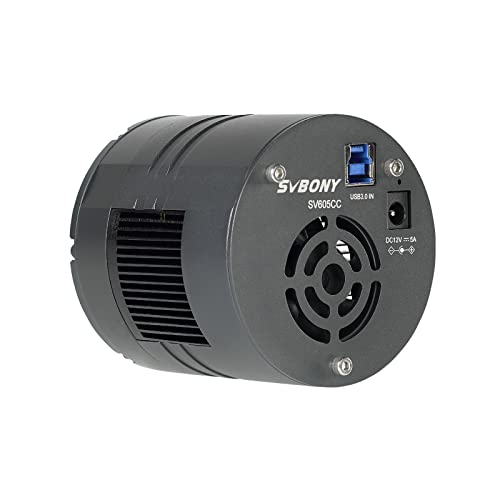
- Best dedicated deep-sky camera: ZWO ASI533MC Pro — a cooled color astronomy camera designed for long exposures through a telescope or tracking mount, rather than ordinary daytime photography.
The best astrophotography cameras for most night-sky photographers are the Sony A7S III for maximum low-light performance, the Sony A7 IV for a versatile full-frame setup, the Canon EOS R6 Mark II for excellent autofocus and wide-angle lens options, and the ZWO ASI533MC Pro for serious tripod or telescope-based deep-sky imaging.
Our top picks


As an Amazon Associate we earn from qualifying purchases at no extra cost to you. Ratings are shown as listed on Amazon.
Quick picks by shooting situation
- Best all-rounder: Sony A7 IV — a 33-megapixel full-frame sensor, broad native lens selection, and enough resolution for landscapes, star trails, and moderate cropping.
- Best for faint stars and handheld night work: Sony A7S III — its 12.1-megapixel full-frame sensor produces large pixels and clean high-ISO files, though it is expensive and less suited to heavy cropping.
- Best Canon option: Canon EOS R6 Mark II — a 24.2-megapixel full-frame camera with strong high-ISO results, effective stabilization, and access to Canon RF and adapted EF lenses.
- Best value full-frame choice: A used or discounted Sony A7 III — still highly capable for Milky Way photography, with a mature lens ecosystem and widely available batteries.
- Best dedicated deep-sky camera: ZWO ASI533MC Pro — a cooled color astronomy camera designed for long exposures through a telescope or tracking mount, rather than ordinary daytime photography.
What matters most in an astrophotography camera
Sensor size and pixel count
A full-frame sensor gathers more light over a larger area than an APS-C or Micro Four Thirds sensor when both use an equally fast lens with the same field of view. That makes full frame particularly useful for broad Milky Way scenes. APS-C cameras can be smaller and less expensive, while Micro Four Thirds bodies and lenses are often easier to carry to a dark-sky site.
Resolution is a trade-off rather than a simple advantage. More pixels provide room to crop a small nebula or refine a foreground, but individual pixels are smaller and may show more noise at the same exposure. A 12-megapixel full-frame camera such as the Sony A7S III is optimized for large, light-sensitive pixels; a 33-megapixel Sony A7 IV offers substantially more detail for landscape composition and cropping.
ISO performance and dynamic range
High ISO does not make a sensor collect more total light; it amplifies the signal already captured. Lens aperture, shutter speed, tracking, and the quality of the raw file remain crucial. For an untracked Milky Way, ISO 3200–6400 is a common starting range. For tracked exposures, ISO 400–1600 may preserve more highlight and color information, depending on the camera and scene.
Look for clean raw files, low read noise, and good shadow recovery rather than the highest quoted ISO number. The camera should also allow long exposures without excessive thermal noise, especially during warm summer nights.
Lens compatibility
Lens choice often affects results more than a small difference in camera specifications. A fast 14–24mm lens at f/1.4–f/2 is useful for Milky Way landscapes. A 20mm or 24mm prime usually has fewer coma and distortion compromises than an inexpensive ultra-wide zoom. For deep-sky targets, a telescope replaces the ordinary lens, and a compatible mount, T-ring, or field flattener becomes part of the system.
Head-to-head specifications
| Camera | Sensor and resolution | Body weight | Battery / power | Best use |
|---|---|---|---|---|
| Sony A7S III | Full frame, 12.1 MP | Approx. 699 g with battery and card | NP-FZ100, 2280 mAh; USB-C power supported | Low-light landscapes and video |
| Sony A7 IV | Full frame, 33 MP | Approx. 658 g with battery and card | NP-FZ100, 2280 mAh; USB-C power supported | General-purpose astro and daytime photography |
| Canon EOS R6 Mark II | Full frame, 24.2 MP | Approx. 670 g with battery and card | LP-E6NH, 2130 mAh; USB-C charging and power options | Low-light stills with excellent stabilization |
| Fujifilm X-T5 | APS-C, 40.2 MP | Approx. 557 g with battery and card | NP-W235, 2200 mAh; USB-C power supported | Lightweight high-resolution landscapes |
| OM System OM-1 Mark II | Micro Four Thirds, 20.4 MP | Approx. 599 g with battery and card | BLX-1, 2280 mAh; USB-C charging | Compact travel and star-trail setups |
| ZWO ASI533MC Pro | Color CMOS, 9 MP, 1-inch format | Approx. 470 g | External 12 V DC; active cooling | Long-exposure telescope imaging |
Body weights exclude lenses, tripods, tracking mounts, and telescope accessories. Battery capacities are nominal figures; actual runtime changes substantially with screen brightness, autofocus, stabilization, exposure length, temperature, and USB use.
Which camera should you buy?
For Milky Way landscapes
Choose the Sony A7 IV if you want one camera for travel, family photography, and astrophotography. Its 33 MP files give useful cropping flexibility, and Sony’s full-frame E-mount includes many fast wide-angle lenses from Sony, Sigma, Samyang, Tamron, and others.
Choose the Sony A7S III if the priority is clean high-ISO output, video, or viewing the composition in very dark conditions. Its lower resolution is not a disadvantage for a correctly framed Milky Way panorama, but it limits aggressive cropping and large prints.
For a compact kit
The Fujifilm X-T5 offers high resolution in a relatively light body, while Fujifilm’s XF lens range includes fast primes suitable for night landscapes. The smaller APS-C sensor gives a narrower field of view than full frame, so check the equivalent focal length before buying: a 16mm APS-C lens frames similarly to roughly 24mm on full frame.
The OM System OM-1 Mark II is even more travel-friendly as a system, particularly with compact f/1.8 primes. Its Micro Four Thirds sensor has less low-light latitude than current full-frame alternatives, but the smaller lenses can make the complete kit considerably easier to carry.
For nebulae and galaxies through a telescope
A dedicated cooled camera such as the ZWO ASI533MC Pro is a better fit than a general-purpose camera when you regularly shoot long exposures. Its active cooling reduces sensor temperature several degrees below ambient, improving consistency between light frames and calibration frames. It requires a computer, 12-volt power, a telescope or lens, a tracking mount, and appropriate adapters, so the camera is only one part of the system.
For occasional deep-sky attempts, a mirrorless camera may be more practical. It can be removed from the telescope and used normally, operates without a computer, and avoids the additional cables and software required by a cooled astronomy camera.
Cold-weather battery planning
Cold weather reduces available battery capacity and makes voltage drop more likely during long exposures. Do not plan a full night around the manufacturer’s maximum shot count. As a practical example, if a camera normally manages around 500 still frames under moderate conditions, a cold session with live view, image review, and long exposures may deliver substantially less. Carry at least two spare batteries, keep them in an inside pocket, and rotate the warmest one into the camera.
A 3-hour session containing 30-second exposures has a theoretical maximum of 360 frames, but a real interval may include 5–15 seconds for writing, focusing, composition, and mount corrections. At an average 45-second cycle, the camera makes approximately 240 exposures. That calculation explains why a battery that appears adequate for a daytime walk can fail before dawn.
USB-C power banks can extend mirrorless-camera sessions, but check whether the camera accepts continuous power while recording and use a short, secured cable. For a cooled astronomy camera, use a regulated 12 V supply with enough current for both the camera cooler and the mount. Insulate or shield connectors from dew without blocking ventilation.
Decision matrix
| Your situation | Best direction | Why |
|---|---|---|
| First camera, mixed daytime use | Sony A7 IV or Canon EOS R6 Mark II | Versatile lenses, strong autofocus, and useful resale value |
| Maximum low-light quality, less cropping | Sony A7S III | Large full-frame pixels and strong high-ISO performance |
| Frequent travel with limited space | Fujifilm X-T5 or OM System OM-1 Mark II | Smaller bodies and lenses than a full-frame kit |
| Monthly telescope imaging | ZWO ASI533MC Pro | Cooling and computer control suit repeated long exposures |
| Lowest sensible system cost | Used Sony A7 III with a fast wide prime | Older body prices are lower while lens availability remains broad |
Ownership details that affect results
Most failures are caused by dew, focus drift, weak tripods, or poor power management rather than sensor specifications. A lens heater and dew shield can prevent condensation, while manual focus should be checked after the camera and lens reach outdoor temperature. Use a sturdy tripod, disable long-exposure noise reduction when shooting a sequence, and capture separate dark frames only when your chosen workflow requires them.
Keep spare batteries warm but dry, allow cold equipment to warm inside a sealed bag before opening it, and clean the front element with a blower before using a cloth. Avoid changing lenses in blowing dust or moisture. The first consumables to wear are usually batteries, cable connectors, lens heater straps, and memory cards—not the sensor itself.
Bottom line
For the broadest recommendation, buy the Sony A7 IV and pair it with a fast 20mm or 24mm lens. Pick the Sony A7S III when high-ISO cleanliness matters more than resolution, the Canon EOS R6 Mark II if you prefer Canon’s system, and the Fujifilm X-T5 or OM System OM-1 Mark II when carrying weight is the deciding factor. Move to the ZWO ASI533MC Pro only when deep-sky imaging, a tracking mount, and computer-based control are central to your plans.



Write Your Review
No reviews yet. Be the first to share your experience!