

Key takeaways
- Best Overall (patio): Land Guard Galvanized Raised Bed with Legs, 48x24x32 in, 700 lb listed capacity.
- Best Heavy-Duty Elevated: Yardbliss Large Galvanized Raised Bed with Legs, 48x26x30 in, 1,200 lb listed load capacity.
- Best Value Elevated 2-Pack: COMHOMA 2 Pack Elevated Galvanized Bed, 4x2x2.5 ft.
- Best Budget Elevated: Easllre 2PCS 48x24x30 in, listed at 300 lb capacity.
- Best Ground-Level Starter: Land Guard 2 Pack 4x2x1 ft bottomless galvanized beds.
- Best Budget Ground-Level: Utopia Home Galvanized Raised Bed Kit, 4x2x1 ft.
- Best for Long Rows: DIIYIV 2PCS 12x4x1 ft galvanized beds.
The best galvanized raised garden beds for a patio are the elevated ones on legs, and the Land Guard 48x24x32 in galvanized bed with legs is our top pick because it lists a 700 lb capacity, drainage holes and a waist-high working height that keeps your back off the pavement. For ground-level beds on a lawn or gravel pad, the Land Guard 2 pack of 4x2x1 ft bottomless beds is the best all-round starter. This guide compares seven galvanized steel beds, flat and elevated, explains sizes, height and weight, and covers the best covers and enclosures for raised planting beds.
We did not personally use these products; this guide is research-based, built from manufacturer details, listing specifications and independent gardening guidance named in the Sources section. Where a spec is not stated in the listing, we say “not listed” instead of guessing.
Our top picks


As an Amazon Associate we earn from qualifying purchases at no extra cost to you.
Top Picks at a Glance
- Best Overall (patio): Land Guard Galvanized Raised Bed with Legs, 48x24x32 in, 700 lb listed capacity.
- Best Heavy-Duty Elevated: Yardbliss Large Galvanized Raised Bed with Legs, 48x26x30 in, 1,200 lb listed load capacity.
- Best Value Elevated 2-Pack: COMHOMA 2 Pack Elevated Galvanized Bed, 4x2x2.5 ft.
- Best Budget Elevated: Easllre 2PCS 48x24x30 in, listed at 300 lb capacity.
- Best Ground-Level Starter: Land Guard 2 Pack 4x2x1 ft bottomless galvanized beds.
- Best Budget Ground-Level: Utopia Home Galvanized Raised Bed Kit, 4x2x1 ft.
- Best for Long Rows: DIIYIV 2PCS 12x4x1 ft galvanized beds.
Quick Comparison Table
| Product | Style | Key specs (from listing) | Best for | Watch for | Price tier |
|---|---|---|---|---|---|
| Land Guard with Legs 48x24x32 | Elevated | 48 x 24 x 32 in; 700 lb capacity; drainage holes | Patios and balconies | Weight when filled; bed depth not listed | Mid-range |
| Yardbliss with Legs 48x26x30 | Elevated | 48 x 26 x 30 in; 1,200 lb load capacity | Heavy soil loads, root crops | Heaviest to assemble and move | Mid-range |
| COMHOMA 2 Pack 4x2x2.5 ft | Elevated | Two beds; 4 x 2 x 2.5 ft; drainage holes | Two beds for one budget | Capacity per bed not listed | Mid-range |
| Easllre 2PCS 48x24x30 | Elevated | Two beds; 48 x 24 x 30 in; 300 lb capacity | Light crops, herbs, flowers | Low load limit for full wet soil | Budget to mid-range |
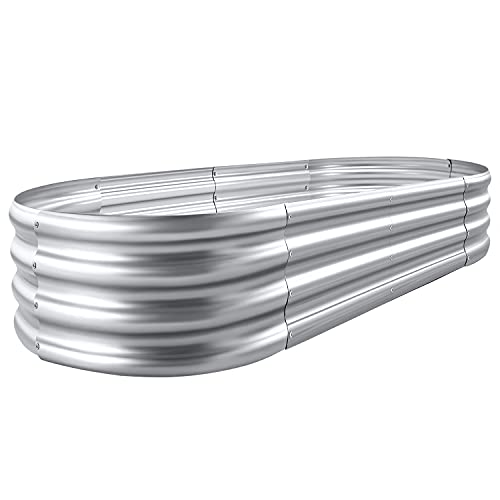
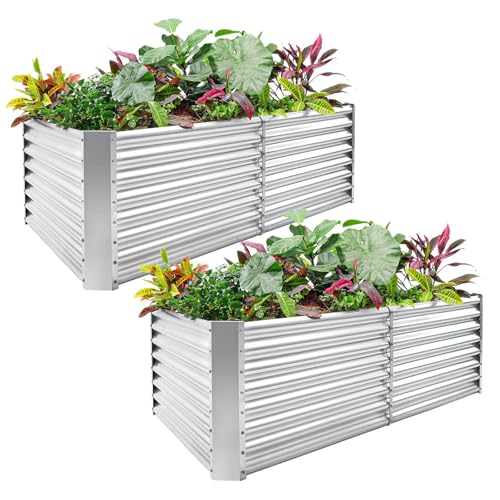
| Land Guard 2 Pack 4x2x1 ft | Ground-level, bottomless | Two beds; 4 x 2 x 1 ft each | Lawn, gravel pad, first beds | Shallow for deep roots | Budget |
| Utopia Home 4x2x1 ft kit | Ground-level | One bed; 4 x 2 x 1 ft; easy assembly | Trying a single bed | Single bed only | Budget |
| DIIYIV 2PCS 12x4x1 ft | Ground-level | Two beds; 12 x 4 x 1 ft each | Big plantings, long rows | Long sides can bow when full | Mid-range |
1. Land Guard with Legs, 48x24x32 in: Best Overall for Patios
- Size: 48 x 24 x 32 in overall
- Listed capacity: 700 lb
- Material: galvanized steel, grey finish
- Drainage: drainage holes in the base
- Soil depth inside the bed: not listed
Best for: patios, decks and balconies where you want a waist-high bed that does not need bending. Skip if: you want a deep planting space for carrots and parsnips; the usable soil depth is not listed, so check before you buy.
An elevated bed solves three patio problems at once. It keeps soil off the surface, so you are not staining a deck or paver with wet earth. It lifts the work to a comfortable height, which matters if kneeling is difficult. And it gives each bed its own drainage, which helps avoid the soggy root zone that is so common in container-style planting. The 32 in total height is typical of this style; most of that height is leg space, with the soil tray sitting at the top.
The 700 lb figure is the listed maximum load, and it is the number to think about before filling it. We run the numbers in the buying guide: a 4×2 ft bed with about 10 in of soil weighs several hundred pounds once watered. A bed rated for 700 lb leaves a healthy margin, while a bed rated for 300 lb does not.
Pros:
- High listed capacity for the size
- Waist-high working height
- Drainage holes
- Rust-resistant galvanized steel
Cons:
- Soil depth not listed
- Needs a level, solid surface
- Filling it takes a lot of soil mix
2. Yardbliss Large Galvanized Bed with Legs, 48x26x30 in: Best Heavy-Duty Elevated
- Size: 48 x 26 x 30 in
- Listed load capacity: 1,200 lb
- Material: galvanized steel, silver finish
- Use: backyards, patios and balconies
Best for: gardeners who plan to fill the bed with a dense soil and compost mix and grow heavier crops such as tomatoes and peppers. Skip if: you only plant herbs and need something lighter to move.
The 1,200 lb listed capacity is the highest in this group, and that is what you are buying. A wet, compost-rich mix is heavy, and a high capacity gives you more margin for rain on top of irrigation. At 26 in wide, it is two inches wider than the standard 24 in bed, which adds a little planting room, though reach from either long side is still comfortable. The 30 in height sits a little lower than some competitors, which suits people who prefer a lower working height or want a bed under a window ledge.
Pros:
- Highest listed capacity here
- Slightly wider planting area
- Built for patios and balconies
Cons:
- Heavy when assembled and filled
- Listing does not state soil depth
3. COMHOMA 2 Pack, 4x2x2.5 ft: Best Value Elevated Set
- Quantity: two beds
- Size: 4 x 2 x 2.5 ft each
- Material: galvanized metal with drainage holes
- Capacity per bed: not listed
Best for: people who want two matching elevated beds, for example one for vegetables and one for herbs and flowers, without paying twice. Skip if: weight limits matter to you, since capacity is not stated.
Buying a 2-pack changes the cost per bed noticeably, and two beds give you the flexibility to rotate crops, such as a leafy bed one season and a root bed the next. At 2.5 ft the working height is slightly lower than the 32 in models, which is easier for shorter gardeners and for seated reach. Because the load limit is not stated, we would keep the soil level modest and avoid overfilling.
Pros:
- Two beds in one purchase
- Elevated with drainage holes
- Good for crop rotation
Cons:
- Load capacity not listed
- Less proven than larger brand names
4. Easllre 2PCS, 48x24x30 in: Best Budget Elevated Pair
- Quantity: two beds
- Size: 48 x 24 x 30 in each
- Listed capacity: 300 lb
- Material: galvanized metal with legs, silver
Best for: shallow-rooted plants such as lettuce, herbs, strawberries and flowers on a balcony. Skip if: you plan to fill the bed with heavy wet soil and grow big fruiting crops.
This is the one where the listed capacity should guide what you plant. At 300 lb per bed, a full tray of wet soil may come close to the limit, so use a lighter mix and keep the fill level a few inches below the rim. A lighter mix, for example one with more perlite or coir, weighs less per cubic foot and drains faster. For ornamental plantings and herbs, this is a perfectly sensible and affordable option.
Pros:
- Two beds at a low price tier
- Elevated working height
- Good for light crops
Cons:
- Low listed capacity
- Not ideal for deep, heavy fills
5. Land Guard 2 Pack, 4x2x1 ft Bottomless: Best Ground-Level Starter
- Quantity: two beds
- Size: 4 x 2 x 1 ft each
- Design: bottomless, heavy-duty galvanized steel
- Use: vegetables, flowers and herbs
Best for: first-time raised-bed gardeners, patio lawns and gravel pads where drainage goes straight into the ground. Skip if: you only have hard paving, because a bottomless bed needs soil underneath.
Bottomless means roots can reach the ground below, which is the cheapest way to get a deep root zone. It also means these beds are not suited to a deck or a balcony; they work on soil, grass and gravel. At 12 in, the walls are deep enough for most salad crops, beans, peppers and herbs. Two 4×2 ft beds give you 16 sq ft of planting area in total, a comfortable amount for a family salad garden.
Pros:
- Two beds
- Roots reach the ground below
- Simple to assemble and move
Cons:
- Not for decks or balconies
- Low walls for deep roots
6. Utopia Home 4x2x1 ft Kit: Best Budget Ground-Level Bed
- Quantity: one bed
- Size: 4 x 2 x 1 ft
- Material: galvanized steel, silver; easy assembly listed
Best for: trying raised-bed gardening with a single bed. Skip if: you want two or more beds, where a multi-pack is cheaper per bed.
A single bed is a sensible way to test whether raised-bed gardening suits you. It is small enough to move around the patio edge in spring and fits easily next to a fence or a wall. As with all thin-walled steel kits, wear gloves when assembling because panel edges can be sharp, and check that every corner is fully fastened before filling.
Pros:
- Low price tier
- Easy assembly listed
- Compact
Cons:
- Only one bed
- Shallow depth
7. DIIYIV 2PCS, 12x4x1 ft: Best for Long Rows
- Quantity: two beds
- Size: 12 x 4 x 1 ft each
- Material: galvanized metal
Best for: larger gardens, border plantings and row crops such as onions, beans and carrots. Skip if: your patio is small; at 12 ft long each bed needs real space.
A 12×4 ft bed holds 48 sq ft of planting area, so two give you nearly 100 sq ft. That is enough to move from a hobby bed to a serious vegetable plot. Long steel sides can bow outward under the pressure of wet soil, so check whether a mid-span brace is included, as it is not listed here, and add one if you can. Fill gradually and tamp each layer.
Pros:
- Large planting area
- Two beds
- Good for row planting
Cons:
- Long walls may bow
- Needs a large flat area
Also Consider
- Homoda 2 Pack Frost Covers (fits 4 x 8 ft beds): Plant covers sized at 102 x 50 x 22 in for freeze protection in cold weather. A good match for a winter season extension on a larger bed.
- Pop-up mesh raised bed cover with 30 percent sun block: A pop-up mesh tent for shade and insect protection over a bed in summer. Useful for lettuce in hot weather.
- Vego garden Rolling Elevated Bed, 2 x 4 ft: An elevated planter with a storage rack and a listed 700 lb capacity; the listing does not describe it as galvanized, so check the material before you choose it for the same reasons as the beds above.
- Rakukiri 5 ft oval galvanized bed: A ground-level oval planter for a softer shape on a lawn or a pad. Budget price tier.
How We Chose
We did not personally use these products; this guide is research-based. We reviewed listing details and manufacturer information, then cross-checked general guidance on raised-bed materials from university extension publications and gardening organizations. We kept beds that are currently sold, that describe galvanized steel as the material, and that give clear dimensions. We limited each brand to two picks, covered both flat and elevated styles, and favored listings that state a load capacity because that is the figure that matters most on a patio.
The main questions we asked were: Can it sit on a patio without a soil base? Does it have drainage? What is the stated load limit? How many beds do you get for the price tier? And how likely is it that a person with ordinary tools can assemble it without help?
Buying Guide
Elevated beds versus ground-level beds
Choose an elevated bed with legs if you garden on a deck, balcony or paving, or if you want to reduce bending. Choose a bottomless, ground-level bed if you have a lawn, gravel or bare soil and want deep roots for the lowest cost. A bottomless bed on a patio slab does not work, because there is nowhere for water to go and roots stop at concrete.
Height and size
Beds 24 to 30 in wide are the easiest to reach across from one side; 48 in is a common maximum if you can reach from both sides. For leafy crops and herbs, 8 to 10 in of soil is enough. For tomatoes, peppers and carrots, aim for 12 in or more. On a legged bed, ask how much of the overall height is actual soil space, because the listing often quotes total height including the legs.
Worked example: soil volume and weight
A 4 x 2 ft bed filled to 10 in (0.83 ft) holds about 6.7 cubic feet of mix. Wet garden mix commonly weighs somewhere around 60 to 100 lb per cubic foot depending on compost and moisture, so that bed holds roughly 400 to 670 lb. That is above a 300 lb listed capacity and within a 700 lb or 1,200 lb limit. A ground-level 4 x 2 x 1 ft bed holds 8 cubic feet, so two beds need 16 cubic feet, a bit over half a cubic yard of soil (one cubic yard is 27 cubic feet). A 12 x 4 x 1 ft bed holds 48 cubic feet, or about 1.8 cubic yards each. Confirm weights with your soil supplier.
Galvanized steel: what to know
Galvanized steel is coated with zinc to resist rust, and it is widely used for raised garden beds. Rust resistance varies with coating thickness, which most listings do not state. Very acidic soil or constant standing water shortens a coating’s life. If you grow food, read the maker’s statement on the coating, and if you have concerns, line the inside with landscape fabric, or ask your local extension office. Metal walls can warm the soil in strong sun, so mulch and water consistently in summer.
Covers and enclosures
The best cover for a raised bed depends on the problem. Fine insect netting keeps cabbage moths and aphids off brassicas. Bird netting protects berries and seedlings. Frost cloth extends the season by a few degrees in cold snaps, and a pop-up mesh tent gives partial shade for lettuce. If you want a permanent enclosure for raised planting beds, a hoop frame with removable netting is more flexible than a fixed cage and easier to open for harvesting.
How to Set Up and Fill a Galvanized Bed
- Pick the spot first. Look for six or more hours of direct sun, a level surface and access to a hose. Once an elevated bed is full it is very hard to move, so decide the position before you add any soil.
- Assemble on the ground, then lift. Wear gloves and follow the maker’s panel order. Fasten every corner bolt fully, and check that the frame sits square before you tighten the last fasteners.
- Level the legs. On pavers or decking, use small plastic shims under the feet. A bed that rocks or leans puts uneven stress on the corner joints when it is loaded with soil.
- Add drainage and a liner if you wish. A sheet of landscape fabric over the drainage holes keeps soil in while letting water out. On a ground-level bed, a layer of cardboard on the grass underneath helps suppress weeds as it breaks down.
- Fill in layers. Mix coarse material such as bark or small branches at the bottom of deep beds if you want to save on soil, then a blend of topsoil, compost and an aerating material such as perlite or coir. Wet each layer lightly as you go so it settles and you avoid large air pockets.
- Leave a gap below the rim. A gap of one to two inches stops water and soil from spilling over the top when you irrigate, and it protects the edge from soil splash.
Seasonal Care and What Wears First
In spring, check the bolts and re-tighten any that have loosened after a winter of freezing and thawing. In summer, watch the watering: raised beds, and especially elevated ones with open bottoms or drainage holes, dry out faster than ground soil, and a metal wall can add to the heat. A layer of straw or shredded leaves on top keeps moisture in. Soil settles by an inch or more in the first season, so plan to top up with compost each spring.
In autumn, clear spent plants, add a layer of compost and consider a cover crop or a winter mulch. If you garden in a freezing climate, frost cloth over the bed can extend the harvest by several weeks. In winter, leave a bottomless bed in place; an elevated bed with a full soil load is better left alone than moved, but if you want to empty it for storage, do so on a dry day to avoid hauling wet soil.
The parts that wear first are usually not the steel panels, but the fasteners and any scratched areas of coating. If you see surface rust at a cut edge or a scratch, clean it with a wire brush and touch it up with a zinc-rich cold galvanizing paint, following the label directions. Check the legs periodically for any bending, especially if the bed has been moved.
Common Mistakes to Avoid
- Putting a bottomless bed on concrete or a deck.
- Ignoring the weight limit and filling an elevated bed with dense wet soil.
- Skipping gloves while assembling thin steel panels; edges can be sharp.
- Placing the bed in shade; most vegetables need around six hours of sun.
- Forgetting that legs need a level surface; shim on uneven pavers.
Frequently Asked Questions
What are the best galvanized raised garden beds for a patio?
Elevated galvanized beds with legs are the best fit for patios, with the Land Guard 48x24x32 in and the Yardbliss 48x26x30 in leading on listed capacity. Both include drainage and a comfortable working height.
Are galvanized steel raised beds safe for vegetables?
They are widely used for vegetable gardening, but coating details vary by maker. Read the manufacturer’s statement on the coating, avoid constantly acidic soil, and ask your local extension service if you have questions.
What are the best elevated raised garden beds for a balcony?
Choose a bed with a clearly stated load capacity and drainage holes, and check your balcony’s weight limit with your landlord or building manager. Lighter mixes and shallower fills reduce weight.
What is the best cover for raised beds?
It depends on the goal: frost cloth for cold nights, insect netting for pests, bird netting for berries, and a mesh pop-up cover for shade. A hoop and netting system fits most beds.
What is the best enclosure for raised planting beds?
For pests, a hoop frame with fine mesh netting is flexible and easy to remove. For rabbits and deer, a taller fixed frame with wire mesh is more suitable. Choose a mesh size that matches the pest.
How deep should a raised bed be?
Eight to ten inches is enough for lettuce and herbs, and twelve inches or more suits tomatoes, peppers and root crops. For a legged bed, check the actual soil tray depth.
Do galvanized beds get too hot for plants?
Metal walls can warm the outer soil in strong sun. Mulch the surface, water regularly, and consider a light-colored finish or shade cloth in hot climates.
Which One Should You Buy?
For most patio gardeners, buy the Land Guard 48x24x32 in elevated bed. If you plan on heavy crops or deep soil, the Yardbliss 1,200 lb bed gives more headroom. For two beds on a budget, choose the COMHOMA 2 pack or the Easllre pair, keeping in mind the lower 300 lb limit on the Easllre. If you have ground to plant into, the Land Guard 4x2x1 ft 2 pack is the simplest start, the Utopia Home kit is the cheapest single bed, and the DIIYIV 12 ft beds are the pick for a larger garden. Add a frost or insect cover when the weather calls for it.
Sources
- Land Guard manufacturer product details
- Yardbliss manufacturer product details
- University cooperative extension guidance on raised bed construction and soil depth
- Royal Horticultural Society advice on raised beds
- Manufacturer listings for the Utopia Home, COMHOMA, Easllre and DIIYIV beds
Last updated: October 2026



Write Your Review
No reviews yet. Be the first to share your experience!