

Key takeaways
- Wire-free does not mean one technology: RTK uses a satellite-corrected antenna, LiDAR scans the surroundings with a laser, and vision uses cameras. Most 2026 models blend two of them.
- Open lawn with little shade: RTK plus vision is the efficient choice. Lots of tree cover or tall structures: lean toward LiDAR or a LiDAR-plus-vision hybrid.
- Rated lawn size is a ceiling, not a target. Leave 20 to 30 percent headroom, especially with many obstacles or slopes.
- Slope ratings are manufacturer figures, and the listing wording differs by model. Measure your steepest section before you shop.
- Always check what is in the box: some RTK models need a separate reference antenna, and some features (4G, theft tracking) may depend on a plan.
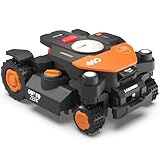
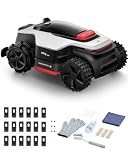
The best wire free robot lawn mower for most yards is a model whose navigation matches how much open sky your lawn gets: RTK-plus-vision mowers such as the Roborock RockNeo Q110H and ECOVACS GOAT O1000 RTK suit open quarter-acre lawns, while LiDAR-led mowers such as the MOVA LiDAX Ultra 1000 and HOOKII Neomow X2 Air suit yards with trees, eaves and fences. This guide compares seven wire-free picks and four alternatives by navigation type, rated lawn size and slope, so you can choose the technology before you choose the brand.
Key takeaways
- Wire-free does not mean one technology: RTK uses a satellite-corrected antenna, LiDAR scans the surroundings with a laser, and vision uses cameras. Most 2026 models blend two of them.
- Open lawn with little shade: RTK plus vision is the efficient choice. Lots of tree cover or tall structures: lean toward LiDAR or a LiDAR-plus-vision hybrid.
- Rated lawn size is a ceiling, not a target. Leave 20 to 30 percent headroom, especially with many obstacles or slopes.
- Slope ratings are manufacturer figures, and the listing wording differs by model. Measure your steepest section before you shop.
- Always check what is in the box: some RTK models need a separate reference antenna, and some features (4G, theft tracking) may depend on a plan.
“Wireless” is the word many shoppers type, but the mowers in this guide are not battery-free or cable-free in every sense: they still dock to a charging station on mains power. What they skip is the perimeter wire that older robots needed buried or pegged around the lawn. In its place, you walk or drive the mower along the edge once (or let it map itself), draw no-go zones in the app, and the machine navigates from its own sensors.
Our top picks


As an Amazon Associate we earn from qualifying purchases at no extra cost to you.
How a wire free robot lawn mower finds its way
Three technologies show up in the listings below, and the names matter because each fails in a different place.
RTK: satellite precision that needs a clear view
RTK stands for real-time kinematic positioning. The mower, or a small antenna you mount outside, receives satellite signals plus a correction stream, which lets it know its position to roughly the centimeter in good conditions. Listing text for the Roborock RockNeo Q110H and ECOVACS GOAT O1000 RTK uses this approach. The strength is straight, even stripes and predictable paths across an open lawn. The weakness is shade: dense tree canopy, a tall house wall or a valley location can degrade the signal, so many RTK mowers pair the antenna with cameras that take over for short stretches.
LiDAR: a laser map that ignores the sky
LiDAR mowers such as the MOVA LiDAX Ultra 1000 and the HOOKII Neomow X2 Air spin a sensor that builds a 3D picture of fences, trunks and walls. Because they do not rely on satellites, the listings describe them as “RTK-free” or “no RTK antenna”. That makes setup simpler and tends to help under trees. The trade-offs most buyers report are cost, and the fact that rain, fog or very tall grass can confuse any optical sensor; check the maker’s guidance on wet conditions.
Vision: cameras for obstacles and fine edges
Almost every model here adds AI cameras for obstacle recognition (toys, pets, hoses) and edge cutting. A few, like the NovorikX X3, pair RTK with dual cameras. Cameras are the least reliable in low light, so check the listing for any night-mowing or lighting note if you plan to mow on summer evenings.
Quick comparison of the wire-free picks
| Model | Navigation | Rated lawn size | Slope (listing) | Best for |
|---|---|---|---|---|
| Roborock RockNeo Q110H | Full-band RTK + VSLAM, AI vision | Up to 1/4 acre | 45% | Open quarter-acre lawns on a mid budget |
| ECOVACS GOAT O1000 RTK | RTK + vision | Up to 1/4 acre | 45% per maker page | Small yards that need 3D obstacle avoidance |
| MOVA LiDAX Ultra 1000 | 3D LiDAR + AI vision, RTK-free | 1/4 acre | 45% | Yards with trees and many zones |
| HOOKII Neomow X2 Air | 3D LiDAR, no RTK antenna | 0.37 acre | Not stated in the title | Larger shaded lawns, 4G and anti-theft |
| NovorikX X3 | RTK + dual AI vision | 1/4 acre | 35% | Flat lawns, budget-minded buyers |
| Lymow One Plus | RTK + vision | 1.73 acres daily coverage | 100% (45 degrees) | Big, rough or steep properties |
| RoboUP T1200Pro | RTK + vision | 0.37 acre | Check listing | Multi-zone yards with tidy edges |
Slope percent is rise over run: 45 percent means 45 feet of rise over 100 feet of ground, about 24 degrees. A listing that says 80 percent corresponds to roughly 38.7 degrees, a very steep lawn.
1. Roborock RockNeo Q110H: Best for open quarter-acre lawns
- Full-band RTK plus VSLAM navigation with AI vision obstacle avoidance
- Rated for up to 1/4 acre; 45% slope in the listing
- Auto mapping and app control for virtual boundaries
- Third-party spec pages list rear-wheel drive and a cutting width around 8.7 inches; confirm both on Roborock’s page
Best for: a mostly open lawn near a quarter acre where you want a well-known appliance brand and a moderate cost for RTK. Skip if: the yard sits under heavy tree cover or you need all-wheel drive on a wet slope.
Pros
- RTK plus VSLAM gives a second source of position information when the signal dips
- Brand has a support and parts network through its wider robot lineup
- Listed slope rating is respectable for the size
Cons
- Quarter-acre rating leaves little headroom for a 0.3-acre lawn
- RTK performance depends on antenna placement and sky view
2. ECOVACS GOAT O1000 RTK: Best for small yards with cluttered lawns
- RTK plus vision navigation, rated for up to 1/4 acre
- AIVI 3D obstacle avoidance, per the listing
- Auto mapping, app control and zero-edge cutting claims in the listing
- Maker spec pages list a cutting width of about 8.7 inches and a 45% slope
Best for: suburban yards with toys, planters and garden furniture, where obstacle recognition matters as much as stripes. Skip if: your lawn is wider than about 0.2 acre of real mowable grass or lies under mature trees.
Pros
- Obstacle recognition is a headline feature, not an add-on
- Multiple kit versions exist, so you can choose a bundle with or without extras
- Edge-cutting tools reduce hand trimming
Cons
- Several near-identical GOAT O1000 listings exist; compare what each bundle includes before buying
- The RTK reference antenna is part of the setup, which means one more thing to mount and power
3. MOVA LiDAX Ultra 1000: Best for tree-lined yards with many zones
- 360 degree 3D LiDAR plus AI vision, RTK-free
- 1/4 acre rating; 45% slope in the listing
- Cutting height 1.2 to 3.9 inches, zero-edge cutting
- Up to 150 managed zones and dual maps, per the listing
Best for: a yard with a patchwork of beds, trees and narrow passages where satellites may be blocked and you want separate mowing maps (front and back, for example). Skip if: you have an open lawn and want the lowest cost; RTK models can be cheaper for the same area.
Pros
- No antenna to mount, so setup is simpler
- Generous cutting-height range suits both fine turf and taller grass
- Dual maps help if you mow two separate lawns
Cons
- Tends to sit in a higher cost tier than basic RTK models
- Optical sensors need clean lenses; wipe them as part of regular upkeep
4. HOOKII Neomow X2 Air: Best for larger shaded lawns with 4G
- 360 degree 3D LiDAR, no RTK antenna, wire free for 0.37 acre
- 4G app control and GPS anti-theft, per the listing
- 13 Ah battery and IPX6 water-resistance rating
- Optional AI Bionic Triple Vision module can be added for auto-mapping, per the listing
Best for: a lawn near 0.3 acre with trees where you want theft tracking and remote control even when the Wi-Fi does not reach the back yard. Skip if: you want built-in vision from day one, since the vision module is described as an upgrade; check what ships in your bundle.
Pros
- Larger battery capacity than typical entry mowers
- 4G removes dependence on home Wi-Fi coverage
- IPX6 rating signals resistance to water jets, though always follow the manual on rain
Cons
- 4G features may involve a data plan; confirm terms with the maker
- Slope rating is not in the listing title, so verify it for hilly yards
5. NovorikX X3: Best budget-minded pick for flat lawns
- RTK plus dual AI vision, wire free for 1/4 acre
- Zero-edge cutting and app control
- Cutting height 0.98 to 2.36 inches
- 35% slope rating in the listing
Best for: a flat, open quarter-acre lawn where the lowest cost matters more than a famous brand. Skip if: you need to climb sharp slopes (35 percent is the lowest rating in this group) or want a long local support history.
Pros
- Dual cameras plus RTK covers two navigation methods
- Lower cutting height range reaches short turf styles
- A step-up X3Pro exists for larger lawns (see “also consider”)
Cons
- Newer brand, so check warranty terms and service options
- Maximum cutting height of 2.36 inches may be too low for taller summer grass
6. Lymow One Plus: Best for big, rough or steep properties
- Wire-free RTK plus vision navigation
- 1.73 acres daily coverage and 100% slope (45 degrees) climbing, per the listing
- 1.2 to 4 inch cutting height
- AWD all-terrain design with app control
Best for: properties well beyond a quarter acre, or rough ground where small mowers stall. Skip if: your yard is small and tidy; this is a premium-tier machine and you will pay for capability you will not use.
Pros
- Coverage and slope claims are far above the quarter-acre group
- Wide cutting-height range reaches 4 inches
- Designed for uneven ground, not only manicured turf
Cons
- Highest cost tier in this guide
- “Daily coverage” is not the same as one-charge coverage; check run time and recharge in the maker’s spec sheet
7. RoboUP T1200Pro: Best for multi-zone lawns with neat edges
- Wire-free RTK plus vision for 0.37 acre
- AI obstacle avoidance
- 1.18 to 2.36 inch adjustable cutting height
- Unlimited multi-zone mowing, per the listing
Best for: a yard split into several lawn patches (front, side, back) by paths or beds. Skip if: you want a lower cost tier or need documented slope capability; the listing leads with area and zones, not slope.
Pros
- Rated area is larger than the common quarter-acre models
- Multi-zone handling suits segmented yards
- Cutting-height range covers most cool-season lawns
Cons
- The listing gives no slope figure, so verify it for hills
- Smaller brand footprint than Roborock or ECOVACS
Also consider
- Segway Navimow i110N: RTK + vision · 1/4 acre · virtual boundary · 58 dB(A) quiet, per the listing. A long-running wire-free model with a bigger sibling lineup; see our Navimow comparison for the full range.
- Greenworks C20Z: RTKVision navigation · up to 1/2 acre · 24 degree slope climbing · electric height adjustment. A larger rated lawn from a mainstream outdoor-tool brand.
- Roborock RockMow X130H: full-band RTK + quad-vision · 4WD · 80% slope · covers up to 1 acre in the listing. The step-up for big or steep lawns.
- Sunseeker S4: 3D LiDAR + vision AI · 0.25 acre · wire-free. A LiDAR option aimed at complex yards with trees, shade and narrow passages.
How we chose
This is a research-based roundup. We did not personally use these mowers. We built the shortlist from current product listings, the makers’ published specs and published comparison material, then kept models that are genuinely wire free (no perimeter cable), have a rated lawn size in the quarter-acre-or-larger class, and publish enough information to compare. We ranked on five points: navigation method and its fit to real yards, rated area against slope, obstacle handling, ownership burden (antennas, cleaning, anti-theft) and warranty or service clarity. We capped each brand at two entries and skipped renewed units, accessory bundles and models with no stated rated lawn size. Specs come from the listings and maker pages and can change between production runs, so verify current figures before ordering.
Wire free robot lawn mower buying guide
Match navigation to sky view
Walk the lawn at midday and look up. If you can see most of the sky from most of the grass, an RTK model is workable. If you stand under maple or oak canopy for a third of your mowing area, favor LiDAR or a LiDAR-plus-vision hybrid. A hybrid RTK-and-camera robot can fall back on cameras for short stretches, but long stretches under trees are a weak point for anything satellite-led. Tall walls matter too: a three-story house can block part of the sky along one side, so try antenna placement as the manual describes and keep the antenna in the clearest spot.
Size the rating with headroom
One acre is 43,560 square feet, so a quarter acre is 10,890 square feet and 0.37 acre is about 16,100. Suppose you measure a front and back lawn at 12,000 square feet of actual grass. A mower rated for 1/4 acre (10,890 square feet) is already below your total, so you need the 0.37-acre class, and the extra capacity gives you room for obstacles and a skipped day after rain. Rated area describes a simple, open lawn; every flower bed island and tree ring reduces effective productivity.
Check slope in two ways
Measure your steepest stretch: lay a straight board 10 feet long, level it, and measure the rise at the downhill end. Divide rise by run to get percent. A 4.5-foot rise over 10 feet is 45 percent. Then compare with the listing and add caution if the slope is wet, sandy or has loose mulch beside it. Two-wheel-drive mowers usually carry lower slope ratings than all-wheel-drive models, and maker boundary-slope limits are often lower than interior limits.
| Your yard | Look for | Rough rated size |
|---|---|---|
| Flat, open, small (under 5,000 sq ft) | Vision or RTK entry model | 1/8 acre or more |
| Open, around 1/4 acre | RTK + vision | 1/3 acre rating for headroom |
| Trees, fences, tight passages | 3D LiDAR with vision | 1/4 to 0.37 acre |
| Slopes over 30% | AWD with a stated 45% or higher rating | Match to lawn, plus headroom |
| Half acre or more | Large-lot RTK or LiDAR models | 1/2 to 1.7 acres |
Plan for obstacles, edges and zones
Every mower here lets you draw no-go zones in the app. Ask how many zones the app supports, whether you can keep two maps (front and back), and whether the mower trims along edges. Edge claims differ: “zero-edge” in a listing describes how close the blade gets to the boundary, but it does not remove the need to trim around trees and fences once in a while. Expect to keep a string trimmer for those few spots.
Ownership costs beyond the sticker
- Blades: replace them on the schedule in the manual; sharp blades give a cleaner cut and use less battery.
- Cleaning: wipe sensors and the underside; check whether the manual allows hosing the deck.
- Antenna and power: RTK models need a mounting spot and an outdoor-rated power source.
- Connectivity: 4G, theft tracking or cloud features may involve an account or plan; read the terms.
- Winter: store the mower and charger as the manual describes in cold climates.
Safety and local practice
Keep children and pets away from the working area while the blades spin, and set the schedule so the mower runs while the yard is empty. Follow the manual on rain, snow and night operation, and check local noise rules if you mow at dawn or dusk.
Frequently Asked Questions
What is the difference between wire free and wireless robot lawn mowers?
People use both terms for mowers without a buried perimeter wire. The mower still charges at a station on mains power; “wire free” refers to navigation. Look for the phrases RTK, LiDAR and vision in the listing to see how it navigates instead.
Is RTK better than LiDAR for a robot mower?
Neither wins everywhere. RTK is precise and efficient on open lawns but can struggle under dense canopy or beside tall structures. LiDAR works without satellites and tends to suit cluttered, shaded yards, but costs more and needs clean sensors. Hybrids that combine two methods are the common middle ground.
Do these mowers work without Wi-Fi?
Most need Wi-Fi or Bluetooth for setup and scheduling in the app, and some use 4G, such as the HOOKII Neomow X2 Air listing. Check whether the mower keeps working on its saved map when your network goes down, and what features rely on a connection.
How steep a slope can a wire free robot mower handle?
Listings in this guide range from 35 percent on the NovorikX X3 to 45 percent on several mid-tier models and 100 percent (45 degrees) on the Lymow One Plus. Treat these as maker ratings for dry, short grass, and remember the boundary edge usually has a lower limit than the interior.
How much lawn can a quarter-acre mower really cover?
A quarter acre is 10,890 square feet of simple, open lawn. With many beds, trees or slopes, the effective area drops. If you measure within 20 percent of the rating, move up one size class.
Do I still need a string trimmer?
Probably, at least occasionally. Edge-cutting features shrink the uncut border, but trunks, fence posts and walls may leave strips. Plan a quick trim every few weeks in growing season.
Can a robot mower be stolen?
It can, which is why listings such as the HOOKII Neomow X2 Air mention GPS anti-theft. Look for a PIN lock, lift alarm and tracking, and read what each feature requires.
Which one should you buy?
Choose the Roborock RockNeo Q110H or ECOVACS GOAT O1000 RTK for an open quarter-acre lawn. Pick the MOVA LiDAX Ultra 1000 if trees and tight passages block the sky. Move to the HOOKII Neomow X2 Air for around a third of an acre with 4G and anti-theft, to the NovorikX X3 for a flat lawn on a tighter budget, and to the Lymow One Plus when the property is big, steep or rough. Before you buy, confirm the rated area against your measured lawn, the slope against your steepest section, and what is included in the bundle.
Sources
- Manufacturer product pages and specification sheets (Roborock, ECOVACS, MOVA, HOOKII, NovorikX, Lymow, RoboUP)
- Current retail listing text for each model
- Published navigation guides comparing RTK, LiDAR and vision systems
- Independent robot mower write-ups and specification databases
Last updated: November 2026
More from Amazon
Programs that pair well with the guide above. Offers and eligibility are set by Amazon and may change.
Collect the home and kitchen items you want in one registry that guests can shop from.
Create a wedding registrySet up recurring deliveries of everyday items on eligible products. Terms and savings are set by Amazon.
Explore Subscribe & SaveFree shipping on eligible items, Prime Video and more. Eligible new members can start with a free trial.
Start a Prime free trialAudiobooks and podcasts to listen to on the go. Eligible new members can start with a free trial.
Try Audible freeAs an Amazon Associate we earn from qualifying purchases.




Write Your Review
No reviews yet. Be the first to share your experience!