

Key takeaways
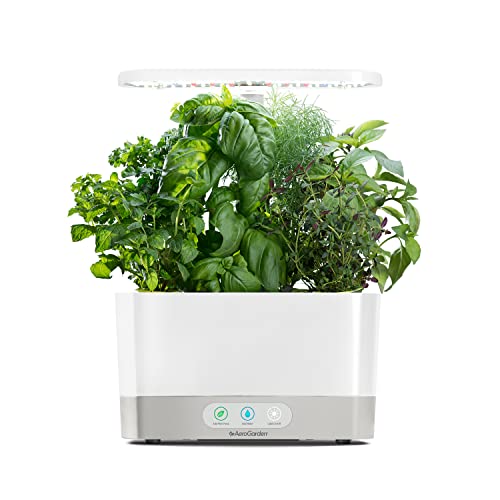
- Small kitchen counter or first hydroponic garden: AeroGarden Harvest or Harvest Elite.
- Several herbs plus leafy greens: AeroGarden Bounty Basic.
- More intense light and larger plants: AeroGarden Bounty Elite.
- High-volume salads and vegetables: AeroGarden Farm 12XL.
- Lowest ongoing commitment: A six-pod model, because unused pods, nutrients, and mature plants are easier to manage.
The best AeroGarden systems for most homes are the Harvest for a compact six-pod herb garden, the Bounty Basic or Bounty Elite for larger weekly harvests, and the Farm 12XL for serious indoor growing; choose by available counter width, maximum light height, and how many plants you will actually use.
Our top picks



As an Amazon Associate we earn from qualifying purchases at no extra cost to you. Ratings are shown as listed on Amazon.
Quick picks by growing situation
- Small kitchen counter or first hydroponic garden: AeroGarden Harvest or Harvest Elite.
- Several herbs plus leafy greens: AeroGarden Bounty Basic.
- More intense light and larger plants: AeroGarden Bounty Elite.
- High-volume salads and vegetables: AeroGarden Farm 12XL.
- Lowest ongoing commitment: A six-pod model, because unused pods, nutrients, and mature plants are easier to manage.
AeroGarden models use a water reservoir, a pump, liquid nutrients, and an adjustable LED light rather than soil. The practical difference between models is not simply the number of pod openings: a taller light lets basil, tomatoes, peppers, and mature leafy greens develop without pressing into the fixture, while a larger reservoir reduces refilling.
AeroGarden systems compared
| System | Pod capacity | Maximum grow height | Approximate footprint | Light and controls | Best fit |
|---|---|---|---|---|---|
| Harvest | 6 pods | 12 inches | About 12 × 6 inches | 20-watt LED; basic timer controls | Compact herbs and salad greens |
| Harvest Elite | 6 pods | 12 inches | About 12 × 6 inches | 20-watt LED; digital reminders and adjustable settings | Small spaces where automated reminders matter |
| Bounty Basic | 9 pods | 24 inches | About 17.5 × 11 inches | 30-watt LED; larger reservoir and controls | Mixed herbs and leafy greens |
| Bounty Elite | 9 pods | 24 inches | About 17.5 × 11 inches | 50-watt LED; digital controls and stronger lighting | Frequent harvests and larger plants |
| Farm 12XL | 12 pods | Up to about 36 inches | About 25 × 13 inches | High-output LED; larger vertical growing area | Vegetables, large herbs, and substantial harvests |
Dimensions and light specifications can vary by production revision and regional package, so check the label before ordering. The important comparison is consistent: Harvest is shallow and low; Bounty provides considerably more vertical room; Farm models use much more counter or floor-adjacent space but are better suited to fruiting plants.
Harvest versus Bounty: the most useful head-to-head
Choose Harvest when counter space is the limiting factor
The Harvest occupies roughly half the front-to-back area of a Bounty. Six pods are enough for a practical kitchen selection such as basil, parsley, thyme, mint, and two lettuces. Its 12-inch light range is also a constraint: compact herbs and greens fit well, but mature basil can require frequent trimming, and tomatoes or peppers may outgrow the available height.
The six-pod format is also easier to keep productive. If one plant bolts, becomes crowded, or develops poor roots, replacing one pod does not leave a large unused reservoir full of competing plants.
Choose Bounty when you cook with fresh greens every week
The Bounty’s nine pods and approximately 24 inches of clearance provide a better balance for a household that wants several herbs plus lettuce, kale, or another leafy crop. The larger planting area is valuable even if you do not fill every opening: spacing plants farther apart improves access for pruning and reduces leaves shading one another.
The Bounty Elite’s higher-power light is the more suitable version for a full planting of fast-growing greens or plants that must remain productive through repeated cuttings. The Basic model can be the better value if you mainly grow herbs and do not need maximum growth speed.
Which AeroGarden is best for vegetables?
For vegetables, distinguish between leafy vegetables and fruiting vegetables. Lettuce, arugula, and many compact greens work well in Harvest and Bounty systems. Cherry tomatoes and peppers need more height, stronger support, careful pruning, and patience; a Bounty or Farm model is more practical than a Harvest, but the largest plants can still outgrow a countertop unit.
A Farm 12XL makes sense when the goal is volume rather than decoration. Twelve pods give you twice the planting positions of a six-pod Harvest, and the taller growing area is better for larger herbs and compact fruiting varieties. It also demands more planning: a full array can create a dense canopy, and plants may need trellising or pruning to prevent them from blocking the light.
Decision matrix: match the system to your routine
| Your priority | Recommended choice | Why | Trade-off |
|---|---|---|---|
| Less than 1 square foot of clear counter | Harvest | Smallest practical footprint and six usable pods | Limited height for mature plants |
| New grower who wants reminders | Harvest Elite | Simple capacity with more guided controls | Not a high-volume vegetable garden |
| Fresh herbs several times per week | Bounty Basic | Nine pods and more room for repeated trimming | Needs nearly twice the counter depth of Harvest |
| Regular greens and faster growth | Bounty Elite | Higher-output light and larger growing area | Higher purchase and electricity cost |
| Large harvests or taller crops | Farm 12XL | Twelve pods and approximately 36 inches of height | Bulky, heavier, and more demanding to maintain |
How much does pod capacity really change?
Pod count is not the same as harvest volume. A six-pod garden filled with basil may produce more usable kitchen harvest than a nine-pod garden crowded with large plants. As a rough planning example, reserve one pod for mint, one for basil, one for parsley, one for thyme, and two for lettuce in a Harvest. In a Bounty, add two or three greens or another basil plant, but leave enough room for mature leaves.
If you harvest leafy herbs twice weekly, a nine-pod Bounty can reduce the need to buy small supermarket herb packs. However, it does not eliminate consumable costs: seed pods, liquid nutrients, replacement grow sponges, and occasional filters or pump parts remain part of ownership. General market pricing typically places compact six-pod systems in the lower range, Bounty systems in the middle range, and Farm systems in the premium range; sales and included pod kits can change the comparison substantially.
Setup and maintenance that affect results
- Place the unit before filling it. Water makes the reservoir substantially heavier, and moving it afterward can stress the pump or spill nutrient solution.
- Keep the light close to seedlings. Raise it as plants grow, but avoid leaving a large gap early on; excessive distance encourages thin, leaning stems.
- Use the recommended nutrient concentration. More fertilizer does not compensate for inadequate light and can damage roots.
- Check the water level several times per week. A full Bounty or Farm planting can consume water quickly, especially in dry indoor air.
- Prune before plants touch the light. Regular harvesting keeps herbs bushier and protects neighboring pods from shade.
- Clean between growing cycles. Empty the reservoir, wash removable parts, and remove roots from the pump area. Algae commonly appears where light reaches nutrient water, so keep unused openings covered.
The pump and light are the components most likely to affect long-term ownership. Pumps can become noisy or restricted by roots and mineral buildup; LED panels gradually lose output but generally do not require the bulb replacements associated with older grow lights. Hard-water deposits can also accumulate around the reservoir and pump, making periodic descaling and careful rinsing worthwhile.
Bottom line
Buy the Harvest if your priority is a small, manageable herb garden. Choose the Harvest Elite for similar capacity with more reminders. The Bounty Basic is the best middle ground for most households that want regular herbs and greens, while the Bounty Elite is preferable when stronger lighting and heavier harvesting justify the added cost. Select the Farm 12XL only when you have the space and routine to maintain a larger, taller crop canopy.





Write Your Review
No reviews yet. Be the first to share your experience!