

Key takeaways
- Open-cell quick-dry foam is the best type of foam for outdoor cushions that stay outside, because it drains and dries faster than standard foam.
- Standard high-density polyurethane foam is cheaper and firmer, but it holds water; reserve it for covered porches or cushions you bring in.
- Density (pounds per cubic foot) tells you how long the foam lasts; firmness (ILD, in pounds) tells you how it feels. You need both numbers.
- Cut foam about one half to one inch larger than the cover in length and width so it fills the corners; wrap it in polyester batting for a smooth, soft look.
- Fiberfill is a fine insert for throw pillows and swing cushions, but it flattens quickly on a seat that takes daily use.
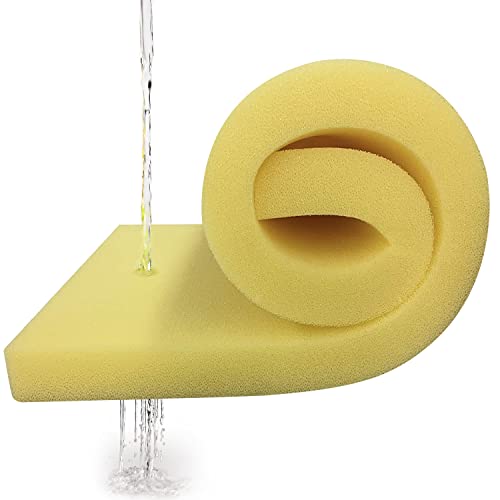
The best foam for outdoor cushions is open-cell quick-dry foam, often sold as reticulated or “dry fast” foam, because water drains through it instead of soaking in and growing mildew. For seat cushions, choose it in 4 to 5 inch thickness; for backs and arms, 3 to 4 inches; and for sheltered porches where cushions come inside when it rains, a high-density polyurethane foam of roughly 1.8 to 2.5 pounds per cubic foot with a medium to firm feel is the lower-cost alternative.
This guide explains the foam types used for patio cushions, how density and firmness numbers work, and how to measure and cut a replacement insert so the cover fits tight. It also covers the best fill for chair cushions and throw pillows when foam is not the right answer, with a short list of gear that helps when you are rebuilding a worn cushion.
Our top picks


As an Amazon Associate we earn from qualifying purchases at no extra cost to you.
Key takeaways
- Open-cell quick-dry foam is the best type of foam for outdoor cushions that stay outside, because it drains and dries faster than standard foam.
- Standard high-density polyurethane foam is cheaper and firmer, but it holds water; reserve it for covered porches or cushions you bring in.
- Density (pounds per cubic foot) tells you how long the foam lasts; firmness (ILD, in pounds) tells you how it feels. You need both numbers.
- Cut foam about one half to one inch larger than the cover in length and width so it fills the corners; wrap it in polyester batting for a smooth, soft look.
- Fiberfill is a fine insert for throw pillows and swing cushions, but it flattens quickly on a seat that takes daily use.
Best type of foam for outdoor cushions: five options compared
| Foam or fill | Water behavior | Typical feel | Best use | Cost tier |
|---|---|---|---|---|
| Open-cell quick-dry (reticulated) foam | Drains and dries fast | Medium to firm, a little springy | Cushions left outside year-round | Upper |
| High-density polyurethane (1.8 lb/ft3 or more) | Absorbs water, dries slowly | Medium to very firm | Covered porches, deck boxes, indoor-outdoor use | Mid |
| Standard polyurethane (under 1.5 lb/ft3) | Absorbs water | Soft, compresses quickly | Back cushions, light use | Low |
| Polyester fiberfill (polyfill) | Holds moisture, mats down | Soft, loose | Throw pillows, swing and daybed pillows | Low |
| Shredded foam fill | Absorbs water but dries more evenly than fiberfill | Moldable, softer | Bolsters, pillows, adjustable support | Low to mid |
Why open-cell quick-dry foam wins outside
Standard foam is full of small, mostly closed cells, so rainwater gets in and dries slowly. Open-cell or reticulated foam has the cell walls removed, which turns it into something like a rigid sponge that lets water through. Under a water-resistant cover, a quick-dry insert helps because any moisture that leaks through a seam does not get trapped; it runs out of a drain-friendly cover or evaporates in sun and wind.
Quick-dry foam is not magic. Mildew still starts in any cushion that stays wet for days, and a cover with a sealed, waterproof backing can trap moisture around the foam. The best setup is quick-dry foam inside a breathable outdoor fabric cover, plus the habit of standing cushions on edge to dry after rain.
Density and firmness: what the numbers mean
Density in pounds per cubic foot
Density tells you how much foam material is in each cubic foot. For a seat cushion, higher density generally lasts longer. Foam under about 1.5 pounds per cubic foot tends to go flat within a season or two of daily use; 1.8 to 2.5 pounds is the range that many upholsterers recommend for seats. If a listing does not state density, treat that as a warning sign.
Firmness (ILD)
Indentation load deflection, or ILD, is the weight in pounds needed to compress a foam sample by 25 percent. A lower number is softer. As a rule of thumb, 20 to 30 ILD feels soft, 30 to 40 feels medium, and 40 to 60 feels firm. Seat cushions are usually 35 to 50 so that you do not bottom out; back cushions can be softer at 20 to 35.
Why both matter
A foam can be dense and soft, or light and firm. A high-density, medium-firmness foam usually gives the best comfort and lifespan. Some listings quote density and ILD, such as “2.2 density, 50 ILD”; others quote only one, so check the product page.
How thick should outdoor cushion foam be?
| Use | Typical thickness | Notes |
|---|---|---|
| Dining chair seat pad | 1 to 2 inches | Thin foam keeps you at table height |
| Standard patio chair seat | 3 to 4 inches | Common for replacing flat cushions |
| Deep seat sofa or sectional seat | 4 to 6 inches | Thicker foam plus a polyester wrap for loft |
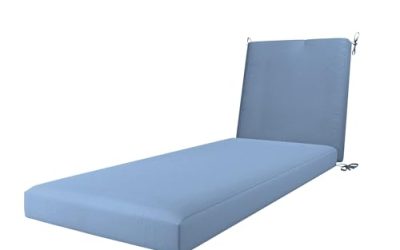
| Chaise lounge | 3 to 4 inches | Long pieces often come in 24 by 72 inch sheets |
| Back and arm cushions | 3 to 4 inches (or loose fill) | Softer foam works |
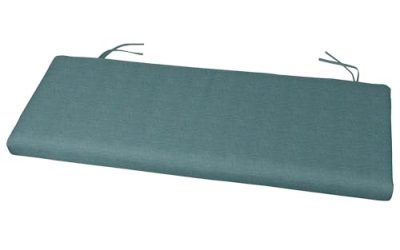
| Bench or swing seat | 2 to 4 inches | Keep seat height comfortable and ties accessible |
Thicker is not always better. A 6 inch foam on a bench changes seat height, so check the clearance under armrests and the position of the back rail before you order.
How to measure, cut and install foam in an outdoor cushion cover
- Measure the cover or the old foam. Measure seam to seam: length, width and thickness. If the old foam is flat, measure the cover, not the foam.
- Order the foam oversized. Upholsterers commonly cut foam one half to one inch larger than the cover in length and width, so the foam fills the corners. Keep thickness the same or add up to a half inch.
- Mark and cut. Lay the foam on a flat surface and mark with a marker. Cut with an electric carving knife or a long serrated blade, keeping it vertical. Cut slowly to avoid a slanted edge.
- Round the edges (optional). A gentle bevel on the top edges helps the foam slide into the cover and keeps seams from puckering.
- Wrap in polyester batting. Wrapping gives a softer crown and a smoother look. Use spray adhesive made for foam, or a few stitches, to hold it in place.
- Slide it in. Fold or roll the foam into a plastic bag to compress it, slide the bag into the cover, pull the bag out and zip up. The foam expands to fill the cover.
- Check the fit. Corners should be full, and the cover should be smooth. If it is baggy, order a half inch more in length and width next time.
Common sizing mistakes
- Ordering foam exactly the size of the cover, which leaves floppy corners.
- Ordering a thickness that does not fit the cover’s boxing strip, which can pull the seams.
- Forgetting that a cover with ties or a curved front may need a shaped foam cut.
- Ignoring the foam’s tendency to expand when out of the bag; leave the foam out of the bag for a few hours before cutting.
Best fill for chair cushions, pillows and swing cushions
When you are not replacing a full foam seat, the fill matters. Search results often lump “best fill for chair cushions” with foam; the options are different.
Polyester fiberfill
Polyfill is inexpensive and light, and it suits decorative pillows, back cushions and swing bed bolsters. It compresses with use and traps moisture, so it needs refluffing each season and a fast dry after rain. Some outdoor pillow inserts are sold with water-resistant liners.
Shredded foam
Shredded foam fill is more supportive than fiberfill and lets you adjust the amount of fill. It is popular for bolsters and daybed pillows. Check that the cover seams are tightly stitched so the pieces do not leak.
Foam sheet with a fiber wrap
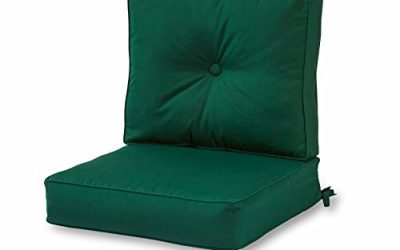
For seat cushions, a foam core with a polyester wrap is the best of both: a firm base for support and a soft layer for comfort. This is how most store-bought deep seat cushions are built.
Down alternative and feather fills
These are popular for indoor sofas, but they are a poor fit outdoors, because they hold water and take a long time to dry. If you want the look, choose a hypoallergenic polyester fill with an outdoor cover.
Gear that helps
- SUNROX DryFast Foam All-Weather Outdoor Cushion Replacement: sold in sizes such as 3 by 24 by 72 inches and 2 by 24 by 54 inches; marketed as quick-dry foam for outdoor seat cushions and chair cushions. A good starting point for long chaise cushions and bench seats; check the listing for density and thickness options.
- FoammaUSA 4 by 24 by 24 inch Outdoor Foam Cushion Replacement: a high-density polyurethane insert made in the U.S., sold without a cover, with 5 inch and multi-pack versions listed. It suits covered porches and standard chair seats.
- FoamTouch Upholstery Foam, 4 by 24 by 72 inches: a high-density upholstery sheet that you can cut to size for benches, chaise cushions and custom shapes. Use it only where the cushions stay dry.
- Prolinemax Polyester Fiberfill Pillow and Bolster Inserts: inserts sold for porch swing and daybed use; suitable for loose back pillows and bolsters, not for a firm seat.
Quick-dry foam versus standard foam: a cost and lifespan view
Quick-dry foam usually costs more at purchase, often noticeably more per cushion than standard foam of the same size. The payoff is a lower risk of mildew and a longer life outdoors. Standard foam costs less, but if it soaks and stays wet, you may replace it in one or two seasons, and a replacement that takes longer to dry also invites mildew. A rough way to compare is cost per season: divide the price by the seasons you expect the foam to last. If quick-dry foam costs twice as much but lasts three times as long outdoors, it wins; if the cushions come inside each night, standard high-density foam can be the better value.
| Foam | Relative price | Assumed lifespan outdoors | Relative cost per season |
|---|---|---|---|
| Standard polyurethane | 1.0x | 1-2 seasons | 0.5x to 1.0x |
| High-density polyurethane | 1.5x | 2-4 seasons, if kept dry | 0.4x to 0.75x |
| Quick-dry foam | 2.5x | 4-6 seasons or more | 0.4x to 0.6x |
Common mistakes with outdoor cushion foam
- Using indoor memory foam, which absorbs water and can stay damp for days.
- Choosing foam by price only; a foam with no stated density can compress in a season.
- Using a waterproof cover with no vent or drain; moisture can get trapped around the foam.
- Leaving cushions lying flat on a wet deck after rain; stand them on edge so air reaches both faces.
- Forgetting to dry the foam fully before you cover it for winter.
Frequently Asked Questions
What is the best foam for outdoor cushions?
Open-cell quick-dry foam is the best foam for outdoor cushions that stay outside, because it drains and dries faster than standard foam. If your cushions are covered or stored dry, a high-density polyurethane foam with a medium to firm feel works well at a lower cost.
What density foam is best for patio cushions?
Look for 1.8 pounds per cubic foot or higher for seats, with 2.0 to 2.5 giving the longest life. Back cushions can use lower densities. Pair the density with a firmness (ILD) of about 35 to 50 for seats.
Can I use regular upholstery foam outdoors?
You can, but it soaks up water and dries slowly, so it works best on a covered porch or cushions that come inside. Under a waterproof cover it still gets damp from humidity, so allow it to air out.
How thick should foam be for outdoor seat cushions?
Standard patio chairs usually take 3 to 4 inches, and deep seat sofas 4 to 6 inches. Check clearance under armrests and the seat height before you go thicker.
What is the best fill for chair cushions that are not foam?
Polyester fiberfill is the most common choice for back and throw cushions, and shredded foam fill gives firmer support. For a seat that takes daily use, foam with a polyester wrap lasts longer than loose fill.
How do I keep foam from getting moldy?
Choose quick-dry foam, let cushions dry on edge after rain, store them dry, and clean covers each season. Foam that stays wet in a warm place will grow mildew; if it smells musty after drying, replace it.
Should I wrap new foam in batting?
Yes, in most cases. A layer of polyester batting rounds the edges and fills the cover smoothly, and it makes the cushion feel softer without losing support.
Which foam should you buy?
- Cushions that stay outside all year: quick-dry foam in 4 to 5 inches, such as the SUNROX DryFast line.
- Covered porch, indoor-outdoor use: high-density polyurethane such as FoammaUSA, 4 to 5 inches thick.
- Long bench or chaise seat: a cut-to-length 24 by 72 inch sheet.
- Soft back pillows and bolsters: polyester fiberfill or shredded foam inserts.
Measure the cover, order the foam half an inch to an inch larger, wrap it in batting, and you will get a firmer, fuller cushion than the one you are replacing.
Last updated: November 2026
More from Amazon
Programs that pair well with the guide above. Offers and eligibility are set by Amazon and may change.
Collect the home and kitchen items you want in one registry that guests can shop from.
Create a wedding registrySet up recurring deliveries of everyday items on eligible products. Terms and savings are set by Amazon.
Explore Subscribe & SaveFree shipping on eligible items, Prime Video and more. Eligible new members can start with a free trial.
Start a Prime free trialAudiobooks and podcasts to listen to on the go. Eligible new members can start with a free trial.
Try Audible freeAs an Amazon Associate we earn from qualifying purchases.

Write Your Review
No reviews yet. Be the first to share your experience!