

Key takeaways
- Compare the best magnetic tile sets for kids, from the 102-piece Connetix Creative Pack to the Magna-Tiles 100-piece set, with specs and safety notes.
Buying a first magnetic tile set looks simple until you compare what is actually in each box. Sets with the same headline piece count can hold very different mixes of squares and triangles, and that mix decides whether a child can finish a roof, a garage or a simple cube. Magnets matter just as much: tiles that pull apart mid-build end up back in the box, while stronger edges hold tall towers together long enough to be played with.
This guide is for parents choosing a first set, relatives buying a gift that will actually get used, and teachers stocking a classroom corner. Every set below was picked from the names, piece counts and specifications published on its Amazon product page, so the contents lists and dimensions quoted here come straight from those listings rather than from brand marketing.
Quick Picks
As an Amazon Associate we earn from qualifying purchases.
| Product | Best for | Key spec from title |
|---|---|---|
| Magna-Tiles Classic 100-Piece Set | The original brand’s full-size starter | 100-Piece |
| Connetix Rainbow Creative Pack | Houses and castles with windows and doors | 102 Pieces |
| PicassoTiles 100 Piece Set | A mainstream 100-piece set with clear tiles | 100pcs Magnet Building Tiles |
| Playmags 100-Piece Super Set | Letter and number play mixed into building | Includes Click-in ABC Learning Tiles |
| Magna-Tiles Classic 32-Piece Set | A compact first set for one young builder | 32-Piece |
How to Choose
Piece Count and Shape Mix
A set’s usefulness depends less on the headline number than on how many squares it contains, because squares form the walls and floors of almost every build. A 100-piece box with only a handful of large squares runs out fast, while a smaller set with a generous square count can still raise a decent house. Check the contents list on the listing before buying: look for large squares for bases, enough equilateral triangles for roofs, and a few right-angle triangles for ramps and corners. Window, door and fence pieces are bonuses that suit children who build pretend-play settings rather than pure towers.
Magnet Strength and Tile Construction
Tiles connect along their edges, so the magnets inside the frame decide how tall a structure can go before it shears apart. Better sets seal or rivet the tile halves together so the magnets stay captive even if a tile is dropped on a hard floor, which is also a safety point covered below. Listings rarely publish a pull-strength figure, so judge construction from the product details instead: food-grade ABS or MABS plastic, sonic-welded or riveted seams, and a stated age grade of three years and up all signal a set built for daily handling rather than occasional use.
Compatibility With Sets You May Add Later
Most mainstream tiles share the same basic square footprint, so sets from different brands often click together well enough for home play. That makes the first purchase less risky than it looks: a starter box from one brand can usually be expanded with a cheaper set later. The catch is that triangle angles and tile thickness vary slightly, and mixed-brand builds can wobble at the joins. If a listing states compatibility with major brands, treat that as a useful sign, then test any new addition on a small build before committing to a large expansion pack from a different maker.
Age Fit and Magnet Safety
Every set in this guide is graded for children aged three and up, and that grading is not decoration. Magnetic tiles contain small magnets, and a cracked tile that frees a magnet is a genuine hazard for toddlers who mouth objects. Inspect tiles regularly, retire any with split seams, and keep loose click-in accessories away from children under three. Younger builders also do better with fewer, larger pieces and simple shapes, while five- and six-year-olds quickly want the triangle variety and specialty pieces that larger creative packs include.
The 5 Best Options
Magna-Tiles Classic 100-Piece Set

This is the set most families mean when they say magnetic tiles. Magna-Tiles created the category, and the Classic 100-piece box remains its flagship starter: 54 squares and 46 triangles in clear colors, enough for two children to build side by side without negotiating over pieces. The contents are published shape by shape on the listing, which makes it easy to confirm exactly what arrives. It suits households that expect the set to be used daily for years and expanded later, since the same tile size runs through the brand’s whole range of add-on packs.
Specs
- Pieces: 100
- Contents: 50 small squares, 4 large squares, 20 equilateral triangles, 11 right triangles, 15 isosceles triangles
- Model number: 4300
- Manufacturer recommended age: 3 years and up
- Product dimensions: 12.05 x 3.31 x 8.74 inches
- Item weight: 6.16 pounds
Best for: families who want the original brand’s full-size starter with a published shape-by-shape contents list.
Watch out for: the box holds only squares and triangles, so window, door and vehicle pieces require a separate expansion set.
Connetix Rainbow Creative Pack

Connetix built its name on strong magnets and a beveled tile design, and the 102-piece Rainbow Creative Pack is its most complete starter. Alongside the usual squares and triangles it includes windows, doors, rectangles and fences, which pushes play toward houses, castles and farms rather than abstract towers. The pack also comes with an inspiration book, handy for children who freeze in front of a pile of pieces and need a first project to copy. It is the heaviest box in this guide, a clue to the tile density, and a good fit for a main birthday or holiday gift.
Specs
- Pieces: 102
- Contents: 36 standard squares, 6 large squares, 12 equilateral triangles, 12 right-angle triangles, 12 isosceles triangles, 6 window pieces, 6 door pieces, 6 rectangles, 6 fences, inspiration book
- Model number: CON-102
- Manufacturer recommended age: 3 years and up
- Product dimensions: 8.27 x 3.35 x 12.83 inches
- Item weight: 7.54 pounds
Best for: children who build rooms and castles and want windows, doors and fences included from the start.
Watch out for: a separate 100-piece Canadian listing for this pack circulates under a different ASIN, so confirm the 102-piece count and model CON-102 on the product page before ordering.
PicassoTiles 100 Piece Set

PicassoTiles is the value end of the mainstream brands, and its plain 100-piece set, model PT100, is the one to buy rather than the themed track and marble variants sold under similar names. The tiles are clear colored squares and triangles in the same footprint as the major brands, so this box doubles as an affordable way to expand an existing collection. The listing is sold by Picasso Toys and shipped by Amazon, and the set has sat at the top of its category for years, which makes replacement and expansion pieces easy to find.
Specs
- Pieces: 100
- Model number: PT100
- Manufacturer recommended age: 3 years and up
- Product dimensions: 14 x 11.63 x 1.38 inches
- Item weight: 5.51 pounds
- Tile style: clear magnetic 3D blocks
Best for: buyers who want 100 clear tiles that can also expand a collection started with another major brand.
Watch out for: the same brand sells a 100-piece marble run (PTG100) and a race track set (PTR100) under similar names, so check that the model number reads PT100 for the plain tile set.
Playmags 100-Piece Super Set

Playmags takes a different angle: mixed into its 100 tiles are click-in accessories, including alphabet tiles that snap into the square frames, plus an idea book. That turns a building session into early letter and number practice, which suits preschoolers who are starting to recognize characters. The set is noticeably lighter than the other 100-piece boxes here, at 2.2 pounds, so it travels well between home and grandparents. Families who want pure construction pieces may find the click-ins a distraction, but for a three- or four-year-old who likes mixing activities, the variety keeps the box in rotation longer.
Specs
- Pieces: 100
- Extras in the box: click-in ABC learning tiles and an idea book
- Product dimensions: 12.75 x 9.25 x 2.5 inches
- Item weight: 2.2 pounds
- Material: plastic
- Manufacturer recommended age: not stated
Best for: preschoolers who enjoy letter and number play mixed into their building.
Watch out for: the click-in letter tiles are small accessories, so keep them out of reach of children under three even though the main tiles are large.
Magna-Tiles Classic 32-Piece Set
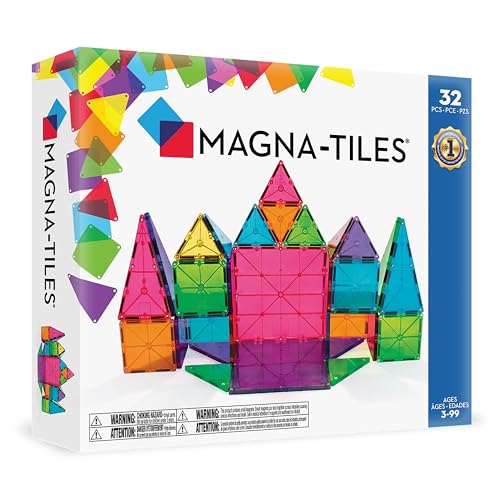
Not every child needs a hundred pieces on day one. The Classic 32-piece set uses the same tiles as its bigger sibling, just in a count that suits a single young builder: 16 squares and 16 triangles, enough for cubes, small houses and flat pattern work on a fridge door or cookie sheet. It is a sensible way to test whether a child takes to magnetic building before committing to a large box, and because the tiles match the 100-piece set exactly, nothing is wasted if you upgrade later and merge the two.
Specs
- Pieces: 32
- Contents: 14 squares, 2 large squares, 8 equilateral triangles, 4 right triangles, 4 isosceles triangles
- Model number: 2132
- Product dimensions: 11.73 x 2.13 x 10.04 inches
- Item weight: 2.67 pounds
- Manufacturer recommended age: not stated
Best for: a first set for one young builder, or a small set kept at a grandparent’s house.
Watch out for: 32 pieces run out quickly when two children build together, so sharing households should start with a 100-piece box instead.
Which One Fits Your Situation
A First Set for a Preschooler
Start with the Playmags 100-Piece Super Set if your child is three or four and likes letters, or the Magna-Tiles Classic 32-Piece Set if you want to test interest first. Both keep the piece shapes simple, and the Playmags click-in alphabet tiles give younger children a second way to play on days when building a tower feels like too much.
Siblings Building Side by Side
Choose a 100-piece box at minimum, because two builders drain a small set in minutes. The Magna-Tiles Classic 100-Piece Set publishes its full shape mix, which helps when you are dividing pieces fairly, and the PicassoTiles 100 Piece Set is a practical second box when the first one stops being enough for joint projects.
A Gift That Feels Substantial
The Connetix Rainbow Creative Pack is the gift pick here. Its windows, doors and fences make finished builds look like real places, the inspiration book gives the child a starting project on the first morning, and the box weight makes it feel like a main present rather than a stocking filler.
Expanding a Collection You Already Own
Match the footprint first: mainstream sets share a standard square size, so the PicassoTiles 100 Piece Set works as a general expansion, while Magna-Tiles owners can add the Classic 32-Piece Set for specialty shapes in small numbers. Build one mixed test structure before buying a second expansion, since slight thickness differences show up in tall walls.
Common Mistakes
- Buying by headline piece count alone, without checking how many squares the box actually contains.
- Giving a magnetic tile set to a child under three, when every set here is graded for ages three and up.
- Keeping cracked or split tiles in the box instead of throwing them away, even though a loose magnet is a serious hazard.
- Mixing a marble run or race track variant into the order by mistake, when the plain tile set has a different model number.
- Storing tiles loose in a deep toy bin, where the pieces at the bottom get stepped on and split along their seams.
Frequently Asked Questions
Are magnetic tiles safe for toddlers?
The sets in this guide are graded for children aged three and up, and they carry choking hazard warnings because they contain small magnets. For a child under three, the risk is a cracked tile releasing a magnet that can be swallowed. Older children can play safely as long as damaged tiles are removed and loose accessories stay put away.
Do magnetic tiles from different brands work together?
Usually, yes. The major brands share a standard square footprint, so tiles from Magna-Tiles, PicassoTiles, Connetix and Playmags generally click together in the same build. Small differences in tile thickness and triangle angles can make mixed walls less stable, so test a mixed structure before relying on a cross-brand expansion for a tall project.
How many pieces does a first set need?
For one child, 32 pieces are enough to learn the basics and build small houses. For siblings or a child who already loves construction toys, start at 100 pieces, because roofs and enclosed rooms consume triangles and squares quickly. Running out of pieces mid-build is the most common reason first sets get abandoned.
What should I do if a tile cracks?
Remove it from play immediately and throw it away rather than gluing it. A split seam can release the small magnets sealed inside the frame, and swallowed magnets are a medical emergency. Check the rest of the set for similar seam damage at the same time, especially tiles that have been stepped on.
More from Amazon
Programs that pair well with the guide above. Offers and eligibility are set by Amazon and may change.
Collect the home and kitchen items you want in one registry that guests can shop from.
Create a wedding registrySet up recurring deliveries of everyday items on eligible products. Terms and savings are set by Amazon.
Explore Subscribe & SaveFree shipping on eligible items, Prime Video and more. Eligible new members can start with a free trial.
Start a Prime free trialAudiobooks and podcasts to listen to on the go. Eligible new members can start with a free trial.
Try Audible freeAs an Amazon Associate we earn from qualifying purchases.
Write Your Review
No reviews yet. Be the first to share your experience!