

Key takeaways
- For most people seeking the best tabletop fire pits, a propane model with adjustable output, a recessed burner, a glass wind guard, and a 13–16-inch footprint is the strongest all-around choice. Pick gel or alcohol when size and simplicity matter more than warmth. Pick a…
The best tabletop fire pits depend on your fuel preference and table size: choose a 6–8-inch gel or alcohol-fuel model for compact, decorative flames, a 13–16-inch propane model for adjustable heat, or a wood-burning tabletop model only when smoke, sparks, and surface protection are manageable.
Our top picks


As an Amazon Associate we earn from qualifying purchases at no extra cost to you. Ratings are shown as listed on Amazon.
Quick picks by situation
| Situation | Best choice | Why it fits | Main compromise |
|---|---|---|---|
| Small balcony or café table | Gel or alcohol-fuel tabletop pit | Usually 6–10 inches wide, lightweight, and simple to store | Low heat and short burn time |
| Regular patio entertaining | Propane pit with a 13–16-inch footprint | Adjustable flame, better heat, and easy relighting | Requires a cylinder, hose, and more clearance |
| Most attractive flame display | Propane model with glass media | Clean flame pattern and no ash | Glass and burner require occasional cleaning |
| Camping or occasional off-grid use | Small wood-burning tabletop pit | No fuel canister and a natural fire experience | Smoke, embers, ash, and more demanding setup |
| Lowest ongoing fuel cost | Wood-burning model | Firewood is often inexpensive and widely available | More cleanup and greater surface and wind concerns |
Tabletop fire pit comparison
The figures below describe common specifications for the main tabletop formats rather than a promise that every model will match them. Always confirm the manual’s clearance, fuel, and surface requirements before buying.
| Type | Typical footprint | Typical weight | Burn time | Flame and heat | Wind resistance |
|---|---|---|---|---|---|
| Gel-fuel canister | 6–10 in. diameter | 2–8 lb | 2–3 hours per 13 oz can | Small flame; decorative warmth | Low without a glass guard |
| Liquid alcohol burner | 8–14 in. diameter | 4–12 lb | 45–120 minutes per fill | Bright flame; low-to-moderate heat | Low to moderate |
| 1 lb propane tabletop pit | 11–16 in. wide | 10–25 lb | 1.5–3 hours on a 1 lb cylinder | Adjustable; approximately 10,000–15,000 BTU | Moderate with a lid or guard |
| 20 lb propane tabletop pit | 15–22 in. wide | 20–40 lb | 8–20 hours, depending on BTU setting | Adjustable; approximately 20,000–40,000 BTU | Moderate to good with shielding |
| Small wood-burning pit | 13–20 in. wide | 10–25 lb | 30–90 minutes per load | Variable; hottest but least controllable | Low in exposed locations |
What separates the best tabletop fire pits
Flame size and heat output
A tall flame is not automatically a useful flame. Gel and alcohol models commonly produce an attractive 3–6-inch flame but little radiant heat, making them better for visual ambiance than for warming several people. Propane models with 10,000–15,000 BTU can warm the hands and forearms of nearby users. Larger units in the 20,000–40,000 BTU range feel more substantial, but they also consume fuel faster and need more space above and around the burner.
For a dining table, adjustable propane output is the most practical compromise. It lets you lower the flame while eating and increase it after sunset. A fixed-flame burner is simpler, but you may have to extinguish it whenever the flame is uncomfortable or wind shifts.
Fuel type and running cost
Propane offers the cleanest control. A 1-pound cylinder contains roughly 21,500 BTU of usable fuel before accounting for appliance efficiency. At a 12,000 BTU-per-hour setting, that suggests about 1.5 hours of operation, which matches the typical experience of compact units. A 20-pound cylinder contains about 430,000 BTU, so a 30,000 BTU-per-hour pit could theoretically run for about 14 hours. Real runtime varies with regulator settings and temperature.
Gel cans are convenient but become expensive for frequent use. As an example, if a $5 can burns for 2.5 hours, fuel costs about $2 per hour. A $20 propane refill containing roughly 20 pounds of fuel might provide 10–15 hours on a medium-output tabletop appliance, or approximately $1.33–$2 per hour before the cylinder’s initial cost. Prices vary by region and refill method.
Wood is economical, but the price is paid in labor: dry, appropriately sized firewood; ash removal; ember management; and storage. Never substitute charcoal, construction scraps, or treated wood.
Footprint and table fit
Measure the usable tabletop area, not the table’s advertised width. A 16-inch fire pit placed in the center of a 36-inch round table leaves only about 10 inches of radial space around it. That can be enough for glasses but not for four dinner plates. On a rectangular table, leave space for the fuel connection and ensure the hose cannot run across a seating or walking path.
Keep the pit on a stable, level, noncombustible surface. Composite decking, plastic tables, untreated wood, and painted surfaces can discolor or soften from heat even when the manufacturer permits outdoor use. A heat-resistant base or paver can protect the surface, but it must not block ventilation or violate the appliance instructions.
Wind resistance
Wind is the main reason a small flame disappoints outdoors. Look for a recessed burner, a properly fitted glass wind guard, a broad burner ring, and an ignition system that does not require holding your hand over the burner. A wind guard improves flame stability, but it is not a license to use the pit in strong wind. A gust can carry sparks from a wood-burning unit and can also tip lightweight decorative models.
Glass beads or lava rock can improve the appearance of a propane flame, but they do not make an appliance windproof. Use only the media supplied or approved for that burner; ordinary decorative glass can crack or explode from thermal shock.
Recommended formats and notable examples
Compact wood-burning: Solo Stove Mesa and Mesa XL
Solo Stove’s Mesa line is designed as a small wood-burning tabletop fire pit. The original Mesa is roughly 5 inches wide and the Mesa XL is roughly 7 inches wide, making them unusually compact. Their double-wall construction is intended to promote airflow, but the small size limits fuel capacity and heat coverage. They suit a sheltered patio where users want a live flame rather than a room-warming appliance.
Choose this format only if you can manage smoke, sparks, ash, and local fire restrictions. A stainless-steel lid, if included or purchased for the model, helps with storage but should not be placed on a hot fire unless the instructions specifically allow it.
Adjustable propane: tabletop fire bowls and fire tables
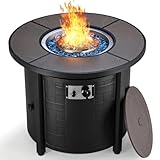
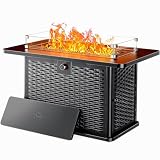
Propane fire bowls from brands such as Outland Living and Bond Manufacturing commonly provide the most useful balance for patios. Models in the approximately 40,000 BTU class are generally larger and heavier than decorative tabletop burners, while compact 10,000–15,000 BTU designs are easier to move and more suitable for a dining table.
Check whether the listed BTU output is the maximum, whether the hose is included, whether the unit accepts a 1-pound cylinder or requires a 20-pound tank, and whether a tank cover is included. The cylinder may occupy more floor space than the pit itself.
Decorative alcohol or gel burners
These are the easiest option for a small surface and occasional use. They typically have fewer mechanical parts and no hose, regulator, or cylinder. Their limitation is heat: the flame looks substantial at close range but will not replace a heater. Never refill an alcohol burner while it is burning or still warm, and do not move it until the fuel has been extinguished and the unit has cooled.
Setup and maintenance that prevent common problems
- Measure clearances first. Follow the manual’s minimum distance from walls, umbrellas, railings, curtains, and overhead branches. A canopy can trap heat and should not be assumed safe.
- Inspect before every use. For propane, check the hose, regulator, burner holes, and connection for cracking, blockage, or damage. Apply approved leak-detection solution to a connection after assembly; bubbles indicate a leak. Never use a flame to test it.
- Protect the surface. Use the manufacturer’s base or an appropriate heat-resistant pad. Do not place a hot pit directly on wood, vinyl, synthetic wicker, or a glass tabletop unless specifically approved.
- Keep the burner dry and clear. Water, leaves, and spilled food can block burner ports or cause uneven flames. Let the unit cool, then brush debris away gently rather than poking ports with metal.
- Cover only when cool. Moisture trapped under a cover accelerates corrosion. Store removable media and fuel components dry, and disconnect propane according to the manual.
The parts that usually wear first are fabric covers, ignition batteries, rubber hoses, burner finishes, and decorative media. A stainless-steel burner pan generally tolerates outdoor use better than thin painted steel, but stainless steel can still discolor. Replace a damaged hose, cracked glass, warped burner, or unreliable safety control rather than trying to improvise a repair.
Bottom line
For most people seeking the best tabletop fire pits, a propane model with adjustable output, a recessed burner, a glass wind guard, and a 13–16-inch footprint is the strongest all-around choice. Pick gel or alcohol when size and simplicity matter more than warmth. Pick a compact wood-burning model when the ritual of tending a real fire outweighs smoke and cleanup. Whatever the format, surface protection, wind limits, fuel compatibility, and the manufacturer’s clearance rules matter more than an impressive flame height.




Write Your Review
No reviews yet. Be the first to share your experience!