

Key takeaways
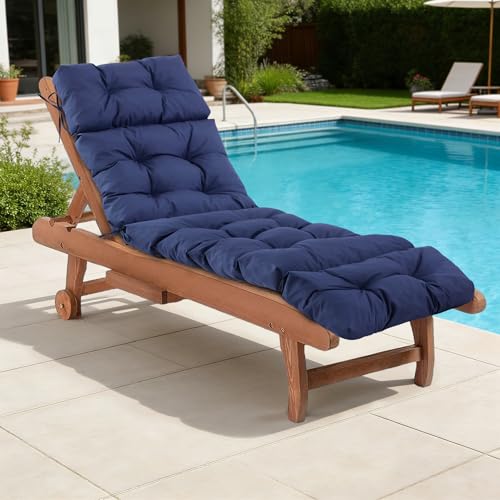
- Zero gravity loungers: iMounTEK 67 x 22 x 4 inch cushion (thick fill, machine washable) or the Moutosne with its eight ties and head cover.
- Extra-wide zero gravity chairs: ERWUDEling extra-wide cushion.
- Standard Adirondack chairs: YEFU 2-pack at about 49 inches long, or the MQK at 44 x 19 inches for smaller frames.
- Premium fade resistance: Home Decorators Collection Sunbrella-fabric Adirondack cushion.
- Mainstream value for slatted chairs: Arden Selections Leala.
- Basic recliner pad: Wilytyres zero gravity cushion.
The best lawn chair cushions for most buyers are the iMounTEK zero gravity cushion for reclining loungers, the YEFU 2-pack for standard Adirondack chairs, and the Home Decorators Collection Sunbrella cushion when fade resistance matters more than budget. The right pick depends almost entirely on chair shape, because a cushion that is two inches too wide or too long will slide, bunch and drain poorly no matter how good the fabric is.
Lawn chairs are not one product category. A folding director’s chair, a slatted Adirondack, a sling-style recliner and a zero gravity lounger each need a different cushion shape, different tie placement and a different thickness. This guide sorts cushions by chair type first, then by fabric and fill, and gives you a measuring routine so you can order once instead of returning twice.
Our top picks


As an Amazon Associate we earn from qualifying purchases at no extra cost to you.
Quick answer: top picks by chair type
- Zero gravity loungers: iMounTEK 67 x 22 x 4 inch cushion (thick fill, machine washable) or the Moutosne with its eight ties and head cover.
- Extra-wide zero gravity chairs: ERWUDEling extra-wide cushion.
- Standard Adirondack chairs: YEFU 2-pack at about 49 inches long, or the MQK at 44 x 19 inches for smaller frames.
- Premium fade resistance: Home Decorators Collection Sunbrella-fabric Adirondack cushion.
- Mainstream value for slatted chairs: Arden Selections Leala.
- Basic recliner pad: Wilytyres zero gravity cushion.
How we chose
This guide is based on desk research, not product evaluation. We compared manufacturer specifications, published dimensions and fabric descriptions across retailer listings and independent buying guides, then favored cushions whose listed measurements, tie counts and fabric claims were consistent from source to source. Where a spec could not be confirmed, the entry describes the product by spec class instead (for example, “standard Adirondack class”) and tells you to confirm the number on the current listing. Manufacturers revise sizes and fabrics between production runs, so treat every dimension below as a starting point and check the listing against your own measurements.
Comparison table
| Cushion | Chair type | Listed size / class | Securing | Fabric / care | Tier |
|---|---|---|---|---|---|
| iMounTEK zero gravity cushion | Zero gravity lounger | 67 x 22 x 4 in | Straps | Thick fill, machine washable | Mid-range |
| Moutosne zero gravity cushion | Zero gravity lounger | Full-length lounger class (confirm) | Eight ties on four strap pairs, head cover | Water-resistant fabric class | Mid-range |
| ERWUDEling extra-wide cushion | Wide zero gravity chair | Extra-wide lounger class (confirm) | Ties/straps | Weather-resistant fabric class | Mid-range |
| Wilytyres zero gravity cushion | Zero gravity lounger | Roughly 66-69 x 19-22 x 4 in class | Straps | Water-resistant fabric class | Entry-level |
| YEFU 2-pack | Adirondack | About 49 in long | Anti-slip features | Weather-resistant fabric | Entry-level per unit |
| MQK Adirondack cushion | Adirondack / rocker | 44 x 19 in | Ties (confirm) | Outdoor fabric class | Entry-level |
| Arden Selections Leala | Adirondack / slat chair | Standard Adirondack class (confirm) | Ties | Outdoor fabric class (confirm) | Mid-range |
| Home Decorators Collection Sunbrella | Adirondack | Standard Adirondack class (confirm) | Ties | Sunbrella acrylic fabric | Premium |
Measure first: the fit decision matrix
Most returns come from skipping a tape measure. Measure the part of the chair the cushion will actually cover, not the whole frame, and compare against these thresholds.
| Chair type | What to measure | Target cushion size | Tie points needed | Risk if wrong |
|---|---|---|---|---|
| Zero gravity lounger | Head-to-foot length of the fabric bed; width at the widest point | Length within 2 inches of the bed; width equal to or up to 1 inch under | 6 to 8, plus a head strap | Slides toward the foot end when you recline |
| Adirondack | Seat depth, seat width between arms, back height along the slope | Seat 2 to 3 inches narrower than the gap between arms | 4 (two seat, two back) | Back panel buckles at the seat angle |
| Folding sling or director chair | Seat width between side rails | Pad no wider than the rail gap, thin enough for the chair to fold | 2 to 4 | Chair will not close, or pad bunches at the fold |
| Rocking or slatted chair | Seat depth, back height, contour of slats | Contoured pad no deeper than the seat | 4 | Pad hangs off the front edge |
Cushions for zero gravity chairs
Zero gravity loungers recline far enough that the cushion must stay put along a long, sloped surface. Typical cushions for this chair class run roughly 66 to 69 inches long, 19 to 22 inches wide and about 4 inches thick, but frames vary, so measure the fabric bed before ordering. A zero gravity chair is designed for leaning back, not for eating or sitting upright for hours, so thickness helps comfort but does not change posture.
iMounTEK zero gravity cushion
Spec line: 67 x 22 x 4 in · thickened fill · machine washable · strap secured
Best for: Full-size loungers where you want a plush pad you can wash at home. Skip if: your chair bed is narrower than about 20 inches, because 22 inches of width will overhang and curl.
- Pros: Listed dimensions match the common full-size lounger; thick fill; washing is simple.
- Cons: A 4-inch pad raises your seat height slightly and can press against some side trays; thick fill takes longer to dry after a soaking.
Moutosne zero gravity cushion
Spec line: Full-length lounger class · eight ties across four strap pairs · separate head cover · water-resistant fabric class
Best for: Anyone whose cushion has wandered off the chair before. Eight ties at four points is the most anchoring in this group. Skip if: you dislike fiddling with straps each time you fold the chair.
- Pros: Strong anti-shift design; the head cover keeps the pillow area in place.
- Cons: Tying and untying eight points takes a minute; confirm the length against your chair before buying.
ERWUDEling extra-wide cushion
Spec line: Extra-wide lounger class · ties/straps · weather-resistant fabric class
Best for: Oversized zero gravity chairs where standard 22-inch cushions look narrow. Skip if: you own a standard-width chair; an extra-wide pad will fold over the frame edges.
- Pros: Answers a real gap, since most pads are sized for standard loungers.
- Cons: Narrow product category, so confirm the width on the current listing and compare to your measurement.
Wilytyres zero gravity cushion
Spec line: Roughly 66 to 69 x 19 to 22 x 4 in class · strap secured · water-resistant fabric class
Best for: A basic, lower-cost replacement pad for a standard lounger. Skip if: you want a premium fabric made for years of direct sun.
- Pros: Familiar standard sizing; easy to swap.
- Cons: Fabric details are less specific than premium options, so expect a shorter fade life in direct sun.
Cushions for Adirondack chairs
Adirondack dimensions differ by manufacturer. The seat tilts backward, the back slopes, and the arms are wide, so a cushion that fits one brand can sit loose or too tall on another. Buy by seat width between arms and by seat depth, not by the phrase “fits most Adirondack chairs.”
YEFU 2-pack
Spec line: About 49 in long · anti-slip features · weather-resistant fabric · sold as 2
Best for: Pairs of standard Adirondack chairs where a single set covers both. Skip if: your chairs are small or kid-sized; 49 inches is long.
- Pros: Two cushions in one purchase lowers the cost per chair; the anti-slip feature helps on slick slats.
- Cons: One-piece construction means the seat-to-back crease may not match your chair angle.
MQK Adirondack cushion
Spec line: 44 x 19 in · fits standard and rocking chairs · outdoor fabric class
Best for: Smaller or slim-profile Adirondack and rocking chairs. Skip if: your chair seat is wider than about 21 inches between arms.
- Pros: Compact enough for tight frames; works on rockers.
- Cons: Shorter back coverage on tall-back chairs.
Arden Selections Leala
Spec line: Standard Adirondack class · ties · outdoor fabric class (confirm on listing)
Best for: Buyers who want a recognized outdoor-cushion brand without paying premium fabric prices. Skip if: you need documented fade guarantees; check the warranty wording.
- Pros: Brand with a long record in outdoor cushions; typically offered in several coordinated colors.
- Cons: Sizing options vary by model, so double-check which variant you are viewing.
Home Decorators Collection Sunbrella cushion
Spec line: Standard Adirondack class · Sunbrella acrylic fabric · ties · premium tier
Best for: Chairs in full sun year after year, since Sunbrella is a solution-dyed acrylic made for outdoor fade and mildew resistance. Skip if: the chairs are covered most of the year or you replace cushions every season.
- Pros: Best fade resistance of the group; fabric is designed to be cleaned with mild soap and water.
- Cons: Highest cost tier; the foam inside still needs ventilation to dry.
Fabric, fill and construction: what matters
Fabric
Polyester is the common entry-level cover. It resists water and is light, but unprotected polyester can fade after a few summers of direct sun. Look for terms like “UV-resistant” or “solution-dyed.” Solution-dyed acrylic, the category Sunbrella belongs to, carries color through the fiber instead of printing on the surface, which is why it holds up in sun. Olefin is another solution-dyed choice, with good mildew resistance and a slightly rougher feel.
“Water-resistant” and “waterproof” are not the same. Water-resistant fabric sheds light rain; waterproof backing can trap moisture inside the cushion. If the cushion will live outside, favor fabric that dries quickly and a foam core that is open-cell, so water drains instead of pooling.
Fill and thickness
Polyester fiberfill is soft, light and inexpensive, but flattens over time. Foam cores hold their shape longer. Thickness trade-offs:
- Under 2 inches: Thin seat pad. Fine for folding chairs where the pad needs to fold with the frame.
- 2 to 3 inches: Balanced comfort for Adirondack and slatted chairs.
- 4 inches: Plush, standard for zero gravity pads, but takes longer to dry.
Ties, straps and non-slip backing
Ties are the cheapest way to stop a cushion from migrating. A seat cushion needs at least two at the back edge; a long lounger pad needs six or more. Non-slip rubber dots help on slick slats but do little on a recliner that tilts.
Washable covers
A zipper cover you can remove and machine wash means the pad can be refreshed without replacement. Check whether the care tag calls for cold water and air dry; high heat can shrink the cover or damage the foam bond.
Worked example: sizing a cushion for an Adirondack chair
- Measure the seat width between the inside faces of the arms. Say it is 21 inches.
- Subtract 2 inches so the cushion sits clear of the arms: target width 19 inches.
- Measure seat depth from the back slat to the front edge. Say 20 inches.
- Measure the back from the seat junction to the top of the slats along the slope. Say 26 inches.
- A combined one-piece cushion needs seat depth plus back height plus a few inches for the bend: 20 + 26 + 3 = about 49 inches long.
- Result: a 19-inch-wide cushion about 49 inches long fits. A 44 x 19 inch model would leave roughly 5 inches of the back uncovered, so a 49-inch model is the better match.
The same logic applies to any chair: add the seat length and the back length, then add a small bend allowance. If your total lands between two sizes, choose the shorter one, because overhang looks sloppy and makes the pad slide.
Decision guide by use case
- Chair sits in full sun all summer: choose solution-dyed fabric (the Sunbrella cushion) and accept the higher cost tier.
- Cushion is stored indoors between uses: mid-range polyester is fine and you save money.
- Rain exposure is frequent: pick a thinner pad with open-cell foam so it dries quickly.
- Windy deck or lawn: prioritize ties and straps over thickness.
- Pets or kids use the chair: choose a removable, machine-washable cover.
Care tips to extend cushion life
- Stand cushions on edge after rain so water drains from the foam.
- Brush off dirt and leaves before they stain; spot-clean with mild soap and water.
- Rotate or flip pads when the construction allows it, so one side does not take all the sun.
- Store in a ventilated bin or deck box through winter, not a sealed plastic bag.
- Check ties and zippers each spring; a loose seam is easier to repair than a torn cover.
Frequently asked questions
What thickness is best for lawn chair cushions?
Two to three inches suits most Adirondack and slatted chairs; four inches is standard for zero gravity pads. Folding chairs need thinner pads so the frame can still close.
Thicker foam is more comfortable but dries more slowly and can crowd armrests. If the chair will be left in the rain, lean toward the thinner end of the range.
How do I measure for a lawn chair cushion?
Measure seat width between arms, seat depth, and back height along the slope, then match to the listed dimensions. Order slightly smaller rather than larger.
For a one-piece cushion, add seat depth and back height, then add roughly 3 inches for the bend. The worked example above walks through the numbers.
Will a zero gravity cushion fit any zero gravity chair?
No. Most are sized for a typical full-length lounger around 66 to 69 inches, but extra-wide and compact chairs exist. Check length and width against your fabric bed.
If your chair is wider than standard, an extra-wide model such as the ERWUDEling is a better fit than folding a standard pad over the edges.
Which fabric resists fading best?
Solution-dyed acrylic, such as Sunbrella, resists fading best because color runs through the fiber. Basic printed polyester fades faster in direct sun.
Olefin is another solution-dyed option. Whichever you pick, storing cushions out of direct sun when not in use extends color life.
Can I machine wash outdoor chair cushions?
Many can, if the cover is removable and the care tag allows it. Use cold water, a mild detergent and air dry. Do not machine wash cushions with sewn-in foam unless the label says so.
For non-removable covers, spot clean with mild soap and a soft brush, then rinse and let the cushion dry on edge.
How do I keep cushions from sliding?
Use ties at both seat and back, add a non-slip underside, and size the cushion to the chair. Straps matter most on reclining loungers, where the slope encourages slipping.
If ties are missing, sew or attach strap points to the cushion edge, or place a rubberized shelf-liner mat under it.
How long do outdoor lawn chair cushions last?
Entry-level polyester cushions often last a few seasons in direct sun, while solution-dyed fabric over quality foam lasts noticeably longer. Care and storage matter as much as fabric.
Expect the foam to flatten before the fabric fails. Replace cushions when they no longer support you, not only when they fade.
Are waterproof cushions better than water-resistant ones?
Not always. Water-resistant fabric sheds rain while letting the foam breathe; waterproof backing can trap moisture and promote mildew if water gets in through seams or zippers.
The best approach is quick-drying fabric, open-cell foam and storing the cushion on edge after rain.




Write Your Review
No reviews yet. Be the first to share your experience!