

Key takeaways
- Solution-dyed acrylic (Sunbrella-type) with light mildew: Sunbrella Clean Multi-Purpose Fabric Cleaner or STAR BRITE Outdoor Collection Fabric Cleaner Spray.
- Black spotting on marine-grade fabric: STAR BRITE All Surface Mold & Mildew Remover.
- Bird droppings, pollen and general grime: Chemical Guys Foaming Citrus Fabric Clean (enzymatic foam).
- Mixed outdoor surfaces and cushions together: Carbona Pro Care Oxy Powered Active Foam or CLR Outdoor Furniture Cleaner.
- Low-effort maintenance between deep cleans: POFL No Scrub Outdoor Fabric & Furniture Cleaner.
- Vinyl or polyester only, heavy mildew: STAR BRITE Ultimate Mildew Stain Remover (chlorine-based; not for acrylic).
The best outdoor cushion cleaners for mold and mildew are Sunbrella Clean Multi-Purpose Fabric Cleaner for solution-dyed acrylic, STAR BRITE All Surface Mold & Mildew Remover for stubborn spotting on marine-grade fabric, and Carbona Pro Care Oxy Powered Active Foam for a gentle oxygen-based option on mixed materials. The right pick depends less on brand than on three facts: what the cushion cover is made of, what the stain actually is, and whether you are willing to rinse thoroughly afterward.
Mildew is a surface growth that feeds on dirt, pollen, body oils and sunscreen, not on the fabric itself. That is why a cleaner that lifts the food source matters as much as one that kills spores. This guide sorts the products by the stain you are fighting and by the fabric you own, then walks through a repeatable cleaning routine and a dilution calculation so you do not over-mix a concentrate.
Our top picks

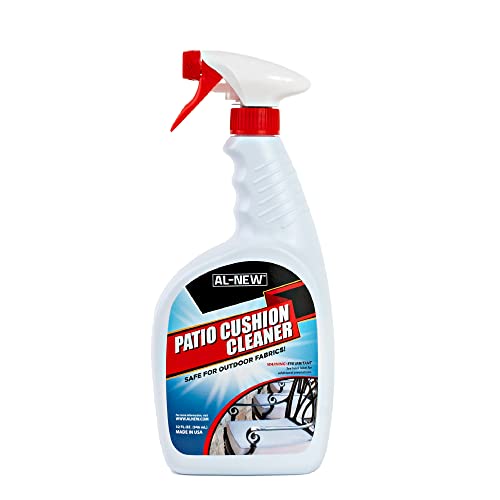


As an Amazon Associate we earn from qualifying purchases at no extra cost to you.
Quick picks by situation
- Solution-dyed acrylic (Sunbrella-type) with light mildew: Sunbrella Clean Multi-Purpose Fabric Cleaner or STAR BRITE Outdoor Collection Fabric Cleaner Spray.
- Black spotting on marine-grade fabric: STAR BRITE All Surface Mold & Mildew Remover.
- Bird droppings, pollen and general grime: Chemical Guys Foaming Citrus Fabric Clean (enzymatic foam).
- Mixed outdoor surfaces and cushions together: Carbona Pro Care Oxy Powered Active Foam or CLR Outdoor Furniture Cleaner.
- Low-effort maintenance between deep cleans: POFL No Scrub Outdoor Fabric & Furniture Cleaner.
- Vinyl or polyester only, heavy mildew: STAR BRITE Ultimate Mildew Stain Remover (chlorine-based; not for acrylic).
How we chose
This ranking is based on research, not product trials. We compared manufacturer fabric-compatibility statements, the care guidance published by outdoor-fabric makers, and the cleaner chemistry (oxygen-based, enzymatic, alkaline or chlorine-based) described for each formula. A product earned a place when its stated fabric compatibility was clear, when its chemistry matched a common cushion problem, and when it is widely stocked in the US in 2026. Where a spec such as bottle size varies by retailer or could not be confirmed, we describe the product by class instead of quoting a number.
Three criteria drove the order:
- Fabric safety. Bleach-type formulas can weaken or strip color from some fabrics and coatings, so compatibility comes first.
- Match to stain type. Mildew, organic stains (droppings, leaves) and oily stains (sunscreen, food) respond to different chemistry.
- Rinse and dwell requirements. Residue left on fabric attracts dirt and can feed new growth, so a clear rinse step counts in a product’s favor.
Comparison table
| Product | Form | Chemistry class | Fabric notes | Best stain match |
|---|---|---|---|---|
| Sunbrella Clean Multi-Purpose Fabric Cleaner | Spray | Fabric-care detergent | Water-safe fabrics, vinyl, Sunbrella materials | Routine dirt, light mildew |
| STAR BRITE Outdoor Collection Fabric Cleaner Spray | Spray (32 oz bottle) | Cleaner with UV-protective polymers | Polyester, canvas, acrylic | General grime, faded areas |
| Chemical Guys Foaming Citrus Fabric Clean | Foam (16 oz, sold in 2-packs) | Enzymatic, detergent-free | Safe for Sunbrella, compatible with water-repellent coatings | Droppings, pollen, organic soils |
| STAR BRITE All Surface Mold & Mildew Remover | Spray | High-alkaline | Marine and outdoor upholstery, Sunbrella fabrics | Black mildew spotting |
| STAR BRITE Ultimate Mildew Stain Remover | Gel spray (16 oz) | Chlorine-based oxidizer | Vinyl and polyester; not for acrylic or Sunbrella | Heavy mildew on vinyl |
| Carbona Pro Care Oxy Powered Active Foam | Foam spray with brush applicator (22 oz, 2-pack) | Oxygen-based | Fabric, vinyl, plastic, wood; plant- and pet-safe when used as directed | Mixed stains, multi-surface sets |
| CLR Outdoor Furniture Cleaner | Spray | Surface cleaner | Resin, wicker, rattan, canvas | Dirt on frames and canvas |
| POFL No Scrub Outdoor Fabric & Furniture Cleaner | Spray | No-scrub fabric cleaner | Outdoor fabrics | Maintenance cleaning |
| ForceField Fabric Cleaner | Spray (22 oz, 2-pack) | Oil and water stain lifter | Compatible with water-repellent finishes | Oily marks, sunscreen |
Match the cleaner to the fabric first
Before any product goes on, read the care tag or the manufacturer’s fabric page. Outdoor cushion covers fall into four groups, and the group sets your chemistry limits.
Solution-dyed acrylic (Sunbrella-type)
The color runs through the fiber, so the fabric tolerates stronger cleaning than printed fabrics. The fabric maker’s own method is gentle: brush off loose dirt, wash with a mild soap solution in lukewarm water, rinse thoroughly and air dry on edge. For mildew the maker publishes a diluted bleach-and-soap mix for its own branded fabric only, so use it only when the tag confirms that fabric. Avoid machine washing and machine drying.
Polyester and olefin
These are more sensitive to harsh oxidizers and often carry a printed or coated finish. Oxygen-based and enzymatic cleaners are the safer starting point, and any strong formula belongs on a hidden seam first.
Vinyl and coated fabrics
Vinyl tolerates chlorine-based mildew removers better than woven fabrics do, but rinse well so residue does not dull the surface.
Unknown or blended fabric
Treat it as the most sensitive case. Start with a mild soap solution, then escalate to an oxygen-based product. Skip chlorine-based formulas entirely.
Match the cleaner to the stain
| Stain | What it is | Chemistry that works | Avoid |
|---|---|---|---|
| Black or green spotting | Active mildew colonies | Alkaline mildew remover, oxygen-based foam, or diluted bleach on bleach-safe acrylic only | Wetting the fabric before brushing off dry growth |
| Bird droppings, pollen, leaf tannins | Organic soils | Enzymatic foam, mild soap | Hot water, which can set protein stains |
| Sunscreen and body oils | Oily residue that feeds mildew | Surfactant or oil-lifting spray | Rubbing hard, which spreads the oil |
| Rust or metal-frame marks | Mineral staining | Dedicated rust remover on the spot | Mixing with chlorine products |
| General gray dullness | Ground-in dirt | Fabric cleaner spray and soft brush | Pressure washers, which damage fibers |
The 9 cleaners compared
1. Sunbrella Clean Multi-Purpose Fabric Cleaner
Specs: Spray · Water-safe fabrics and vinyl · Made for Sunbrella materials · Surface-level cleaning
Best for: Owners of solution-dyed acrylic cushions who want a cleaner designed by the fabric’s own brand.
Skip if: You have a heavy black mildew problem that needs a dedicated remover.
- Pros: Fabric-matched, simple routine, suitable for repeat seasonal cleaning.
- Cons: A general cleaner rather than a mildew specialist.
2. STAR BRITE All Surface Mold & Mildew Remover
Specs: Spray · High-alkaline formula · Marine and outdoor upholstery · Listed as suitable for Sunbrella fabrics
Best for: Black spotting on marine-grade cushions and boat-style fabrics.
Skip if: Your fabric is delicate, printed or unknown; alkaline formulas call for a hidden-seam check.
- Pros: Targets mildew directly, works on several surfaces.
- Cons: Needs a thorough rinse; alkaline residue is not something to leave in the foam.
3. STAR BRITE Outdoor Collection Fabric Cleaner Spray
Specs: Spray · 32 oz · UV-protective polymers · Polyester, canvas and acrylic · Rinse after use
Best for: Whole-set maintenance of mixed polyester and acrylic cushions.
Skip if: Your main issue is entrenched mildew rather than surface soil.
- Pros: Large bottle, broad fabric range, protective polymers.
- Cons: Not a dedicated mildew killer.
4. Chemical Guys Foaming Citrus Fabric Clean
Specs: Foam · 16 oz · Enzymatic and detergent-free · Safe for Sunbrella · Compatible with water-repellent coatings
Best for: Bird droppings, pollen and organic stains on coated fabric.
Skip if: You need an aggressive oxidizer for black mildew.
- Pros: Gentle on repellent finishes, foam stays where you put it.
- Cons: Small bottles for a full patio set.
5. Carbona Pro Care Oxy Powered Active Foam
Specs: Foam spray with brush applicator · 22 oz · Oxygen-based · Plant- and pet-safe when used as directed
Best for: Households with pets and plants nearby, and cushions plus frames cleaned together.
Skip if: You want a mildew-specific formula for heavily infested foam.
- Pros: Built-in scrubbing brush, gentler chemistry, multi-surface.
- Cons: Oxygen formulas can need a second pass on old stains.
6. CLR Outdoor Furniture Cleaner
Specs: Spray · Resin, wicker, rattan and canvas · Soak, then wipe, brush or rinse
Best for: Canvas cushions and the resin or wicker frames beside them.
Skip if: Your cushions are acrylic and you want a fabric-brand-matched cleaner.
- Pros: One product for frame and canvas.
- Cons: Fabric guidance is narrower than the dedicated fabric cleaners.
7. POFL No Scrub Outdoor Fabric & Furniture Cleaner
Specs: Spray · No-scrub application · Outdoor fabrics
Best for: Quick maintenance when you want minimal effort.
Skip if: The stain is set in and needs brushing.
- Pros: Low effort.
- Cons: Embedded mildew still benefits from a brush; confirm fabric compatibility on the label.
8. ForceField Fabric Cleaner
Specs: Spray · 22 oz (2-pack) · Oil- and water-based stain removal · Compatible with water-repellent finishes
Best for: Sunscreen, food and oily marks that precede mildew.
Skip if: The problem is established mildew.
- Pros: Preserves repellent finishes, two bottles per pack.
- Cons: It removes the food source rather than treating the growth.
9. STAR BRITE Ultimate Mildew Stain Remover
Specs: Gel spray · 16 oz · Chlorine-based oxidizer · For vinyl and polyester · Not for acrylic or Sunbrella
Best for: Heavy mildew on vinyl cushions.
Skip if: Your cushions are acrylic or fabric of unknown type.
- Pros: Strong action, gel clings to vertical seams.
- Cons: Can bleach or damage incompatible fabrics; keep it off metal hardware and plants.
Spray, concentrate or scrub kit?
Ready-to-use sprays
Best for spot work and light seasonal cleaning. You trade price per ounce for convenience and no mixing errors.
Foams
Foams cling to the fabric, which improves dwell time on sloped or vertical cushion faces. They are the easier option for mildew along seams.
Concentrates and DIY mixes
Mild soap in water is the baseline method published by outdoor-fabric makers. It is cheap and appropriate for most fabrics, but it does not kill established mildew by itself. A bleach mix belongs only on fabrics the maker confirms as bleach-safe.
Scrub kits with brushes
A soft-bristle brush matters more than the spray in many cases. Dry brushing removes loose spores before the fabric is wetted. Stiff bristles roughen fibers, so keep it soft.
Worked example: mixing a soap solution for four cushions
Fabric-maker guidance for a mild wash is no more than 1/4 cup of mild soap per gallon of lukewarm water, with water below 100°F. Suppose you have four seat cushions and a bucket that holds 3 gallons.
- Soap needed: 3 gallons x 1/4 cup = 3/4 cup of mild soap at the maximum. Using 1/2 cup is plenty for light dirt.
- Coverage: a gallon of solution typically wets one to two cushion faces with a soft brush, so 3 gallons cover four cushions with refills.
- Rinse volume: plan on at least as much clean water for rinsing as you used for washing, about 3 gallons or a gentle hose rinse for several minutes per cushion.
- Bleach-safe acrylic only: the published mix for branded acrylic is about 1 cup of bleach plus 1/4 cup of mild soap in a gallon of water. Mix one gallon at a time, never in a closed container, and never combine with ammonia, vinegar or another cleaner.
The calculation shows that mixing in small batches wastes less, avoids over-soaping, and cuts the rinse time that most owners underestimate.
Step-by-step cleaning routine
- Move cushions outside onto a clean, sloped surface in dry weather.
- Brush off dry dirt and loose mildew with a soft brush. Do this before wetting to avoid pushing spores into the fabric.
- Check the care tag and run a hidden-seam spot test with any new cleaner.
- Apply the cleaner and respect the stated dwell time. Do not let it dry on the fabric.
- Scrub gently with a soft brush in small circles.
- Rinse until water runs clear and no suds remain.
- Stand cushions on edge in direct sun to dry fully. Sunlight helps limit regrowth.
- Squeeze the foam core lightly if the cover has a zipper; if the foam stays damp, open the cover and air it out.
Safety notes
- Never mix chlorine bleach with ammonia, vinegar or acid-based cleaners. The combination can release harmful gases.
- Wear gloves and eye protection when using alkaline or chlorine-based products, and work outdoors with ventilation.
- Keep products away from plants, pets and children during application, and rinse runoff off lawns and planters.
- Store cleaners in their original containers, capped and out of reach.
- If a product touches skin or eyes, follow the label’s first-aid instructions and contact a poison control center or your doctor if irritation continues.
Preventing mildew from returning
- Clean regularly, because mildew needs a food source and dirt is the common one.
- Let cushions dry fully after rain; stand them on edge so water drains.
- Store cushions in a ventilated deck box or indoors during long wet stretches. A sealed plastic bag traps humidity.
- Choose outdoor-rated foam. Standard indoor foam wrapped in outdoor fabric holds water and breeds mildew from the inside.
- Reapply a fabric protector or water-repellent treatment after deep cleaning if the fabric maker approves it.
Frequently asked questions
What is the best cleaner for mold on outdoor cushions?
Match the cleaner to the fabric: an oxygen-based or fabric-brand cleaner for acrylic and polyester, and a mildew remover only if the label allows it. Always brush dry growth off first.
For solution-dyed acrylic, the fabric maker’s mild soap method handles routine growth, and a dedicated alkaline remover handles stubborn black spotting.
Can I use bleach on outdoor cushions?
Only on fabrics the maker confirms as bleach-safe, such as branded solution-dyed acrylic. On other fabrics, bleach can weaken fibers and strip color.
Use the published dilution, rinse thoroughly, and never combine bleach with other cleaners.
Does vinegar kill mildew on cushions?
White vinegar mixed with water and a little dish soap is a bleach-free option that works on light mildew when left for about 15 to 20 minutes.
It is less effective on deep black growth. Rinse well and dry in the sun.
Can outdoor cushion covers go in the washing machine?
It depends on the fabric. Solution-dyed acrylic makers advise against machine washing and drying, while some polyester covers permit a gentle cycle.
Check the tag, remove the foam, and air dry. Heat from a dryer can shrink covers and damage coatings.
How do I remove bird droppings from patio cushions?
Scrape off the solid material with a dull tool, then treat the spot with an enzymatic foam or mild soap solution and rinse with cool water.
Avoid hot water, which can set the stain, and do not rub hard.
Do I have to rinse after using a cushion cleaner?
Yes, in almost every case. Residue attracts dirt and can feed new growth, and alkaline or oxidizing products should never stay in the fabric.
Follow the label, but a thorough rinse followed by full sun drying is the safe default.
How often should I clean outdoor cushions?
Wipe or brush them regularly during the season and do a full wash at least once or twice a year, more often in humid or shaded areas.
Clean sooner after bird droppings, sunscreen contact or long rainy periods.
Why does mildew keep coming back on clean cushions?
Usually the foam core is damp or the fabric holds invisible dirt. Spores survive in the filling even when the cover looks clean.
Dry the cushions completely, replace saturated indoor foam with outdoor-rated foam, and store them where air can circulate.




Write Your Review
No reviews yet. Be the first to share your experience!