

Key takeaways
- 30–32 inches: commonly suited to smaller children, depending on height and coaching preference.
- 33–35 inches: useful for growing juniors and smaller adult players.
- 36.5–37.5 inches: the normal adult range and the safest starting point for most players.
- 38–38.5 inches: can suit taller defenders or players who value reach, but may feel cumbersome in tight attacking areas.
The best field hockey sticks are chosen by position and playing style: defenders usually benefit from a slightly heavier, lower-balance stick, midfielders from an all-round mid-bow model, and forwards from a lighter, quick-handling low-bow stick.
Our top picks
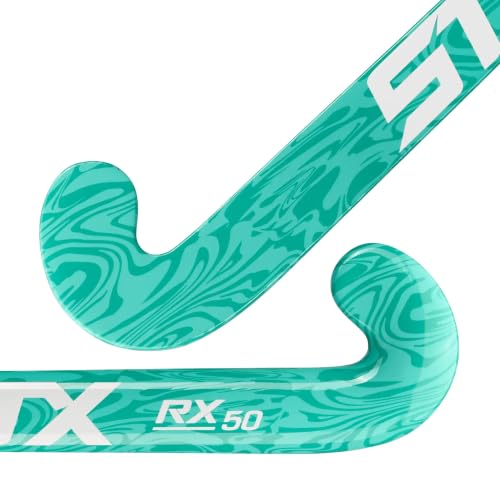


As an Amazon Associate we earn from qualifying purchases at no extra cost to you. Ratings are shown as listed on Amazon.
Quick picks by position and playing level
| Player or position | Recommended length | Useful weight | Bow profile | What to prioritize |
|---|---|---|---|---|
| Beginner or developing junior | 30–36.5 in | 450–520 g | Mid bow | Forgiveness, comfortable grip, moderate carbon |
| Defender | 36.5–38.5 in | 520–570 g | Mid or late bow | Receiving stability, tackling, strong reverse-side passes |
| Midfielder | 36.5–37.5 in | 490–540 g | Mid bow | Balanced control, passing range, quick changes of direction |
| Forward | 36.5–37.5 in | 470–520 g | Low bow | Fast dribbling, aerial skills, shooting and 3D control |
| Experienced drag-flick specialist | 36.5–37.5 in | 490–540 g | Extreme low bow | Specialist technique, high rebound speed, precise head shape |
These are practical starting ranges rather than rules. Two sticks with the same listed weight can feel very different because of balance, shaft shape and where the bow is positioned. A 520 g stick with weight toward the head may feel slower than a 540 g model with a more even balance.
How to choose the right stick length
Length affects reach, control and posture. A stick that is too short can make defensive work and tackling uncomfortable; one that is too long may slow close control and make the ball feel distant.
- 30–32 inches: commonly suited to smaller children, depending on height and coaching preference.
- 33–35 inches: useful for growing juniors and smaller adult players.
- 36.5–37.5 inches: the normal adult range and the safest starting point for most players.
- 38–38.5 inches: can suit taller defenders or players who value reach, but may feel cumbersome in tight attacking areas.
A simple fitting check is to stand the stick upright with the toe on the floor. The top should generally reach somewhere around the hip or slightly above it, while the player remains able to bend comfortably at the knees and hips. Position and personal technique matter, so use this as a screening method rather than a rigid formula.
Bow profile: the biggest difference in playing character
Mid bow: the best starting point
A mid-bow stick, typically with the curve around 22–24 mm, gives a balanced blend of receiving, passing, dribbling and shooting. It is usually the easiest profile for beginners because it does not demand highly specialized hand positioning. Mid-bow models also suit many midfielders and all-round club players.
Late bow: control and conventional skills
A late-bow stick places the curve closer to the head and often feels predictable for trapping, tackling and traditional passing. Defenders who prefer a stable, composed feel may appreciate this profile, particularly when they play many flat passes under pressure.
Low bow: attacking and aerial skills
A low-bow stick, often around 20–24 mm with the curve positioned lower on the shaft, can make it easier to lift the ball, execute 3D skills and generate speed in attacking movements. It also exposes technical errors: poor hand position or an open stick angle can cause inconsistent receiving. For that reason, a low bow is not automatically an upgrade for a beginner.
Extreme low bow: specialist choice
Extreme low-bow sticks are designed for players already comfortable with aerials, drag-flicking and advanced close control. They can be excellent for a specialist forward or penalty-corner player, but may feel less natural for a defender who mainly wants secure first touches and strong tackles.
Carbon content, weight and balance compared
| Construction | Typical carbon content | Likely feel | Best match | Main compromise |
|---|---|---|---|---|
| Fiberglass-dominant composite | 0–30% | Comfortable, forgiving, moderate power | Beginners and developing players | Less explosive response at high speed |
| Balanced composite | 30–70% | Good control with added power | Most club midfielders and defenders | More expensive and less forgiving than fiberglass-heavy models |
| Carbon-rich composite | 70–100% | Stiff, powerful, responsive | Experienced competitive players | More vibration and greater demand for clean technique |
Carbon does not measure quality by itself. A 95% carbon stick may produce more power, but a player who cannot control its rebound will perform better with a 50% carbon model. Carbon-rich sticks can also transmit more impact through the hands and may be less pleasant when receiving hard passes or mishitting the ball.
For weight, beginners commonly do best around 480–520 g, while experienced players may prefer anything from roughly 470 to 560 g. Lighter sticks accelerate quickly for elimination skills and quick wrist movements. Heavier sticks can feel steadier during tackles, powerful hits and receiving, although excessive weight can slow repeated changes of direction.
Balance is often more important than the number printed on the scale. A head-heavy stick helps create momentum through a hit but can feel slow during close dribbling. An evenly balanced or slightly handle-heavy stick changes direction faster and usually feels easier for midfield play.
Best field hockey stick type for each position
Defenders: stability before maximum speed
Choose a 36.5–38.5-inch stick weighing approximately 520–570 g, with a mid or late bow and a durable toe. A little extra mass can help with tackles, blocks and long passes. Look for a forgiving receiving surface and a head shape that supports reverse-stick control. Extremely low bows and very light sticks can work for attacking defenders, but they are not the most dependable default.
Midfielders: the most versatile setup
A 36.5–37.5-inch, 490–540 g mid-bow stick is the all-purpose choice. A balanced composite with roughly 40–70% carbon often provides enough power without making first touches unnecessarily lively. Midfielders cover more situations than any other position, so prioritize predictable receiving and directional passing over a highly specialized bow.
Forwards: quick hands and attacking lift
Forwards often prefer a 36.5–37.5-inch stick in the 470–520 g range, with a low or late bow. A lighter balance makes rapid dribbling, pulls and changes of direction easier. If you regularly use aerial skills, select a model with a bow and head shape intended for that technique rather than simply choosing the lightest stick available.
Beginners: control beats impressive specifications
Start with a fiberglass-heavy or mid-carbon composite, a mid bow and a moderate weight. Spending more on maximum carbon content rarely compensates for poor fit. A comfortable grip, predictable touch and a length that supports a balanced stance will help a beginner develop faster than an aggressively stiff specialist stick.
Decision matrix for common buying situations
| Your situation | Recommended specification | Why |
|---|---|---|
| Plays once weekly and is still learning | 30–50% carbon, 480–520 g, mid bow | Forgiving touch and sufficient durability without paying for specialist performance |
| Plays several times weekly in a club league | 40–70% carbon, 490–550 g, mid or low bow | Balances power, consistency and all-round control |
| Mostly attacking, using aerial skills | 60–100% carbon, 470–520 g, low bow | Faster response and easier lift for a technically capable player |
| Defends and hits long balls frequently | 30–70% carbon, 520–570 g, mid or late bow | Stable receiving and momentum through tackles and passes |
| Wants one stick for every position | 40–60% carbon, 500–540 g, mid bow | The least specialized and most adaptable combination |
Ownership realities: what wears first
The toe and lower edge usually show damage first, especially on abrasive artificial surfaces or when the stick is repeatedly used to strike the ground. Small cosmetic chips are not automatically dangerous, but cracks, soft spots, delamination, a loose grip or a visibly distorted head are reasons to replace the stick.
- Wipe off water, mud and grit after each session; grit can accelerate edge wear.
- Do not use a field hockey stick for striking stones, boards or anything other than a hockey ball.
- Replace a worn grip before it affects hand position. Over-wrapping can change the handle diameter and reduce control.
- Store the stick indoors, away from prolonged heat, direct sunlight and a damp equipment bag.
- Check league regulations before buying an unusual bow or oversized head, particularly for junior competition.
For most players, the best field hockey sticks are not the stiffest or most expensive models. Choose the correct length first, then select a weight and balance that match your position, and finally use carbon content and bow profile to refine the feel. If you are unsure, a moderate-weight mid-bow stick is the safest starting point; move toward a lighter low bow or heavier defensive model only when your technique and position clearly call for it.





Write Your Review
No reviews yet. Be the first to share your experience!