

Key takeaways
- Compare three walk-in greenhouses with published dimensions, from a 10 by 7 foot tunnel to a shelved 56 inch house, matched to your yard and crops.
A walk-in greenhouse only earns its floor space if you can actually work inside it: stand upright, reach the back shelves, and water without crouching through a zippered flap. The real decision is how much structure you are buying for that headroom, because a staked fabric tunnel, a shelved patio house and a heavy framed tunnel all give you walk-in height while asking for very different amounts of anchoring, ventilation and seasonal care.
This guide serves three kinds of outdoor growers: vegetable gardeners who want rows of beds under cover, patio and balcony growers who need shelves for pots and seedlings, and anyone extending the season for tender plants through spring frosts and autumn rain. Every product below was chosen from the names, dimensions and specifications published on its Amazon page, and each one publishes its full measurements.
Quick Picks
As an Amazon Associate we earn from qualifying purchases.
| Product | Best for | Key spec from title |
|---|---|---|
| VIVOSUN 10 x 7 x 7 ft Large Walk-in Greenhouse | Row beds and tall crops in a big yard | 10x7x7 ft |
| WORKPRO 56 x 56 x 77 in Heavy Duty Walk-in Greenhouse | Shelved growing on a patio or porch | 56 x 56 x 77 in |
| Gaildon 10 x 7 x 7 ft Heavy Duty Walk-in Greenhouse | A large tunnel with steady airflow | 6 ventilated mesh windows |
How to Choose
Match the footprint to the path, not just the plants
Dimensions on a listing describe the outside of the house, and shelves, pots and a watering can eat that space fast. A 10 by 7 foot tunnel sounds generous until a central path and two rows of grow bags leave a narrow working strip, while a 56 inch square house with shelves can hold more seedlings than a bare tunnel twice its size. Measure the spot, then subtract room for the door swing and the path you need to reach the back wall. If the house will sit on a patio, check that the footprint leaves walking room around it, because a greenhouse pressed against a fence on three sides is hard to anchor, ventilate and clean.
Weigh the frame against your wind
Walk-in houses catch wind like sails, so the frame decides whether the structure survives its first storm. Galvanized steel resists rust and carries a heavy cover without sagging, while powder-coated metal frames hold up well when the coating stays intact and the joints are tight. Cross bars and diagonal braces matter more than tube thickness alone, because they stop the frame racking sideways in gusts. Lightweight pop-up frames suit sheltered courtyards and renters who take the house down in winter, but an exposed garden needs stakes, ropes or ground anchors used exactly as the manual directs, plus a level base.
Read the cover like a consumable
The cover is a wear item, and its weight and material set both its lifespan and its insulation. A 140 gram per square metre PE cover resists tearing and sheds rain better than thin film, while a transparent reinforced cover lets in more light for sun-loving crops. Grid reinforcement and double-stitched edge banding slow the splits that start at zippers and corners. Expect any PE cover to need replacement after a few seasons of strong sun, and budget for that from the start. A cover with an extra-long edge that buries into soil seals out drafts and stops the wind getting underneath.
Plan ventilation before you buy shelves
Heat builds inside a closed greenhouse far faster than most new owners expect, so vents, windows and doors are working features rather than extras. Six side windows plus a roll-up door move air through a large tunnel on a warm afternoon, while screen windows on a small house keep insects out while letting heat escape. Check that windows open from inside the house, because climbing out to adjust a vent defeats the point. A house with only one door will run hot on still sunny days, so plan where you will add shade cloth or a small fan before the first heatwave arrives.
The 3 Best Options
VIVOSUN 10 x 7 x 7 ft Large Walk-in Greenhouse
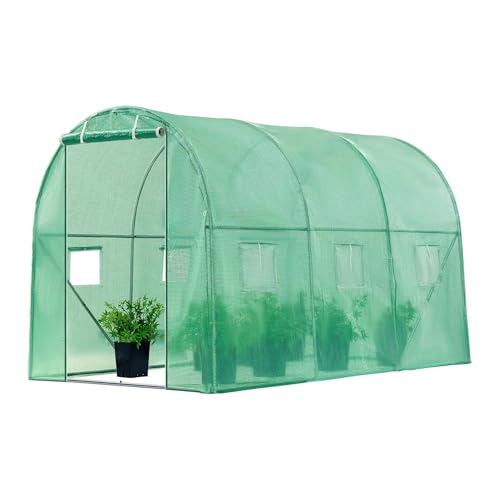
This VIVOSUN tunnel is the pick for growers who think in rows rather than shelves, because ten feet of length and seven feet of width leave room for proper soil beds or long lines of grow bags with a path between them. The seven foot peak lets most adults stand upright while tending tomatoes and cucumbers, and the six side windows keep air moving on warm days without a fan. It suits a suburban backyard with a level patch of soil, and it comes down or moves more easily than any rigid panel kit.
Specs
- Dimensions: 10 x 7 x 7 ft
- Frame: heavy-duty galvanized steel
- Cover: transparent reinforced PE, waterproof
- Door: roll-up zipper door
- Windows: 6 side windows
- Cover edge: extra-long cover designed to be buried in soil
- Edge banding: double-stranded
Best for: Vegetable growers who want row beds and tall crops under cover in a large yard.
Watch out for: The PE cover is a wear item, so plan to replace it after a few seasons of strong sun, and stake the tunnel firmly before the first storm.
ASIN: B082FGDGPQ
WORKPRO 56 x 56 x 77 in Heavy Duty Walk-in Greenhouse

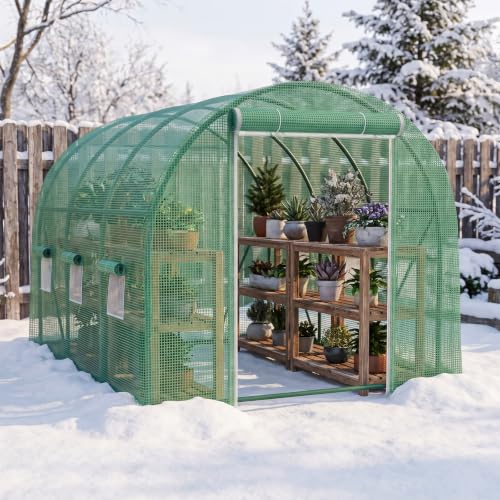
This WORKPRO house is the pick for patio growers who measure success in pots and trays rather than beds, because three tiers of shelving hold eight shelves of seedlings, herbs and flowers inside a footprint barely wider than a garden chair. The 77 inch height still lets you step inside to water and rearrange pots, and the screen windows temper the heat that builds against a sunny wall. It suits balconies, porches and small patios where a tunnel would swallow the whole space, and it assembles without tools.
Specs
- Dimensions: 56 x 56 x 77 in
- Shelves: 3 tiers, 8 shelves
- Cover: 140 g per square metre waterproof PE cover
- Frame: heavy-duty powder-coated metal
- Windows: screen windows
- Anchoring: corner straps, ropes and ground anchors
- Assembly: tool-free
Best for: Patio and porch growers who want shelved space for seedlings, herbs and potted plants.
Watch out for: Check the weight of fully watered pots against the shelf frames, and anchor the corners before a windy night, since the house is light for its height.
ASIN: B0BFQPRSLC
Gaildon 10 x 7 x 7 ft Heavy Duty Walk-in Greenhouse
This Gaildon tunnel is the pick for growers who want the floor area of a large house with steadier airflow than a single-door tunnel, because six mesh windows and a roll-up door move air through the whole length on warm afternoons. The galvanized steel frame carries four reinforced diagonal bars, which stiffen the structure against sideways wind, and the 140 gram per square metre PE grid cover is built to resist tearing. It suits gardeners extending the season for beds of vegetables, flowers and tender plants in a yard with room to anchor properly.
Specs
- Dimensions: 10 x 7 x 7 ft
- Frame: galvanized heavy-duty steel with 4 reinforced diagonal bars
- Cover: 140 g per square metre PE grid cover
- Windows: 6 mesh windows
- Door: roll-up door
- Use: indoor and outdoor growing, for any season
Best for: Gardeners who want a large tunnel with strong ventilation for beds of vegetables and tender plants.
Watch out for: Confirm the assembled footprint with the seller before ordering, since the listing states two slightly different depth figures, and use all anchor points on exposed sites.
ASIN: B0C6WYP77N
Which One Fits Your Situation
You grow vegetables in rows
Choose the VIVOSUN tunnel, because its ten foot length fits soil beds or long rows of grow bags with a path between them, and the seven foot peak gives tall crops room to climb. The Gaildon tunnel works too if you want more windows, but the VIVOSUN cover edge that buries into soil seals the beds against drafts. Either way, keep the path clear of pots so you can reach the back row without stepping on plants.
You grow on a patio or balcony
Choose the WORKPRO house, because its three tiers of shelving hold far more pots than a bare tunnel of the same footprint, and it fits a corner of a patio without swallowing the seating area. The screen windows keep the interior bearable on sunny days, and the tool-free frame means you can move it indoors when the season turns. Measure the door swing first, since the house needs clear space in front.
You want one big house for the whole season
Choose the Gaildon tunnel, because six mesh windows and a roll-up door give the steadiest airflow of the three, and the diagonal bars add stiffness for a house left up through spring and autumn. It holds beds, benches and tall pots at once, so you can start seedlings at one end while tomatoes ripen at the other. Anchor it well and plan a shade cloth for the hottest weeks.
You rent or move the house each year
Choose the WORKPRO house for a small space or the VIVOSUN tunnel for a large one, because both are fabric-covered steel-frame houses that assemble without a permanent base and come down without tools or concrete. The WORKPRO packs into the smallest footprint for storage, while the VIVOSUN gives renters the most growing area per season. Either way, keep the cover dry in storage so it lasts longer.
Common Mistakes
- Buying by footprint alone and forgetting the path, shelves and door swing that eat the usable space.
- Skipping the anchors on a calm day and losing the house to the first strong gust.
- Closing every window on a sunny morning and cooking seedlings by midday.
- Placing the house in shade and expecting the cover to make up for missing sun.
- Treating a PE cover as permanent instead of budgeting for a replacement every few seasons.
Frequently Asked Questions
How much space do I need around a walk-in greenhouse?
Leave at least a stride of clear ground on the sides you need to reach, plus room for the door to open fully and for you to carry a watering can past it. A house pressed against a fence on three sides is hard to anchor, clean and ventilate, so measure the spot with the door swing and the path included before ordering.
Do walk-in greenhouses need a foundation?
Rigid panel houses need a level solid base, but fabric walk-in houses like these three sit on soil, gravel or paving as long as the ground is level and the anchors are used. A timber edge or paving slabs under a tunnel keep the base square and stop the frame sinking into soft ground after rain.
How do I stop a walk-in greenhouse overheating?
Open the door and every window on sunny mornings, and add shade cloth over the roof before the hottest weeks arrive. A house with six windows ventilates far better than a single-door design, so use that airflow daily rather than waiting until plants wilt, and water early so leaves dry before night.
Can I leave a fabric walk-in greenhouse up all winter?
A staked fabric house survives mild winters, but heavy snow should be brushed off the roof before it builds up, and the cover should come down ahead of severe storms. In cold regions, treat the house as season extension rather than winter growing, and store the cover dry indoors over the coldest months.
More from Amazon
Programs that pair well with the guide above. Offers and eligibility are set by Amazon and may change.
Collect the home and kitchen items you want in one registry that guests can shop from.
Create a wedding registrySet up recurring deliveries of everyday items on eligible products. Terms and savings are set by Amazon.
Explore Subscribe & SaveFree shipping on eligible items, Prime Video and more. Eligible new members can start with a free trial.
Start a Prime free trialAudiobooks and podcasts to listen to on the go. Eligible new members can start with a free trial.
Try Audible freeAs an Amazon Associate we earn from qualifying purchases.





Write Your Review
No reviews yet. Be the first to share your experience!