

Key takeaways
- Compare the best self-watering plant spikes and watering globes, from ceramic Blumat stakes to glass globes, for vacation-proof potted plant care.
A week away from home should not mean coming back to wilted patio containers and crispy houseplants. Self-watering plant spikes and watering globes solve that problem with no pumps, no timers, and no plumbing: each device holds or draws a small reservoir of water and releases it into the soil slowly, over days instead of minutes. The category splits into three simple families. Ceramic and terracotta spikes seep water through porous clay, either from an inverted bottle or through a tube dipped in a nearby container. Plastic drip spikes add an adjustable valve so you can set the flow rate yourself. Glass watering globes are the decorative option, storing water in a hand-blown bulb that empties gradually through a narrow stem. This guide compares five verified picks across all three families, covering how each one works, how long it can keep a pot watered, and which plants and trip lengths it suits best.
As an Amazon Associate, we earn from qualifying purchases.
Quick answer
For most potted plants, the Blumat Classic stakes are the most reliable choice because the ceramic cone releases water only as the soil dries and can draw from a large shared container. The Tcamp terracotta spikes are the best value for many pots, LABOTA spikes add adjustable drip control, and the Soilagua and Kingbuy glass globes suit smaller pots where looks matter.
Blumat Classic Self-Watering Stakes, 6 Pack

The Blumat Classic is the reference design in this category, made in Austria and built around a porous ceramic cone connected to a thin tube. You soak the cone, push it into the soil, and drop the end of the tube into any nearby container of water. As the soil dries, the roots and soil pull moisture through the cone walls, and that suction draws replacement water up the tube. When the soil is moist again, uptake stops on its own, so the plant effectively sets its own watering schedule. The listing notes the cones draw water up a maximum of 12 inches, which means the reservoir should sit close to pot height rather than on the floor far below. One stake handles a small to medium pot, and thirsty or large plants can take two or three cones spaced around the root ball. Because the reservoir is separate, capacity scales with whatever container you choose, from a small jug for a weekend to a large bucket for a long trip. This six pack without the bottle adapter is the version to buy if you plan to run several pots from shared containers on a patio or balcony.
Specs
- Material: porous ceramic cone
- Pack size: 6 stakes
- Water source: any open container, not included
- Maximum draw height: 12 inches (30 cm)
- Cone length: 4.5 inches
- Tubing: included, 8 mm diameter
- Bottle adapter: not included in this variant
- Power required: none
Tcamp Terracotta Watering Spikes, 10 Pack
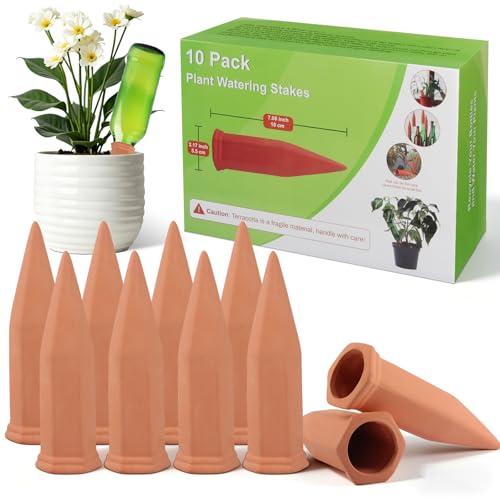
Tcamp’s spikes take the simpler bottle-fed route. Each stake is a hollow terracotta cone that you soak, push into the soil, and then invert a filled long-neck bottle into. Water seeps through the porous clay walls directly into the root zone, and the release speeds up as the surrounding soil dries and slows as it moistens. The listing states that one liter of water lasts about seven to ten days depending on plant type, soil composition, and humidity, which makes a standard wine bottle a realistic one-week reservoir for a medium pot. Terracotta is fragile, so the maker advises digging a pilot hole rather than forcing the stake into compacted soil, and handling the spikes with care when they arrive. With ten stakes in the pack, this is the economical way to cover a whole collection of patio pots before a trip, or to keep spares on hand. The spikes work with wine bottles, glass beer bottles, and long-neck plastic bottles, so the reservoir is whatever you already have in the recycling bin.
Specs
- Material: terracotta clay
- Pack size: 10 spikes
- Reservoir: long-neck bottle, not included
- Listed duration: about 7 to 10 days per 1 liter
- Pack weight: 2.36 pounds
- Model number: JSQ68
- Power required: none
LABOTA Self Watering Spikes, 24 Pack

Where clay spikes let the soil decide the flow, LABOTA’s plastic spikes put a valve in charge. Each dripper screws onto a standard bottle and has a slow-release control valve switch that you open or close to set the drip rate, from a barely-there trickle for succulents and small pots to a faster drip for thirsty plants in hot weather. That adjustability is the main reason to choose plastic over clay: two identical bottles can deliver very different amounts of water depending on how you set the valves. The trade-off is that a valve cannot sense soil moisture, so the drip continues at the set rate whether the soil needs it or not, and rates can drift as bottle pressure changes. A test run over a sink or tray before a trip is worth the few minutes it takes. The 24 pack is sized for gardeners with many containers, greenhouse benches, or seedling trays, and the simple construction means a clogged dripper can be rinsed and reused rather than replaced.
Specs
- Material: plastic
- Pack size: 24 drippers
- Flow control: adjustable slow-release valve switch
- Reservoir: standard bottles, not included
- Fit type: spike insert
- Power required: none
Soilagua Plant Watering Globes, 2 Pack

Glass globes are the oldest design here: fill the bulb, push the stem into the soil, and let gravity and soil suction meter the water out. Soilagua’s version is the high-capacity end of the family, with each globe holding 13 ounces, the largest reservoir in this guide, and the listing states the pair can keep plants hydrated for up to two weeks under the right conditions. The globes are hand blown from high borosilicate glass with an iridescent rainbow finish that catches the light, so they read as garden ornaments as much as watering tools. That capacity suits medium patio pots and indoor statement plants where a bottle on a spike would look out of place. The usual glass caveats apply: pre-make the hole with a stick or pencil so the stem does not snap or plug with soil, keep globes out of freezing weather, and expect real-world duration to shrink in hot, windy spots where pots dry faster.
Specs
- Material: hand-blown high borosilicate glass
- Capacity: 13 ounces per globe
- Pack size: 2 globes
- Listed duration: up to 2 weeks
- Finish: iridescent rainbow
- Power required: none
Kingbuy Mushroom Shaped Self-Watering Globes, 2 Pack

Kingbuy’s globes lean fully into the decorative side of the category, shaping each hand-blown glass bulb as a mushroom that sits above the soil on a narrow stem. The transparent glass makes the water level visible at a glance, which is genuinely useful: you can see which pots need a refill without touching the soil. Inside the pot, the mechanism is the standard globe pattern, releasing water gradually as the soil dries and air replaces the water in the bulb. These are best matched to small and medium houseplants, herb pots on a sunny patio ledge, and gift giving, where the whimsical shape earns its place. They are not the pick for large, thirsty containers, since a small globe empties quickly in summer heat, and like all glass globes they should be inserted into a pre-made hole and handled gently. Capacity is not stated in the listing, so treat the first fill as a test and note how many days it lasts in your conditions.
Specs
- Material: glass, hand blown and moulded
- Pack size: 2 globes
- Shape: mushroom
- Model number: MG0415-2
- Capacity: not stated
- Power required: none
How to choose
Start with trip length and pot size, because those two factors eliminate most options quickly. For a weekend, almost anything works. For one to two weeks, reservoir capacity decides: bottle-fed spikes and tube-fed stakes let you scale up the reservoir, while a glass globe carries only what fits in the bulb. Next, decide how much control you want. Ceramic systems like the Blumat respond to soil dryness and are the closest thing to set-and-forget, but they need the reservoir placed within their draw height and a short soak before first use. Valve spikes like LABOTA’s let you dial in a rate per plant, at the cost of a test run to confirm the setting. Terracotta bottle spikes sit in the middle: no adjustment, but predictable seepage and very low cost per pot. Finally, match the device to the setting. Glass globes belong in sheltered spots and visible indoor plants, clay spikes tolerate outdoor container gardens well, and any device should be trialed for a few days before you rely on it for a long absence. In freezing weather, bring glass and clay devices indoors, since trapped water can crack both materials.
Who should skip
Skip spikes and globes entirely if your containers are very large or your trip runs longer than about two weeks in peak summer; a shared-reservoir stake system or a timer-based setup fits that job better. Skip glass globes in households where pots get knocked over often, in windy exposed spots, and anywhere they would freeze. Skip bottle-fed spikes if you dislike the look of inverted bottles in your pots, and skip valve spikes if you will not spend ten minutes test-running the drip rate, because an untested valve can empty a bottle in a day or barely drip at all. Gardeners whose plants need precise, measured irrigation, such as orchids and bonsai with strict routines, will also find these simple devices too approximate.
FAQ
How long do self-watering spikes and globes actually last?
It depends on reservoir size, pot size, soil, and weather. The Tcamp listing rates one liter at about seven to ten days, and the Soilagua globes are listed at up to two weeks from 13 ounces, but hot and windy conditions can cut those figures considerably. Always test before a trip.
Do watering globes work for outdoor patio plants?
Yes, for small and medium containers in sheltered spots. Outdoors, wind and heat dry pots faster, so choose the largest globe or a bottle-fed spike, push the stem deep, and mulch the soil surface to slow evaporation. Glass globes should come inside before freezing nights.
Can I add liquid fertilizer to the reservoir?
Blumat states liquid fertilizer may be added to the reservoir water for its stakes. For clay spikes and glass globes, dilute fertilizer can stain porous clay and leave residue inside glass, so plain water is the safer default, with feeding done separately when you are home.
Why did my spike stop releasing water?
The usual causes are an airlock, a clogged tip, or a reservoir placed too high or too low. Re-soak ceramic cones, clear soil from stems and spike tips, and for tube-fed stakes keep the water level below the top of the cone, since Blumat warns a higher reservoir can cause constant flow instead.
Final verdict
Self-watering spikes and globes are the simplest insurance a container gardener can buy, and the right pick depends on how you water now. Choose the Blumat Classic six pack for the most automatic, soil-responsive watering across several pots. Choose Tcamp’s terracotta spikes to cover many pots cheaply using bottles you already own. Choose LABOTA when you want per-plant drip control, and choose the Soilagua or Kingbuy glass globes when the device will be on display and the pots are small to medium. Whichever family you pick, run it for a few days while you are still home, and it will quietly do its job while you are away.
Product and ASIN Reference
| Product | ASIN |
|---|---|
| Blumat Classic Self-Watering Stakes, 6 Pack | B07H9HZ4FB |
| Tcamp Terracotta Watering Spikes, 10 Pack | B0B1THXR4D |
| LABOTA Self Watering Spikes, 24 Pack | B07T6FJGL6 |
| Soilagua Plant Watering Globes, 2 Pack | B0D8L8QP3F |
| Kingbuy Mushroom Shaped Self-Watering Globes, 2 Pack | B0873VS4HZ |
More from Amazon
Programs that pair well with the guide above. Offers and eligibility are set by Amazon and may change.
Collect the home and kitchen items you want in one registry that guests can shop from.
Create a wedding registrySet up recurring deliveries of everyday items on eligible products. Terms and savings are set by Amazon.
Explore Subscribe & SaveFree shipping on eligible items, Prime Video and more. Eligible new members can start with a free trial.
Start a Prime free trialAudiobooks and podcasts to listen to on the go. Eligible new members can start with a free trial.
Try Audible freeAs an Amazon Associate we earn from qualifying purchases.


Write Your Review
No reviews yet. Be the first to share your experience!