

Key takeaways
- The flat length and width available above the burner covers.
- The vertical clearance between the support surface and the closed cooking grate or hood.
- The distance between the smoker box and nearby burner ports or grease channels.
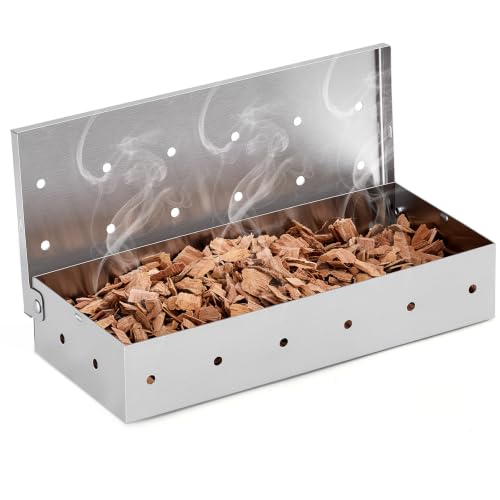
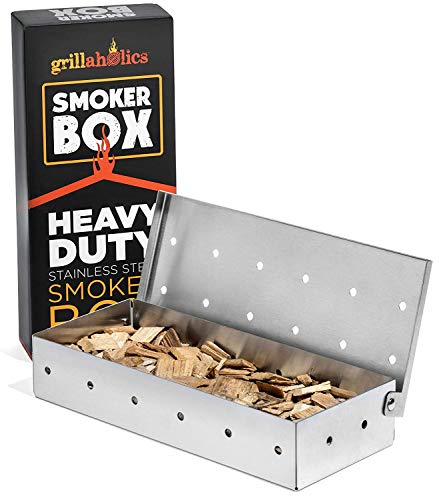
The best smoker boxes for gas grills are usually stainless-steel models for easy cleaning and flexible placement, while cast-iron boxes make more sense for frequent smoking when heat retention and long service life matter more than weight.
Our top picks


As an Amazon Associate we earn from qualifying purchases at no extra cost to you. Ratings are shown as listed on Amazon.
Quick picks by grilling situation
| Situation | Best choice | Useful target specification | Why it fits |
|---|---|---|---|
| Occasional ribs, chicken, or fish | Stainless-steel box | 10–12 in long, 3–4 in wide, 1.5–2 in deep | Light, quick to heat, and easier to empty |
| Long cooks several times a month | Thick cast-iron box | 4–7 lb, 1–2 mm lid vents, hinged or secure-fitting lid | Holds heat well and resists distortion |
| Small or crowded grill | Compact stainless-steel box | 8–10 in long, under 2 in high | More likely to fit beside a burner or under a hood |
| Grill with a dedicated smoker-box position | Brand-specific replacement box | Dimensions matched to the flavorizer-bar or grate opening | More stable and less likely to block burner ports |
| Lowest initial cost | Thin stainless-steel box | About 0.6–0.9 mm steel, roughly 1–2 lb | Usually available in the general market range of $15–$30 |
Stainless steel versus cast iron
Stainless steel: the practical choice for most gas grills
Stainless-steel smoker boxes heat relatively quickly and are light enough to move while the grill is cold. They are also less vulnerable to surface rust when grease, condensation, or damp wood chips are left inside. A box made from 304 stainless steel is preferable to an unspecified thin alloy, although even good stainless can discolor, warp slightly, or develop burnt-on residue after repeated high-heat cooks.
The main drawback is heat stability. Thin stainless transfers heat rapidly, so chips can ignite if the box sits directly over a powerful burner with the burner set too high. A stainless box also cools faster when the lid is opened. These limitations are manageable: use a low burner setting, keep the box above a heat diffuser where possible, and avoid lifting the lid to check the chips.
Examples of the stainless-steel format include universal boxes such as the Weber stainless steel smoker box and similar rectangular boxes sold for gas grills. The important point is the box’s dimensions and vent arrangement, not the logo alone.
Cast iron: better for repeated, high-heat use
Cast iron absorbs and stores more heat than thin stainless steel. That can produce steadier smoldering once the box is hot, especially on a grill whose burner cycles noticeably. Cast iron is also less likely to deform after years of heating and cooling.
Its disadvantages are substantial. A cast-iron box may weigh several pounds, can occupy valuable grate space, and takes longer to heat. It must be dried thoroughly after washing and lightly oiled according to the manufacturer’s care instructions. Neglect can lead to surface rust, particularly around the lid seam and ventilation holes. A cast-iron box is a strong choice for frequent users, but unnecessary for someone who smokes food four or five times a year.
Capacity: how much wood should the box hold?
Capacity is more useful than exterior size alone. A compact box holding approximately 1 to 1.5 cups of dry chips is normally sufficient for a short cook of chicken pieces or fish. A medium box holding about 2 to 3 cups can provide smoke for a longer session, though the actual duration depends on burner output, lid sealing, chip size, and wind.
Do not fill a smoker box to the rim. Wood expands as it heats and needs room for air movement. Filling roughly two-thirds to three-quarters of the internal volume gives the chips space to smolder rather than forcing smoke through an overloaded mass. A 2.5-cup box, for example, should generally receive about 1.75 to 2 cups of chips.
Soaking chips is usually unnecessary. Wet chips delay smoke production, can produce steam and dirty condensation, and may encourage users to increase the burner too far. Dry chips in a properly ventilated box give more predictable results. Wood chunks are less suitable unless the box is specifically deep and strongly vented; large chunks can restrict airflow or fail to heat evenly.
Ventilation determines whether chips smolder or burn
A smoker box needs enough oxygen to sustain smoldering but not so much that the wood bursts into flame. Look for several small vent holes or slots in the lid rather than one large opening. A close-fitting lid helps contain chips and reduces the chance of flare-ups when the box is moved.
Vent holes around 2–4 mm in diameter are common on compact boxes, but the pattern matters more than one exact measurement. Holes concentrated on the top encourage smoke to rise toward the food. Large openings on the sides can admit excessive air when the box is directly over a burner.
A box that produces no smoke after 15–20 minutes may be too far from the burner, overloaded with chips, or made from heavy material that has not preheated. A box producing flames usually has excessive burner heat, too much ventilation, or oil-soaked wood. Turn down the burner first; do not open the grill repeatedly, because each opening supplies fresh oxygen.
Fit across different burner layouts
Gas grills do not all transfer heat in the same way. On a standard two- or three-burner grill, the safest general arrangement is to place the box on the flavorizer bars or heat tents above one active burner, then cook the food over an unlit burner using indirect heat. This leaves the box in the hot zone while keeping the food away from direct flame.
On grills with wide burner covers, a long box may bridge two covers and sit unevenly. On infrared grills, heat is concentrated and can ignite chips quickly; a smaller box placed at the edge of the heated zone is usually easier to control. Side burners often lack the protective hood and indirect-cooking space needed for smoking, so they are poor locations except for briefly preheating a box.
Before buying, measure three things while the grill is cold:
- The flat length and width available above the burner covers.
- The vertical clearance between the support surface and the closed cooking grate or hood.
- The distance between the smoker box and nearby burner ports or grease channels.
Leave at least 1 inch of clearance around the box where practical. Never allow it to cover burner ports, obstruct grease drainage, touch the hood, or sit directly on a porcelain-coated cooking grate if its weight could damage the coating.
Cleaning, durability, and ownership costs
What wears first is usually not the main body. Thin lids can warp, small ventilation holes can clog with carbon, and hinged fittings can seize from grease and heat. On cast iron, neglected edges and the underside are the first areas likely to rust. On stainless steel, repeated thermal cycling may loosen a lid that originally fitted tightly.
Let the box cool completely, then empty ash and charcoal-like residue before it absorbs moisture. Soak stainless steel in hot water with a small amount of dish detergent, loosen residue with a non-abrasive pad, and dry it fully. Avoid chlorine bleach and harsh oven cleaner, which can damage stainless surfaces. For cast iron, use minimal soaking, scrub while warm rather than hot, dry immediately, and apply a thin film of high-smoke-point cooking oil if the maker recommends seasoning.
Do not put either material on a cold, wet surface immediately after a cook. Thermal shock can distort thin stainless steel and may crack or damage cast iron in extreme cases.
Wood chips are the continuing cost. A typical 1.5-cup load weighs approximately 3–5 ounces depending on the wood and cut. If a 2-pound bag costs $10–$16, the wood cost is roughly $0.95–$2.50 per load. A box used twice a month for a grilling season of six months might therefore consume about $12–$30 of wood. That makes durability more important than saving a few dollars on the initial box if you cook frequently.
How to use a smoker box on a gas grill
- Choose a dry load. Add chips to about two-thirds of the box, leaving room for expansion and airflow.
- Set up two-zone heat. Light one burner under or near the box and leave the food-side burner off.
- Preheat the grill. Close the lid for 10–15 minutes. The box should begin producing a thin, steady stream of smoke, not large flames.
- Reduce the burner. Use the lowest setting that maintains smoke. Excessive heat consumes chips quickly and can make the food bitter.
- Place the food indirectly. Keep food over the unlit area, with the thicker portion nearer the warm side.
- Monitor temperature, not smoke volume. Maintain the grill at the recipe’s target temperature. Smoke that is barely visible can still flavor food; dense white smoke often indicates smoldering problems.
- Replace chips only when needed. Opening the hood loses heat, so do not reload simply because smoke has temporarily become less visible.
Final buying recommendation
For most owners, choose a medium stainless-steel smoker box approximately 10–12 inches long, with a close-fitting lid, several small top vents, and enough capacity for 1.5–3 cups of chips. It offers the best balance of price, fit, cleaning, and control across common two- and three-burner grills.
Choose cast iron when you smoke regularly, have a sturdy grill with ample clearance, and are willing to dry and maintain the box after every cook. Choose a compact model when hood height or grate space is limited, and choose a grill-specific replacement box when your manufacturer provides a dedicated opening. Material matters, but correct placement above the burner, moderate ventilation, and a size that fits without blocking airflow matter more.




Write Your Review
No reviews yet. Be the first to share your experience!