

Our Top Picks
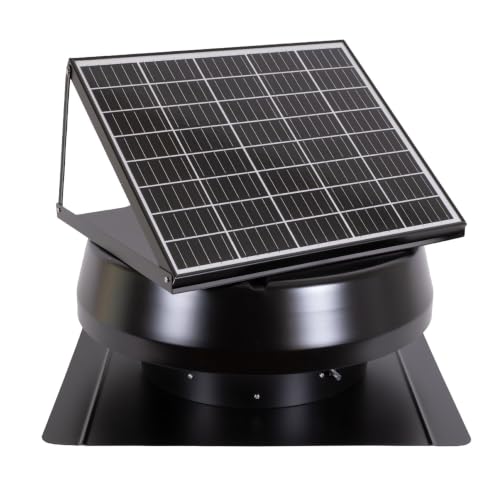


A solar attic fan only moves its rated air while the sun is up, so the real decision is how much airflow your attic gets at the hottest hour of the day, and what the fan does the rest of the time. Thermostat cutoffs, an optional adapter for night running, and a panel that can face the sun change the result more than brand names. A fan that is too small for the attic volume barely dents peak temperatures, while a matched one pulls the hottest air out before it soaks through the ceiling.
The picks below serve three groups: owners of large, sun-baked attics who need the highest rated airflow they can mount; households in humid regions where moisture control matters as much as heat; and owners of smaller attics, garages and sheds who want ventilation without new wiring. Every product was chosen from the names, panel ratings and specification fields published on its own Amazon page, and each section repeats those listing details rather than brochure claims.
Quick Picks
As an Amazon Associate we earn from qualifying purchases.
| Product | Best for | Key spec from title |
|---|---|---|
| iLIVING ILG8SF301 Hybrid Ready Smart Thermostat Solar Attic Fan | Set-and-forget temperature control with a hybrid upgrade path | 1750 CFM |
| OmniPV OP-SAF-50 Pro Solar Attic Fan | Large attics that need the highest rated airflow here | 2850 CFM |
| VEVOR 42W Solar Attic Fan (JBSF-320G) | Changing fan speed by remote from inside the house | 2800 CFM |
| Remington Solar 30 Watt Roof Mount Solar Attic Fan (SF30-BLK) | Humid climates where moisture matters as much as heat | Thermostat / Humidistat |
| PEAKROCK 35W Solar Attic Fan | Simple solar-only venting for smaller spaces | Cools up to 2800 sq.ft |
How to Choose
Match Airflow to Your Attic Size
Start with the coverage and airflow figures in the listing title, because they decide whether the fan can cycle the air in your attic often enough to matter. A fan rated near 1,550 CFM suits a modest attic, while the 2,800 CFM class exists for large footprints and high ceilings. Coverage claims assume the attic is reasonably sealed from the living space below and has open intake venting. If your attic is bigger than the stated coverage, the fan still helps, but peak temperatures will drop less than the marketing implies.
Panel Wattage and Sun Exposure
Panel wattage is the engine behind every other number on the page. A 30-watt panel can drive a mid-size fan well in full sun, while 40- and 50-watt panels hold speed better in morning and late-afternoon light. What matters most is placement: the panel needs direct sun during the hottest part of the day, not at breakfast. A roof face that is shaded by a chimney, dormer or tree at midday will starve any fan, whatever its rating. Check your roof’s sun path before choosing, not after the hole is cut.
Thermostat, Humidistat and Night Running
A built-in thermostat stops the fan wasting its effort on cool mornings and switches it on as the attic heats up, and the better listings state the control range in their specification tables. A humidistat goes further, running the fan on damp, cool days when moisture is the problem and temperature alone would never trigger it. Night running is a separate question: solar-only fans stop at dusk unless the listing includes an AC adapter or offers one as an add-on kit, so check the box contents before assuming round-the-clock ventilation.
Mounting, Flashing and Intake Vents
Every fan in this roundup is a roof-mount unit, which means cutting an opening in the deck and sealing the flashing under the shingles so the vent cannot leak. Measure your rafter spacing and roof pitch before ordering, and confirm the housing dimensions in the listing against the space you have. Just as important, an exhaust fan can only move as much air as the soffit or gable intake vents let in. Blocked or undersized intakes choke even the strongest fan, so walk the attic and check the intake path first.
The 5 Best Options
iLIVING ILG8SF301 Hybrid Ready Smart Thermostat Solar Attic Fan
The iLIVING ILG8SF301 is the control-focused pick in this group. Its listing pairs a 40-watt panel with a 14-inch fan and a smart thermostat, so the fan follows attic temperature instead of running flat out whenever light hits the panel. The title rates it at 1,750 CFM for up to 2,500 square feet of coverage. It is also hybrid-ready: an AC/DC adapter kit, sold separately under model ILG8SF304, lets it keep running after sunset. Choose it if you want set-and-forget temperature control now, with the option to add night operation later without replacing the fan.
Specs
- Panel: 40W
- Fan size: 14 in
- Airflow: 1,750 CFM
- Coverage: up to 2,500 sq ft
- Thermostat: smart thermostat
- Night running: hybrid-ready; AC/DC adapter kit ILG8SF304 sold separately
- Warranty: not stated
Best for: buyers who want thermostat-led control now and a clear path to night running later.
Watch out for: the adapter kit is a separate purchase, so price the whole setup before comparing it with fans that include one.
ASIN: B07HDLHT38
OmniPV OP-SAF-50 Pro Solar Attic Fan

The OmniPV OP-SAF-50 Pro is built around the largest panel and the highest airflow figure in this roundup: a 50-watt monocrystalline panel and up to 2,850 CFM from a rare-earth brushless DC motor. Its specification table lists continuous thermostat control, a top speed of 1,550 RPM and an AC adapter in the box, so night running does not need a second purchase. At 18.5 pounds, with a body measuring 22 by 20.6 by 8.1 inches, it is a substantial roof unit. Pick it for a big, hot attic where the other fans here would be working at their limit.
Specs
- Panel: 50W monocrystalline
- Airflow: up to 2,850 CFM
- Thermostat: continuous control, 50–104°F per the specification table
- Motor: rare-earth brushless DC
- Max speed: 1,550 RPM
- Noise: 62 dB max
- Weight: 18.5 lb
- Dimensions: 22 x 20.6 x 8.1 in
- AC adapter: included
Best for: large attics that need maximum rated airflow plus adapter-backed night running in one box.
Watch out for: the listing title and its specification table give slightly different thermostat ranges, so confirm the range on the page before ordering.
ASIN: B0DC258623
VEVOR 42W Solar Attic Fan (JBSF-320G)
The VEVOR 42W, model JBSF-320G, is the remote-control option. Its listing describes a 42-watt monocrystalline panel, 2,800 CFM of airflow and a brushless DC motor with three speeds, adjusted from below by remote instead of by climbing into the attic. A 110V smart adapter is included, which moves it into the small group of solar fans that can run after dark on household power. The listing’s contents also name the flashing, screws and remote in the box. Choose it if you want high airflow plus the ability to change speeds seasonally without opening the attic hatch.
Specs
- Model: JBSF-320G
- Panel: 42W monocrystalline
- Airflow: 2,800 CFM
- Motor: brushless DC
- Speeds: 3, by remote control
- Max speed: 1,500 RPM
- Noise: 60 dB
- Adapter: 110V smart adapter included
Best for: owners who want strong airflow and speed changes without repeated trips into the attic.
Watch out for: other VEVOR attic fan variants are described elsewhere with lower airflow, so confirm the model number JBSF-320G on the listing.
ASIN: B0DFY7LGP1
Remington Solar 30 Watt Roof Mount Solar Attic Fan (SF30-BLK)
The Remington Solar SF30-BLK is the moisture specialist. Alongside the usual thermostat, its title and listing details add a humidistat, so the fan can respond to damp attic air on cool, wet days when a temperature-only fan would stay off. The panel is 30 watts, the motor is brushless, and the rated airflow is 1,550 CFM, with a lifetime warranty on the fan itself. The housing measures 22 by 22 by 11 inches. Pick it for coastal or humid-climate homes where winter moisture, not summer heat, is the bigger threat to the roof deck and insulation.
Specs
- Model: SF30-BLK
- Panel: 30W
- Airflow: 1,550 CFM
- Controls: thermostat and humidistat
- Motor: brushless
- Dimensions: 22 x 22 x 11 in
- Warranty: lifetime on the fan
Best for: humid and coastal homes where attic moisture control matters as much as summer cooling.
Watch out for: as sold it is solar-only, and the night-running adapter is a separate accessory, so check the listing if you need after-dark operation.
ASIN: B00CWKCO96
PEAKROCK 35W Solar Attic Fan

The PEAKROCK 35W is the straightforward solar-only entry. Its title lists a 35-watt panel, a built-in thermostat and a copper motor, and claims cooling coverage of up to 2,800 square feet across homes, garages, greenhouses and sheds. Notably, the listing does not publish a CFM figure, so its output has to be judged from panel wattage and the coverage claim rather than a rated airflow number. There is no adapter or battery in the picture; it runs when the sun shines and stops when it does not. Choose it for a smaller space where simple daytime venting is the whole job.
Specs
- Panel: 35W
- Thermostat: built-in
- Motor: copper motor
- Mount: roof
- Coverage: up to 2,800 sq ft
- Airflow: not stated
Best for: sheds, garages and smaller attics that need simple daytime venting with no wiring at all.
Watch out for: with no CFM figure published, compare it on wattage and coverage only, and confirm the current seller on the listing before ordering.
ASIN: B0GL1WLXNC
Which One Fits Your Situation
Your Attic Is Large and Bakes All Afternoon
Start with the OmniPV OP-SAF-50 Pro, whose 2,850 CFM rating and 50-watt panel are the strongest figures here, or the VEVOR 42W at 2,800 CFM if you also want remote speed control. Both include an AC adapter, so the ventilation does not have to stop at sunset. The smaller fans in this roundup will still help a big attic, but they are rated for gentler workloads and will not cycle a large volume as often.
Moisture Worries You More Than Heat
The Remington SF30-BLK is the natural pick, because its humidistat lets it answer damp air directly instead of waiting for a hot day. The iLIVING ILG8SF301 is the alternative if you prefer a smart thermostat and a larger panel, and adding its adapter kit later gives you scheduled night running for damp seasons. In wet climates, judge these fans on their controls first and their airflow second, since moisture damage builds quietly outside the summer months.
You Want Ventilation That Continues After Dark
Only fans with an AC adapter can run once the panel goes dark. The OmniPV OP-SAF-50 Pro and the VEVOR 42W include the adapter in the box, so they are the ready-made choices. The iLIVING ILG8SF301 gets there with its separately sold ILG8SF304 kit. The Remington and the PEAKROCK are solar-only as listed, so if overnight moisture removal is the goal, cross them off before comparing anything else.
You Are Venting a Shed, Garage or Small Attic
The PEAKROCK 35W fits this job: a thermostat, a mid-size panel and no wiring, wiring accessories or adapter decisions to make. Its missing CFM figure matters less at this scale, where any steady daytime exchange beats a sealed, stagnant space. If the building is wired and you want temperature control you can fine-tune, step up to the iLIVING ILG8SF301 instead and leave the hybrid kit for later.
Common Mistakes
- Sizing the fan by roof area instead of the attic coverage and airflow figures the listing actually states.
- Mounting the panel where a chimney, dormer or tree shades it during the hottest part of the day.
- Ignoring the soffit intake vents, then blaming the fan when choked intake air limits how much it can exhaust.
- Expecting a solar-only fan to run at night when the listing includes no adapter or battery.
- Comparing two fans on CFM when one of the listings never publishes a CFM figure at all.
Frequently Asked Questions
How many solar attic fans does a typical house need?
Most single-family attics are served by one fan matched to the stated coverage, and the five listings here claim coverage between roughly 1,850 and 2,900 square feet where a figure is given. Very long or divided attics sometimes need a second unit at the far end. Compare your attic’s floor area with each listing’s coverage claim before deciding, and treat a divided attic as two smaller spaces.
Can a solar attic fan run at night?
Only if it has another power source. In this roundup, the OmniPV OP-SAF-50 Pro and the VEVOR 42W include an AC adapter, and the iLIVING ILG8SF301 accepts a separately sold adapter kit. The Remington SF30-BLK and the PEAKROCK 35W are solar-only as listed, so they stop when the panel stops producing, which is usually soon after sunset.
Does a solar attic fan need intake vents to work properly?
Yes. An exhaust fan can only push out as much air as the intake vents let in, so soffit or gable intakes need to be open and roughly matched to the fan’s airflow. Blocked insulation, painted-over soffit vents and stored boxes against the eaves all restrict intake. Check the intake path before blaming a fan for weak results, because installers find intake problems behind many disappointing installations.
What happens on cloudy days and in winter?
Output falls with the light. Brushless motors on larger panels keep turning at reduced speed under bright cloud, while smaller panels may stall until the sun returns. A thermostat prevents pointless running on cold bright days, and a humidistat, like the one on the Remington SF30-BLK, can still call for ventilation on damp winter days when moisture, rather than heat, is the reason to move air.
More from Amazon
Programs that pair well with the guide above. Offers and eligibility are set by Amazon and may change.
Collect the home and kitchen items you want in one registry that guests can shop from.
Create a wedding registrySet up recurring deliveries of everyday items on eligible products. Terms and savings are set by Amazon.
Explore Subscribe & SaveFree shipping on eligible items, Prime Video and more. Eligible new members can start with a free trial.
Start a Prime free trialAudiobooks and podcasts to listen to on the go. Eligible new members can start with a free trial.
Try Audible freeAs an Amazon Associate we earn from qualifying purchases.



Write Your Review
No reviews yet. Be the first to share your experience!